
-
Robotic Legs Controlled by Your Brain
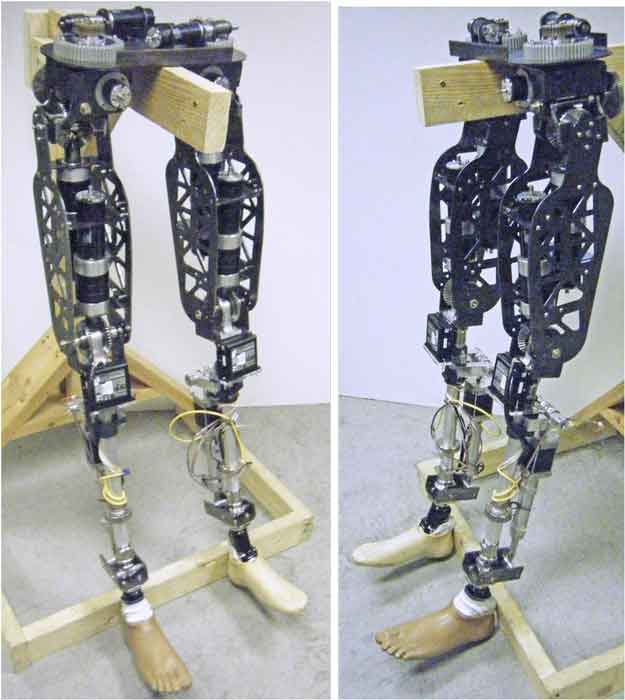

Engineers at Johns Hopkins University have created a set of robotic legs that can be controlled using brain signals. The legs are controlled through a electronic cap so the technology is non-invasive.
So far, the device is able to recognize when a person wants to walk or stop with 95% accuracy. All the user has to do is imagine walking or stopping and the legs behave accordingly. Using EEG signals, paralyzed people throughout the entire world will one day be able to go about their day again with just the effort of a thought.
Research has also made advancements using EEG signals to control a computer cursor and/or drive a wheelchair.
The legs still need to have speed and direction factored into their movement, but this is a few steps in the right direction.
accuracy, brain scan, brain signals, Colleges and Universities, computer, control using brain signals, cybernetics, cyborg, education, EEG, Electroencephalography, electronic cap, Johns Hopkins University, robotic legs, Robotics, Spinal cord injury, think, thought, United States, Veterans Health Administration, wheelchair -
The Extraordinary Benefits of Psilocybin in Magic Mushrooms
http://www.whoaorno.com Researchers have found time and time again that the majority of people who ingest a psychedelic substance like psilocybin (one of the major psychoactive constituents in magic mushrooms) experience long lasting, extremely positive personality changes.
If you have ever ingested these awe-filled spores, or know anyone that has, you have probably heard them say the term “set and setting.” This means that the expereince of the “trip” depends entirely upon the set (a person’s personality, their desires, their emotional stability, their beliefs, etc.) and the setting (where you are, who you are with, the time of day). Altering any one variable completely changes the experience overall. I like to call it “self-chemistry.”
Researchers are now realizing with greater understanding that ‘set and setting’ isn’t just hippie jargon, it’s a science. People with the highest levels of absorption, or a person’s tendency to experiencing complete attention, where a person’s awareness is fully engaged in whatever is holding their interest, seem to have the most life changing and beneficial experiences while under the effect of magic mushrooms. Absorption is directly related to the personality trait openness, which relates to a person’s receptiveness to new ideas and experiences.
A study focusing on varying levels of absorption and openness in people found that
people who experienced what the researchers described as a ‘complete mystical experience’ developed increased openness to experience whereas those who did not have such an experience had no increase in openness. People who are more open to their inner experience seem more likely to have a mystical experience and those who have a mystical experience tend to become more open as a result.
The more willing you are to change, the more open you will become. The study also noted that although positive or negative personality change in adults over 30 is almost never observed, psilocybin has the profound ability to affect and alter personality in adults of any age with effects lasting more than a year after the experience.
Johns Hopkins University School of Medicine is one of the leading centers of research on psilocybin. Throughout their studies they have found that ingesting psilocybin even once creates profound
positive changes in attitudes, mood, life satisfaction, and behavior that persist for more than a year.
In one study, Johns Hopkins found that
94 percent of the study’s 18 participants rated their experiences with psilocybin as among the top five most or as the top most spiritually significant experience of his or her life at a 14-month follow-up. 84 percent also reported positive changes in their behaviors, changes like improved relationships with family and others, increased physical and psychological self-care, and increased devotion to spiritual practice, which were corroborated by family members and others.
One of the participants in the test even stated that
I feel that I relate better in my marriage, there is more empathy – a greater understanding of people and understanding their difficulties and less judgment.
Most participants described their experience as ‘pleasurable’ or ‘ineffably beautiful.’
As a note, the most profound and long lasting effects were found to occur in participants who had experienced a low dosage of the chemical before ingesting larger dosages.
The studies have found minimal physical side effects, ranging from
a brief increase in blood pressure and a small increase in levels of thyroid-stimulating-hormone (TSH), prolactin, cortisol, and adrenocorticotropic hormone.
None of the side effects were considered dangerous by professional medical staff.
The staff concluded that
psilocybin is remarkably non-toxic to the bodyʼs organ systems.
The study does mention that it is important that a “sitter,” or a person who is not ingesting the substance, be present. This person should be someone that the person ingesting the substance trusts and can depend on if they begin to experience anxiety. There were people in the study who experienced brief fear and anxiety, but all of the negative experiences were abated immediately with gentleness and by simply having a trusting person present. The highlights of magic mushroom ingestion:
- Improved marriage
- No age dependence
- Increased empathy
- Greater openness
- Positive and long-lasting personality alterations
- Improved creativity
- Less judgement
- Greater understanding
- A greater feeling of connectedness
- Therapeutic
- No health risks
- No danger (as long as a ‘sitter’ is present)
- Proven effectiveness
- Pleasurable
- Ineffably beautiful
Sources:
Magic Mushrooms Improve Personality
Psychology Today: Psilocybin and Personality
PLOS ONE: Psilocybin Response in Healthy Volunteers
Journal of Psychopharmacology: Mystical Experience of Psilocybin and Openness
absorption, aware, beautiful, benefit, empathy, entheogen, ingest, John Hopkins, Johns Hopkins School of Medicine, Johns Hopkins University School of Medicine, magic mushrooms, marriage, medicine, open mind, open minded, Openness to experience, personality change, personality trait, Psilocybin, psychedelic, Psychedelic drug, relationships, research, science, study, substance, Trait theory, trip -
The Extraordinary Benefits of Magic Mushrooms
Researchers have found time and time again that the majority of people who ingest a psychedelic substance like psilocybin (one of the major psychoactive constituents in magic mushrooms) experience long lasting, and extremely positive personality changes.
If you have ever ingested these awe-filled spores, or know anyone that has, you have probably heard them say the term “set and setting.” This means that the expereince of the “trip” depends entirely upon the set (a person’s personality, their desires, their emotional stability, their beliefs, etc.) and the setting (where you are, who you are with, the time of day). Altering any one variable completely changes the experience overall. I like to call it “self-chemistry.”
Researchers are now realizing with greater understanding that ‘set and setting’ isn’t just hippie jargon, it’s a science. People with the highest levels of absorption, or “a person’s tendency to have episodes of “total” attention where a person’s awareness is fully engaged in whatever has their interest,” seem to have the most life changing and beneficial experiences while under the effect of mushrooms. Absorption is directly related to the personality trait openness, “which relates to a person’s receptiveness to new ideas and experiences.”
A study focusing on varying levels of absorption and openness in people found that “people who experienced what the researchers described as a “complete mystical experience” developed increased openness to experience whereas those who did not have such an experience had no increase in openness. People who are more open to their inner experience seem more likely to have a mystical experience and those who have a mystical experience tend to become more open as a result.” The more open you are, the more open you will become. The study also noted that although modern research has found that personality change, be it positive or negative, in adults over 30, is almost never observed. Psilocybin, however, is able to affect and alter personality in adults of any age with effects lasting more than a year after the experience.
Johns Hopkins University School of Medicine is one of the leading centers of research on psilocybin. Throughout their studies they have found that ingesting the substance creates “positive changes in attitudes, mood, life satisfaction, and behavior that persist for more than a year”
In one study, Johns Hopkins found that “94 percent of the study’s 18 participants rated their experiences with psilocybin as among the top five most or as the top most spiritually significant experience of his or her life at a 14-month follow-up. Eighty-four percent also reported positive changes in their behaviors, changes like improved relationships with family and others, increased physical and psychological self-care, and increased devotion to spiritual practice, which were corroborated by family members and others.”
One of the participants in the test even stated that “I feel that I relate better in my marriage, there is more empathy – a greater understanding of people and understanding their difficulties and less judgment.”
Most participants described their experience as ‘pleasurable’ or ‘ineffably beautiful.’
As a note, the most profound and long lasting effects were found to occur in participants who had experienced a low dosage of the chemical before ingesting larger dosages.
The studies have found minimal physical side effects, ranging from “a brief increase in blood pressure and a small increase in levels of thyroid-stimulating-hormone (TSH), prolactin, cortisol, and adrenocorticotropic hormone.” None of the side effects were considered dangerous by professional medical staff.
The staff concluded that “psilocybin is remarkably non-toxic to the bodyʼs organ systems.”
The study does mention that it is important that a “sitter,” or a person who is not ingesting the substance, be present. This person should be someone that the person ingesting the substance trusts and can depend on if they begin to experience anxiety. There were people in the study who experienced brief fear and anxiety, but all of the negative experiences were abated immediately with gentleness and by simply having a trusting person present.
- Improved marriage
- No age dependence
- Increased empathy
- Greater openness
- Positive and long-lasting personality alterations
- Improved creativity
- Less judgement
- Greater understanding
- A greater feeling of connectedness
- Therapeutic
- No health risks
- No danger
- Proven effectiveness
- Pleasurable
- Ineffably beautiful
What are you waiting for?
absorption, aware, beautiful, benefit, empathy, entheogen, ingest, John Hopkins, Johns Hopkins School of Medicine, Johns Hopkins University School of Medicine, magic mushrooms, marriage, medicine, open mind, open minded, Openness to experience, personality change, personality trait, Psilocybin, psychedelic, Psychedelic drug, relationships, research, science, study, substance, Trait theory, trip -
No Link Between Cannabis and Depression

A study done in Sweden spanning 35 years and testing a total of 45,087 Swedish men has found no connection linking cannabis and depression.
That being said, although the risk was extremely slight, the study did reiterate the connections found between chronic cannabis use and schizoaffective disorders. The study finds that “there was a strong graded association between cannabis use and schizoaffective disorder, even after control for confounders, although the numbers were small (HR 7.4, 95% CI, 1.0-54.3).
“Conclusion: We did not find evidence for an increased risk of depression among those who used cannabis. Our finding of an increased risk of schizoaffective disorder is consistent with previous findings on the relation between cannabis use and psychosis.”
-
Long Distance Quantum Teleportation is Reality
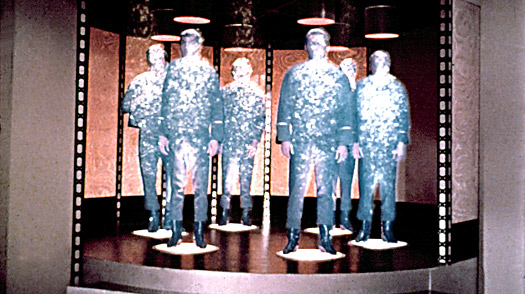
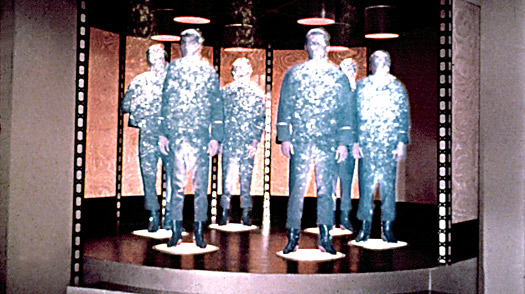
Researchers in multiple locations around the globe have successfully teleported photons across distances greater than 100km. We aren’t ready to beam people up to the moon for a gravity-free lunar getaway just yet, but these recent breakthroughs are a monumental step in the right direction.
Just weeks after researchers in China quantumly teleported photons a distance of 100km, researchers from the University of Waterloo completed a similar teleportation near the Canary Islands over a distance of 143 km.
The technique used isn’t teleportation in the traditional Star Trek sense, it is an implementation of quantum entaglement. The photon being teleported isn’t moved anywhere. Essentially, its information is copied perfectly and instantaneously to another photon at an intended destination. Quantum entanglement allows us to send and receive information without any error or delay whatsoever.
Using a new laser technology that ensures the laser beam remains focused and does not disperse, scientists are paving the way for a global quantum network, the next evolutionary step of the internet. A quantum network “could form the backbone of an internet populated by quantum computers. In theory, each quantum processor/computer connected to the quantum network could be instantly linked to every other computer via an entangled pair of photons.”
Quantum teleportation also redefines privacy. Because it is impossible to view an entangled particle, information that is entangled would be protected and guaranteed to be 100% secure. Quantum cryptography will replace password protection in the future.
In lieu of recent breakthroughs, Kirk’s classic catchphrase may need to be changed; “Entangle me up Scottie!”
Canary Islands, China, cryptography, entangled photon teleport, gravity, instant, laser, laser beam, long distance teleport, Moon, particle, password, Photon, privacy, quantum, quantum computer, quantum cryptography, Quantum entanglement, quantum teleport, Quantum teleportation, quick, research, Star Trek, step in right direction, teleport, Teleportation, University of Waterloo -
Soft Robots Grip Things Gently
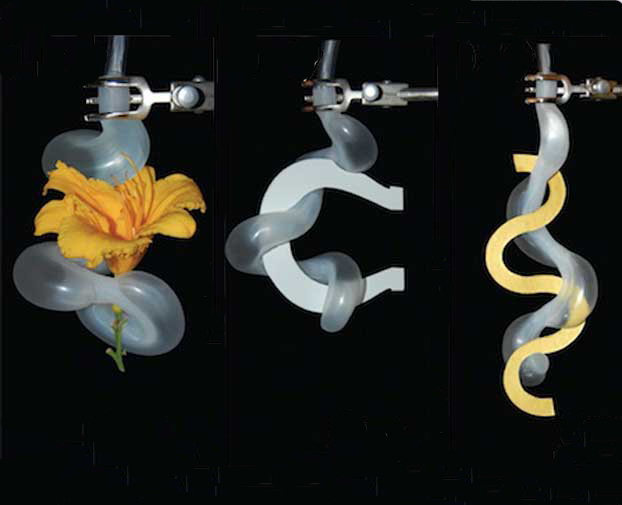

Researchers at Harvard University have created a robot tentacle that has a soft touch. It can grab objects with delicate care. The robot tentacle allows for flexibility and a myriad of directional possibilities. This particular robot is one in a series of robots being developed at Harvard. It can manage objects as fragile as flowers, and I’m thinking, what lovely lady wouldn’t love her flowers delivered by a nice compliant robot tentacle?
The future is looking pretty lithe if you ask me.
-
EU Orwellian Plan to Invasively Monitor Public’s Behavior

http://kiwipolemicist.files.wordpress.com In a push to prevent crime, the EU is beginning to implement various invasive techniques that monitor the public physically and virtually.
The name of the project is Project Indect, and its aim is to
develop computer programmes which act as ‘agents’ to monitor and process information from web sites, discussion forums, file servers, peer-to-peer networks and even individual computers.
The EU has increased its budget for fighting crime, terrorism and handling migration by 13.5% over the last 6 years. Through profiling populations of entire nations, the new collective European police force is
likely to gain access to sensitive information held by UK police, including the British DNA database. It also expects the number of UK citizens extradited under the controversial European Arrest Warrant to triple.
The ‘1984′ style overhaul will even analyze and monitor personal computers and networks. Critics all around the world are calling this the beginning of a ‘European CIA.’
Sources:
Telegraph: Orwellian Artificial Intelligence
1984, agents, British DNA database, computer, crime, EU, Europe, European Arrest Warrant, European union, george orwell, individual privacy, invasion of privacy, invasive procedures, invasive techniques, migration, monitor public, orwellian, peer to peer, privacy, profiling, project indect, terrorism, UK police -
EU Funds Orwellian Plan to Invasively Monitor Public’s Behavior

In a push to prevent crime, the EU is beginning to implement various invasive techniques that monitor the public physically and virtually.
The name of the project is Project Indect, and its aim is to “develop computer programmes which act as “agents” to monitor and process information from web sites, discussion forums, file servers, peer-to-peer networks and even individual computers.”
The EU has increased its budget for fighting crime, terrorism and handling migration by 13.5% in the last 5 years. Through profiling entire nations, the new collective European police force is “likely to gain access to sensitive information held by UK police, including the British DNA database. It also expects the number of UK citizens extradited under the controversial European Arrest Warrant to triple.”
The ‘1984’ style overhaul will even analyze and monitor personal computers and networks. Critics all around the world are calling this the beginning of a ‘European CIA.’
1984, agents, British DNA database, computer, crime, EU, Europe, European Arrest Warrant, European union, george orwell, individual privacy, invasion of privacy, invasive procedures, invasive techniques, migration, monitor public, orwellian, peer to peer, privacy, profiling, project indect, terrorism, UK police -
You Might be a Psychopath; Psychological Catch 22
In this TED talk from Jon Ronson the destruction of the field of psychology and strange answers to the psychopath test are discussed. Set to eerie music and unsettling visuals this talk is intriguing to say the least. It also brings up many important questions. Is the psychopath test a catch 22? Is everyone a psychopath?
Ronson says that Scientologists are trying to destroy psychology. Scientologists claim it is a pseudo-science that can’t be trusted. Their evidence? A man, Tony, who feigned insanity at his criminal trial to be placed in a lush cozy hospital for the mentally ill instead of jail. Their assertion is that he faked too well, and now can’t get out. It’s an incredibly insteresting look at mental illness and the abnormal behaviors of the human race.
“Tony said that it’s a lot harder to convince people that you’re sane than you’re crazy”
“You know they’re always looking for nonverbal cues to my mental state. But how do you sit in a sane way? How do you cross your legs in a sane way? It’s just impossible!” Tony says that one of the points on the psychopath check list is not feeling remorse, but if you say you feel regret and remorse, the psychologists claim you are being cunning and manipulative, which is another one of the points on the psychopath check list. He was caught in this catch 22 for fourteen years before the psychologists decided it was safe to release him into society, decidedly still a psychopath.
Ronson goes on to discuss capitalism and the characteristics presented in successful capitalists.
“The reason why is because capitalism at its most ruthless rewards psychopathic behavior. The lack of empathy, the glibness, cunning, manipulative. In fact capitalism perhaps at its most remorseless, is a physical manifestation of psychopathy.”
This video may get you worrying about your mental state, but I wouldn’t fret too much about it. All human behavior is relative.
-
Cellphones Cause Higher Incidence of Brain and Spinal Tumors
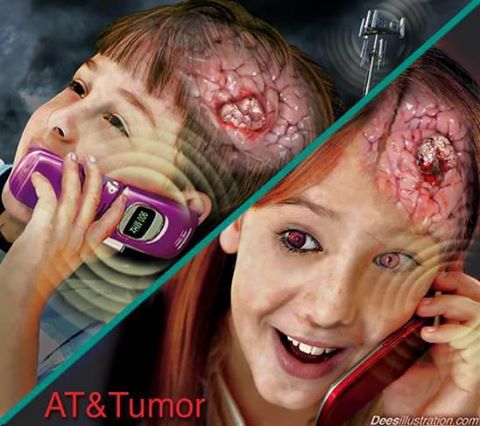

New research has found that phones of all shapes and sizes dramatically increase our chances to develop glioma, or brain and spinal tumors.
The findings tested ages ranged 20-80 years and found conclusive evidence that the risk increases proportionally to the amount of time and frequency a person uses their phone.
So, the next time you miss a call just tell them, “sorry about that, I was busy avoiding cancer.”
Wonder about your world…

Take the plunge down the rabbit hole of insanity and wonder in this fast-paced, nonstop psychological thriller that will leave you questioning the very nature of reality and beyond. Part thriller, part romance, part existential horror, A Dream of Waking Life delves into lucid dreaming, psychedelics, existential ontology, video games, the nature of love, the nature of reality, and more.

Mendel’s Ladder delivers an adrenaline-fueled journey set on a dystopian future Earth, brimming with high-stakes action, adventure, and mystery. This epic series opener plunges readers into a world filled with diverse cultures, heart-pounding battles, and characters who will captivate your heart and imagination.

“E.S. Fein is raising the bar for quality as it’s a very well-written and thought-provoking book…There are points and themes in the story that could be discussed for eons as people will have their own idea on where it leads. It’s a book I would highly recommend.” – Andy Whitaker, SFCrowsnest

 Wondergressive