
-
Human vs. Alien Technology: Fact, Fiction, and Speculation


The concept of extraterrestrial life has fascinated humans for centuries, leading to countless depictions of alien technology in science fiction. These portrayals often paint a picture of technological prowess far surpassing our own, raising the question: how does human technology compare with what we imagine alien technology to be? This article explores our understanding of human technology, speculations about alien technology, and the intriguing intersection of the two.
Understanding Human Technology
Human technology, developed over thousands of years, has resulted in remarkable advancements. From the invention of the wheel to the development of AI, our technological progress is a testament to human ingenuity and innovation. We have explored our planet, ventured into space, and begun to unlock the mysteries of the universe.
Speculating About Alien Technology
While we have no concrete evidence of extraterrestrial life or their technology, we can speculate based on our understanding of physics, biology, and technology. Theoretical physicists and astrobiologists suggest that advanced alien civilizations could harness energy from their stars (Dyson Spheres), manipulate matter at the nanoscale (nanotechnology), or even bend the fabric of spacetime for interstellar travel (warp drives).
The Intersection of Human and Alien Technology
The search for extraterrestrial intelligence (SETI) represents an intersection of human and hypothetical alien technology. Our efforts to detect alien signals use the pinnacle of human technological capabilities, from advanced radio telescopes to complex algorithms analyzing vast amounts of data.

UFOs and Unexplained Phenomena
Unidentified Flying Objects (UFOs) and unexplained phenomena often stoke speculation about alien technology. While most of these sightings have earthly explanations, some remain unexplained. Governments worldwide, including the U.S., have conducted investigations into these phenomena. Although they haven’t provided evidence of alien technology, they have sparked public interest and scientific curiosity.
The Impact of the Search for Alien Technology
The search for alien technology has profound implications for our understanding of the universe and our place in it. It drives us to push the boundaries of science, inspiring technological innovations and fostering a sense of global unity in the shared quest for knowledge.
Conclusion: Human vs. Alien Technology – A Journey of Discovery
In comparing human and alien technology, we embark on a journey of discovery, exploring the limits of our knowledge and imagination. The quest for understanding alien technology is not just about finding extraterrestrial life; it’s also about understanding ourselves – our potential, our drive for discovery, and our place in the cosmos.
Until we make contact, the comparison between human and alien technology remains speculative. Yet, it’s a speculation that inspires, driving us towards new horizons of science, technology, and understanding. Whether we find alien life or not, the journey itself enriches our species, pushing us to reach further into the cosmos and deeper into understanding our existence.
Advanced Radio Telescopes, alien technology, biology, Complex Algorithms, Contact with Aliens, Cosmic Position, cosmos, Data Analysis, Discovery Drive, Dyson Spheres, Existence Understanding, extraterrestrial life, Global Unity, Government Investigations, human potential, Human Technology, Human vs. Alien Technology, imagination, innovation, Journey of Discovery, Knowledge Limits, Knowledge Quest, Nanotechnology, New Horizons, physics, Public Interest, Science and Technology Intersection, science fiction, Scientific Curiosity, Search for Extraterrestrial Intelligence (SETI), Space Exploration, speculation, technological advancements, Technological Progress, Technological Prowess, Understanding the Universe, unexplained phenomena, Unidentified Flying Objects (UFOs), warp drives -
The Phantom Time Hypothesis: A Journey Through Controversial Chronology


In the realm of historical revisionism, few theories are as audacious as the Phantom Time Hypothesis. Proposed by German historian Heribert Illig in 1991, the hypothesis suggests that nearly three centuries of the Early Middle Ages (614-911 AD) never occurred. This article delves into this controversial theory, its claims, criticisms, and its place in the broader discussion about historical accuracy and interpretation.
Unraveling the Phantom Time Hypothesis
The Phantom Time Hypothesis revolves around the idea that the years 614-911 AD were fabricated by the Holy Roman Emperor Otto III and Pope Sylvester II. According to Illig, they altered historical documents and created fictitious accounts to position themselves at the turn of the millennium in 1000 AD, effectively inventing 297 years of history.
The Anomalies: Evidence for the Hypothesis
Illig’s hypothesis draws upon perceived inconsistencies in historical records and discrepancies in the Gregorian calendar. He also cites the scarcity of archaeological evidence from this period and perceived stylistic leaps in art and architecture as supporting his theory.
Criticisms of the Phantom Time Hypothesis
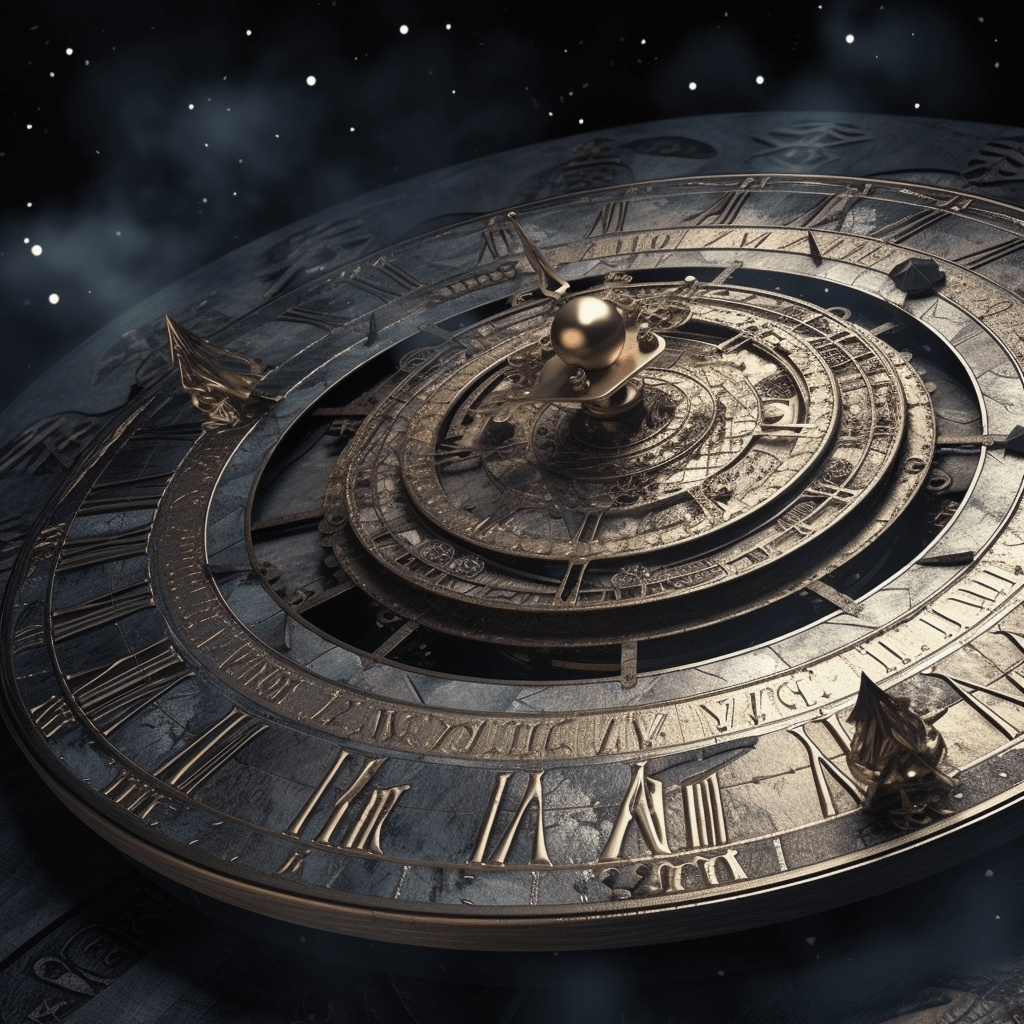
The Phantom Time Hypothesis has been met with widespread criticism from historians, archaeologists, and scholars. Critics argue that the hypothesis disregards a wealth of historical and archaeological evidence from various cultures worldwide, which independently verify the existence of the disputed period. They also point out that Illig’s claims rely heavily on conspiracy theories, with little solid evidence to support them.
Impact and Interpretation: The Phantom Time Hypothesis in Context
Despite its controversial status, the Phantom Time Hypothesis raises interesting questions about historical accuracy and interpretation. It invites us to consider how history is recorded, preserved, and sometimes manipulated. It also reminds us of the importance of critical thinking and rigorous scholarship in examining historical claims.
Although most historians dismiss the Phantom Time Hypothesis, its enduring popularity among some circles shows the allure of alternative historical narratives. These narratives, even when not widely accepted, can stimulate discussion and encourage a deeper understanding of history and historiography.
Conclusion: The Phantom Time Hypothesis – An Unconventional Lens on History
The Phantom Time Hypothesis, while largely discredited, offers a fascinating journey into the world of historical revisionism. It exemplifies the complexities of historical interpretation and the intriguing allure of conspiracy theories. Whether you dismiss it as a far-fetched conspiracy or embrace it as an audacious challenge to conventional history, the Phantom Time Hypothesis invites us to question, explore, and delve deeper into our understanding of the past.
While it may not rewrite our calendars, the Phantom Time Hypothesis serves as a testament to the enduring fascination with history, the quest for truth, and the human propensity to question and challenge established narratives. In a world where history often shapes our present and future, such critical examination remains more important than ever.
Alternative Historical Narratives, Archaeological Evidence, Archaeologists, Art and Architecture, Audacious Challenge, conspiracy theories, Conventional History, Critical Examination, Critical Thinking, Early Middle Ages, Fabricated History, Far-fetched Conspiracy, Fascination with History, Fictitious Accounts, Gregorian Calendar, Heribert Illig, Historians, Historical Accuracy, Historical Claims, Historical Complexity, Historical Discussion, Historical Documents, Historical Interpretation, Historical Revisionism, Historical Truth, Historiography, History Preservation, History Recording, Holy Roman Emperor Otto III, Manipulated History, Phantom Time Hypothesis, Pope Sylvester II, Quest for Truth, Questioning Established Narratives, Rigorous Scholarship, Scholars, Shaping the Future, Shaping the Present, Understanding History, Widespread Criticism -
The Eruv: New York’s Invisible Wire and its Cultural Significance


In a city as bustling and visually cacophonous as New York, it’s easy to overlook a singular, nearly invisible feature that carries immense cultural and religious significance: the Eruv. This thin wire, strung high above city streets, forms a symbolic boundary allowing observant Jews to carry out certain activities otherwise restricted on the Sabbath. This article will explore the history, significance, and controversy of the New York Eruv.
The Unseen Boundary: Understanding the Eruv
The concept of an Eruv (Hebrew for “mixture” or “blending”) originates from Jewish religious law (Halakha). On the Sabbath, carrying objects or pushing strollers in public spaces is considered a form of work, which is prohibited. However, within an Eruv, these spaces are symbolically transformed into private domains, where such actions are permitted.
The Eruv is typically a wire or string encircling a neighborhood, city, or even an entire metropolitan area. The New York Eruv, one of the largest in the world, spans Manhattan, parts of Brooklyn, and other boroughs, encompassing an area of over 165 square miles.
History of the New York Eruv

The first Eruv in New York was established in the 19th century in the Lower East Side by Eastern European Jewish immigrants. However, the modern Manhattan Eruv wasn’t established until 1994. The Eruv’s boundaries are maintained weekly by a team of inspectors who ensure its integrity.
The Eruv and Modern Jewish Life
The Eruv’s existence is central to the daily lives of many observant Jews in New York. By transforming public spaces into private ones, it allows individuals to engage in activities such as pushing strollers or carrying prayer books on the Sabbath, thus enabling them to participate in communal religious services and gatherings.
Controversies and Legal Challenges
The Eruv has not been without its controversies. Some within the Jewish community argue that the Eruv’s creation is a lenient interpretation of the Halakha, while others see it as a necessary adaptation to modern urban living.
Legal challenges have also arisen, with opponents claiming that the Eruv violates the principle of separation of church and state. However, courts have generally upheld the legality of Eruvs, viewing them as similar to other accommodations for religious practice.
Invisible Yet Significant: The Role of the Eruv
In the midst of New York’s concrete jungle, the almost invisible Eruv serves as a powerful testament to the city’s rich cultural and religious diversity. It shows how ancient religious traditions adapt to modern urban landscapes and how religious practices can shape the way individuals experience and navigate the city.
Conclusion: The Eruv – A Silent Witness to New York’s Vibrant Diversity
The Eruv, an unassuming, almost invisible wire, holds a significant place in the tapestry of New York. It’s a thread that connects past and present, tradition and modernity, individual and community. Even as it blends into the cityscape, it continues to shape the lives of many of its residents, silently testifying to the enduring power of faith and the remarkable diversity of the city that never sleeps.
Ancient Traditions, Brooklyn Eruv, City That Never Sleeps, Communal Gatherings, community, Concrete Jungle, cultural diversity, cultural significance, diversity, Eastern European Jewish Immigrants, Eruv, faith, Halakha, Invisible Wire, Jewish Religious Law, Legal Accommodations, Legal Challenges, Lower East Side, Manhattan Eruv, Modern Adaptations, Modern Jewish Life, Navigating the City, New York, Observant Jews, Prayer Books, Private Domains, Public Spaces, Religious Accommodations, Religious Diversity, Religious Practice, Religious Services, Religious Significance, Religious Traditions, Sabbath, Separation of Church and State, Symbolic Boundary, Tradition and Modernity, Urban Landscapes, Urban Living, Weekly Inspections -
Project Stargate on Mars: Unveiling the Enigma of Remote Viewing


Project Stargate, an initiative undertaken by the U.S. Government in the 1970s and 1980s, sought to investigate the potential for psychic phenomena in military and domestic intelligence applications. While its name might evoke interstellar travel, the project’s connection to Mars is centered on one of the most controversial aspects of its research: remote viewing.
Unmasking Project Stargate
Project Stargate was a code name for a secret U.S. Army unit established in 1978 at Fort Meade, Maryland. The project, and its precursors (Grill Flame, Center Lane, Sun Streak, and others), focused on psychic phenomena, particularly “remote viewing,” which is the ability to perceive places, persons, and actions that are not within the range of the senses.
The Mars Connection: Remote Viewing and Extraterrestrial Landscapes
The connection between Project Stargate and Mars stems from one specific incident: a remote viewing session conducted in 1984 by psychic consultant Joseph McMoneagle. According to declassified documents, McMoneagle was given a sealed envelope containing a 3×5 card with the following information: “The planet Mars. Time of interest approximately 1 million years B.C.”
Unveiling the Martian Mysteries: The McMoneagle Session
During the session, McMoneagle described a landscape that appeared to be Mars, filled with vast, barren plains and huge pyramids. He also reported encountering ancient, dying civilizations and advanced technologies.
The descriptions given by McMoneagle were vivid and detailed, sparking intrigue and debate among researchers, skeptics, and enthusiasts alike. His account remains one of the most detailed and controversial remote viewing sessions associated with Project Stargate.
Fact or Fiction: Skeptics and Believers

As with many topics relating to psychic phenomena, Project Stargate, and its Mars connection, has been met with skepticism and criticism. Critics argue that remote viewing lacks empirical evidence and that any successful trials could be attributed to coincidence or leading cues from the experimenters.
However, believers and some researchers argue that the level of detail and accuracy in some remote viewing sessions, like McMoneagle’s, cannot be easily dismissed. The debate continues, and while scientific consensus has yet to be reached, the interest in remote viewing and its potential implications remains strong.
Exploring Further: Project Stargate’s Legacy
Despite the controversy, Project Stargate has left a lasting legacy. It has fueled interest in psychic phenomena and has been the inspiration for numerous books, movies, and TV shows. The declassified documents from the project continue to be analyzed and debated by researchers and enthusiasts alike.
In the realm of Mars exploration, the intrigue sparked by McMoneagle’s remote viewing session continues. As we send rovers and plan manned missions to the Red Planet, we are slowly unveiling the Martian mysteries that were once the realm of psychics and remote viewers.
Conclusion: Project Stargate and the Enigma of Mars
Project Stargate was an exploration into the unknown, a journey into the realm of psychic phenomena and remote viewing. The connection to Mars, through McMoneagle’s remote viewing session, added another layer of intrigue to the project.
Whether you see it as a fascinating exploration of human consciousness or a misguided venture into pseudoscience, Project Stargate serves as a reminder of our relentless quest for knowledge and understanding, even in the most uncharted territories.
As we continue our exploration of Mars, both physically and psychically, who knows what mysteries we may yet uncover? Project Stargate may be over, but our fascination with the unknown and the potential of the human mind continues to drive us into the future.
advanced technologies, ancient civilizations, Center Lane, Coincidence, Declassified Documents, Empirical Evidence, Experimenters, Extraterrestrial Landscapes, Fascination with the Unknown, Fort Meade, Grill Flame, Human Consciousness, Joseph McMoneagle, Knowledge and Understanding, Lasting Legacy, Leading Cues, Manned Missions, Mars, Mars Exploration, Martian Mysteries, Martian Surface, Maryland, Military Intelligence, Physical Exploration, Potential of the Human Mind, Project Stargate, pseudoscience, Psychic Exploration, Psychic Phenomena, Psychic Research, Red Planet, remote viewing, Remote Viewing Sessions, Rovers, Scientific Consensus, Sealed Envelope, Sun Streak, U.S. Army Unit, U.S. Government, Uncharted Territories -
Unlocking the Enigma of Dodleston: Unraveling the Time Travel Mystery

The world is full of unexplained phenomena that have captivated our imagination for centuries. Among these mysteries lies the enigmatic Dodleston time travel case, a puzzling event that has perplexed researchers and intrigued enthusiasts for years. In this article, we embark on an exciting journey to explore the Dodleston time travel mystery, delving into its origins, examining the evidence, considering the various theories, and delving deeper into the scientific concepts that attempt to shed light on this captivating enigma.
The Dodleston Time Travel Incident: A Glimpse into the Past: Nestled in the serene village of Dodleston, England, lies a tale that defies the bounds of conventional reality. Our story begins in the year 1988 when an unassuming couple, John and Anne Smith, stumbled upon a hidden passage in their home’s cellar. As curiosity took hold, they ventured deeper into the concealed corridor and found themselves inexplicably transported back in time to the 17th century.
Examining the Evidence: Unraveling the Enigma: Though skepticism surrounds the Dodleston time travel incident, intriguing evidence has emerged to support the Smiths’ claims. Historical records from Dodleston and its surroundings indicate the existence of a hidden tunnel system, providing a plausible explanation for the passage discovered by the Smiths. Furthermore, witnesses from the time period reported strange occurrences in Dodleston, including sightings of a peculiar couple that resembled the Smiths. Such testimonies add credibility to the possibility of temporal disturbances in the area.
Theories and Explanations: Unveiling the Truth: The Dodleston time travel mystery has given rise to a multitude of theories seeking to explain the unexplainable. One hypothesis proposes the existence of a temporal vortex, a phenomenon that acts as a bridge connecting different periods in time. This theory suggests that the Smiths unwittingly stumbled upon such a vortex within the hidden passage, leading to their temporal displacement. Another intriguing explanation posits the occurrence of a localized time anomaly triggered by specific conditions within the concealed corridor, causing a rupture in the fabric of time itself.
Quantum Mechanics and Time Travel: A Closer Look: To unravel the Dodleston enigma, we must delve into the realm of quantum mechanics, where the fabric of reality appears malleable. Quantum physics offers a myriad of theoretical frameworks that may shed light on the phenomenon experienced by the Smiths. Concepts such as wormholes, which are hypothetical tunnels connecting distant parts of spacetime, and the possibility of parallel universes within the multiverse, present intriguing possibilities for understanding the intricacies of time travel.

The Cultural Impact: Inspiring Literature and Media: The Dodleston time travel mystery has transcended its status as a mere historical incident, leaving an indelible mark on popular culture. Countless books, movies, and television shows have drawn inspiration from this captivating enigma. From best-selling novels exploring the mysteries of alternate realities to gripping films centered around the complexities of time travel, Dodleston has ignited the imagination of storytellers and captivated audiences worldwide.
The Quest for Answers: Advancing Scientific Knowledge: The Dodleston time travel mystery stands as a testament to the limits of our current understanding of reality. It serves as a reminder that the boundaries of science are ever-expanding, and what was once considered impossible may eventually be within our grasp. As researchers continue to explore the depths of scientific inquiry, advancements in fields such as quantum physics and temporal mechanics may one day unlock the secrets behind Dodleston’s fascinating temporal voyage.
Conclusion: The Dodleston time travel mystery continues to captivate us with its tantalizing possibilities. While the true nature of the incident remains elusive, it serves as a testament to the human spirit of curiosity and the insatiable quest for answers. As we explore further into the depths of scientific understanding, perhaps one day we will unravel the secrets behind Dodleston’s fascinating temporal voyage.
The Dodleston enigma invites us to ponder the nature of time itself. Is time a linear progression, or are there hidden realms and dimensions that coexist with our own? The mystery challenges our preconceived notions of reality, urging us to question the limitations of our perception and the vast potential of the universe.
Moreover, the Dodleston incident holds a mirror to our own existence. It raises philosophical inquiries about the nature of identity and the ripple effects of our actions. If time travel were possible, what would it mean for our sense of self and the consequences of altering the past or influencing the future? The repercussions of such temporal manipulation could be far-reaching and profound.
The enduring allure of the Dodleston time travel mystery lies not only in the extraordinary nature of the incident itself but also in its reflection of our collective fascination with the unknown. It serves as a reminder that there are still countless mysteries awaiting discovery, both within the boundaries of our planet and beyond.
Furthermore, the Dodleston enigma reminds us of the power of imagination and the importance of embracing the unexplained. It encourages us to nurture our sense of wonder and curiosity, to explore the realms of possibility, and to challenge the boundaries of what we deem possible. For it is in the pursuit of the enigmatic and the inexplicable that we push the boundaries of human knowledge and ignite the spark of innovation.
In conclusion, the Dodleston time travel mystery stands as a testament to the enduring power of the human spirit and our unyielding quest for knowledge. It invites us to explore the intersection of science, history, and the enigmatic realms of the universe. Whether the Dodleston incident was a fantastical figment of imagination or a genuine temporal anomaly, its allure persists, inspiring us to delve deeper into the mysteries that surround us. As we continue our journey of scientific exploration and philosophical contemplation, perhaps we will one day unravel the secrets of Dodleston’s fascinating temporal voyage, unlocking new insights into the fabric of time itself.
17th century, boundaries of reality, captivating enigma, collective imagination, Dodleston time travel mystery, enigma, evidence, gripping films, hidden passage, hidden secrets, historical enigmas, historical records, inspirational literature, intriguing incident, multiverse, mysterious phenomenon, phenomenon, Popular Culture, quantum mechanics, quantum physics, quantum realm, scientific exploration, skepticism, temporal anomalies, temporal displacement, temporal journey, temporal paradox, temporal vortex, time anomaly, time disturbances, time travel enthusiasts, time travel research, time travel theories, time-bending events, time-bending possibilities, time-traveling couple, unexplained phenomena, unraveling the truth, Village of Dodleston, wormholes -
Operation Highjump: Unveiling the Mysteries of the Antarctic Expedition


At the close of World War II, a unique mission known as Operation Highjump was launched, captained by Rear Admiral Richard E. Byrd of the U.S. Navy. Its official purpose was to establish a research base in the Antarctic, but the scale and secrecy surrounding the operation sparked a flurry of theories and speculation. This article explores the fascinating facts and enduring mysteries of Operation Highjump.
Unmasking Operation Highjump
Operation Highjump, officially titled The United States Navy Antarctic Developments Program, 1946–1947, was a large-scale Antarctic expedition. Launched in August 1946, the operation was led by Rear Admiral Richard E. Byrd, an experienced polar explorer, and involved 13 ships, 23 aircraft, and over 4,000 personnel.
The stated objectives of the mission were to train personnel and test equipment in frigid conditions, consolidate and extend the United States’ sovereignty over the largest practical area of the Antarctic continent, and determine the feasibility of establishing and supplying bases in the Antarctic.
Enigma and Intrigue: Theories Surrounding Highjump
While the official objectives were straightforward, the scale of Operation Highjump sparked speculation. Why would such a large military force be necessary for a scientific expedition? This question has fueled numerous theories about the operation’s real purpose.
- Nazi Connection: Some theories suggest that Operation Highjump was a covert mission to locate and destroy a secret Nazi base in the Antarctic. It’s a fact that Nazi Germany had an interest in the region and had launched expeditions there before the war.
- UFO and Alien Technology: More fantastical theories propose that the operation was launched to recover alien technology or interact with extraterrestrial beings believed to be in the region.
- Cold War Preparation: Another theory posits that Operation Highjump was a display of military might, aimed at deterring the Soviet Union at the dawn of the Cold War.
The Reality of Highjump: Challenges and Discoveries
Despite the intriguing theories, the reality of Operation Highjump was somewhat more mundane, yet no less impressive. The mission faced numerous challenges, including harsh weather conditions, logistical hurdles, and the tragic loss of life in aircraft accidents.
Nevertheless, the expedition achieved significant scientific and strategic successes. It mapped around 1.5 million square kilometers of the Antarctic territory and provided valuable data about the region’s geology, meteorology, and potential for human habitation.
The Legacy of Operation Highjump
Operation Highjump’s legacy extends beyond its scientific and strategic achievements. It marked a significant step towards international cooperation in the Antarctic. In the years following Highjump, the Antarctic Treaty was signed, prohibiting military activity and preserving the continent for peaceful research.
Furthermore, Operation Highjump’s enduring intrigue has permeated popular culture, inspiring novels, films, and video games, and fueling ongoing fascination with the Antarctic’s mysteries.
Navigating the Icebergs of Truth and Fiction
While some of the theories surrounding Operation Highjump are undoubtedly fueled more by imagination than by evidence, they speak to our collective fascination with the unknown. The Antarctic, with its harsh climate and remote location, is a perfect canvas for such speculation.

However, it’s important to navigate the icebergs of truth and fiction carefully. Operation Highjump was indeed a significant military operation with notable scientific achievements, but claims of secret Nazi bases or extraterrestrial encounters are largely unsubstantiated.
Conclusion: The Highjump Enigma
More than seven decades after Operation Highjump, the expedition remains a source of fascination and speculation. While the official objectives were achieved, the air of mystery surrounding the operation continues to fuel imaginative theories about its true purpose.
In the end, whether you’re captivated by the theories of secret bases and extraterrestrial encounters or inspired by the expedition’s scientific achievements and strategic prowess, Operation Highjump serves as a reminder of our human curiosity and our relentless pursuit of knowledge, even in the face of the harshest conditions.
The allure of the Antarctic, the world’s last frontier, remains as strong today as it was during the time of Operation Highjump. It is a testament to our enduring spirit of exploration and discovery. As we continue to explore this vast icy wilderness, who knows what secrets we may yet uncover?
Unearthing the Mysteries: Operation Highjump in Modern Research
Modern research continues to unveil the mysteries and secrets of the Antarctic. While we may not find secret bases or alien technology, the scientific revelations are no less remarkable. The ice cores of Antarctica, for example, hold vital clues about Earth’s climate history, helping scientists predict future climatic trends.
Moreover, the Antarctic’s unique ecosystems continue to reveal new species and biological phenomena. From extremophile microbes to vast colonies of emperor penguins, the biodiversity of this frozen continent continues to amaze and inspire.
Operation Highjump played a significant role in initiating this ongoing journey of discovery, laying the groundwork for future research and fostering international cooperation in Antarctic exploration.
Final Thoughts: The Everlasting Allure of the Unknown
Operation Highjump, with its blend of fact, speculation, and enduring mysteries, encapsulates the human spirit’s insatiable curiosity. It’s a testament to our collective desire to explore the unknown, push boundaries, and seek knowledge, even in the most inhospitable corners of our planet.
While we may never fully unravel the enigma of Operation Highjump, the expedition’s legacy lives on in the ongoing exploration and research in the Antarctic. It continues to inspire a sense of wonder and intrigue, serving as a beacon for explorers and researchers who dare to venture into the icy unknown.
As we continue to uncover the Antarctic’s secrets, the legacy of Operation Highjump reminds us that exploration is as much about the journey as it is about the destination. It’s a journey of discovery, fraught with challenges and risks, but also filled with the thrill of uncovering the unknown – a journey that, much like the mysteries of Operation Highjump, continues to captivate our collective imagination.
Antarctic Expedition, Antarctic Mapping, Antarctic Treaty, biodiversity, Climate History, Cold War Preparation, Emperor Penguins, Enigma of Highjump, Exploration and Discovery, Extremophile Microbes, Fiction, Geological Data, Harsh Weather Conditions, human curiosity, Human Habitation, Ice Cores, Icebergs of Truth, Insatiable Curiosity, international cooperation, Journey of Discovery, Logistical Hurdles, Meteorological Data, Military operation, Modern Research, Nazi Connection, Ongoing Exploration, Operation Highjump, Peaceful Research, Popular Culture, Rear Admiral Richard E. Byrd, Scientific Achievements, Scientific Mission, Sense of Wonder, Strategic Successes, U.S. Navy, UFO and Alien Technology, Uncovering Secrets, Unknown Mysteries, World War II -
Project Blue Beam: Conspiracies and Controversies Surrounding a Global Deception


Project Blue Beam, a controversial and widely debated conspiracy theory, proposes that powerful organizations are planning to orchestrate a massive global deception, using advanced holographic technology to simulate extraterrestrial or divine events. This alleged plot is said to serve the purpose of establishing a new world order and further consolidating power in the hands of a select few. This comprehensive, research-based exploration delves into the origins of the Project Blue Beam conspiracy theory, its main tenets, and the evidence supporting or refuting these claims, while examining the implications of such a scheme on society and global politics.
I. Origins of the Project Blue Beam Conspiracy Theory
The Project Blue Beam conspiracy theory can be traced back to Serge Monast, a Canadian journalist and conspiracy theorist, who first publicized the concept in the early 1990s. Monast claimed that the project was a secret operation devised by NASA and the United Nations, with the ultimate goal of establishing a one-world government under their control.
According to Monast, the implementation of Project Blue Beam would occur in four distinct stages, each designed to manipulate the perceptions and beliefs of the global population in order to pave the way for the new world order.
II. The Four Stages of Project Blue Beam
- Stage One: The Breakdown of All Archaeological Knowledge – This phase involves the manipulation of archaeological discoveries and historical data to undermine the foundations of all major religions, creating doubt and confusion among believers.
- Stage Two: The Great Space Show – In this phase, advanced holographic technology is used to project images of extraterrestrial beings or divine figures in the sky, fostering the belief in an imminent alien invasion or a second coming of a religious figure, depending on the targeted population.
- Stage Three: Telepathic Electronic Two-Way Communication – This stage involves the use of advanced technology to transmit thoughts and ideas directly into the minds of individuals, creating the illusion of direct communication with a higher power or extraterrestrial beings.
- Stage Four: The Universal Supernatural Manifestation – In the final phase, holographic projections are used to simulate supernatural events, convincing the global population of the need for a single, unified world government to protect humanity from these apparent threats.
III. Evidence Supporting or Refuting Project Blue Beam

The evidence supporting the existence of Project Blue Beam is largely anecdotal and speculative, often relying on alleged insider information, unverified documents, or the reinterpretation of existing events and technology to fit the conspiracy narrative. Many critics argue that the theory is based on unfounded assumptions and a lack of concrete evidence.
It is important to note that the advancement of holographic and communication technologies has fueled the plausibility of the Project Blue Beam theory. However, there is no definitive proof that such technology is being utilized or developed for the purpose of a global deception as described by Monast.
IV. Implications of Project Blue Beam
If the Project Blue Beam conspiracy theory were true, it would have profound implications for society, politics, and our understanding of reality. The manipulation of global beliefs and perceptions on such a scale would represent an unprecedented exercise of power and control by those orchestrating the deception.
Additionally, the successful implementation of Project Blue Beam would raise significant ethical and philosophical questions about the nature of truth, the manipulation of information, and the consequences of such a deception on individual freedom and autonomy.
V. Conclusion
Project Blue Beam, with its claims of a massive global deception and advanced technology used to manipulate the beliefs of the world’s population, has captivated the minds of conspiracy theorists and skeptics alike. While there is no definitive evidence to support the existence of Project Blue Beam, the theory serves as a cautionary tale about the potential dangers of unchecked power, the manipulation of information, and the erosion of individual freedoms.
As we continue to advance in our understanding and development of technology, it is crucial that we remain vigilant and critical in our assessment of the potential applications and implications of these advancements. Whether or not Project Blue Beam is a genuine threat, the ongoing pursuit of truth and the protection of individual autonomy remain essential in the face of an increasingly interconnected and technologically advanced world.
In the face of speculation and conjecture surrounding Project Blue Beam, one thing remains clear: the importance of fostering an open dialogue and critical analysis of the potential risks and rewards of technological progress. By engaging in thoughtful discussion and inquiry, we can work to ensure that technology is used for the betterment of humanity, rather than as a tool for manipulation and control.
advanced technology, archaeological knowledge, autonomy, conspiracy theory, critical analysis, ethical questions, evidence, global deception, holographic technology, individual freedom, interconnected world, manipulation of information, NASA, new world order, one-world government, philosophical questions, politics, potential rewards, potential risks, Project Blue Beam, reality, Serge Monast, society, space show, supernatural manifestation, technological advancements, telepathic communication, truth, United Nations -
The Emerald Tablet of Atlantis: Exploring the Origins, Mysteries, and Wisdom of a Lost Civilization
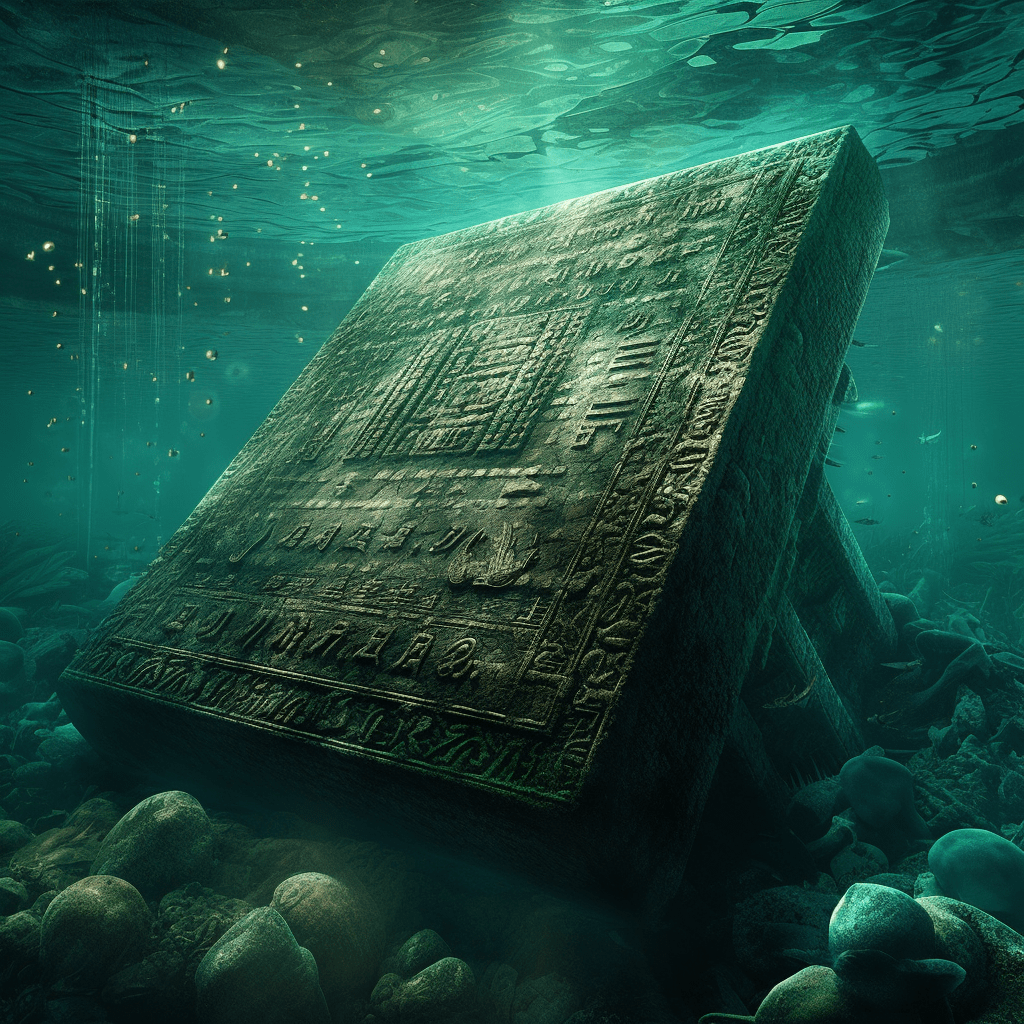

The Emerald Tablet, a legendary artifact shrouded in mystery and intrigue, has long been associated with the fabled lost city of Atlantis. This enigmatic tablet is said to contain ancient wisdom and profound secrets, passed down from a highly advanced civilization that vanished without a trace. This comprehensive, research-based exploration delves into the history of the Emerald Tablet, its connection to Atlantis, and the wisdom it is believed to hold, while examining the various theories and interpretations that have emerged over the centuries.
I. The History of the Emerald Tablet
The origins of the Emerald Tablet can be traced back to the Hellenistic period, with the earliest known references appearing in the works of the Greek-Egyptian sage Hermes Trismegistus. Hermes Trismegistus, a legendary figure often associated with the ancient Greek god Hermes and the Egyptian god Thoth, is credited with writing the Hermetic Corpus, a collection of esoteric texts that form the foundation of Hermeticism.
The Emerald Tablet is believed to be a part of this corpus, containing a succinct yet enigmatic description of the principles of alchemy and the secrets of the universe. The text of the tablet has been translated and interpreted by numerous scholars and mystics throughout history, including the famed alchemists Isaac Newton and Roger Bacon.
II. The Connection to Atlantis
The lost city of Atlantis, first described by the ancient Greek philosopher Plato in his dialogues “Timaeus” and “Critias,” has long captivated the imagination of historians, archaeologists, and mystics alike. Atlantis is described as a highly advanced civilization that ultimately fell out of favor with the gods and was destroyed in a cataclysmic event. The Emerald Tablet is often linked to Atlantis, with some theories suggesting that the tablet is a surviving artifact from this lost civilization.
According to these theories, the Emerald Tablet was created by the Atlanteans to preserve their advanced knowledge and understanding of the universe. The tablet was then passed down through various ancient civilizations, including the Egyptians and the Greeks, who revered its wisdom and incorporated its teachings into their own esoteric traditions.
III. The Wisdom of the Emerald Tablet
The Emerald Tablet is said to contain a wealth of wisdom, encapsulating the secrets of the universe and the principles of alchemy in its cryptic text. Among the most famous lines from the tablet is the axiom “As above, so below,” which reflects the Hermetic principle of correspondence between the macrocosm (the universe) and the microcosm (the individual).
The tablet also describes the process of transmutation, the transformation of base metals into gold, which is symbolic of spiritual enlightenment and the attainment of higher consciousness. The wisdom of the Emerald Tablet has been influential in various esoteric traditions, including alchemy, Hermeticism, and the Western mystery schools, and continues to inspire seekers of knowledge to this day.
IV. Theories and Interpretations

The Emerald Tablet and its connection to Atlantis have given rise to various theories and interpretations over the centuries. Some scholars and mystics view the tablet as a literal artifact from a lost civilization, while others see it as a metaphorical representation of ancient wisdom and spiritual truths. There are also those who believe that the tablet is a hoax or a fabrication, created to lend credibility to the teachings of Hermeticism or other esoteric traditions.
Despite these differing perspectives, the Emerald Tablet remains an enduring symbol of ancient wisdom and the quest for understanding. Its enigmatic text and the mysteries surrounding its origins continue to fascinate and inspire, inviting new generations of seekers to explore its hidden depths.
V. Conclusion
The Emerald Tablet of Atlantis, a legendary artifact steeped in mystery and ancient wisdom, has captivated the minds of scholars, mystics, and truth-seekers for centuries. Its connection to the fabled lost city of Atlantis and its alleged role in preserving the advanced knowledge of a vanished civilization have only added to its allure and mystique.
While the true origins of the Emerald Tablet and its relationship to Atlantis remain uncertain, the wisdom it is believed to contain has had a profound and lasting impact on various esoteric traditions and schools of thought. The principles of alchemy, Hermeticism, and the axiom “As above, so below” continue to resonate with those seeking a deeper understanding of the universe and the nature of existence.
In the face of ongoing debate and speculation surrounding the Emerald Tablet and its mysteries, one thing is clear: its enduring legacy as a symbol of ancient wisdom and the human quest for truth remains undiminished. As we continue to explore the unknown and seek to unravel the mysteries of our past, the Emerald Tablet of Atlantis will undoubtedly remain a source of inspiration and a testament to the timeless pursuit of knowledge.
" theories, "As above, alchemy, ancient knowledge, ancient wisdom, Atlantis, Critias, Emerald Tablet, enduring symbol, esoteric traditions, fabrication, Hermes Trismegistus, Hermetic Corpus, Hermeticism, higher consciousness, hoax, human history, interpretations, Isaac Newton, lost civilization, macrocosm, microcosm, mysteries of the universe, plato, quest for understanding, Roger Bacon, so below, spiritual enlightenment, spiritual truths, Timaeus, transmutation, Western mystery schools -
America’s Secret Space Program: Uncovering the Truth Behind the Veil of Secrecy


The world of space exploration has long been shrouded in mystery and intrigue, with various nations vying for supremacy in the race to the stars. As technology and scientific understanding have advanced, so too have the complexities and ambitions of space programs. Among these, America’s secret space program has been a subject of considerable speculation, with claims of covert operations, advanced technologies, and hidden agendas. This comprehensive, research-based exploration delves into the history of America’s space program, the theories surrounding its clandestine counterpart, and the evidence supporting or refuting these claims, while examining the implications of these theories on the broader context of space exploration.
I. The History of America’s Space Program
The United States has been a major player in space exploration since the inception of its official space agency, the National Aeronautics and Space Administration (NASA), in 1958. NASA has played a pivotal role in advancing human knowledge of the cosmos, with achievements such as the Apollo moon landings, the Space Shuttle program, and the development of the International Space Station (ISS). However, alongside these well-documented missions, there have been persistent rumors and allegations of a separate, clandestine space program operated by the United States government.
II. The Theories Surrounding America’s Secret Space Program
Various theories have emerged regarding the nature and scope of America’s alleged secret space program, with some claiming that the United States has developed advanced spacecraft, space-based weapons, and even established off-world colonies. Some of the most prevalent theories include:
- The Solar Warden Program: According to some conspiracy theorists, the United States government operates a classified space fleet known as Solar Warden, which is tasked with defending Earth from extraterrestrial threats and maintaining order in the solar system. These claims often cite alleged whistleblowers and former government employees who have come forward with purported insider information.
- Advanced Propulsion Technologies: Another theory suggests that the United States has developed and is utilizing advanced propulsion systems, such as anti-gravity or zero-point energy technologies, which allow for rapid travel throughout the solar system. Proponents of this theory argue that this technology is being kept secret to maintain a strategic advantage over other nations and to prevent the disruption of the global energy industry.
- Off-World Bases and Colonies: Some conspiracy theorists claim that the United States, in collaboration with other nations or extraterrestrial beings, has established off-world bases and colonies on the Moon, Mars, or elsewhere in the solar system. These alleged bases are believed to serve various purposes, ranging from scientific research to military operations.
III. Evidence Supporting or Refuting the Secret Space Program

While the theories surrounding America’s secret space program are certainly captivating, concrete evidence supporting these claims remains elusive. Many of the allegations rely on anecdotal accounts from alleged whistleblowers, unverified documents, or the reinterpretation of existing information to fit a preconceived narrative. In many cases, the evidence presented can be readily explained by more mundane or scientifically grounded phenomena.
That said, it is important to recognize the historical context of secret military and intelligence operations conducted by the United States government, such as the development of stealth aircraft, the U-2 spy plane, and the SR-71 Blackbird. These programs were highly classified and conducted in secret, only becoming publicly acknowledged years after their inception. While this does not confirm the existence of a secret space program, it does serve as a reminder that covert operations and technological advancements can and do occur behind closed doors.
IV. The Implications of America’s Secret Space Program
If a secret space program were to exist, the implications would be far-reaching and significant. The development and deployment of advanced spacecraft, propulsion technologies, and off-world bases would represent a monumental leap in human capabilities and fundamentally reshape our understanding of space exploration. Furthermore, the existence of such a program would raise serious questions about the motivations and intentions of the United States government and its willingness to conceal groundbreaking advancements from the public.
In addition to the technological implications, a secret space program would also have significant geopolitical ramifications. The development of advanced space-based weapons or the establishment of off-world military installations could potentially destabilize international relations and trigger an arms race in space, reminiscent of the Cold War-era tensions between the United States and the Soviet Union. Such a scenario would pose a significant threat to global peace and security.
V. Conclusion
The theories and claims surrounding America’s secret space program are undeniably fascinating and have captured the imagination of many. However, despite the numerous allegations and purported evidence, there is no definitive proof to support the existence of a clandestine space program operating alongside the well-documented endeavors of NASA and other space agencies.
While the possibility of a secret space program cannot be entirely ruled out, given the historical precedent of covert military and intelligence operations, the burden of proof remains on those making the claims. Until concrete evidence emerges, the theories surrounding America’s secret space program will remain firmly within the realm of speculation.
As our understanding of space and our capabilities in exploration continue to expand, it is essential to remain vigilant and critical in our examination of the unknown. Whether or not a secret space program exists, the ongoing pursuit of knowledge and understanding remains a cornerstone of human progress in our quest to unravel the mysteries of the cosmos.
advanced propulsion systems, advanced technologies, America's secret space program, anti-gravity, arms race, classified space fleet, Cold War, covert operations, extraterrestrial threats, geopolitical ramifications, global peace, human progress, intelligence operations, Mars, military operations, Moon, mysteries of the cosmos, NASA, off-world bases, Security, Solar Warden, Space Exploration, space race, space-based weapons, speculation, SR-71 Blackbird, stealth aircraft, U-2 spy plane, United States government, whistleblowers, zero-point energy
Wonder about your world…

Take the plunge down the rabbit hole of insanity and wonder in this fast-paced, nonstop psychological thriller that will leave you questioning the very nature of reality and beyond. Part thriller, part romance, part existential horror, A Dream of Waking Life delves into lucid dreaming, psychedelics, existential ontology, video games, the nature of love, the nature of reality, and more.

Mendel’s Ladder delivers an adrenaline-fueled journey set on a dystopian future Earth, brimming with high-stakes action, adventure, and mystery. This epic series opener plunges readers into a world filled with diverse cultures, heart-pounding battles, and characters who will captivate your heart and imagination.

“E.S. Fein is raising the bar for quality as it’s a very well-written and thought-provoking book…There are points and themes in the story that could be discussed for eons as people will have their own idea on where it leads. It’s a book I would highly recommend.” – Andy Whitaker, SFCrowsnest


 Wondergressive