-
For Humanity’s Sake, Wash Your Hands! And Look Good Doing It!
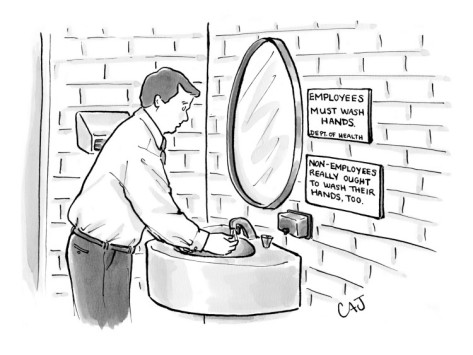
http://www.condenaststore.com/-sp/Man-washing-his-hands-in-restroom-Signs-read-Employees-must-wash-hands-New-Yorker-Cartoon-Prints_i8546202_.htm Do you use hot water when you wash your hands? Do you spend longer than 10 seconds when washing your hands? Or are you the type of person that utilizes the restrooms in a hurried fashion and then bolts out, skipping over the ritual of killing the bacteria that is festering on your hands? Although I am completely against some commercial anti-bacterial soaps, I am still a believer of a healthy and clean body. That being said, wash your hands before you shake mine! And people wonder why some of us are antisocial.
A study conducted at Michigan State University yielded that from a sample size of 3,739 people observed in a college town, only 5.3 percent washed their hands for 15 or more seconds. 10 percent of this did not wash their hands at all, and although this is a low amount, it still translates to over 350 people who don’t wash their hands in that area. If this is a true representation of the population then 10 percent of all the people you encounter are touching you or shaking your hand with filthy, unwashed hands. EWWWW. Also, the 95 percent that are not washing their hands for 20 seconds or more are not paying attention to their washing techniques and are not effectively killing off germs which can spread diseases.
According to the Centers for Disease Control and Prevention or CDC:
Failing to wash or insufficiently washing hands contributes to almost 50% of all food-borne illness outbreaks
But it isn’t completely the fault of the observed, the study also found that the cleanliness of a place contributes to the likely hood of washing ones hands. This definitely makes sense because if I see a sink or faucet with weird brown stains or boogers all over it then I will usually seek out alternative ways to clean my hands. And no, rubbing your hands together to create heat to theoretically kill the bacteria does not help.
Fun fact, the CDC also says that you should wash your hands:
- After using the toilet
- After changing diapers or cleaning up a child who has used the toilet
- After touching an animal or animal waste
- After touching garbage
But why all this emphasis on washing your hands after these daily activities? Why does it really matter?
Well, give it a good mulling over: You use your hands to feel and grab and touch everything throughout the day. You are strolling down to the nearest park and you run your finger across the rail on the sidewalk. You get on a train and you grab the overhead bar to keep stability during your ride. You grab a taxi and you hold the door that thousands have held before you. The restroom others have been in, the chair others have sat in, the weights others have grabbed. Not to mention the object you just grabbed or touched has a chance of containing fecal matter from another person. A study conducted by the London School of Hygiene and Tropical Medicine found that out of the 404 commuters they observed, 28% had bacteria on their hands originating from fecal matter. Gross, I know.
The worst part about all this is that we use our hands to touch our face at least a hundred times a day. My are we conceded. The point is not to become a germaphobe, but to stay aware of the way sickness and disease is spread, and how it all starts with your hands. Damnit man, just wash your hands!
The best way to wash your hands is to wet your hands, rub them together for at least 20 seconds, and then rinse and dry your hands. Make sure to give it that 20 precious seconds, 10 or less just doesn’t cut it. Tedious, I know. But hey! If all else fails here is an awesome way to help you wash your hands. Think of all the doctor visits you can avoid and all the fun singalong time you can experience!
Now if only we could find an easy way to keep our bellybuttons clean. Cheers!
Sources:
Dirty Hands: Bacteria of Faecal Origin
Wondergressive: The Secret World of Bacteria
Wondergressive: Stay Away From Antibacterial Soap
Wondergressive: Belly Button Bacteria
Bacteria, bano, belly button, CDC, Centers for Disease Control and Prevention, doctor, faecal, fecal, fecal bacteria, food borne illness, garbage, germaphobe, hands, handwashing, London School of Hygiene and Tropical Medicine, MSU, nbc, ObamaCare, outbreak, restroom, sick, sickness, soap, toilet, Triclosan, wash your hands, waste, wondergressive, YouTube -
Neocortex: How Human Memory Works and How We Learn
I have been reading a book on how the brain functions, particularly the neocortex which we know as the two pinkish greyish hemispheres. It is a seriously technical and boring read, but that is why I bring the main points into this first post on explaining how our memory works. If you start to feel that this is tedious, just glance over the bold parts.
How the Neocortex and Human Memory Works
Sequential Patterns
Our memory works sequentially and in a hierarchy. We remember linear sequential patterns. A sequence is the basic building block of our memory, how we learn, and how we function as humans. A popular sequence, for example, is the alphabet. We can recite the alphabet from A to Z with very little effort because we memorized the sequence from the beginning to the end.
Related Article: Become a God for 79 Cents
But what if you were asked to recite the alphabet from Z to A? Computers have no problem doing this as they can process the alphabet backwards in a thousandth of a second. But we humans would struggle, computing it sequentially. First, we would start to recite the alphabet until we get to, say, the last two or three letters, X Y Z. We would then be able to recite those backwards. Then we start from the beginning again and get to the next two or three in the list, U V W, then recite those backwards. Each time we are going through the sequential pattern in order to recite the alphabet backwards.

Neocortex Sequential Patterns Pattern Hierarchy in the Neocortex
As for the hierarchical nature of memory, there are lower level patterns and higher level patterns which our neurons process instantaneously, without us even noticing. Take a sentence for example. At the very high end of the pattern hierarchy you will be able to judge whether the writer intended the statement to portray sarcasm, to be a comical remark, or whether the statement was meant to be rhetorical. You will be able to attach your personal feelings to the sentence based on what is written.
You go down the hierarchical ladder and you see grammatical patterns. You understand the colloquial nature of the text and your brain processes this so quickly that you don’t even have to stop and think.
Related Article: Photographic Memory (Phase 2: Holy Shit)
We go even further down the hierarchical ladder and your neocortex is able to guess what word you are reading without even finishing it completely. You just glance over the text and recognize the pattern of the letters. The word “letter” starts with a tall character and has two more tall t’s. It is short enough for your brain to guess that the most plausible word fitting the character pattern is the word “letter”. Your brain also looks for patterns in the text itself, such as contextual patterns.
Way at the bottom of the hierarchy the neocortex recognizes the letters themselves. This is a very rudimentary level and therefore we can say that, with the preconception that you are an American and you know the English alphabet, your neo-cortex recognizes individual letters at the speed of light, metaphorically. If you pass through a letter that has two slants like / and \, /\, your neocortex will almost instantly recognize it as the letter A, since there are no other candidates and enough of a pattern is present for the brain to guess.
In the same way, when you see someone writing like a douche, using $ for “S” and ! for “I”, like $H!T!, we can immediately see that the person intended to use “SHIT!”. This is called auto association, the ability to associate a pattern with a part of itself. We can recognize a pattern even if the entire pattern is not present.
A hierarchical pattern is basically a sequence of sequences of sequences etc…
Hierarchical Patterns = Recursion & Iteration (Where are the programmer geeks?)
In a 2002 paper that Noam Chomsky coauthored called “The Faculty of Language: What Is It, Who Has It, and How Did It Evolve?” he cited the attribute of “recursion” as accounting for the unique language faculty of the human species. Recursion, according to Chomsky, is the ability to put together small parts into a larger chunk, and then to use that chunk as a part in yet another structure, and to continue this process interactively. In this way we are able to build the elaborate structures of sentences and paragraphs from a limited set of words. This essentially describes what the neocortex does.
Related Article: Memory, a Torch Pass
Two excerpts from “How to Create a Mind: The Secret of Human Thought Revealed” that have a lot to do with how we experience learning and memorizing follows below:
The neocortex is, therefore, predicting what it expects to encounter. Envisaging the future is one of the primary reasons we have a neocortex. At the highest conceptual level, we are continually making predictions – who is going to walk through the door next, what someone is likely to say next, what we expect to see when we turn the corner, the likely results of our own actions, and so on. These predictions are constantly occurring at every level of the neocortex hierarchy. We often misrecognize people and things and words because our threshold for confirming an expected pattern is too low. (p59)
I believe I could pick out a picture of the woman with the baby carriage whom I saw earlier today from among a group of pictures of other women, despite the fact that I am unable to actually visualize her and cannot describe her much specifically. In this case my memory of her is a list of certain high-level features. These features do not have language or image labels attached to them, and they are not pixel images, so while I am able to think about her, I am unable to describe her. However, if I am presented with a picture of her, I can process the image, which results in the recognition of the same high-level features that were recognized the first time I saw her. I would be able to thereby determine that the features match and thus confidently pick out her picture. (p66)
Here are some key points to draw from the top two paragraphs. The first paragraph reiterates the fact that our neocortex constantly guesses at blazing speeds what we are looking at or processing by using all of our five senses. The second paragraph basically states, HUMANS DO NOT HAVE PHOTOGRAPHIC MEMORY. DIGITAL CAMERAS DO. The closest to photographic memory that only some rare few humans get to is called eidetic imagery. It also points out that there is a difference between recognizing and recalling something. When you can’t recall a woman’s face from memory by drawing it out, but you can recognize it among a few pictures, that is called autoassociation, or being able to pull out a memory via some visual cue.
Last Point I Swear! Redundancy
Redundancy is the key to enforcing our pattern building, recognition, and recall. Let me also point out that humans have five senses and that we gather “data” from all five of them which allow our neocortex to build numerous patterns that point to the same reference. Take for example french fries. Your brain gathers data from the visual aspect, the crunching, the texture from the touch, the smell, and the amazing taste. The experience itself also enforces your pattern building to keep the fries in your memory.
Sources:
http://en.wikipedia.org/wiki/Autoassociative_memory
http://www.amazon.com/How-Create-Mind-Thought-Revealed/dp/0670025291
http://www.sciencemag.org/content/298/5598/1569.short
http://www.psychologytoday.com/articles/200603/the-truth-about-photographic-memory
Wondergressive: Experiments in Photographic Memory
More Related Articles:
Wondergressive: Erase Memories Because… Why Not?
Wondergressive: Cannabis Cures Cancer and Everything Else: A History and Review of the Evidence
Wondergressive: Controlling Dreams and Implanting Memories
Wondergressive: Computers Improve and Sustain Mind and Memory of the Elderly
-
Gossip Through the PRISM: The NSA’s Shenanigans
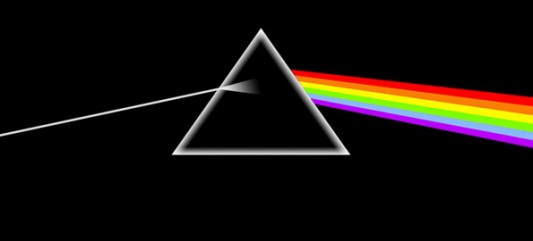

“Truth, through the lens of gossip” or “What is legal, through the lens of Law” (Pink Floyd Dark Side of the Moon Album Cover) When pressed to think about clandestine organizations, I’m often lead down the thought path towards action/sci-fi secret outfits such as Nick Fury’s S.H.I.E.L.D., James Bond’s MI6 (though this is actually a real government organization), and George Orwell’s dogs from Animal Farm. Often times I’ll even muse about how awesome it would be if one of these such organizations existed in real life.
In the last few days, these musings seem to have come to fruition with the recent uproar in regards to the awesomely named “secret organization” called PRISM.
I used quotes for two reasons. The first reason is that PRISM is hardly a secret. The plans have been available in the local planning office for the last nine months. By “local planning office,” I mean to say the internet and by “nine months,” I mean to say 5 years.
The second reason for my implicative use of quotation marks is that PRISM is a tool used by the National Security Agency (NSA).
PRISM is a kick-ass GUI that allows an analyst to look at, collate, monitor, and cross-check different data types provided to the NSA from internet companies located inside the United States.
So the NSA uses PRISM -my instinct here is to complain about acronyms. I’ve decided not to as my name is one of them- PRISM is a tool that collects data and this data is collected from internet companies.
Tech companies are legally required to share information under the Foreign Intelligence Surveillance Act (Fisa). Those requests have to be made via a Fisa court …. The companies are not obliged to make the process easier for the NSA.
From the Director of National Intelligence’s June 8th memorandum (please read this):
Under Section 702 of FISA, the United States Government does not unilaterally obtain information from the servers of U.S. electronic communication service providers. All such information is obtained with FISA Court approval and with the knowledge of the provider based upon a written directive from the Attorney General and the Director of National Intelligence.
Most importantly the information used cannot and I mean cannot:
be used to intentionally target any U.S. citizen, or any other U.S. person, or to intentionally target any person known to be in the United States. Likewise, Section 702 cannot be used to target a person outside the United States if the purpose is to acquire information from a person inside the United States.
So if all of this is true, where is the scandal? Why the uproar? Nobody in the US is being targeted without a reasonable tie to an international terror institution. Well, let’s have a “chat” with Edward Snowden to find out.
Recently Edward Snowden took it upon himself to disclose practices and policies used by the NSA. Practices and Policies which, in Edwards opinion, were immoral and inappropriate.
What I’m doing is self-interested: I don’t want to live in a world where there’s no privacy and therefore no room for intellectual exploration and creativity.”
In his recent revelation as the NSA whistle blower, Edward speaks out about the injustice he has witnessed.
The government has granted itself power it is not entitled to. There is no public oversight. The result is people like myself have the latitude to go further than they are allowed to,”
Supposing that the world was naive enough to believe that everybody followed the law as they should, there would be no problem with the NSA’s use of tools like PRISM.
The problem with this is that the NSA bends the laws to their own purposes. Just as lawmakers, cops, and even people avoiding speeding tickets do. Our legal system is a cacophony of loopholes and short cuts. When you work for the government, the law changes from “what shouldn’t I do” to “what all am I allowed to do” and “how far can I go with this.”
How can we challenge the gross misuse of United States Law?
Sources:http://en.wikipedia.org/wiki/PRISM_%28surveillance_program%29
http://en.wikipedia.org/wiki/Edward_Snowden
http://www.guardian.co.uk/world/2013/jun/06/us-tech-giants-nsa-data
http://gizmodo.com/what-is-prism-511875267
http://www.dni.gov/files/documents/Facts%20on%20the%20Collection%20of%20Intelligence%20Pursuant%20to%20Section%20702.pdfhttp://www.reddit.com/r/explainlikeimfive/comments/1fx8zs/what_is_prism/
http://news.cnet.com/8301-1009_3-57588253-83/what-is-the-nsas-prism-program-faq/
http://theweek.com/article/index/245360/solving-the-mystery-of-prism
http://www.guardian.co.uk/world/2013/jun/09/edward-snowden-nsa-whistleblower-surveillanceNote: When sifting through information concerning current events, I’ve found that the “facts” seem to change on a daily basis. These changes come from all sides. It seems that the need to be first has far outweighed any sort of journalistic integrity and this is very, very disconcerting. The government, the people, and the generally unconcerned all have constantly changing opinions and sources of info. I would just like to ask everybody to please use their best judgment when spreading information. Gossip is the worst (out of all the things). Remember we are all in this life together. The only way to Be Always Growing is to be doing this together. That being said: I welcome any and all corrections that you may have. Thanks for reading-JR
-
Apple Cider Vinegar for Diabetes
Lately, bloggers, Pinterest and the internet in general have flocked towards apple cider vinegar—and why not? The list of its purported benefits goes on for a while! But how much of it is hype and how much if it is actually backed by science? First, let me begin by saying that in this article, “apple cider vinegar” will refer to the raw form only. It should have the “mother” of the vinegar, which appears as strand-like particles. The clear stuff you can get for under a dollar at Walmart has been processed and does not carry any of the benefits of raw apple cider vinegar.
My research on the topic has yielded both good and bad results. First, the good.
There seems to be a strong indication of apple cider vinegar’s effects on blood sugar levels. In a 2007 study of 11 people with Type 2 diabetes, taking two tablespoons of apple cider vinegar before bed was shown to lower their glucose levels in the morning by about 4-6%.
Further to the above, WebMD goes on to tell us:
A 2006 study showed evidence that vinegar could lower cholesterol. However, the study was done in rats, so it’s too early to know how it might work in people.
NOTE: Apple cider vinegar is VERY POTENT! It must always be diluted before being ingested, whether with water or juice, doesn’t matter.
Now the bad. There are a lot of folk legends running amok online (as is the way of the interwebs), that ACV will cure everything from an upset stomach to cancer. However, I would strongly advice caution in this matter. For example:
A few laboratory studies have found that vinegar may be able to kill cancer cells or slow their growth. Observational studies of people have been confusing. One found that eating vinegar was associated with a decreased risk of esophageal cancer. Another associated it with an increased risk of bladder cancer.
That sounds like a bit of a gamble!
Additionally, a number of sources (WebMD among them) note that ACV, being an acid, can harm the enamel of your teeth. However, this Reader’s Digest article recommends it for whitening your teeth without any kind of warnings whatsoever. Not cool, Reader’s Digest. Not cool. You know folks are going to start following this advice blindly.
In that particular scenario, The Herbivore Hippi tells us the following:
Dentists recommend that if you use it as a mouth rinse you must be sure to rinse your mouth thoroughly! The acids, if used too often or not rinsed away will not only soften your teeth but also wear away at the tooth enamel even though it can strengthen brittle teeth. Apple cider vinegar is incredibly potent so always remember to dilute it!
I’d be interested to see how the cancer and cholesterol studies pan out down the road, but in the meantime, those of you with diabetes might consider talking to your doctors about including apple cider vinegar into your diets/daily routines. Please do not just jump into this without consulting your healthcare provider, as vinegar containes chromium and can alter your insulin levels. Your doctor will be in the best position to alter/adjust your current medication to account for the change in insulin levels.
Resources
Health Benefits of Apple Cider Vinegar (ACV)
Reader’s Digest: 8 Health Benefits of Apple Cider Vinegar
Apple Cider Vinegar for Healthy Teethacv, amount of apple cider vinegar, apple cider vinegar, apple cider vinegar cancer, apple cider vinegar health, apple cider vinegar price, apple cider vinegar safe, apple cider vinegar study, apple cider vinegar sun burn, best vinegar, block of seagulls, bloggers, brush teeth, cannabis, cavity, Dentist, diabetes, doctor, glucose, health, herbivore diet, herbivore hippi, hippie, insulin, medication, physician, pinterest, pitnerest, raw, raw foods, readers digest, science, vinegar, vinegar health, webmd -
Your Old Android Phone Can Save the Rainforest


Deforestation in Indonesia, Creative Commons: Rainforest Action Network, 2009 (Source) “Save the rainforest” is a phrase that has been so widely used we don’t even consider the importance of its meaning anymore. Afterall, what can you really do to help save the rainforests of the world besides donate money you don’t have or sell everything you own, buy a plane ticket, and tape yourself to an ancient Indonesian tree full of ants? Finally, there is a simple solution for those of us who want to conserve the world’s forests without all the dirty work.
How many times have you upgraded your cell phone? Now that you have thought about it, was that phone actually broken or just too slow for you? Talk about first world problems.
E-waste is a real issue, only furthered by our insatiable thirst for electronics. In a similar vain is the problem of deforestation, which can only be described as our systematic destruction of the natural world we live in for money, farming, or the production of goods. However, a San Fransisco start-up named the Rainforest Connection has a elegant solution for both.

The deforestation of Borneo’s rainforest. http://www.habitatadvocate.com.au/ Taking an old Android cell phone equipped with a custom app, Rainforest Connection hopes to strategically place these ordinary devices within the Indonesian rainforest. Constantly enabled, they work by detecting abnormal noises, like the roar of a poacher’s chainsaw, alerting the nearby rangers so they may intervene. Equipped with a listening radius of .5km and powered by the sun, this becomes a much more effective method of enforcement by simply stopping deforestation of the rainforest before it starts – far more useful then aerial maps that only show the barren landscape where the chopping has already been done.
Founder Topher White also envisions the day in which others can participate in the activity, even designing self-contained boxes that can be simply hung up and turned on, coupled by a free Android app with real-time alerts:
We want to make people feel like they are taking part in the dramatic events on the front lines of environmental protection…We’ll ultimately rely upon locals to intervene when an ‘event’ is detected. Making it simple, effective and accessible for them is our first priority.
For now, the organization is working with specific partners to use new phones for the project. However, the day isn’t far when the average Joe can donate his old phone to the cause. It’ll make the upgrade to the HTC Moto Mega Droid II.7 much more justified.

Rainforest Connection has the potential to save the rainforest. http://www.ecoblog.it Sources:
NewScientist via Engadget
amazon, android app, android phone, borneo, Brazil, conservation, conservationism, deforestation, e waste, first world problem, first world problems, htc, htc moto, indonesia, indonesia rainforest, internet, ngo, rainforest, rainforest connection, rainforest destruction, san francisco, save the rainforest, smart phone app, solution, topher white -
Turmeric & Tumors: How The Spice Can Help
What do head, neck, skin and breast cancer, rheumatoid arthritis, upset stomachs, Alzheimer’s and melanoma have in common? In scientific studies, turmeric is either proving or showing solid results of kicking all of the above’s ass.
Turmeric is a spice of Asian origins and has a long history of being used as both food flavoring agent and medicine in the Indian subcontinent as well as China. The American Cancer Society confirms that curcumin (an active ingredient in turmeric) demonstrates some anti-cancer effects.
Several types of cancer cells are inhibited by curcumin in the laboratory, and curcumin slows the growth and spread of some cancers in some animal studies. Clinical trials are underway to find out if it can help humans as well.
Curcumin is being studied to find out whether it helps other diseases such as arthritis, Alzheimer’s disease, and stomach ulcers. It is also being studied to see whether it can help lower “bad cholesterol” and improve outcome in kidney transplants. A few early studies have been done in humans, but much more human research is still needed to find out if curcumin can be effective in these uses.
From the University of Maryland Medical Center, we learn that this same curcumin in turmeric is a powerful antioxidant.
Antioxidants scavenge molecules in the body known as free radicals, which damage cell membranes, tamper with DNA, and even cause cell death. Antioxidants can fight free radicals and may reduce or even help prevent some of the damage they cause.
In addition, curcumin lowers the levels of two enzymes in the body that cause inflammation. It also stops platelets from clumping together to form blood clots.
They go on to note a string of conditions for which turmeric may be of help, including stomach ulcers, heart disease, cancer, osteoarthritis and indigestion.
Related Article: The Power of Hemp Seeds: Behold Powerful Nutrition!
Several UCLA studies focus on turmeric and curcumin. The first was a 2005 study done by Marilene B. Wang, M.D. and showed that curcumin suppressed the growth of head and neck cancer in mice. Another study in 2010, again conducted on cells and then mice, found that
curcumin suppressed head and neck cancer growth by regulating cell cycling.
Drs. Wang and Eri Srivatsan, Ph.D. have both been studying curcumin and its cancer-fighting properties for over seven years.
Turmeric is also known as a potent anti-inflammatory agent. Dr. Randy J. Horwitz, Medical Director of the Arizona Center for Integrative Medicine and Assistant Professor of Clinical Medicine at the University of Arizona College of Medicine (Tucson), writes in his paper for the American Academy of Pain Management:
Turmeric is one of the most potent natural anti-inflammatories available
Referencing a University of Arizona study on rats, Horwitz concludes that
turmeric completely inhibited the onset of rheumatoid arthritis,
in the vermin.
Additionally, curcumin extracts in pill form have been shown to reduce the size of Alzheimer’s-associated brain plaque by 30% in just one week in clinical trials published in the Journal of Neurochemistry.
Related Article: Black Seed: From King Tut to Now
One week! This is just the tip of the iceberg. As more and more research is being done (and turmeric has been a very hot topic as of late), the health benefits of this amazing spice just keep increasing.
ProTip: it’s also great in omelettes.
Resources
American Cancer Society: Turmeric
University of Maryland Medical Center: Turmeric
Primary Compound of Turmeric Kicks Off Cancer-Killing Mechanisms in Human Saliva
The Amazing Health Benefits of Turmeric
Efficacy and mechanism of action of turmeric supplements in the treatment of experimental arthritis.
Discovered: Indian spice reduces Alzheimer’s symptoms by 30% -
Kim Jong-il’s Personal Chef Recounts Life in the Hermit Kingdom


http://www.abc.net.au/news/2007-03-07/north-korean-leader-kim-jong-il/2211588 I’ve been living in South Korea for about the last three years, and naturally I’ve taken quite an interest in most everything Korean. Pulitzer Prize-winning novelist Adam Johnson has a supremely interesting piece up in GQ that helps illuminate the mindset of deceased dictator Kim Jong-il and the Hermit Kingdom he inherited.
Johnson had six interviews with Kenji Fujimoto (an alias), a man who was Kim Jong-il’s personal sushi chef for thirteen years. The man’s story is powerful and informative, although one gets the distinct impression that Fujimoto isn’t the best of company himself. According to the chef, this was one of the reasons that he was trusted enough by Jong-il to be a member of his entourage for over a decade. The Johnson account recalls several instances in which Fujimoto had the courage or reckless audacity to oppose the will-be Dear Leader. He was the only person who stood up to the diminutive despot.

http://tiananmenstremendousachievements.wordpress.com/tag/kenji-fujimoto/ Knowing almost nothing about North Korea and the horrors it perpetrated, Fujimoto agreed to move there for one year in 1982 to train Pyongyang chefs in the art of preparing sushi. Soon after he met Kim Jong-il, although he initially had no idea that he was speaking to the the son of Kim Il-sung, who ruled the nation from 1948 to his death in 1994.
He and Kim Jong-il became something akin to friends, with the pair often playing traditional Korean board games together. He learned that Jong-il loved movies, particularly Arnold Schwarzenegger flicks, and was interested in foods that could increase his sexual vitality.
Related Article: North Korean Propoganda About Western World is Sadly Accurate
Fujimoto then returned to Japan after fulfilling his contract. However, he was contacted four years later with another job offer to be Kim Jong-il’s personal chef for three years. He was promised a high salary, an apartment in Pyongyang and a black Mercedes. Tempted by promises of wealth, he returned to North Korea in 1988.
In addition to cooking carefully coordinated meals for the heir to the North Korean throne, Johnson describes the sushi chef’s worldwide culinary wheeling-and-dealings as well as describing his relationship with Kim Jong-il:
“For special occasions, Fujimoto traveled great distances to procure ingredients for elaborate banquets. He would take a North Korean Air Koryo plane to Beijing, then a commercial airliner to either Moscow or Prague, places Kim stored a private jet. From there, it was off to France for wine or Denmark for ham. Mostly he flew to Japan to buy fish, where the first stop was always a ramen stand at Tsukiji run by Fujimoto’s old friend Inoue. Fujimoto brought many officials to eat Inoue’s noodles, including Kim Jong-un’s brother Kim Jong-chul.
Fujimoto became part of Kim’s entourage, joining him for pheasant hunts and tours on Kim’s bulletproof train. The two went horseback riding, bowling, roller-skating, and swimming. In Wonsan, Kim had an underground bombproof Olympic swimming pool constructed with his image emblazoned in gold tiles on the bottom. North Korean engineers had even built him a motorized boogie board.”
Not long after arriving for his second tour of duty, Kim made it known that he wanted Fujimoto to stay in North Korea for ten more years. Incredibly, the chef agreed to the terms. Kim paid for the expensive separation and even arranged for him to be married to a well-known singer in Korea. The couple had two children, the youngest of which was named Jong-un. Although Fujimoto claims it’s a coincidence that one of his children’s names is the same as Kim Jong-il’s youngest son and current North Korean despot, that seems unlikely. According to Fujimoto and Johnson, the sushi chef was handpicked to be a nanny and playmate of the Kim children; naming his child after Kim’s seems like a safe bit of political patronage.
Fujimoto’s account also details some of the events after Kim Il-sung’s death in 1994 when Kim Jong-il wielded his considerable and Machiavellian political acumen to secure his ascension to power.
Soon after becoming Supreme Leader, a large famine struck the nation. Before its onset, crop production of North Korea was steadily rising, a rare and slight success story for the Kim dynasty. The agricultural minister then in charge, supposedly the architect for this success, was honored for his efforts by being interred in the Patriots’ Cemetery upon his death.
Johnson recounts Kim’s reaction to the initial agricultural success and later the subsequent insanity at its ultimate failure:
“…Kim Jong-il wanted more. He ordered the new agricultural minister to improve crop production by cutting down trees on hillsides to make room for terrace farming. Come the next rainy season, that deforestation would cause the flash floods that would destroy the crops that would cause the famine that would slowly kill 2 million people.
As the famine unfolded, according to Bradley K. Martin, a preeminent North Korea expert, Kim Jong-il had his new agricultural minister executed by firing squad. As the famine became devastating, Kim Jong-il had the former agricultural minister’s body exhumed from the Patriots’ Cemetery and subjected to a posthumous execution by firing squad.”
Fujimoto was arrested in Tokyo in 1996 on a trip to the Tsukiji Fish Market in Tokyo. He was repeatedly questioned by authorities over a period of 18 months. After understanding Fujimoto’s position and importance, officials moved him to the south of Japan to work at a sushi bar. They also provided him with books describing North Korean gulags and the myriad other atrocities committed in the Hermit Kingdom.
Johnson details Fujimoto’s encounter with a would-be assassin:
“One night, a Korean man came to see Fujimoto at the sushi bar. By his accent, Fujimoto could tell he was from the North. He said, “Someone sent me here, and after you finish your work, we’re going to talk about something.”
Fujimoto knew a killer when he saw one. But after work, the man didn’t return. In fact, Fujimoto never saw him again. For the first time during all his escapades in North Korea, Fujimoto became afraid. He was also depressed. He couldn’t get the torture books out of his head. He was drinking a lot. He was lonely and wanted to return to Pyongyang, to his wife and children. On July 9, 1998, the Japanese agreed to release him. But first they extracted a promise: If he ever left North Korea again, he was to call them and report in.”
Fujimoto honored his promise with the Japanese officials. He called them on a trip to China while shopping for exotic foods for Kim. However, his hotel was bugged and a suspicious Kim put the chef on house arrest for 18-months. This provided the impetus for his desperate desire to escape back to Japan.
The sushi chef’s full account is well-worth the longish read. He goes on to detail how he ultimately escaped from North Korea in 2001 by enticing Kim Jong-il with sea urchin roe, a delicacy the Dear Leader had never experienced. On a trip to Japan to procure the roe he slipped away from his handlers and went into hiding.
The perils of being close to dictators, the loyalty they demand and the propaganda the exude seem to have had an effect on Fujimoto. During his interview he states:
“If Kim Jong-il were here right now,” Fujimoto said, “I would kneel down and apologize. I’d admit that I left North Korea and I disclosed secrets about North Korea. I am a traitor, an absolute traitor.”
Fujimoto was invited back to North Korea by Kim Jong-un in June 2012. He describes his reunion with the leader:
“I jumped up to hug him, shouting ‘Comrade General’ and instantly burst into tears … He hugged me back, the first hug in 11 years. I said, ‘Fujimoto the betrayer is back now,’ and I apologized for all I did and all I disclosed about him. He said, ‘OK, don’t worry anymore.”
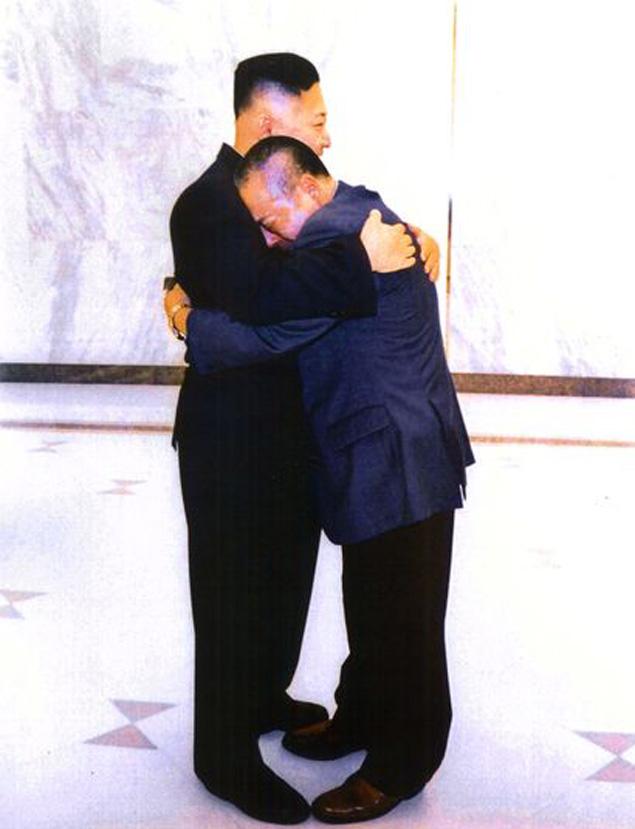
http://www.nydailynews.com/news/world/kim-jong-il-personal-sushi-chef-visits-north-korea-offers-rare-latest-state-closed-off-country-article-1.1163090 He also describes how different Pyongyang looks compared to just ten years ago:
“I went window shopping from the third day. There are plenty of goods in shops. That’s already a big difference. There was nothing there 10 years ago … I guess it changed drastically since the Kim Jong Un era started.”
There are reasons to be skeptical of some of Fujimoto’s claims. His wife and children still live in the North and it’s entirely understandable that some of his lavish praise for Kim Jong-un is designed to protect them. He has written several books detailing his experiences as Kim Jong-il’s personal chef, and it’s possible he’s sensationalizing their relationship to boost sales. He could also be a man turned by the despotic and luxurious charm of the Kim dynasty. Or he could be a man who is genuinely ashamed of his betrayal.
Who knows? Maybe he’s all of things at once, with layers of deceit and honestly carefully wrapped like the sushi rolls he was paid to delicately craft. At any rate, it’s a rare glimpse into the most secretive and tyrannical nation in the world.
Sources:
http://edition.cnn.com/2012/09/19/world/asia/north-korea-chef/index.html?hpt=hp_c1
Cults of Personality, daves esl cafe, english teacher abroad, english teacher pay, english teacher requirements, esl, Hermit Kingdom, how much pay korea teacher, Japan, Kenji Fujimoto, Kim Il-sung, Kim Jong-il, Kim Jong-un, korea english teacher, korea esl, north korea, Pyongyang, teaching abroad, teaching in korea, teaching jobs, Tokyo -
Solar Power Going the Distance! Literally.


http://www.orascomhdblog.com Solar powered cars are something of the past, old news, been there done that. Shocking, I know. But I bet you’ve never thought about a solar powered airplane! Nope, I can’t say that I have either. In fact, when researching the new/old technology behind blimp ships and space shuttles capturing asteroids, one overlooks the thought of solar energy powering any of these vessels.
YES! They did it! The brilliant among us created solar powered fliers, and without any of us demanding it either! But then again who would want to fly Air Japan on solar energy and find themselves stuck in overcast for 12 hours, that’d be a big uh oh. Lets not “fly” ahead of ourselves just yet.
Solar Impulse has created just that miracle plane we are talking about. The Solar Impulse HB-S1A has a wingspan of 208 ft. and weighs only 3,500 lbs, not all too heavy because of its carbon fiber structure, and most of the weight comes from the solar panels. It was able to attain an altitude of 30,300 feet and stayed aloft for a record 26 hours, 10 minutes, and 19 seconds at an average flying speed of 43 mph. In fact, the plane continued to fly throughout the night on energy stored in the day.
This HB-S1A vessel was actually a prototype and in 2015 Solar Impulse plans to launch Solar Impulse HB-S1B which is expected to circumnavigate the Earth. I think the coolest thing about this newer model is that it will incorporate nanotechnology to help with battery storage. I am always excited about prospective new technology and its uses!
Can you imagine the implications of an airplane that flies on solar power? The cost reduction in substituting jet fuel for something easily attained on a clear day? How about just the thought of solar power being so effectively researched and put into use that our government will be forced to use it as an alternative source of power?! On a bad note, those poor birds; they don’t even stand a chance with more things in the air… At least we can say that we got all the needed Vitamin D for the day when taking one of these bad boys out for a spin! Move over solar salamanders! Your’re yesterdays news.
Cheers!
Research:
Time: Solar Powered Plane flies around US
Wondergressive: Capture an Asteroid
Wondergressive: The Drones are Coming
-
Aspartame In Diet Soda Responsible For Destroying Kidney Function


http://img2.timeinc.net/health/images/gallery/eating/aspartame-400×400.jpg Aspartame has always been a topic of great debate. It is found in highest concentrations in diet sodas, and proliferates markets and restaurants across more than 90 nations. Now, a study published in the Clinical Journal of the American Society of Nephrology determined that sugar sweetened soda increases the odds for kidney function decline. 3,318 women participated in the study for a number of years as they consumed diet soda that contained artificial sweeteners, most notably aspartame. Two or more diet drinks per day led to a double risk in fast-paced kidney decline. The study was conducted by scientists from Brigham and Women’s Hospital in Boston. Another study published in the American Journal of Clinical Nutrition showed that aspartame is linked to non-Hodgkin lymphoma and leukemia.
There are positives to using artificial sweetners; according to Mayo Clinic, aspartame and other artificial sweeteners do not contribute to tooth decay and cavities, and they help to control blood sugar in diabetes patients. But so does stevia, without the health risks. The dangers of aspartame, like many other substances, have been documented since its inception. It’s not uncommon to come to the conclusion that, at the very least, aspartame provides us with minimal health benefits and has great risks attached to it.
Why is aspartame still so widespread despite the supposed health risks?
In the mid 60′s a chemist named James M. Schlatter accidentally created aspartame while trying to create a cure for stomach ulcers. He worked for a comapany called G.D. Searle. With the patent for aspartame in hand, Searle tested aspartame and had it approved by the FDA. Health effects began to arise that were potentially associated with aspartame and G.D. Searle came under suspicion for faulty testing practices.
By 1980 the FDA banned aspartame from use after having independent scientists study the sweetener’s relationship with brain tumors. Although they were unable to find a connection, they did cite a lack of unanswered questions regarding cancer in laboratory rats. On the official FDA board questionnaire, 12 out of 69 scientists expressed serious concerns regarding the safety of aspartame.
In 1981 former Secretary of Defense and then Searle Chairman, Donald Rumsfeld, pushed to get aspartame approved. Ronald Reagan, who had just taken his throne of power, told his new FDA commissioner Arthur Hayes Hull, Jr. to appoint a 5-person Scientific Commission to review the FDA’s ban. 3 of the 5 scientists believed aspartame was safe, while the other 2 had serious doubts. Under Hull, aspartame was approved for use in dry goods.
It is clear that despite what the board cliams, the safety of aspartame is not ‘clear-cut’. It has already been through a process of being banned and unbanned multiple times, and were it not for the decision of a single scientists, it would not be used today.
You don’t need the diet soda anyway. Reach for the tea instead!
Sources:
http://cjasn.asnjournals.org/content/6/1/160.abstract?sid=fb9e39ed-6318-46de-9bf1-d497348f0756
http://www.ncbi.nlm.nih.gov/pubmed/23097267
http://rense.com/general33/legal.htm
http://online.wsj.com/article/BT-CO-20130602-700834.html
http://www.mayoclinic.com/health/artificial-sweeteners/MY00073
http://informahealthcare.com/doi/abs/10.1080/10408440701516184
http://www.amazon.com/Stevia-Sweetener-50-Count-Packages-Pack/dp/B00374ZKQ0
-
Foraging in the Modern World
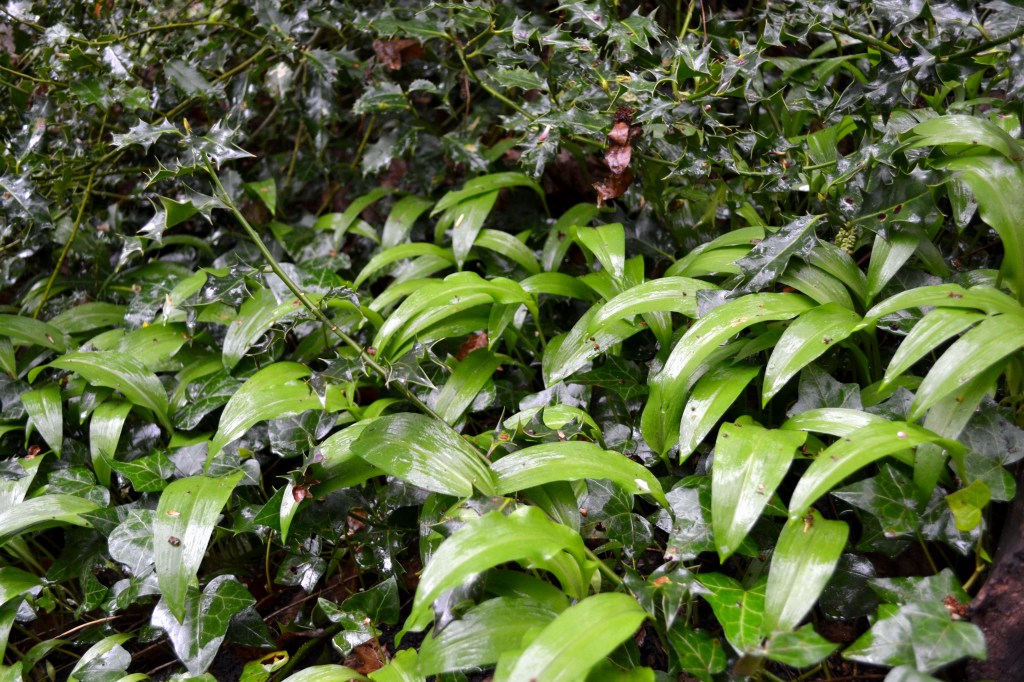
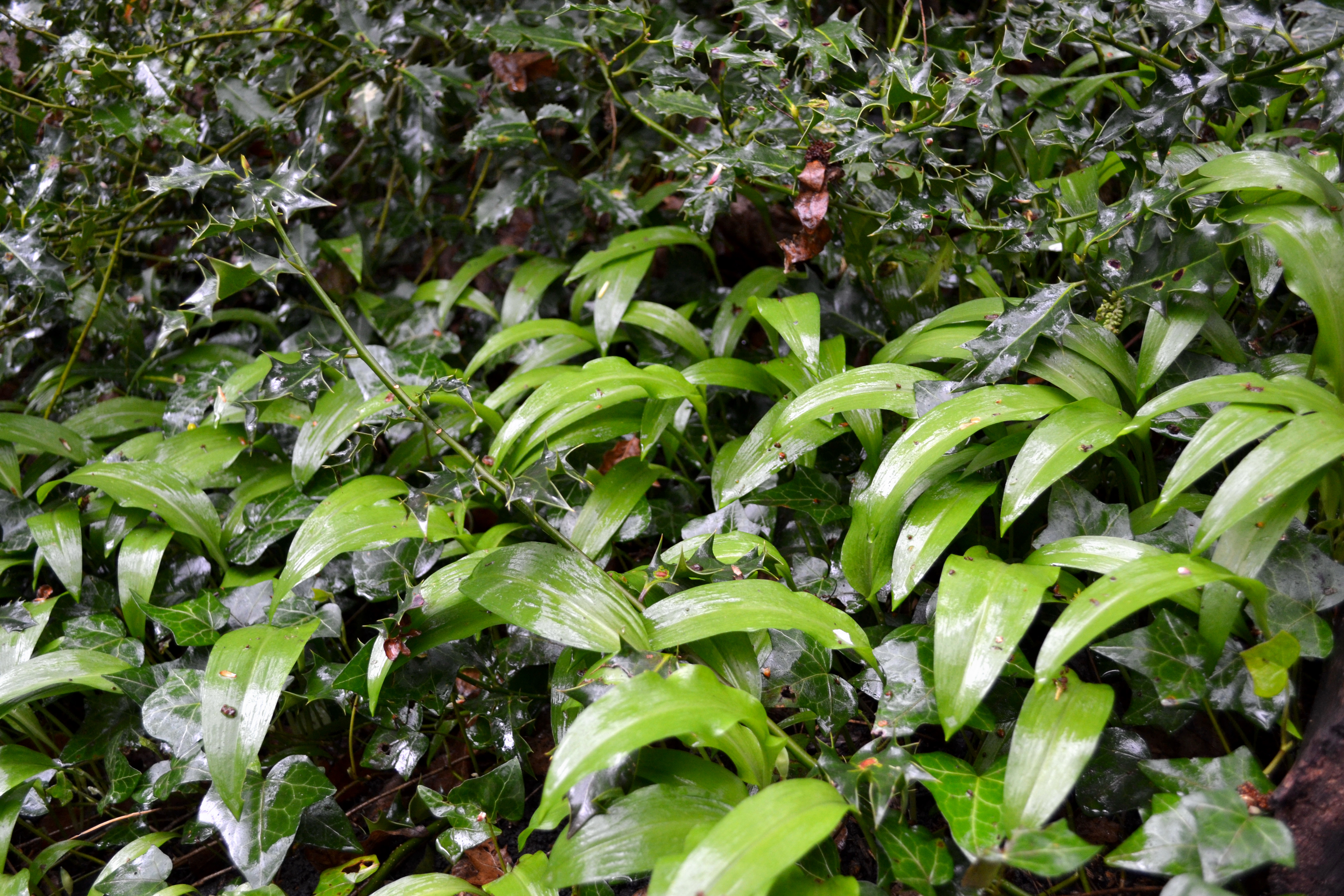
From: http://susaneatslondon.com/2012/04/11/foraging-and-cooking-with-wild-garlic/ “The apple doesn’t fall far from the tree” is what all the old gaffers used to say. The trick to this is finding the tree which bears the delicious fruit. While this saying applies to a whole host of generalized concepts, I’m speaking literally about finding that fallen apple and eating it.
Foraging is finding food and eating it. It is a simple concept which can be metaphorically extrapolated into all areas of human existence. When we need something, we go and find it. Whether we are searching for nuggets of gold, information, or delicious legumes, there are many tricks of the trade that transform mere scavenging into the art of foraging.
The beauties of foraging lie all around you. In parks, forests, gardens, run down abandoned lots, and even your own back yard you can find edibles to fill your belly with. Are you confused about where to start? Well aside from going outside and looking-with those eyeball things attached to your brain, there are many resources available for all levels of foragers.
FallingFruit.org aims to map out all of the foods. In their about section:
Falling Fruit is a celebration of the overlooked culinary bounty of our city streets. By quantifying this resource on a map, we hope to facilitate intimate connections between people, food, and the natural organisms growing in our neighborhoods. Not just a free lunch! Foraging in the 21st century is an opportunity for urban exploration, to fight the scourge of stained sidewalks, and to reconnect with the botanical origins of food.
Mmmm… connecting with the botanical origins of food. Foraging cuts out the middles. The only processing that takes place is inside your, uh, insides and it is a great way to spend time with your friends, kids, enemies, and political representatives.
Some cities are taking foraging very seriously. The City of Seattle is turning an overgrown lot into a foraging park for locals. Beacon Food Forest will include apples, pears, plums, grapes, blueberries, raspberries and whatever else they decide to grow. This is really amazing in a world where everybody is vying for a power increase. It isn’t every day you see a major city actually giving back to its constituents.
Freeganism is foraging applied to the corporate environment. As more radical cousin, freeganism aims to spread awareness:
In the globalized system dominated by a relative handful of corporations, vital resources like food and housing are wasted while the needs of hundreds of millions go unmet. All manner of consumer commodities are produced cheaply, offered for sale at high prices, and often discarded unsold by corporations that dismiss the waste as a cost of doing business. These corporations promote disposable goods over reusable ones, design rapidly obsolete products, and ensure that repair is more expensive than replacement. Enormous volumes of still-usable goods go to landfills that poison the exurban communities pressed into hosting them, with a disproportionate impact on the poor and disenfranchised. Freegans put this waste to practical use by keeping it out of the waste stream.
The main method utilized by freegans is commonly referred to as dumpster diving. This is no ordinary dumpster diving. Freegans clean out the dumpsters of grocery stores, bakeries, restaurants, and many other businesses. A lot of the time companies discard “waste” purely because of expiration dates. These dates do not necessarily mean that the food is bad. What they do imply is that you should precede with caution before consuming. As many of us have likely preformed the smell-the-milk-before-drinking-because-it-expired-three-days-ago-but-I’d-rather-not-buy-a-new-carton-just-yet test, we all have a bit of freeganism in our veins.
So there are many ways to go about finding a no-cost meal. Foraging for food is a wonderful activity that inspires community, nutritional education, and even some radical political movements. Forage on!
Stay tuned, in the next few weeks I’ll have a follow-up with photos and information on food that I’ve foraged!
Sources:
http://www.npr.org/blogs/thesalt/2013/04/23/178603623/want-to-forage-in-your-city-theres-a-map-for-that
http://en.wikipedia.org/wiki/Foraging
http://en.wikipedia.org/wiki/Freeganism
http://www.life123.com/food/sides/beans/list-of-legumes.shtml
http://www.npr.org/blogs/thesalt/2012/02/29/147668557/seattles-first-urban-food-forest-will-be-free-to-forage
http://freegan.info/https://wondergressive.com/2012/08/15/edible-landscapes/
Other Wondergressive Articles:
Enslaved Ants Regularly Stage RebellionA Delicious Cure – Honey as an Antibiotic & Much, Much, More
Wonder about your world…

Take the plunge down the rabbit hole of insanity and wonder in this fast-paced, nonstop psychological thriller that will leave you questioning the very nature of reality and beyond. Part thriller, part romance, part existential horror, A Dream of Waking Life delves into lucid dreaming, psychedelics, existential ontology, video games, the nature of love, the nature of reality, and more.

Mendel’s Ladder delivers an adrenaline-fueled journey set on a dystopian future Earth, brimming with high-stakes action, adventure, and mystery. This epic series opener plunges readers into a world filled with diverse cultures, heart-pounding battles, and characters who will captivate your heart and imagination.

“E.S. Fein is raising the bar for quality as it’s a very well-written and thought-provoking book…There are points and themes in the story that could be discussed for eons as people will have their own idea on where it leads. It’s a book I would highly recommend.” – Andy Whitaker, SFCrowsnest

 Wondergressive
