-
Did You Know That Certain Plants Do Division?
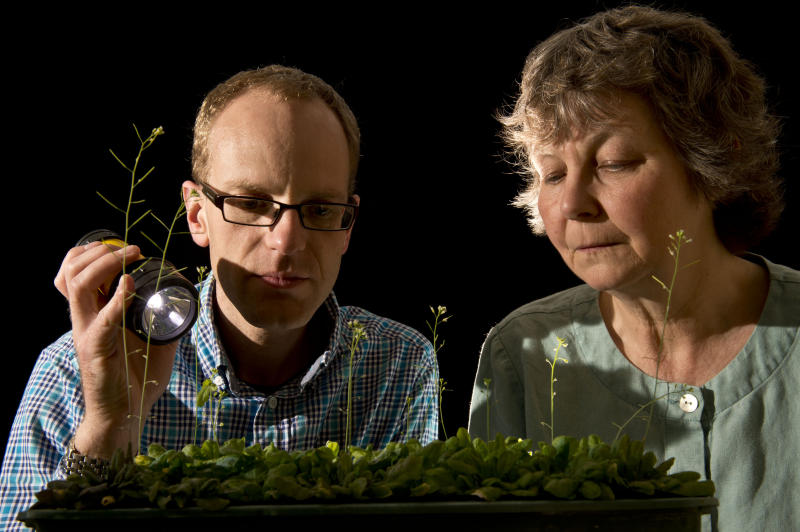

Plants Do Division http://news.jic.ac.uk/ I thought that only humans can do arithmetic, but plants do division as well. I guess a brain with a neocortex is not required. New research shows that arabidopsis plants perform an arithmetic feat to know how to distribute stored energy during the night when there is no light, preventing starvation.
Plants get their energy from light through a process called photosynthesis. This involves breaking down carbon dioxide compounds into sugars. And we all know what awesome byproduct that gives us; oxygen! So during the day they store sugars, and during the night plants do division in order to distribute the sugars at a steady rate. This insight comes from new research done by the scientists at the John Innes Centre and found through the open access journal eLife.
It is vital that plants do division in order to be able to grow properly. Learning more about this process has some implications, such as possible plant hacking in order to achieve higher crop yields. This is already being done with GMOs.
Plants do division during night time. There are certain “mechanisms” in the leaves that measure how much of the starch is stored and how much time will pass until the sun rises. Plants also have a sort of an internal “biological clock” which allows them to guess when dawn will come. There are three clock genes that work together like a seesaw. When dawn comes, these genes instruct the plant to make two proteins, CCA1 and LHY. These proteins tell the plant that it is daytime. During the day these are destroyed, which allows for the third protein, TOC1, to be made. This tells the plant that it is night time. That last protein also tells the plant that it’s time to make the first two, so the whole process cycles again.
According to Professor Alison Smith,
the calculations are so precise so that plants prevent starvation but also make most efficient use of their food.
Using up the starch too fast will induce starvation, while using it up too slow will waste the unused starch. Scientists predict that there are two molecules that encode the information about how much starch is stored at a given time and time until dawn breaks. Let’s call these molecules S and T for the time being. The rate at which starch is consumed is set by the ratio of S molecules to T molecules. Because a ratio is actually a fancy way to say division, scientists are confident in the claim that plants are division experts.
Sources:
http://elife.elifesciences.org/content/2/e00669
http://news.jic.ac.uk/2013/06/plants-do-sums-to-get-through-the-night/
http://arabidopsis.info/InfoPages?template=arabidopsis;web_section=arabidopsis
http://www.plantsci.cam.ac.uk/research/webb/plantTime/clock.html
alison smith, arabidopsis, arithmetic, biological clock, carbon dioxide, consciousness, division, DNA, enzymes, genes, GMO, gmos, john innes centre, neocortex, open access journal, oxygen, parts of air, photosynthesis, plant type, plants, plants alive, plants consciousness, plants do math, plants math, research, science, starvation, sugars -
Lightning Strikes! A Sit and Learn About Lightning
Often times we as humans struggle with various road blocks in our lives- in whatever it is that we’re trying to accomplish. It’s hard, frustrating and even annoying. Time seems like it is never going to turn around for the better (as if time was real- HAH!). Then suddenly a BOLT of INSPIRATION STRIKES. In honor of these moments of sparked creativity, I’ve decided to pay homage to the O.G. bolt: Lightning.
Some Cold Hard Facts About Lighting
Lightning is a giant discharge of electricity accompanied by a brilliant flash of light and a loud crack of thunder. The spark can reach over five miles (eight kilometers) in length, raise the temperature of the air by as much as 50,000 degrees Fahrenheit (27,700 degrees Celsius), and contain a hundred million electrical volts.
That’s right. You’re just sitting outside in the rain trying to enjoy a torrential downpour when the comfortable 83 degree air temperature turns suddenly to a most certainly uncomfortable 50,083 degrees of electrical hell. Some religions (none on record) believe that being struck by lightning is a direct symbol of your “existential deep-fry-edness” (copyright Wondergressive 2013).
And have you ever noticed just how many times a single bolt of lightning actually strikes?
The term lightning flash is used to describe the entire discharge, which takes on the order of 0.2 seconds. But a flash is usually made up of several shorter discharges which last less than a millisecond and which repeat rapidly enough that the eye cannot resolve the multiple events. These individual discharges are called strokes. Sometimes the strokes are separated enough in time for the eye to resolve them, and the lightning appears to flicker.
The answer is no, considering that you’re eyes aren’t capable of seeing that fast. But lets just say that you perceive time much slower than the rest of us. This is what it would look like
That’s slowed down to about 7207 images per second. Crazy, huh? Lightning needs to be slowed down to be properly viewed primarily due to the fact that a single bolt is traveling at about 62,000 miles per second–one-third the speed of light.
Well this rather silly website gives a simple explanation of how it works: Negative static charge builds up in the atmosphere while positive charges are pull upwards by thunderheads. Once there is enough electrical charge on either side, the insulating properties of the air are overcome. Checkmate wind, I’m taking this tree out!
Sources:
http://www.ucar.edu/communications/infopack/lightning/kids.html
http://news.nationalgeographic.com/news/2004/06/0623_040623_lightningfacts.html
http://hyperphysics.phy-astr.gsu.edu/hbase/electric/lightning2.html -
What Your Poo is Trying to Tell You

Unicorn Poop Cookies
http://www.instructables.com kristylynn84Poop, the good old number two; everyone does it. It’s a healthy part of being a living animal, and it turns out it can tell you a lot about your body and how your body is reacting to your diet. The important things to consider when observing your stool (a scientific word for poo) are the color, shape, and ease of passage.
Stool color covers the spectrum, but only some colors are considered normal. The Puristat website agrees:
The color of your stool can tell you all sorts of things about the health of your digestive system, ranging from what you ate the previous night to having dangerous bleeding in your colon.
Gastroenterologist Michael F. Picco M.D. states that:
All shades of brown and even green are considered normal.
Only rarely does stool color indicate a potentially serious intestinal condition.
Stool color is generally influenced by what you eat as well as by the amount of bile — a yellow-green fluid that digests fats — in your stool. As bile pigments travel through your gastrointestinal tract, they are chemically altered by enzymes — changing the pigments from green to brown.
Both websites agree; brown and green are good colors for poo. Colors divergent from brown or green are a strong reason to go see the doctor. While some abnormal colors are more serious than others, all indicate a problem with the digestive tract. Black and any shade of red indicate bleeding within the system and lighter colors indicate a blockage of the bile duct or a lack of bile for some other reason.
Related Article: Salamba Sirsasana: It’s Time to do a Headstand!
The shape of your poo is also important. The Bristol Stool Chart defines 7 different types of stool with descriptions. The Continance Foundation of Australia explains the chart saying:

http://www.continence.org.au Every person will have different bowel habits, but the important thing is that your stools are soft and easy to pass – like types 3 and 4 below.
- Type 1–2 indicate constipation
- Type 3–4 are ideal stools as they are easier to pass, and
- Type 5–7 may indicate diarrhoea and urgency.
I was strongly under the impression that a daily bowel movement was important for the digestive systems health. However, a helpful page on constipation and impaction, reviewed by the Harvard Medical School, informed me that:
Normally, people have bowel movements at fairly regular intervals, and stool passes out of the body easily without much straining or discomfort. Although the normal frequency of bowel movements varies from person to person, about 95% of healthy adults have a pattern that ranges from three times a day to three times a week.
The ease of passing a bowel movement can be affected by the amount of fiber, and fluids in a diet, or by the amount of exercise or medication in one’s life. For more information on how to keep normal, easy bowel movements head over to the Intelihealth page about constipation and impaction.
Related Article: AI Prescribes Better Treatment than Doctors
Another factor that can also be an indication of a health problem is the smell of your stool. Stool is not a generally pleasant smelling byproduct, but if it starts to smell particularly foul for an extended period of time, consider the factors at hand. If there has been no change in your diet it might be time to see a doctor.
Sources:
The New York Times- Looking Beyond Fiber to Stay ‘Regular’
Harvard Medical School Reviewed- Constipation and Impaction
Puristat- Understanding Bowel Movement Stool Color
Mayo Clinic- Stool Color: When to Worry
The Continance Foundation of Australia
Medline Plus- Stools Foul Smelling
Extra Reading for those Interested:
NDDIC- Gas in the Digestive Tract
io9- This scientific article about poop may have the best title in the history of peer-reviewed research (possibly NSFW figures)
National Institutes of Health- Let’s Talk About Bowel Control
#2, am I constipated?, body, constipated, constipation, diarrhea, diarrhoea, diet, excrement, feces, fiber, frequency, frequently, health, how frequently should I poop?, impaction, new york times, number 2, number two, poo, pooping, rainbow poop, shit, stool, toilet, Unicorn poop, unicorn poop cookies, waste -
The History and Legality of Cannabis Use Around the World

//
http://ray032.files.wordpress.com
*Note: This article is part of a larger report featured on Wondergressive entitled ‘Cannabis Cures Cancer and Everything Else: A Thorough History and Review‘ Copyright © 2013 [Eric Feinberg]. All Rights Reserved.Why is cannabis labeled as a schedule 1 drug, or in laymen terms, a dangerous, highly addictive substance devoid of any medical benefit? Tobacco has absolutely no medical benefits, is proven to cause cancer, is proven to kill hundreds of thousands of people worldwide, and is one of the most physically and psychologically addictive substances on the planet. However, tobacco, like alcohol, isn’t even scheduled. Additionally, cannabis is scheduled as even more dangerous, more addictive, and less medicinally beneficial then cocaine or methamphetamine, which are labeled as schedule 2 substances. As another example of the illogical scheduling process, psilocybin mushrooms, LSD, and DMT, which have been proven to be highly effective to cure cluster headaches as well as an invaluable tool inpsychotherapy, are labeled as schedule 1 drugs despite these psychedelics having little to no addiction potential. Are you starting to see how silly this is? So what gives? Let’s take a walk through history to find the answer.
Historical Use
Cannabis has an extremely long history of use. Although cannabis is indigenous to Central and South Asia, it spread all over the world very early in human history. While humans in Taiwan were growing hemp as early as 8,000 BCE, the historical use of cannabis as a physical and psychological medicine began over 5,000 years ago.
Related Article: Portugal Decriminalizes All Drugs; 10 Years Later the Results are Mind Blowing
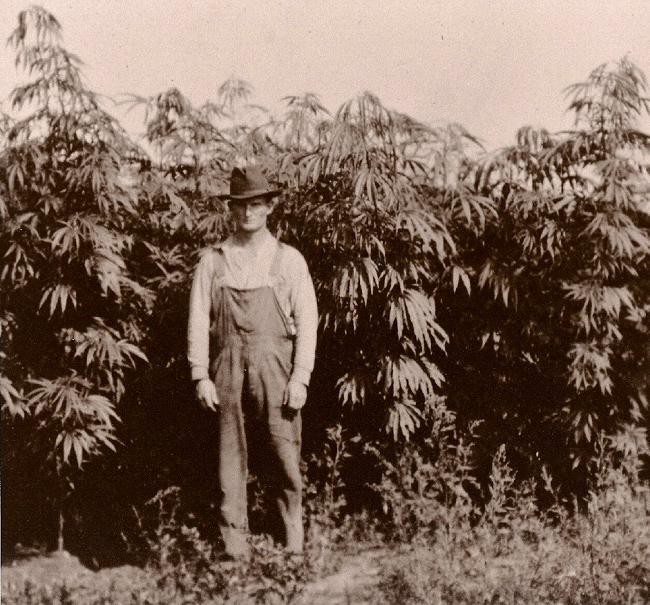
http://irelandcannabisinformation.files.wordpress.com Researchers even found over two pounds of still green, highly potent cannabis in a basket near the recently discovered 2700 year old Ice Man. It has been historically used by Jews, Christians, Muslims, Hindus, Taoists, Buddhists, and Atheists alike. Cannabis was even used by the ancient Greeks and Romans, as well as in medieval Islamic countries.
Cannabis is a natural human pastime, embedded into our epigenetic expression. It was used for centuries as a form of relaxation, as a tool for meditation during religious ceremonies, and as a way to foster creativity. Additionally, hemp is one of the oldest domesticated plants known. Hemp was used in various industries, optimizing productivity, efficiency, and waste management. Then one day, cannabis and hemp were suddenly seen as cesspools of sin originating from the pits of hell.
Historical Legality
To understand the history and legality of cannabis you must also understand the history of hemp. The difference between these plants is that industrial hemp contains little to no THC (meaning it can’t get you high) and is also more fibrous and tough, making it more useful as a productive material. Additionally, hemp seeds are highly nutritious, containing the most easily digestible protein in the world, as well as a nearly perfect ratio of omega 6 to omega 3 fatty acids.
As mentioned above, both plants were used all over the world for various purposes since time immemorial. The plants were brought to the new world for the first time (in Chile) by the Spaniards in 1545. Cannabis seeds may have been brought to Brazil even earlier in the 16th century by African slaves. Cannabis and hemp were used widely in England and America even before the US existed. Both cannabis and hemp were grown in the original colonies by the boat load and exported to international buyers. Hemp was used as a cheap yet high quality textile source for clothing and rope. It was also used to make paper products (the first two copies of the Declaration of Independence were written on hemp), dyes, housing, etc. and began gaining prominent use in many other fields as scientific innovation progressed.
Related Article: The Power of Hemp Seeds: Behold Powerful Nutrition
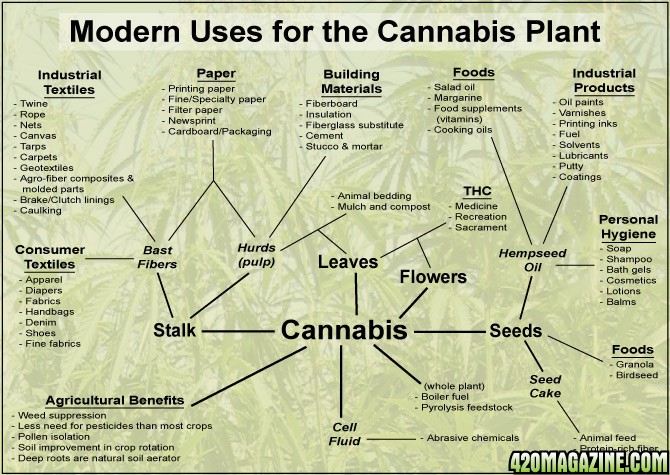
420magazine.com Even before the early colonial era, cannabis was used as a highly effective pharmacological agent and was listed as a viable option to cure many ailments. Even today, hemp is considered one of the most important and functionally diverse materials on the planet and would pave the way for incredible innovation and efficiency in more industries than you could probably name if given the legal opportunity (refer to the picture). So why did cannabis and hemp become illegal?
Both hemp and cannabis were made illegal for multiple reasons, but the most prominent reasons were due to money, ignorance, and irrational racism. All around the world cannabis and hemp were being criminalized simply by default; by tossing them in a category with substances that were highly addictive (opium, hashish, morphine, etc.). There was no consideration for each substance’s individual pros and cons, and certainly no empirical scientific basis. Anything with even the slightest amount of potential for addiction was just labeled together as a harmful/addictive substance, and that was that. The US took a similar approach.
As the US began to buckle down and ensure that all of their medicine was regulated and safe, they also realized that it would be a good time to help rid the country of addictive substances like opium. Although there wasn’t any serious problem with cannabis abuse, our ancestors figured that once opium and morphine were no longer freely available, people would turn to one of the most readily available and easily procured substances in the country: cannabis. States began arbitrarily tossing it into the growing legislation of criminalized substances, not giving much thought to the actual dangers or potential pit falls of such an action.
In an attempt to make substance regulation laws more uniform, all states were encouraged to regulate cannabis in the same way, essentially handing over control to the federal level. Up until this point cannabis was still legal and available as a medicine; it was simply regulated while its recreational use was criminalized. Then along came Harry Anslinger, the future head of the Federal Bureau of Narcotics, and a nuclear bomb of lies, deceit and propaganda was dropped onto the US and the world at large.
Related Article: Uruguay to Legalize Marijuana
Harry Anslinger Versus Science
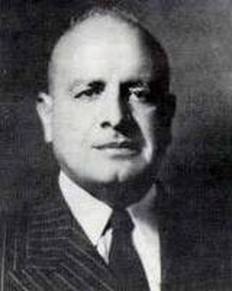
http://thehempplant.weebly.com Harry Anslinger claimed that cannabis, which he referred to as “marijuana” to incite racial fear and rage, (the word marijuana originates from the Spanish word marihuana, which is Mexican Spanish for cannabis) was the most dangerous and fatal substance ever known to mankind. He developed highly racist rhetoric devoid of any science and contrary to statements made by the American Medical Association at the time. He paraded in front of congress and across the country spouting his ridiculous, unfounded claims. Here are some classic Harry Anslinger quotes actually used as ‘fact’ by prominent newspapers and regurgitated as reasons for stricter cannabis laws by congress in the 1930’s:
There are 100,000 total marijuana smokers in the US, and most are Negroes, Hispanics, Filipinos, and entertainers. Their Satanic music, jazz, and swing, result from marijuana use. This marijuana causes white women to seek sexual relations with Negroes, entertainers, and any others.
…the primary reason to outlaw marijuana is its effect on the degenerate races.
Marijuana is an addictive drug which produces in its users insanity, criminality, and death.
Reefer makes darkies think they’re as good as white men.
Marihuana leads to pacifism and communist brainwashing.
You smoke a joint and you’re likely to kill your brother.
Marijuana is the most violence-causing drug in the history of mankind.
We recognize these claims as utterly ridiculous nowadays, but congress back in the day wasn’t very bright. I guess some things never change.

http://times.weed-city.net Anslinger and his buddies were also directly responsible for the propaganda video entitled “Reefer Madness,” depicting young men and women becoming violent, sex crazed, and downright insane after smoking cannabis. “Reefer Madness” was seen as a legitimate informational source at the time of its release and for many decades afterward. It is now shown to students as a form of retrospective humor. Anslinger used baseless scare tactics in an attempt to bolster criminalization laws in the US regarding cannabis, and even more astounding, industrial hemp, which can in no way get a person high.
Related Article: The Senate is Useless and Should be Dismantled
Many seemingly separate parties were involved with the criminalization and illegality of cannabis/hemp. Big name players such as the banker Andrew Mellon, industrial wood company Dupont, and media mogul William Randolph Hearst were all directly and passionately involved in the senseless fight against cannabis/hemp for the sake of their wallets. William Randolph Hearst owned a string of newspapers across the nation. Unfortunately for Hearst, he had a great deal of money invested in timber, and hemp is far more efficient, cost effective, and environmentally friendly than wood. What’s a man to do? Make your competition illegal of course.
Anslinger used Hearst’s publications to create an onslaught of propaganda that reached millions of households, killing two birds with one stone by furthering his career and outlawing hemp. Because cannabis and hemp were viewed as the same plant at the time (which is like comparing a Great Dane to a Shih Tzu and saying they are the same animal because they are both dogs), after congress passed the Marijuana Tax Act of 1937, the production of industrial hemp, despite being unable to get people high, was also criminalized and exorbitantly taxed.
Various highly researched, credible reports (from the American Medical Association, members of the DEA, medical professionals, and patients) like the La Guardia Report, were issued by medical journals in 1944 directly refuting every single claim made by Anslinger. These reports were blatantly ignored.
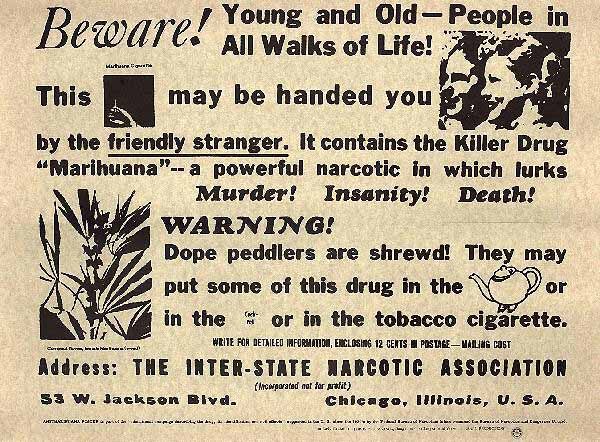
http://themidatlanticlounge.files.wordpress.com After 1937, cannabis and hemp continued to become more and more controlled with increasingly harsh criminal/mandatory sentencing. Cannabis and industrial hemp were eventually made completely illegal in the 50’s through a series of further restrictions and mandates. Eventually both substances were listed as schedule 1 narcotics, losing any and all hope of finding a place in society.
Related Article: U.K. Chief Advisor on Drug Policy Fired for Showing Danger of Alcohol and Tobacco
What should you take out of this brief history lesson? Congress made cannabis(a great medicine) and hemp (a product that would revolutionize countless industries) illegal because of a silly, sensationalized, utterly unscientific movie shown to school children. They disregarded the claims made by experts and medical professionals. They ignored the pleas for rational thought and sensibility. They had no reason to make cannabis illegal, and still don’t. I guess that’s why times are changing so quickly!
Contemporary Legality
In the latter half of the 20th century, rational substance reform finally began to take a turn with actual long term medical/economic/political/social implications of each individual substance in mind. It became clear that the historical basis for keeping cannabis illegal is entirely political and has nothing to do with science. Just think, even main stream media and most countries around the world still refer to cannabis with a name spawned from mindless propaganda; marijuana.

People all around the world have begun to see that the war on drugs has completely failed in every way imaginable, actually leading to more drug use and significantly more violence worldwide. This is due to the fact that the war on drugs only fights the symptoms of a disease deeply ingrained into our society, and I’m not talking about drug use; I’m referring to gangs/organized drug cartels. In response to the effectiveness of incarceration on drug crimes, the Public Safety Performance Project found that:
Once incarcerated, drug dealers tend to be quickly replaced by new dealers and, as during the crack epidemic, the new recruits can be younger and more prone to violence than their predecessors. Thus while drug dealers no doubt deserve punishment, most leading researchers, and many law enforcement officials, now agree that incarcerating the foot soldiers in drug gangs, not to mention drug users, has a negligible impact on crime. Moreover, by creating job openings in drug-dealing organizations, it draws more people into criminal lifestyles and may in certain cases exacerbate crime.
The war on drugs is also one of the major reasons the US has the highest rate of incarceration in the entire world, with more than 1% of the entire population currently behind bars, and an additional 2% of the population on supervision, probation, or parole. That accounts for about 3% of the US population under correctional supervision. By a large margin, the US has the largest percentage of prisoners based on population in the world. The International Centre for Prison Studies at King’s College in London lists some startling statistics:
More than 9.8 million people are held in penal institutions throughout the world, mostly as pre-trial detainees (remand prisoners) or as sentenced prisoners. Almost half of these are in the United States (2.29m), Russia (0.89m) or China (1.57m sentenced prisoners).
After Nixon and all subsequent presidents became serious about the war on drugs and started punishing non-violent, hard working Americans for ingesting substances responsibly and safely, from 1960 to 1980 the number of total arrests nationwide rose by 28% while the number of drug related offenses rose by more than 127%, with the number continuing to rise exponentially. Nearly 40% of all federal and state inmates are non-violent drug offenders. Moreover, more than half of all drug-related arrests are entirely cannabis related.
Related Article: Cannabis Protects Brain From Damage While Binge Drinking

http://en.wikipedia.org/wiki/File:US_incarceration_rate_timeline.gif This is a staggering waste of financial resources.
Taxpayers spent about $68.7 billion in 2008 to feed, clothe, and provide medical care to prisoners in county jails, state and federal prisons and facilities housing legal and illegal aliens facing possible deportation. From 1982 to 2002, state and federal spending on corrections, not adjusted for inflation, rose by 423%, from $40 to $209 per U.S. resident. Corrections spending, as a share of state budgets, rose faster than health care, education, and natural resources spending from 1986 to 2001. The average cost of housing a prisoner for a year was about $24,000 in 2005, though rates vary from state to state.
That incredible spending increase from 1982 to 2002 coincides precisely with the increase of drug arrests due to the failed ‘war on drugs.’ This is an especially important point to consider since drug offenses are almost entirely non-violent, and rehabilitation costs significantly less for tax payers.
Treatment delivered in the community is one of the most cost-effective ways to prevent such crimes and costs approximately $20,000 less than incarceration per person per year. A study by the Washington State Institute for Public Policy found that every dollar spent on drug treatment in the community yields over $18 in cost savings related to crime. In comparison, prisons only yield $.37 in public safety benefit per dollar spent. Releasing people to supervision and making treatment accessible is an effective way of reducing problematic drug use, reducing crime associated with drug use and reducing the number of people in prison.
The war on drugs only serves to bolster the monstrous prison-industrial complex of the US, increasing the profits of private prisons across the nation. Despite the statistics, the US continues to permanently destroy the lives of hard-working, non-violent citizens. Additionally, private prisons and jails are a total loss of revenue.
… the benefit to counties where private prisons are built and operated can be quite scant — some receive less than $2 per prisoner per day from the private prison operator…the federal government agreed to pay CCA [one of the largest private prison firms] almost $90 per day for each detained immigrant at a San Diego facility.
Today, private companies imprison roughly 130,000 prisoners and, according to one group, 16,000 civil immigration detainees in the United States at any given time. As states send more and more people to prison, they funnel ever greater amounts of taxpayer money to private prison operators. By 2010, annual revenues of the two top private prison companies alone stood at nearly $3 billion.

http://blog.sfgate.com Above all, the war on drugs does a great job of pouring public money into the hands of dangerous cartels and various private entities.
Famous, influential, intelligent individuals all around the world are voicing their opinion that cannabis, and additionally hemp, should at the very least be decriminalized. These individuals include prominent politicians, actors/actresses, presidents, comedians, performers, philosophers, scientists, economists, doctors, judges and more.
Related Article: New Report Urges Decriminalization of Drugs in Australia
The people who advocate the decriminalization/legalization of cannabis along with other substances are from every walk of life; many don’t even ingest cannabis. The one thing they have in common though is that their opinions are founded in scientific evidence, empirically tested data, and time tested proof. Previous and current presidents and politicians have admitted to smoking “pot,” (including president Obama who admitted to smoking pot regularly with his high school friends) yet they continue to stagnate with reform at the federal level (despite, again, the federal government owning the patent on cannabis as a medicine). Amidst all the hurtles and lack of progress, let’s take a look at what is changing within the US and the world at large.
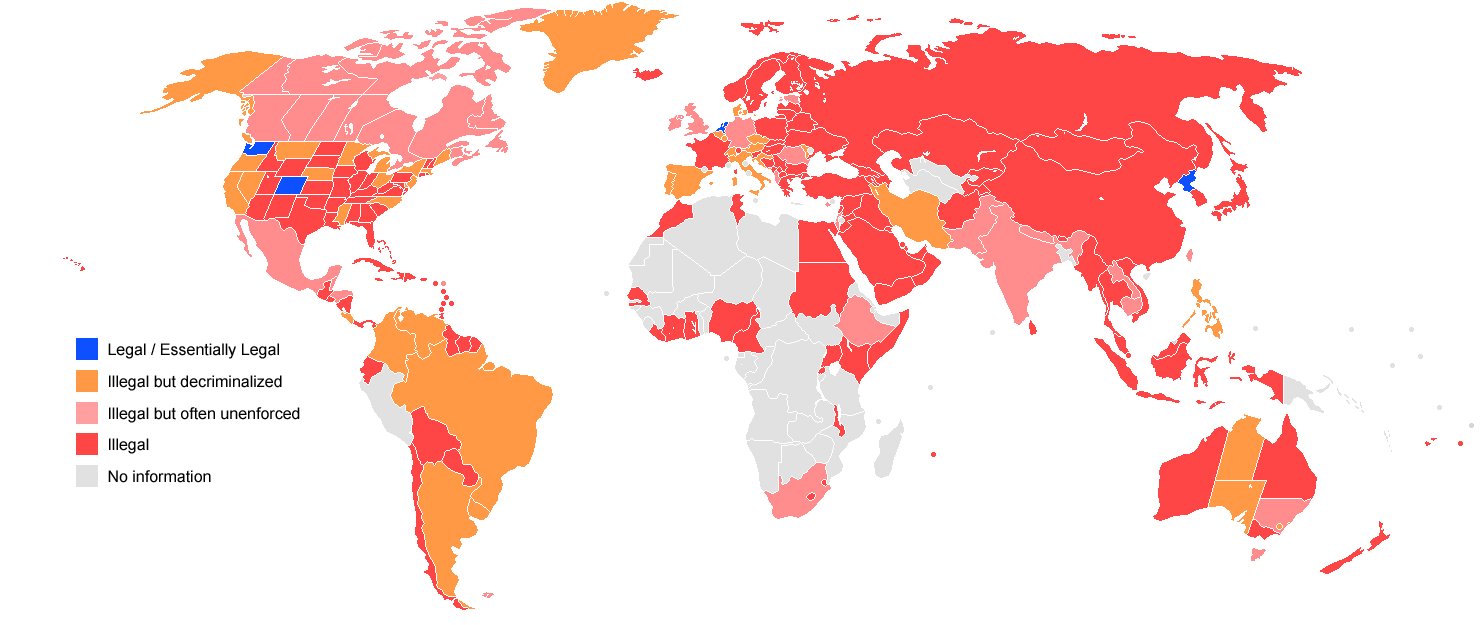
http://en.wikipedia.org Compared to the rest of the developed world, America is definitely lagging behind a significant amount of its rational, forward-thinking brethren. As recent examples, the Czech Republic legalized medical cannabis, Ireland legalized medical cannabis, and the United Kingdom is currently working to legalize cannabis completely, as medical cannabis is already legal. Additionally, in an attempt to combat gang crime, increase economic development, and provide its people with a cheap or free form of potent and effective medicine, Uruguay recently legalized cannabis.
As seen on the map, a significant number of countries around the world have chosen to legalize medical cannabis and/or cannabis as a whole with strong domestic and international support due to the positive effects of the decriminalization of cannabis. There is a surprisingly large number of countries with sensible cannabis laws.
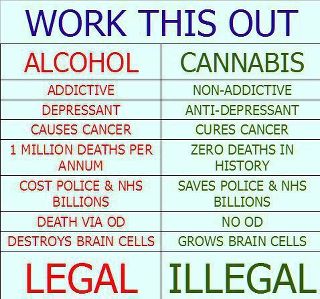
http://1.bp.blogspot.com Many political leaders, heads of agencies, and medical professionals are also pointing out how ridiculous it is that extremely addictive, highly toxic substances like tobacco and alcohol go unchecked while a harmless substance like cannabis remains globally demonized. Ask yourself, if alcohol were discovered today would it even be legal? In the UK, the chief drug adviser Prof. David Nutt was fired for pointing out the dangers of alcohol and nicotine and further explaining that they are for more dangerous and harmful than cannabis. Another UK drug adviser recently resigned from his job in protest of David Nutt’s silencing.
In America, progress is slow, but the wheels of rationality are beginning to turn. The most cited (and dubbed a genius by his peers) federal judge in America recently urged for the legalization of cannabis for the sake of economic development and to “let the punishment fit the crime.” 15 separate states have decriminalized or legalized the personal use of cannabis, while 19 states have passed medical cannabis laws. 9 other states currently have pending medical cannabis laws. As you’ve probably smelled, Washington and Colorado became the first two states to legalize the recreational use of cannabis, with seven more states likely to legalize cannabis as well within the next couple years. Another piece of great news is that the Kentucky Senate Committee voted unanimously to approve legal hemp. The country is waiting with bongs in hand to see how the federal government will react.
 In an interview with Barbara Walters concerning cannabis legalization in Colorado and Washington President Obama said:
It does not make sense from a prioritization point of view for us to focus on recreational drug users in a state that has already said that under state law that’s legal.
President Obama’s response was typical of all political speech; evasive and vague. While tokers all around the country take bets on the fed’s actions, there is a significant amount of pressure on the white house to legalize cannabis at the federal level. Various bills are being presented in Congress to repeal cannabis laws and broaden economic opportunities. Although there are steps you can take, like signing this petition to give states the right to regulate cannabis however they want, decisions and movement at the federal level remain slow and stagnant as usual.
Related Article: Federal Judge Urges Decriminalization of Marijuana

http://i.imgur.com/S2sMd.png One of the strangest pieces of this entire puzzle is that despite continued sentiments from the US federal government that cannabis is still a hellish scourge upon the planet, the federal government has been supplying high grade medical cannabis to select patients since 1978.
Come on America, even the utter craziness that is North Korea has 100% legalized cannabis, and they’re the world’s mentally challenged cousin. Maybe that’s why their attempts to scare the world with a video featuring a nuclear missile hitting New York failed utterly; through their glazed, blood-shot eyes the video looks state of the art!
So, countries all around the world along with a growing number of US states are decriminalizing cannabis for personal use, legalizing cannabis as a medicine (or entirely legalizing it), and the US government owns a patent on medicinal cannabis as well as supplies certain patients with medical cannabis for life. What’s all the hype over cannabis? It just so happens that cannabis is a wonder-drug; a miracle for millions; potentially billions. **This article continues in the report: Cannabis Cures Cancer and Everything Else: A Through History and Review.
What’s the Next Step?
The next step is to step out of the historical shadow of basing medical and political decisions on myths and rumors. More unbiased research needs to be performed on the effects of cannabis on each and every part of the human body and psyche. The DEA, FDA, and NIDA have made further legitimate research an ongoing uphill battle.
A pro-marijuana group lost its legal battle this week when a federal appellate court ruled that marijuana would remain a Schedule I drug, defined as having no accepted medical value and a high potential for abuse. The court deferred to the judgment of federal authorities, quoting the DEA’s statement that “the effectiveness of a drug must be established in well-controlled, well-designed, well-conducted and well-documented scientific studies…. To date, such studies have not been performed.

http://www.anonymousartofrevolution.com But guess who bears responsibility for the studies the court claims are not being performed? The DEA itself, which through its ultra-tight restrictions on cannabis has made it nearly impossible for researchers to obtain the substance for study, as well as the National Institute for Drug Abuse, which controls the availability of the tiny quantity of research-grade cannabis that is federally approved for production.
In response to the DEA’s actions against sensible substance users, the LA Times accurately labeled the DEA as
a terrified and obstinate toddler when it comes to basic science.
Probably the most ridiculous aspect of the FDA’s behavior is that they approve of multiple synthetic cannabinoids which precisely mimic natural cannabinoids found in cannabis, especially THC. The only difference is that they and the pharmaceutical companies can add a few substances to the cannabinoid, call it a cocktail, and turn a significant profit on people in desperate need for something that works. So, synthetic cannabinoids which can be patented and sold at exorbitant rates are legal but naturally grown, free medicine containing the same exact cannabinoidal actions, as well as a wider range of medicinal benefits remains illegal. It doesn’t get much more hypocritical or shameless than that.
Related Article: No Link Between Cannabis and Depression
We have the ability to breed specified strains of cannabis, and create particular synthetic cannabinoids to meet the precise needs of patients. This incredible opportunity to create safe, effective, highly personalized medicine is stifled at the federal level, despite opposition from a majority of the US public.
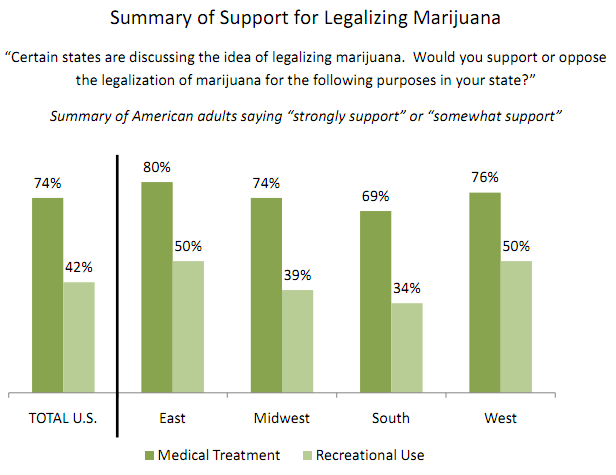
http://multivu.prnewswire.com/mnr/harrisinteractive/44743/ The fact remains that Americans love cannabis. A recent survey of over 85,000 people revealed that at least 42% of Americans have tried cannabis. This is extremely surprising as only 20% of people in the Netherlands have tried cannabis, a country with extremely lax cannabis laws.
A second poll found that nearly 50% of Americans support legalizing cannabis, while 83% favor legalizing medical cannabis. Cannabis is such an American pastime that companies are planning to install cannabis vending machines in Washington and Colorado. Does this mean that 42% of Americans should be in prison, and 83% of Americans should be on the wanted list for supporting an act listed as a felony?
Although Americans love their cannabis, they aren’t the only ones. According to data compiled from WHO World Mental Health Survey, the Addictions Foundation of Manitoba, the National Cannabis Prevention and Information Center, and the European Monitoring Centre for Drugs and Drug Addiction, the prevalence of adult lifetime cannabis by country reveals that the countries with the highest rate of cannabis use are countries that are developed, economically superior, have relative political freedom, and are culturally similar to the US. There is no way all of these people should be considered criminals:
(*Percentages reflect any cannabis use during a person’s life for the stated ages in the stated year.)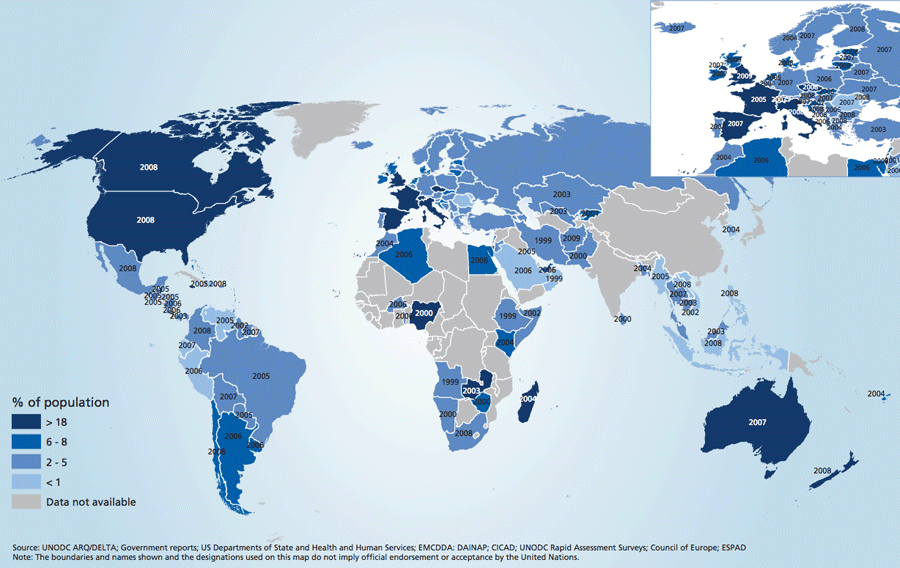
http://www.dope-smoker.co.uk - Canada: 44.5% (ages 15+ in 2005)
- United States: 42.4% (ages 14+ in 2002-2003)
- New Zealand: 41.9% (ages 16+ in 2004-2005)
- Denmark: 36.5% (ages 16-64 in 2005)
- Australia: 33.5% (ages 14+ in 2007)
- France: 30.6% (ages 15-64 in 2005)
- United Kingdom: 29.6% (ages 14+ in 2004)
- Italy: 29.3% (ages 15-64 in 2005)
- Spain: 28.6% (ages 15-64 in 2005-2006)
- Chile: 26% (ages 12-64 in 2009)
- Germany: 24.5% (ages 18-59 in 2003)
- Netherlands: 22.6% (ages 15-64 in 2005)
- Czech Republic: 20.6% (ages 18-64 in 2004)
- Scotland: 20.5% (ages 16-64 in 2004)
- Austria: 20.1% (ages 15-64 in 2004)
Millions of people worldwide use cannabis for an endless list of reasons. Besides using it as a medicine, people all over the world responsibly use cannabis to experience:
a general alteration of conscious perception, euphoria, feelings of well-being, relaxation or stress reduction, increased appreciation of humor, music or the arts,joviality, metacognition and introspection, enhanced recollection (episodic memory), increased sensuality, increased awareness of sensation, increased libido, and creativity.
Why are the DEA/FDA stalling? They raid innocent people’s homes, destroying families and jailing individuals for hyperbolic amounts of time. They go to all this effort to rid society of non-violent, victimless crimes. All this fear and war over a substance that they admit is beneficial (ie. allowing synthetic cannabinoids to be used medicinally and still sending medically grown cannabis to individuals). This is explicitly hypocritical and undoubtedly insane.
Related Article: The Politician Who Donates 90% of His Salary to Charity
If the DEA/FDA are truly concerned over Americans’ safety, why are they not going after the truly dangerous substances. Research routinely finds that cannabis is strikingly safer than alcohol and tobacco within every measurable facet.
According to a 2006 United Kingdom government report, using cannabis is much less dangerous than tobacco, prescription drugs, and alcohol in social harms, physical harm, and addiction.
The scheduling system is nonsensical and has no clear logical basis for the large majority of listed substances.
Another important point is that through the legalization of cannabis, the economy could be booming! Here is a list of some examples of how cannabis legalization has already positively affected the economy, and how further legalization will improve the economy in the future:
- According to TIME, $14 billion a year generated in California is directly linked to cannabis growers, making it the most valuable cash crop in the state.
- AlterNet found in 2007 that cannabis related charges cost U.S. prisons $1billion dollars per year.
- A 2007 study found that cannabis enforcement costs tax payers $41.8 billion annually.
- The Sacramento News and Review received a significant boost in ad revenue after allowing over 60 medical cannabis dispensaries advertising space.
- In 2011, permits for each medical cannabis plant raised $600,000 in revenue in for the Sheriff’s department in Mendocino Country.
- The New York Times Reported that Oakland, California raised $1.3 million in tax revenue from medical cannabis dispensaries.
- In 2011, medical cannabis business accounted for $5 million in Colorado sales tax.
- Whenever weGrow (cannabis supply chain) opens a new store it creates an estimated 75 jobs.
- Pasadena Weekly reported in 2009 that there was more than 1,000 medical cannabis dispensaries operating in California.
- There are more medical cannabis dispensaries in Denver, Colorado than there are Starbucks.
- Cannabis legalization would drop the price of cannabis by up to 100 times the current price, allowing cannabis users’ money to go back into the economy rather than stimulate a black market and go into the pockets of gangs.
- Over 300 economists, including three nobel laureates, signed a petition to call attention to a paper by Harvard economist Jeffrey Miron, which states that if the government legalized marijuana it would save $7.7 billion annually by no longer needing enforcement for cannabis related crimes. It would also save an extra $6 billion per yer through taxes similar to taxes on alcohol and tobacco.
- Legal cannabis could be a $100 billion industry, according to Economist Stephen Easton.
- Over 60 percent of states agree with taxing cannabis.
Furthermore, the tobacco industry is ready to put cannabis distribution into high gear.
Tobacco companies have the land to grow it, the machines to roll it and package it, the distribution to market it. In fact, some firms have registered trademarks, which are taken directly from marijuana street jargon. These trade names are used currently on little-known legal products, but could be switched if and when marijuana is legalized. during the run up to the 2010 election in which marijuana legalization was on the ballot in California, Altria took control of the web domain names AltriaMarijuana.com and AltriaCannabis.com. For those not in the know, Altria is the parent company of Phillip Morris, the manufacturer of Marlboro, Players, Benson & Hedges and many other popular brands of tobacco cigarettes.
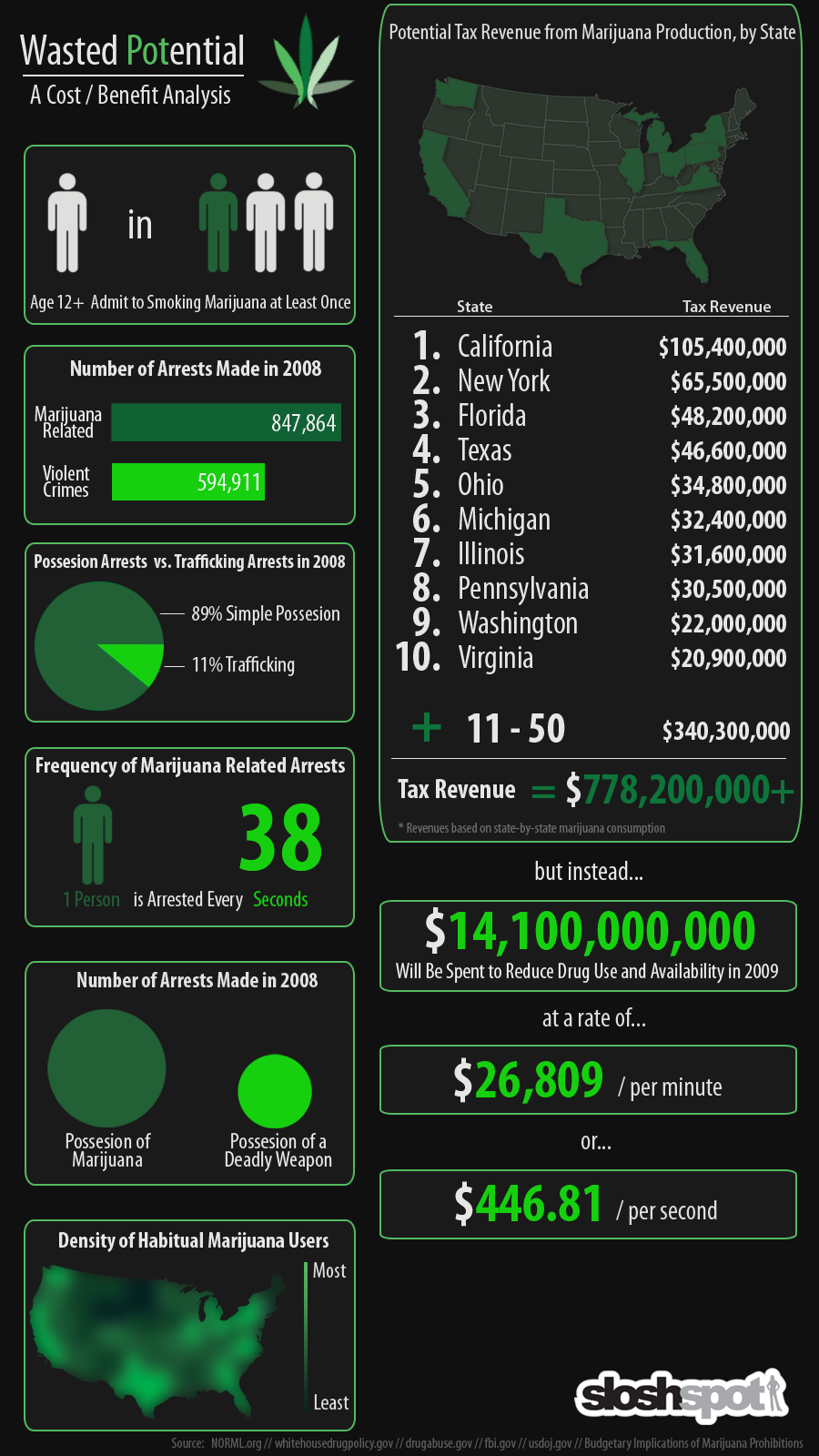
theragblog.blogspot.com Allow me to reiterate how much money Americans would be saving on ending the war on cannabis and reducing incarceration rates. The Center for Economic and Policy Research commented on how cannabis legalization would affect incarceration rates and increase savings.
We calculate that a reduction by one-half in the incarceration rate of non-violent offenders would lower correctional expenditures by $16.9 billion per year and return the U.S. to about the same incarceration rate we had in 1993 (which was already high by historical standards). The large majority of these savings would accrue to financially squeezed state and local governments, amounting to about one-fourth of their annual corrections budgets. As a group, state governments could save $7.6 billion, while local governments could save $7.2 billion.
Cannabis has the potential to change everything for the better. It could also help alleviate the health care crisis as Americans would be able to grow their own highly effective medicine. Let’s not forgot about the multitude of uses for hemp. It’s no wonder so many industries are lobbying against cannabis and hemp legalization including:
(*Note: many companies pour large amounts of money into the Partnership for a Drug Free America)- Police Unions
- Private Prison Corporations
- Prison Guard Unions
- Alcohol Industry and Beer Breweries
- Pharmaceutical Companies
All this information is great and all, but you’re probably wondering what you can do to help, right? Here’s how you can get started.
What You Can Do

http://www.marijuana.com - Vote! Voting is one of the best ways to enact change. It’s how Washington and Colorado were able to finally legalize cannabis.
- Talk to your representatives. Send an email to your house representative and your state senators. Let them know how you feel, and how you think they should vote.
- Sign petitions. Sign a petition to give states the right to decide their own cannabis laws. Sign a petition to legalize cannabis federally. Or, create your own petition to the White House and spread it around.
- Do your own research. Alter your perceptions so that they are founded on evidence and scientific data.
- Spread the world. Share this report or other relevant information you find and help educate others. Don’t be afraid to talk to people and tell them about what you’ve learned.
- Don’t give up: people’s freedom and lives are at stake!
*Note: This article is part of a larger report on Wondergressive entitled ‘Cannabis Cures Cancer and Everything Else: A Through History and Review‘Source List:
Intro
12.
http://en.wikipedia.org/wiki/Controlled_Substances_Act
13.
http://www.gainesville.com/article/20100215/NEWS/100219667
14.
http://www.justice.gov/dea/druginfo/ds.shtml
15.
https://wondergressive.com/2012/09/14/the-extraordinary-benefits-of-magic-mushrooms/
16.
http://www.maps.org/research/psilo-lsd/
17.
https://wondergressive.com/2013/02/01/death-solved-by-vestigial-gland/
18.
http://www.guardian.co.uk/uk/2005/aug/02/health.drugsandalcohol
19.
http://en.wikipedia.org/wiki/Psychedelic_therapy
20.
http://healthland.time.com/2012/01/24/magic-mushrooms-expand-the-mind-by-dampening-brain-activity/
21.
Why is tobacco not a Schedule 1 substanceHistorical Use
22.
http://www.narconon.org/drug-information/marijuana-history.html23.
http://en.wikipedia.org/wiki/Religious_and_spiritual_use_of_cannabis24.
http://books.google.co.kr/25.
http://en.wikipedia.org/wiki/Cannabis_(drug)#History26.
http://dsc.discovery.com/news/2008/12/03/marijuana-stash.html27.
http://forward.com/articles/124342/from-reform-to-orthodox-jewish-opinions-abound-on/28.
http://hightimes.com/entertainment/cbennett/375629.
http://www.ncbi.nlm.nih.gov/pmc/articles/PMC1034978/pdf/medhist00126-0026.pdf30.
http://www.cnsproductions.com/pdf/Touw.pdf31.
http://www.cnsproductions.com/pdf/Touw.pdf32.
http://www.cnsproductions.com/pdf/Touw.pdf33.
http://antitheist-atheist.blogspot.kr/2011/11/carl-sagans-essay-on-marijuana.html34.
http://www.cannabis-med.org/data/pdf/2002-02-3.pdf35.
http://www.ncbi.nlm.nih.gov/pmc/articles/PMC1034978/pdf/medhist00126-0026.pdf36.
https://wondergressive.com/2012/08/28/epigenetics-and-altering-your-dna/37.
http://en.wikipedia.org/wiki/Religious_and_spiritual_use_of_cannabis38.
http://web.archive.org/web/20080723143556/http://www2.dpi.qld.gov.au/hemp/16241.htmlHistorical Legality
40.
http://en.wikipedia.org/wiki/Legal_history_of_cannabis_in_the_United_States41.
http://en.wikipedia.org/wiki/Hemp#United_States42.
http://www.daff.qld.gov.au/26_14356.htm43.
http://www.thehia.org/index.html44.
https://wondergressive.com/2012/08/17/power-of-hemp-seeds/45.
https://wondergressive.com/2012/08/17/power-of-hemp-seeds/46.
http://www.druglibrary.org/schaffer/library/studies/cu/cu54.html#Anchor-4785747.
http://www.druglibrary.org/schaffer/library/studies/cu/cu54.html#Anchor-4785748.
http://druglibrary.org/schaffer/hemp/history/first12000/4.htm49.
http://www.hemphasis.net/History/harriedhemp.htm50.
http://naihc.org/hemp_information/hemp_facts.html51.
http://www.pages.drexel.edu/~ypd23/Hemp/History.html52.
http://www.ncbi.nlm.nih.gov/pubmed/1966292553.
http://www.cannabismd.net/history-of-medical-cannabis/54.
http://norml.org/marijuana/industrial55.
http://www.alternet.org/story/77339/debunking_the_hemp_conspiracy_theory56.
http://www.druglibrary.org/schaffer/history/e1920/willoughby.htm57.
http://www.druglibrary.org/schaffer/history/ophs.htm58.
http://books.google.co.kr/59.
http://www.druglibrary.org/schaffer/history/e1920/willoughby.htm61.
http://www.druglibrary.org/62.
http://www.druglibrary.org/Harry Anslinger Versus Science
65.
http://en.wikipedia.org/wiki/Marijuana_(word)66.
http://www.drugwarrant.com/articles/why-is-marijuana-illegal/67.
http://www.jimsrepair.com/Essays/68.
http://www.drugwarrant.com/articles/why-is-marijuana-illegal/69.
http://www.stupidvotes.com/70.
http://www.youtube.com/watch?v=54xWo7ITFbg71.
http://www.britannica.com/blogs/72.
http://www.rottentomatoes.com/m/reefer_madness/73.
http://www.erowid.org/plants/cannabis/cannabis_culture11.shtml74.
http://www.hemphasis.net/Paper/paper.htm75.
http://blogs.howstuffworks.com/2009/09/25/hemp-and-hearst-whats-the-connection/76.
http://www.ephidrina.org/cannabis/taxact.html77.
http://www.hemp.org/news/category/cannabis/harry-anslinger78.
http://en.wikipedia.org/wiki/Marihuana_Tax_Act_of_193779.
http://www.erowid.org/plants/cannabis/cannabis_culture11.shtml80.
http://www.druglibrary.org/schaffer/library/studies/lag/lagmenu.htm81.
http://www.pbs.org/wgbh/pages/frontline/shows/dope/etc/cron.html82.
http://www.pbs.org/wgbh/pages/frontline/shows/dope/etc/cron.html83.
http://www.pbs.org/wgbh/pages/frontline/shows/dope/etc/cron.htmlContemporary Legality
84.
http://www.youtube.com/watch?v=gSrN2zIRwN885.
http://edition.cnn.com/2012/12/06/opinion/branson-end-war-on-drugs86.
http://www.pewstates.org/uploadedFiles/PCS_Assets/2009/PSPP_1in31_report_FINAL_WEB_3-26-09.pdf87.
http://www.sentencingproject.org/doc/publications/inc_newfigures.pdf88.
http://web.archive.org/web/20080303025427/89.
http://bjs.ojp.usdoj.gov/content/pub/pdf/cpus11.pdf90.
http://bjs.ojp.usdoj.gov/content/pub/pdf/cpus11.pdf91.
http://en.wikipedia.org/wiki/War_on_Drugs#Arrests_and_incarceration92.
http://bjs.ojp.usdoj.gov/content/pub/pdf/p11.pdf93.
http://www.whitehouse.gov/ondcp94.
http://www.fas.org/sgp/crs/misc/R41177.pdf95.
http://www.justicepolicy.org/images/upload/10-06_FAC_ForImmediateRelease_PS-AC.pdf96.
http://en.wikipedia.org/wiki/Prison%E2%80%93industrial_complex97.
http://en.wikipedia.org/wiki/Private_prison98.
http://www.aclu.org/files/assets/bankingonbondage_20111102.pdf99.
http://www.rollingstone.com/politics/blogs/100.
http://reason.com/archives/2012/04/22/4-industries-getting-rich-off-the-drug-w101.
http://www.marijuanamajority.com/102.
http://www.huffingtonpost.com/harvey-wasserman/hemp-is-the-hidden-key- to_b_765740.html104.
http://www.latimes.com/entertainment/news/105.
http://reason.com/blog/2012/12/14/obama-on-marijuana-legalization-if-not-n106.
http://www.youtube.com/watch?v=oj5Sd3BRm_I107.
http://www.dailymail.co.uk/tvshowbiz/article-2205434/108.
http://terebess.hu/english/watts3.html109.
http://www.youtube.com/watch?v=_JVOHgCFd-Q110.
http://www.huffingtonpost.com/111.
http://en.wikipedia.org/wiki/Joycelyn_Elders112.
https://wondergressive.com/2012/09/18/federal-judge-urges-legalization-of-marijuana/113.
http://en.wikipedia.org/wiki/List_of_United_States_politicians_who_admit_to_cannabis_use114.
http://abcnews.go.com/Politics/115.
http://www.patentstorm.us/patents/6630507.html116.
http://www.huffingtonpost.com/2013/02/15/czech-republic-medical-marijuana_n_2693657.html117.
http://www.independent.ie/irish-news/118.
http://www.inquisitr.com/119.
https://wondergressive.com/2012/10/12/uruguay-to-legalize-marijuana/120.
http://homes.chass.utoronto.ca/~haans/misc/mjdcrim.html121.
http://www.huffingtonpost.com/2012/11/20/world-marijuana-laws_n_2167537.html#slide=1783274122.
https://wondergressive.com/2012/09/19/if-alcohol-were-discovered-today-would-it-be-legal/123.
https://wondergressive.com/124.
http://news.bbc.co.uk/2/hi/uk_news/politics/8336635.stm125.
https://wondergressive.com/2012/09/18/federal-judge-urges-legalization-of-marijuana/126.
http://www.thecrimereport.org/news/inside-criminal-justice/2012-06-rethinking-tough-on-crime129.
http://medicalmarijuana.procon.org/view.resource.php?resourceID=002481130.
http://edition.cnn.com/2012/12/05/us/washington-marijuana-legalization131.
http://www.rollingstone.com/politics/news/the-next-seven-states-to-legalize-pot-20121218133.
http://abcnews.go.com/Politics/134.
http://www.huffingtonpost.com/2013/01/09/marijuana-legalization_n_2440352.html?utm_hp_ref=tw135.
http://abcnews.go.com/blogs/politics/2013/02/pot-legalization-goes-federal/136.
https://petitions.whitehouse.gov137.
http://www.whitehouse.gov/ondcp/marijuana138.
http://usatoday30.usatoday.com/news/nation/2005-06-07-pot-program_x.htm139.
http://medicalmarijuana.procon.org/view.answers.php?questionID=000257140.
http://www.cracked.com/article_17165142.
http://www.guardian.co.uk/world/video/2013/feb/06/north-korea-new-york-flames-videoWhat’s The Next Step?
405.
http://www.healthsentinel.com/406.
http://www.npr.org/blogs/health/2013/02/12/171832741407.
http://www.rxlist.com/voltaren-drug.htm408.
http://www.npr.org/templates/story/story.php?storyId=4054991409.
http://medicalmarijuana.procon.org/view.source.php?sourceID=000233410.
http://www.latimes.com/news/opinion/editorials/411.
http://articles.latimes.com/2013/jan/22/nation/la-na-marijuana-court-20130123412.
http://www.fdalawblog.net/fda_law_blog_hyman_phelps/413.
http://onlinelibrary.wiley.com/doi/10.1046/j.1360-0443.1996.911115852.x/abstract414.
http://skunkpharmresearch.com/415.
http://www.time.com/time/health/article/0,8599,1821697,00.html416.
http://www.livescience.com/25990-pot-vending-machines.html417.
http://en.wikipedia.org/wiki/Annual_cannabis_use_by_country418.
http://www.plosmedicine.org/article/info:doi/10.1371/journal.pmed.0050141419.
http://www.afm.mb.ca/Research/documents/CannUseCda.pdf420.
http://ncpic.org.au/ncpic/publications/aic-bulletins/421.
http://www.emcdda.europa.eu/stats07/gpstab08a422.
http://en.wikipedia.org/wiki/Adult_lifetime_cannabis_use_by_country#cite_note-EMCDDA-1423.
http://cannabislink.ca/info/MotivationsforCannabisUsebyCanadianAdults-2008.pdf424.
http://en.wikipedia.org/wiki/Altered_state_of_consciousness425.
http://en.wikipedia.org/wiki/Euphoria426.
http://en.wikipedia.org/wiki/Metacognition427.
http://en.wikipedia.org/wiki/Introspection428.
http://en.wikipedia.org/wiki/Episodic_memory429.
http://en.wikipedia.org/wiki/Libido430.
http://news.bbc.co.uk/2/shared/bsp/hi/pdfs/31_07_06_drugsreport.pdf431.
http://en.wikipedia.org/wiki/United_Kingdom432.
http://www.time.com/time/nation/article/0,8599,1884956,00.html433.
http://www.alternet.org/story/47815/pot_prisoners_cost_americans_%241_billion_a_year434.
http://www.forbes.com/2007/09/29/marijuana-laws-work-biz-cx_qh_1001pot.html435.
http://www.news10.net/news/local/article/144285/2/436.
http://www.huffingtonpost.com/2012/01/09/medical-marijuana-license-mendocino_n_1193198.html437.
http://www.nytimes.com/2012/02/12/us/cities-turn-to-a-crop-for-cash-medical-marijuana.html438.
http://www.nytimes.com/2012/02/12/us/439.
http://aznow.biz/small-biz/wegrow-phoenix-opens-cultivates-opportunities-arizona440.
http://www.pasadenaweekly.com/cms/story/detail/how_does_your_pot_grow/8070/441.
http://www.huffingtonpost.com/2011/07/06/medical-marijuana-denver-starbucks_n_891796.html442.
http://www.huffingtonpost.com/2012/11/07/443.
http://web.archive.org/web/20110718081238/http://www.prohibitioncosts.org/endorsers.html444.
http://web.archive.org/web/20110718082820/http://www.prohibitioncosts.org/execsummary.html445.
http://www.businessweek.com/debateroom/archives/2010/03/legalize_mariju.html446.
http://www.huffingtonpost.com/2010/04/20/legalizing-pot-will-not-b_n_544526.html447.
http://www.samefacts.com/2012/10/448.
http://domainnamewire.com/2009/12/28/altria-gearing-up-to-smell-marijuana/449.
http://www.cepr.net/documents/publications/incarceration-2010-06.pdf450.
http://en.wikipedia.org/wiki/Hemp#Uses451.
http://en.wikipedia.org/wiki/Partnership_for_a_Drug-Free_America#Funding452.
http://www.republicreport.org/2012/453.
http://www.nakedcapitalism.com/2011/06/454.
http://reason.com/archives/2011/06/23/the-golden-states-iron-bars455.
http://www.alternet.org/story/148213/456.
http://www.republicreport.org/2012/police-marijuana-cpac/What You Can Do
2700 ice man, 40-90 purity, 420, 5x legal limit, addiction, addiction potential, addictions foundation of manitoba, addy, adhd, african slaves cannabis, alcohol, alcohol industry, alcohol vs cannabis driving, alternet, altria, ama cannabis, america prison, american colonies, American medical association, amphetamine, anandamide, anatomy, ancient greek and romans cannabis, andrew mellon, anhedonia, anslinger marijuana, anti marijuana, anti oxidant, antiangiogenic, antimetastatic, antiproliferative, antipsychotic effects, apoptotic, arachidonoylglycerol, aspirin, aspirin deaths, asthma cannabis, athiests, Australia, autism, auto immune disease, Bacteria, bacterial infection, barbara walters, BBC, bbc cannabis, bbc driving stoned, beer breweries, begin with alcohol and tobacco, benson & hedges, big brother, bigpharma, binge drinking marijuana, biology, bipolar, blood, blunt, bone loss, bong, bonni goldstein, brain, brain cells, brain damage, brave mykayla, Brazil, breast cancer, breast milk, britan, british journal of psychiatry, bronchitis, bud, budder, Buddhism, buddhist, bush, cachexia, california cannabis, calnorml, cambia, canada, cancer, cancer chemotherapy, cannabidiol, cannabidol, cannabinoid, cannabinol, cannabis, cannabis addiction, cannabis america, cannabis and suicide, cannabis business, cannabis cancer, cannabis cooking, cannabis criminalized, cannabis cure, cannabis cures cancer, cannabis decriminalized, cannabis drug, cannabis economy, cannabis enforcement, cannabis evil, cannabis government, cannabis history, cannabis ireland, cannabis legality, cannabis medicinal properties, cannabis medicine, cannabis oil, cannabis overdose, cannabis rate, cannabis schedule, cannabis smoke -
A Non-Loony Google Project Called LOON: Solar Powered, Internet Wielding Balloons
Even though I currently use Verizon Wireless, which of course claims to have the most coverage in the USA out of all the other cell phone companies, I still find places where my connection to the interweb does not exist. These dead zones are our biggest enemy in the fight for superior knowledge! They limit our access to vast information, they cause frustration and anger, they are the bane to our batman. So when will we have an answer to this persistently pervasive problem? Maybe the movie Up was trying to send us a message.
Related Article: FCC Proposes Free Public Wifi Nationwide
In comes Google. How about sending out 30 balloons, no really they are balloons, which are capable of giving you comparable internet speeds to that of 3G. Google calls it project Loon. The balloons are about 50 feet (15 meters) in diameter and float some 12 miles (20km) up in the air! The great thing about this is that the balloons will be all the way up in the Stratosphere, above planes and above clouds and storms, safely floating without interfering with anything or getting lost in changing weather patterns. They are equipped with a navigation system which allows the balloons to either replace one another in a flight pattern, or continually sail in an area, in a sense guaranteeing a constant signal. The balloons took flight in Christchurch, New Zealand where only a select few were a part of the testing process. Cliff L. Biffle, a part of the project and Tech Lead of Flight Systems, says:
Having access to the internet can change lives and there are 5 billion people on the Earth that aren’t reached. Balloon-powered internet sounds positively mad, and in a way it is, but its mad in a practical way that could just work
Related Article: Free Internet, Help Yourself
What is cooler, but could be a limiting factor for some, is that the Google project developed its own type of antennas to broadcast the signals so that the signal would not get lost or interrupted by all the other Wifi signals around. It could mean paying royalties to access Google’s internet, but you may be thankful for the access when your Google Glasses are recording the next big concert in the middle of a desert that you are exploring. In fact, are you climbing Mt. Everest and the Patriots are in the Superbowl? No problem, whip out your phone for a live feed of Brady’s game winning touchdown. Google has you covered! Literally. Bet you all those people in Maldives, Tunisia, and Belarus can’t wait!
Cheers!
Research:
A Map of the Internet’s “Black Holes”
1g, 2g, 3g, 4g, 5g, AT&T, balloon, baloon, Disney Up, free, free internet, free wifi, future, google, google project, healthyheartbeatz, internet, Loon, loon balloon, project, sprint, tmobile, UP, verizon, wifi, wondergressive, wondergressiver -
Prevent Type 2 Diabetes By What You Love to Do Most: Sleep
It was found that the risk of developing type 2 diabetes has been linked to a lack of sleep. According to the Los Angeles Biomedical Research Institute, including a few more hours of sleep every week may lower your risk of developing diabetes. Diabetes is currently the 7th leading cause of death and affects an estimated 26 million people in the United States, as well as many more in the developed world.
Type 2 diabetes patients become resistant to insulin and it becomes inefficient in clearing out glucose from the bloodstream. The study found that men who prolonged three nights of their sleep also improved their insulin sensitivity, which is responsible for regulating glucose in the blood stream.
Related: Red Wine Vinegar Fights Diabetes
Insulin sensitivity can be improved with longer sleeping hours. Most Americans these days work for a longer period of time during the work week and are engaged in more social activities than in the past. Such a lifestyle explains the current decrease in sleeping hours.
According to the article from labiomed.org, researchers from the University of Sydney, Australia did a study on 19 non-diabetic men who had reported an average of 5.1 years of having a lack of sleep during the workweek. They slept an average of 6.2 hours each night during the week, but slept 37.4 percent longer (or 2.3 hours) longer each night during the weekend. Length of sleep was reported by a device the subjects wore on their wrist which monitored the sleep-wake cycles.
Related: How to Lower Type 2 Diabetes Risk With Less Grains
The men spent three nights in a sleep lab on each of two separate weekends. The researchers randomly assigned the men to two of three sleep conditions: (1) 10 hours of sleep, (2) six hours of sleep or (3) 10 hours in bed, in which noises during deep sleep aroused them into shallow sleep without waking them. The six hours of sleep tested persistent sleep restriction.
During the whole study time, the men had the same food intake so that the diet would not influence the results. Researchers concluded that the men who slept 10 hours a night had improved insulin sensitivity and decreased insulin resistance by a significant factor.
Things to Consider About Type 2 Diabetes
Despite the news that longer sleep could provide improved insulin sensitivity and raise the possibility of preventing type 2 diabetes from developing, keep in mind that this study consisted of a sample of 19 people. Some may consider this to be an insufficient quantity for conclusive research, including myself. You certainly would not want to be prescribed a medication whose effectiveness was confirmed by a few studies that had a handful of sample cases each. More elaborate research should be done to find conclusive evidence for a link between improved sleep and a lower risk of type 2 diabetes.
In line with longer sleeping hours, one should also take personal responsibility for his or her own diet. One should be aware of how much sugar and carbohydrates are consumed. There is a higher risk for type 2 diabetes in people with obesity. As of June 18th, 2013, obesity is now officially recognized as a disease, according to the American Medical Association.
Sources:
http://www.labiomed.org/2013/06/18/getting-enough-sleep-could-help-prevent-type-2-diabetes/
http://m.usatoday.com/article/news/2435701
https://wondergressive.com/2013/05/08/red-wine-vinegar-aids-weight-loss-and-fights-diabetes/
https://wondergressive.com/2013/01/12/save-the-food-pyramid-by-cutting-it-by-the-limbs/
http://diabetes.niddk.nih.gov/dm/pubs/statistics/#fast
-
Conservation Efforts of Earth’s Seven Continents


Captain Planet and the Planeteers by Ted Turner ‘Mostly Harmless.’ The only entry in the Hitchhiker’s Guide to the Galaxy used to read just ‘harmless,’ but after much careful deliberation and much intensive high-level editing, writer Ford Prefect was able to attach “Mostly” to Earth’s entry.
Since then segue writers (probably just me) of the world have attempted to relate the science fiction musings of the Great Wizard Douglas Adams to articles about global conservationism.
Speaking about global conservationism – funny you should even be thinking about that, I’ve compiled a list of conservation programs and projects from around the globe. You know, because when the NSA is watching you or your money is being spent on the military it’s nice to sit back, relax, use some comma splices, and learn about some good old-fashioned-down-to-earth wholesome people.
Related Article: The 5 R’s: Refuse, Reduce, Reuse, Recycle, and Rot
Africa
Oh sweet Africa! The continent of origin. A place both filled with beautiful landscapes and plagued by poverty, war and oppression. Despite the evils that happen there, there is quite a lot of good-natured conservation going on.
For example, I present the KAZA project. This project aims to connect portions of Angola, Botswana, Namibia, Zambia, and Zimbabwe in an effort to co-facilitate human and wildlife-life.
It’s the size of a European country. The inhabitants include 2.5 million people, a quarter of a million elephants, 3,000 species and some of the last hopes that Africa’s wildlife will endure the 21st century in substantial numbers.
…writes Michael J. Coren. But despite all of the good that this project will likely achieve, some critics are a bit skeptical.
Some question whether or not the focus is in the right place
Critics are also concerned that the project may end up enriching foreign tourism companies rather than local communities.
But whether or not this can save the declining African wildlife, it is wonderful to see these nations working together to bring balance to the force. Lets just hope that their efforts are for good.
Related Article: The 5 R’s Follow Up 1: Refuse
Asia
In Indonesia, there are many many many forests. Ask two of our writers, editors, and big cheeses in chief. I’m sure that they could tell you all about it. But where there are forests there are paper mills, tooth pick factories, and beavers. Lots and lots of beavers.
In this case the beavers are corporate and have decided that the woods might be a bit more precious than they previously had thought.
After recieving a lot of flack- and rightfully so- for their destructively belligerent deforestation practices (dbdp for short), Asia Pulp & and Paper has put a hold on their farming of national forests. The company, which holds a substantial amount of private land, has decided to focus on farming renewable trees that they’ve grown. This comes as a significantly awesome change of pace from the fern gully-eske practices which they so loved.
Related Article: The Profound Intelligence and Intuition of Elephants
North America
Oh to be a cowboy crossing the Great Plains of the United States. As you load your riffle, the rail car (built by slaves, and migrant workers) bumps a bit in protest and some of your precious gun powder spills to the floor. No worries, though, this hunt is easy. You load your riffle, take aim, and fire a round. You believe that you’ve missed your target but in all actuality the bison has been downed.
This sort of reckless behavior is exactly what caused the decline of the North American Bison population. Manifest Destiny-ers(?) took the land and it’s bounty as theirs and theirs alone.
As cattle ranching and fenced-in farming became more and more popular so too did it become popular for the bison to die. The pre-columbian Americas boasted a bison population of more than 60 million. In 1890 the population almost entirely died out. There were only 750 left. Now, with much effort, the population is stably rising with approximately 360,000 bison roaming the Americas.
Bison conservation efforts by organizations such as The American Bison Society have dramatically aided bison, buffalo and many other species in an attempt to rejuvenate endangered populations.
Related Article: GMO Labeling Going In Right Direction In The US
South America
Ahh sweet Guyana, the Caribbean nation of South America. Now, you’re about to witness a rare quoting of wikipedia and if this were a dos X meme it’d read something like this: I don’t always quote Wikipedia but when I do It’s about the biodiversity of the only English-speaking non-island Caribbean Nation in South America.
The following habitats have been categorised for Guyana: coastal, marine, littoral, estuarine palustrine, mangrove, riverine, lacustrine, swamp, savanna, white sand forest, brown sand forest, montane, cloud forest, moist lowland and dry evergreen scrub forests (NBAP, 1999). About 14 areas of biological interest have been identified as possible hotspots for a National Protected Area System.
Basically, Guyana is a wonderful paradise for nature’s plants and wildlife. It turns out nature thrives here for one simple reason: There aren’t very many humans living there. The population density of Guyana is 3.8 humans per square mile. That is single digits. To put that into perspective, The population density of Rio de Janeiro is 16,100 humans per square mile.
So not only does Guyana boast an incredibly low impact, the people that do live there want to keep it beautiful. The government is actively working to set conservation guidelines for when people find out about Guyana
The Government of Guyana, under the leadership of President Jagdeo, is taking major steps to protect its natural resources. In 2002, the government granted Conservation International (CI) the world’s first “conservation concession” to protect 81,000 hectares (200,000 acres) of primary rain forest in the Upper Essequibo watershed.
Related Article: Your Old Android Phone Can Save the Rainforest
Antarctica
In 1961 Japan, the U.S., the former Soviet Union, the U.K., France and several other countries agreed to “not do anything stupid in Antarctica“. The cleverly named Antarctic Treaty aims to:
to utilize the area for peaceful purposes only and prohibit to establish military bases and to carry out of the maneuvers, to promote the freedom of scientific investigation and cooperation in the area, not to assert, support or deny a claim to sovereignty or create any rights of sovereignty, and to prohibit any nuclear explosion and the disposing of radioactive materials.
Since that time, 36 other nations have signed onto the Antarctic Treaty.
Related Article: 2800 Year Old Lake Life Survives in Complete Isolation
Europe
Europe, the land of the conquerors, gypsies, and well-to-do aristocrats has much need for conservation. Because of its relatively high population density the types of conservation projects that go on here are a bit different. It seems that those wishing to do some good work have to really try hard to find areas to protect.
The EOCA is a conservation project base for those planeteers looking to help out in their own way. One project, focusing on the Alps, was successful in removing tons of unused metal from old ski lifts.
From an abandoned ski re[s]ort, they took away about 50 tonnes of different waste materials. These included the remnants of ski lifts and a pile of concrete blocks – left from winter sport activities in the 1960’s and 70’s. The slopes of the Montagne de Lure have been returned to a wild state, for the rare Orsini’s Viper, to allow the wild tulips and fritillaries to spread, and for the pleasure of its visitors.
Even in densely-packed Europe there are ways to protect the environment.
Related Article: Sweden is Running Out of Trash
Australia
And before I go on, I must take a second to marvel at how awesome it is that Australia is: an island, a continent, a nation and pretty bad-ass.
Down under, there are many conservation projects. The Tasmanian forests are dwindling. It’s a shame as they are a beautiful place. When you have a forest, you have people who would like nothing more than to chop it down to pulp for paper. The conservation of the Tasmanian Forests comes amid
Growing concerns about the negative public perceptions of the logging of these forests and changes in the market have contributed to this decline and a loss of opportunity. The forest agreement is an attempt to break this downward spiral. It attempts to find a way to protect forests and protect people whose livelihoods are tied up with the forestry industry. It seeks to open opportunity for the industry to move onto a more sustainable higher value path.
So many there is a way for both companies and people to work together to not completely destroy the world as we know it.
Related Article: The Effect of Agriculture on the Planet
Our Powers Combined…
Sources:
http://e360.yale.edu/feature/kaza_ambitious_africa_experiment_to_preserve_threatened_wildlife/2527/
http://en.wikipedia.org/wiki/Africa
http://www.kavangozambezi.org/index.php
http://www.greenbiz.com/news/2013/03/22/how-asia-pulp-paper-learned-put-down-chainsaw
http://www.wcs.org/saving-wildlife/hoofed-mammals/bison/the-american-bison-society.aspx
http://en.wikipedia.org/wiki/American_bison
http://www.newgeography.com/content/003438-the-evolving-urban-form-rio-de-janeiro
http://www.tradingeconomics.com/guyana/population-density-people-per-sq-km-wb-data.html
http://en.wikipedia.org/wiki/Guyana
http://www.conservation.org/where/south_america/guyana/Pages/guyana.aspx
http://www.env.go.jp/nature/nankyoku/kankyohogo_en/kankyo_en/hogo/kokusai/
http://www.acfonline.org.au/news-media/acf-opinion/forests-deal-only-solution
Africa, Angola, Antarctic Treaty, Antarctica, asia, Asia Pulp & Paper, Australia, Beavers, Big Cheese, Bison, Botswana, Buffalo, Captain Planet, Conservation Guidelines, Cowboys, Dos X, Douglas Adams, Down Under, Elephants, EOCA, Europe, France, Global Conservation, Guyana, hitchhikers guide to the galaxy, indonesia, Japan, KAZA Project, Manifest Destiny, Mostly Harmless, Namibia, north america, Paradise, population density, Railroads, Rain Forest, south america, Tasmanian Forests, The Alps, The American Bison Society, The World, United Kingdom, United States, wikipedia, wildlife, Zambia, Zimbabwe -
Breathe Clearer and Live Allergy Free With Nasal Irrigation: Jala Neti
Nasal irrigation (aka nasal lavage or nasal douche) is a method of cleaning the nasal cavities in order to avoid and/or treat allergies, sinus infections, and to generally improve breathing.
Nasal irrigation has existed for at least several thousand years, appearing in the ancient Vedas and remaining a central part of Ayurvedic medicine. It is known as Jala Neti in Sanskrit, and is the first and most essential step for practicing Kriya Yoga due to its ability to clear the nasal breathing passage: the foundation of yoga and meditation. Nasal irrigation is also an essential part of Shatkarma, the yogic system of fully cleansing and purifying the body to make way for proper and advanced meditation and yogic practices.
Related Article: Salamba Sirsasana: It’s Time to do a Headstand!
Hailed by practitioners all over the world, nasal irrigation has gained incredible prominence in the west over the last decade. Health professionals and daily practitioners agree that it is an effective method for cleaning the nasal passages and breathing easier.
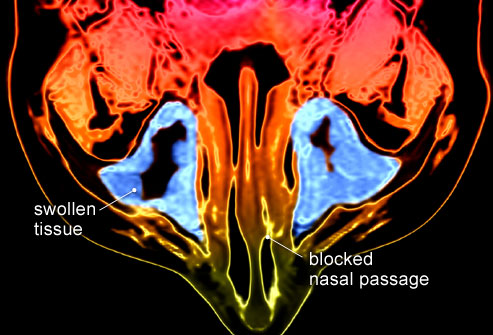
http://sitik.files.wordpress.com/ According to Evangeline Lausier, MD, assistant clinical professor of medicine and director of clinical services at Duke University’s department of integrative medicine,
I find it to be the first line of defense in dealing with complicated sinus problems and allergy problems, particularly if you are developing congestion or have a sinus infection, it’s very helpful.
The tool nasal irrigation practitioners use comes in many forms with the most common and basic being a bulb syringe, squeeze bottle, or neti pot. This article will focus on neti pots, as they are the most widely used, and my personal favorite.
Related Article: Smelling Calmness (And Other Things)
By using a neti pot, nasal irrigation acts as an aid for the cleaning system that is already in place inside your nose. WebMD explains:
The nasal passages come equipped with tiny, hair-like structures called cilia, which beat back and forth to catch dirt, bacteria, viruses, and other unwelcome substances. The cilia beat and the mucus acts kind of like flypaper, catching spores and particles you inhale. Those particles get pushed down to the back of the throat, where they are swallowed and destroyed by stomach acid.
Nasal irrigation helps thin out the mucus and improve the coordination of the cilia to help them more effectively remove bacteria and other irritants from the sinus passages.
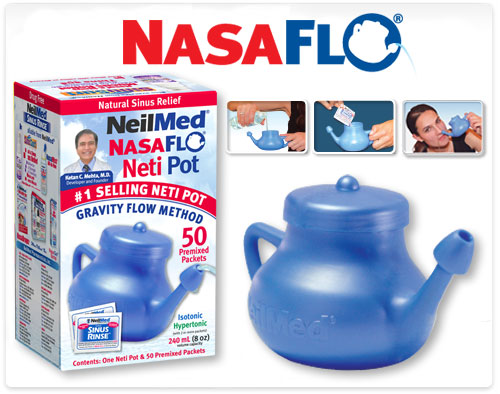
http://www.neilmed.com/ You clean your skin, your hair, your teeth, your tongue, your ears… but not your nose, especially not your nasal cavity. Our bodies are attacked and foraged by a constant onslaught of bacteria and microbes, and your nose is equipped with a natural filtration system to keep those creepies on the outside. How many of you have ever seen an air filter last forever? You need to replace it every so often, right? The same principal applies with your nasal cavity; it must be cleaned. Have you ever seen an air filter that hasn’t been replaced in a while? If you’ve never done jala neti, imagine what your nasal cavity must look like!
Related Article: Breathe Deep to Relieve Stress
For those of you that have concerns, nasal irrigation is a very safe practice. In fact, it is virtually devoid of any complications at all. Studies have shown that even doing it 2-6 times a day is safe and generally side effect free. The Department of Family Medicine, at the University of Wisconsin found that
daily hypertonic saline nasal irrigation improves sinus-related quality of life, decreases symptoms, and decreases medication use in patients with frequent sinusitis.
Although it is rare, a very small number of people do note minor nasal irritation, though studies have shown that the irritation is frankly worth it in view of the benefits.
So, how do you practice nasal irrigation? With a neti pot, especially those made by NielMed, it is very cheap and simple. A basic explanation of the process involves placing the spout of the neti pot in one nostril, tilting your head, and allowing a salt water mix to glide into the nostril, through the nasal cavity, and out the other nostril. Dry yourself, and repeat. There are details you should make sure to pay attention to, like proper drying techniques and proper salt water mixtures. Use this explanation on how to practice nasal irrigation safely to ensure everything flows smoothly.
Related Article: No Breathing Required

http://www.yoga-abode.com/ By the way, if you are interested, there is a more advanced version of jala neti called sutra neti which involves cleaning the nasal cavity with a cord running down your throat that you pull back and forth between your nose and mouth. If you are planning to try out this method, make sure to read this guide from yoga-age and do it safely.
*Important Note* The most important thing to remember is to use distilled, sterile, or previously boiled water. There have been two cases of deaths linked to nasal irrigation due to unintentionally using tap water that contained a highly fatal amoeba. Please, be smart and use properly treated water. As long as you do that you have nothing to worry about.
You should also ensure that your neti pot is clean and properly dried after each use. Think of it like any other hygienic tool: if it’s not clean, it can’t properly clean you.
Here’s to better breathing and clearer cavities!
Sources:
http://en.wikipedia.org/wiki/Nasal_irrigation
https://wondergressive.com/2013/05/17/breathe-deep-to-relieve-stress/
http://en.wikipedia.org/wiki/Neti_(Hatha_Yoga)
http://en.wikipedia.org/wiki/Vedas
http://en.wikipedia.org/wiki/Ayurveda
https://wondergressive.com/2013/03/17/belly-button-bacteria/
http://www.webmd.com/allergies/guide/neti-pot-nasal-irrigation-pros-and-cons
http://www.ncbi.nlm.nih.gov/pubmed/8736053
http://www.ncbi.nlm.nih.gov/pubmed/8736053
http://www.ncbi.nlm.nih.gov/pubmed/12540331
http://www.ncbi.nlm.nih.gov/pubmed/17636843
http://www.eurekalert.org/pub_releases/2012-08/idso-ceo082112.php
http://www.yoga-age.com/asanas/neti.html
https://wondergressive.com/2013/04/29/smelling-calmness-and-other-things/
https://wondergressive.com/2013/05/14/shirshasana-its-time-to-do-a-headstand/
https://wondergressive.com/2012/08/23/no-breathing-required/
allergies, Allergy, allergy pill, amoeba, ayurveda, Bacteria, breathing, Buddhism, cillia, department of family health, different religion, duke university, evangeline lausier, flypaper, hindu relgion, how to jala neti, how to nasal irrigation, hypertonic, jala neti, jala neti safe, kriya yoga, medicine, meditation, nasal douche, nasal irrigation, nasal irrigation safe, nasal lavage, nasal passage, neti pot, quality of life, safe, sanskrit, shatkarma, side effects, sinus infection, sutra neti, vedas, webmd, wisconsin, Yoga, yoga age, yogic breath -
Of Cyborg Monkeys and New Hope for Amputees


http://www.ctvnews.ca/ The innovative breeze of 2013 carries a particularly interesting development in the field of Neuroscience.
A joint venture funded by DARPA, composed of a group of researchers from the University of Pittsburgh and Carnegie Mellon University, revealed promising results in a recent study when monkeys were successful in moving a robotic arm using solely the power of their mind.
The practical application and climax of this study, as if it weren’t exciting enough already, finally arrived this January, when a woman was able to operate an artificial arm in a wide range of angles using her brain alone.
Related Article: Robotic Legs Controlled by Your Brain
For the past 11 years researchers have been conducting a series of experiments involving the motor-cortex, a part of the brain which facilitates movement. A tiny electrode array was implanted in the motor cortices of monkeys, enabling the scientists to read neural activity in the form of electrical spikes. Using a model based approach, the scientists were able to calculate the desired instantaneous hand and arm direction based on the activity of a few hundred neurons.
Reading brain-activity enabled the scientists to accurately move the artificial limb in the correct direction and angle, exactly the way the brain normally signals a healthy flesh and blood arm. In this way they trained the monkeys to move the arms through biofeedback.
Related Article: Robotic Sense and Feel
http://upload.wikimedia.org/ The monkeys were chosen as test subjects due to their similar brain structure to humans. However, it can’t be helped but to wonder: What is the secret for convincing a monkey to operate a robotic arm? The answer is simple: Marshmallows.
By hanging the treat just out of the monkey’s reach, far enough so that they would need to use the robotic arm to reach it, scientists were able to “train” the monkeys in moving the robotic arm in a space and they were able to teach the monkeys to grip their treat.
The next question that comes to mind is how many monkey-arms were removed due to the experiment? Animal rights fighters – rest assured; No monkeys were hurt in the process.
Related Article: Bionic Hand That Can Feel
After a decade of data-mining, the scientists are ready to implant a brain computer interface (BCI), an electrode array, in 53 year old Jan Scheuermann who suffers from quadriplegia; completely paralyzed from the neck down. The outcome of a not-so-simple surgery was optimistic news to all.
For many amputees, lacking an arm does not necessarily mean the brain is damaged as well. The successful experiment described above makes it very easy for a person to control a prosthetic arm, as all that needs to be done is to ‘think’ which way the arm should move, much in the same way you are operating the arm you are using to scroll down and read this article.
Jan’s reports of headaches quickly disappeared, and no sooner did she prove to be able to feed herself, and even high-five Professor Andrew B. Schwartz, a senior figure in the research. According to Jan, feeding herself was:
One small nibble for a woman, one giant bite for BCI.

http://www-users.cs.umn.edu/ While the results of the research are certainly a breakthrough, leaving neuroscientists to fantasize about a world of possibilities opening up, major flaws cannot be ignored.
Implanting the electrode array requires invasive surgery, involving a temporary removal of part of the skull. The degree of control created by the invasive BCI (Brain Computer Interface) is limited by the number of neurons recorded, currently at a few hundred. Non-invasive methods of reading brain signals, such as EEG, offer a much lower information rate and require much more training.
Another flaw that is evident by observing Ms. Scheuermann’s arm movement is a poor eye-arm coordination. Neuroscientists are still looking for a reasonable explanation for Ms. Scheuermann inability to catch a falling object while observing it. Curiously enough, she is able to do so when not looking directly at the object.
Regardless of those facts, the sweet taste of success should not be bittered: this is still the first time a human has been able to operate a robotic arm in so many degrees of freedom, using only the power of the mind.
So what’s next? Killer-coding-ninja monkeys using telepathy? Anyone?
Sources:
NYTimes: Monkeys Think, Moving Artificial Arm as Own
Lancet: Nueroprosthetic Control by Individual with Tetraplegia
Invasive BCI UPMC: Woman with Quadraplegia Feeds Herself
Nature: Cortical Control of a Prosthetic Arm for Self-Feeding
Wondergressive: The Singularity is Nigh Upon Us
Wondergressive: Robotic Sense and Feel
andrew schwartz, animal rights, bci, biofeedback, brain, brain activity, brain computer interface, brain surgery, carnegie mellon, cyborg, DARPA, electrode array, electrode brain, experiment, experiment monkey, innovation, invasive bci, invasive surgery, jan scheuermann, jan schuermann, killer coding ninja monkey, marshmallows, monkey experiment, motor cortex, move with mind, neuroscience, ninja monkey, quadraplegia, robot, robot arm mind, robotic arm, telepathy, tetraplegia, train monkey, university of pittsburgh, woman robot arm -
New Plausible Theory of Black Holes: Gateways to Other Universes
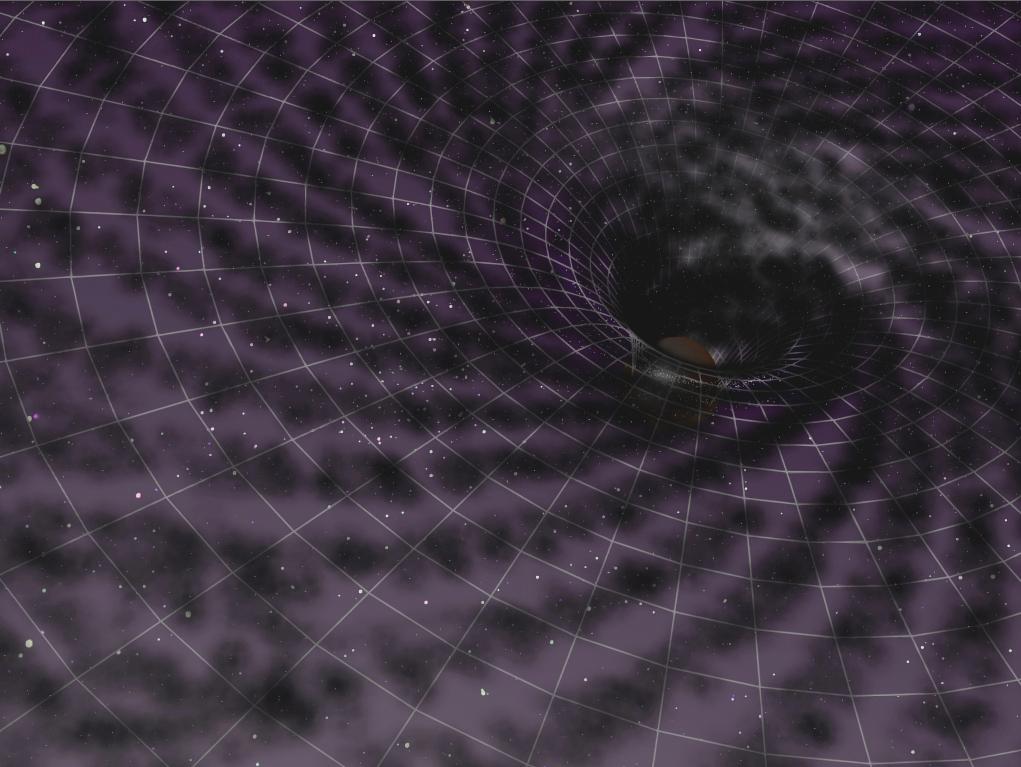
http://www.centauri-dreams.org/ According to traditional physics, once you go far enough into a black hole, traditional physics simply ceases to be. Any meaningful equation breaks down into nonsense. Insanity. Cosmic nincompoopery! Well, not anymore…
Einstein’s theory of general relativity states that if a person were to fall into a black hole they’d be shredded to the atomic level by a process called spaghettification, described as being stretched into an infinitely long strand of matter and energy by infinitely strong gravity. This infinitely strong gravity is due to a singularity at the ‘end’ of the black hole, an infinitely dense area with zero volume. A singularity is also used to describe the Big Bang.
There is a problem though; conventional physics cannot describe what occurs at a singularity point, so talking about the beginning of time or the core of a black hole has always been one-pointed, but pointless. Then quantum mechanics appeared.
Related Article: Life, It’s All Over the Place
By using the theory of loop quantum gravity, a merger of quantum mechanics and general relativity which describes space-time as a web of indivisible chunks about 10-35 meters in size, physicists have come up with a practical way to describe what occurs at the singularity point; the singularity isn’t there.
There is no singularity. Gravity still increases as you get pulled into the black hole, but eventually it decreases, and you come out the other end. Although theories have postulated this idea before, the problem was that the singularity could never be bypassed. This is incredibly revolutionary because modern day physics has always taken the idea of a singularity for granted. The universe had forever been filled with them; all of time and space began as a singularity.
Related Article: Ancient Galaxy That Shouldn’t Exist is Found Perfectly Formed
You are probably wondering what this means for you and me, what relevance this all has. This opens the doors for even more science fiction to become science reality (consider: just about every piece of technology that exists today was written about as science fiction at one point).

http://www.proetcontra.com/ According to the new theory, black holes are more likely doors to other universes, or incredibly distant areas of our own universe, or both. Even more amazingly, using loop quantum gravity theory, if you were to rewind the big bang you wouldn’t be left with an infinitely dense point of mass and energy, you would cross a quantum bridge into another, older universe.
Related Article: Voyager 1: The Final Frontier?
This also helps explain what happens to information that approaches a black hole. In a black hole with a singularity, the information would be lost forever as the black hole eventually evaporates after hundreds of trillions of years (give or take several hundred trillion years). As Jorge Pullin, lead researcher on the study at Louisiana State University, points out:
Information doesn’t disappear, it leaks out.
The infinite universe just became infinitely more infinite.
Sources:
http://en.wikipedia.org/wiki/General_relativity
http://en.wikipedia.org/wiki/Spaghettification\
http://en.wikipedia.org/wiki/Gravitational_singularity
http://www.hawking.org.uk/the-beginning-of-time.html
http://en.wikipedia.org/wiki/Loop_quantum_gravity
http://mashable.com/2010/09/25/11-astounding-predictions/
http://prl.aps.org/abstract/PRL/v96/i14/e141301
http://prl.aps.org/abstract/PRL/v110/i21/e211301
http://en.wikipedia.org/wiki/Multiverse
https://wondergressive.com/2012/08/17/life-its-all-over-the-place/
https://wondergressive.com/2012/09/21/ancient-galaxy-that-shouldnt-exist-is-perfectly-formed/
https://wondergressive.com/2013/01/12/galaxy-geysers/
https://wondergressive.com/2013/03/21/voyager-1-final-frontier/
amazon, best sci fi movie, best science fiction, blackhole, blackhole hawking, blackhole universe, chunks, core, density, door in the floor, Einstein, einstein quote, energy, fiction to non fiction, game of thrones, general relativity, god particle, Gravitation, gravity, gravtity, higgs boson, hugo award, jorge pullin, loop quantum gravity, louisa state university, matter, multiverse, nebula award, new sci fi movie, non fiction, old universe quantum bridge, physicist, physics, postulate, quantum mechanics, quantum physics, sci fi, science fiction, science reality, Singularity, space time, spaghettification, special relativity, stephen hawking, theory, theory of general relativity, time, universe, universe infinite, white hole, wiki, zero volume
Wonder about your world…

Take the plunge down the rabbit hole of insanity and wonder in this fast-paced, nonstop psychological thriller that will leave you questioning the very nature of reality and beyond. Part thriller, part romance, part existential horror, A Dream of Waking Life delves into lucid dreaming, psychedelics, existential ontology, video games, the nature of love, the nature of reality, and more.

Mendel’s Ladder delivers an adrenaline-fueled journey set on a dystopian future Earth, brimming with high-stakes action, adventure, and mystery. This epic series opener plunges readers into a world filled with diverse cultures, heart-pounding battles, and characters who will captivate your heart and imagination.

“E.S. Fein is raising the bar for quality as it’s a very well-written and thought-provoking book…There are points and themes in the story that could be discussed for eons as people will have their own idea on where it leads. It’s a book I would highly recommend.” – Andy Whitaker, SFCrowsnest
 Wondergressive