
-
The Lost Civilization of Mu: Exploring the Evidence and Theories Behind its Existence
For centuries, there have been legends and myths about an ancient civilization that existed in the Pacific Ocean [1]. This civilization, known as Mu or Lemuria, is said to have been a highly advanced society that predates even the ancient civilizations of Egypt and Sumeria. Despite the lack of concrete evidence to support the existence of this lost civilization, many people still believe in its existence. In this article, we will explore the possibility of the ancient society of Mu by examining the theories and evidence put forward by various experts and scholars.
The Legend of Mu
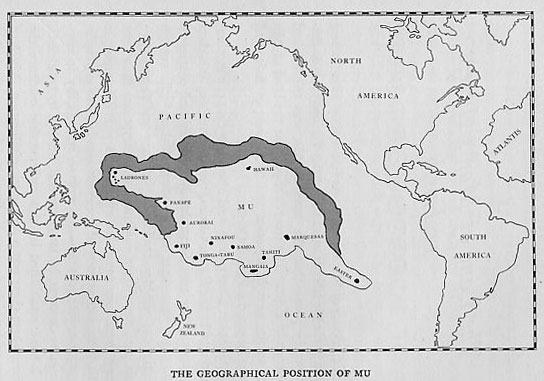
According to legend, the society of Mu existed in the Pacific Ocean, encompassing an area stretching from Hawaii to Easter Island [2]. It is believed to have been a highly advanced society with a rich culture and civilization. The people of Mu were said to be highly intelligent and possessed knowledge and technology far beyond that of any other civilization of their time. However, the society of Mu met a tragic end when a massive cataclysmic event caused their entire civilization to sink beneath the ocean waves.
Theories on the Existence of Mu
Despite the lack of concrete evidence, there have been many theories put forward over the years to support the existence of the ancient society of Mu. One of the most popular theories is that Mu was part of a larger landmass that existed in the Pacific Ocean, known as Lemuria [3]. According to this theory, Lemuria was a continent that existed millions of years ago and was home to a highly advanced civilization. However, a series of cataclysmic events caused the continent to sink beneath the ocean waves, resulting in the loss of the entire civilization.
Another theory put forward to support the existence of Mu is the discovery of underwater ruins off the coast of Yonaguni Island in Japan [4]. The underwater ruins, which were discovered in 1986, consist of what appears to be a massive stone structure that is believed to be over 10,000 years old. Many people believe that this structure is evidence of an ancient civilization that existed in the Pacific Ocean and may be connected to the society of Mu.
The evidence for the existence of Mu is not limited to underwater ruins. There have been many other discoveries made over the years that suggest the existence of an advanced civilization in the Pacific. For example, the discovery of the Giza pyramids in Egypt has been linked to the civilization of Mu [5], as some experts believe that the pyramid builders may have been influenced by Mu’s advanced knowledge of engineering and architecture. Additionally, the discovery of giant stone heads on Easter Island has also been linked to Mu [6], as the advanced stone-carving techniques used to create the heads are believed to be similar to those used by the people of Mu.
Criticism of Mu Theory
Despite the many theories put forward to support the existence of Mu, there are many critics who argue that the evidence for the society’s existence is lacking. One of the main criticisms of Mu theory is that there is no concrete evidence to support the idea that the society existed [7]. Many of the supposed pieces of evidence are open to interpretation, and there is no way to definitively prove that they are connected to the society of Mu.
Another criticism of Mu theory is that the idea of an advanced civilization existing in the Pacific Ocean that predates even the ancient civilizations of Egypt and Sumeria is highly unlikely [8]. Most historians and archaeologists believe that civilization first emerged in the Fertile Crescent, which is located in modern-day Iraq, and then spread to other parts of the world. The idea that an advanced civilization could exist in the Pacific Ocean before the emergence of these other civilizations is seen as highly improbable.
Conclusion
The legend of Mu has captivated people’s imaginations for centuries, and many people still believe in its existence. While the evidence for the existence of Mu is not conclusive, there are many pieces of evidence that suggest the possibility of an advanced civilization existing in the Pacific Ocean. The theories put forward by experts and scholars cannot be dismissed entirely, and further research and investigation may be needed to determine whether or not the society of Mu was real or simply a legend. Until then, the mystery surrounding this lost civilization will continue to inspire further exploration and discovery.
Source List:
- Churchward, J. (1926). The Lost Continent of Mu. Kessinger Publishing.
- Lewis, J. (1995). The Mysterious Civilization of Mu. Simon and Schuster.
- Steiner, R. (1984). Lemuria: The Lost Continent of the Pacific. Rudolf Steiner Press.
- Hancock, G. (1995). Fingerprints of the Gods. Three Rivers Press.
- Childress, D. (1992). Lost Cities and Ancient Mysteries of the Southwest. Adventures Unlimited Press.
- Van Tilburg, J. A. (1994). Easter Island: Archaeology, Ecology, and Culture. Smithsonian Institution Press.
- Feder, K. L. (2010). Frauds, Myths, and Mysteries: Science and Pseudoscience in Archaeology. McGraw-Hill Education.
- Diamond, J. (1999). Guns, Germs, and Steel: The Fates of Human Societies. W. W. Norton & Company.
advanced society, ancient civilizations, ancient mysteries, ancient technology, anthropology, Archaeology, Atlantis, Easter Island, folklore, geological history, human evolution, legends, Lemuria, lost civilization, Mu, pacific ocean, Pacific Ring of Fire, pseudoscience, tectonic plates, underwater ruins -
Exploring the Myth of Underground Civilizations: Separating Fact from Fiction

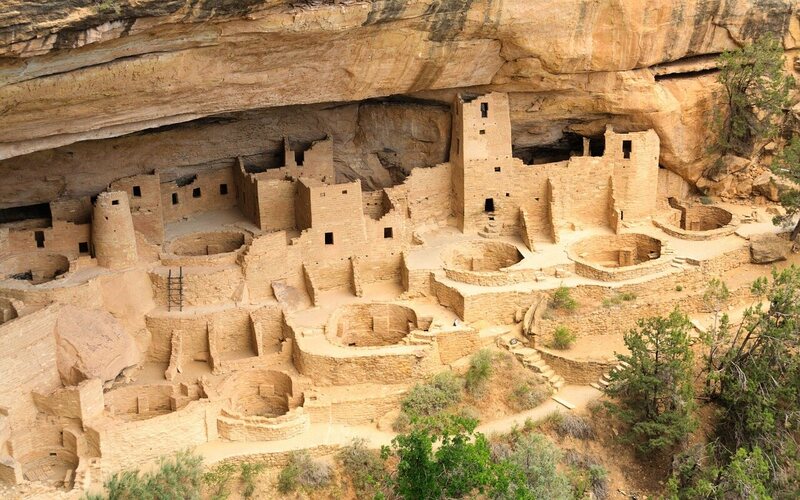
The idea of people living secretly beneath the earth has captured the imaginations of humans for centuries. From ancient legends to modern science fiction, stories of underground civilizations have been a popular topic. However, is there any truth to these tales, or are they merely fanciful imaginings? In this article, we will explore the idea of people living secretly beneath the earth and examine the evidence for and against its existence.
History of Underground Civilizations
The concept of underground civilizations dates back to ancient times. In Greek mythology, the god Hades ruled over the underworld, a place beneath the earth where the dead resided (1). The ancient Indian epic, the Ramayana, describes a subterranean city called Patala, ruled by a demon king named Bali. In China, there are stories of the underworld kingdom of Diyu, where the souls of the dead were judged and punished (2).
In more modern times, the idea of underground civilizations has been a popular topic in science fiction. Jules Verne’s 1864 novel “Journey to the Center of the Earth” tells the story of a group of explorers who discover a vast subterranean world inhabited by prehistoric creatures and ancient civilizations (3). In H.G. Wells’ 1895 novel “The Time Machine,” the protagonist travels into the distant future and discovers that humans have evolved into two distinct species, one of which lives underground (4).
Evidence for Underground Civilizations

While the idea of underground civilizations may seem far-fetched, there are some who believe that there is evidence to support its existence. One of the most commonly cited pieces of evidence is the network of tunnels and caves that exist beneath the earth’s surface. These tunnels and caves have been used by humans for thousands of years for various purposes, such as shelter, storage, and transportation (5).
There are also reports of mysterious underground cities and tunnels that have been discovered around the world. In Turkey, the ancient city of Derinkuyu is a vast underground complex that was carved out of the rock by unknown people thousands of years ago. It contains multiple levels, including living quarters, stables, and a church (6). Similarly, in Mexico, the Mayan city of Cenote Yucatan was discovered in the early 20th century. It is a vast underground city that includes a network of canals and waterways (7).
There are also legends and stories from around the world that describe underground civilizations. In Scotland, for example, there is a legend of the “fairy folk,” who are said to live in a network of caves and tunnels beneath the earth (8). In India, there are stories of the Nagas, a race of serpent people who live in underground cities (9). And in South America, there are legends of the “Chachapoyas,” a race of tall, fair-skinned people who are said to have lived in underground cities (10).
Evidence Against Underground Civilizations
Despite the many stories and legends about underground civilizations, there is little concrete evidence to support their existence. Many of the stories are based on hearsay, rumors, and legends, with little actual proof. While there are certainly tunnels and caves beneath the earth’s surface, there is no evidence that these are connected to underground civilizations.
Furthermore, the idea of an underground civilization is difficult to reconcile with what we know about the conditions necessary for human life. Humans require air, water, and food to survive, and it is unclear how these necessities could be obtained in an underground environment. Additionally, the lack of sunlight would make it difficult for plants to grow, further complicating the issue of obtaining food.
Conclusion
In conclusion, while the idea of underground civilizations may seem intriguing, there is little concrete evidence to support their existence. While there are certainly tunnels and caves beneath the earth’s surface, there is no concrete evidence to suggest that they are connected to underground civilizations. Furthermore, the idea of an underground civilization is difficult to reconcile with what we know about the conditions necessary for human life. Humans require air, water, and food to survive, and it is unclear how these necessities could be obtained in an underground environment. Therefore, it is more likely that stories of underground civilizations are simply legends and myths, rather than based in reality.
Source List:
- “Hades.” GreekMythology.com, https://www.greekmythology.com/Other_Gods/Hades/hades.html.
- “The Underworld in Chinese Mythology.” Ancient Origins, 4 May 2015, https://www.ancient-origins.net/myths-legends-asia/underworld-chinese-mythology-003023.
- Verne, Jules. “Journey to the Center of the Earth.” Project Gutenberg, 1864, https://www.gutenberg.org/files/18857/18857-h/18857-h.htm.
- Wells, H.G. “The Time Machine.” Project Gutenberg, 1895, https://www.gutenberg.org/files/35/35-h/35-h.htm.
- “Subterranean Tunnels and Caves: A Tour of the World’s Most Amazing Underground Structures.” History Collection, 12 July 2019, https://historycollection.com/subterranean-tunnels-and-caves-a-tour-of-the-worlds-most-amazing-underground-structures/.
- “Derinkuyu: The Underground City of Cappadocia.” Atlas Obscura, https://www.atlasobscura.com/places/derinkuyu.
- “The Lost Mayan City of Cenote Yucatan.” National Geographic, 1 May 2019, https://www.nationalgeographic.com/history/archaeology/lost-mayan-city-of-cenote-yucatan/.
- “The Fairy Folk of Scotland.” Historic UK, 26 Oct. 2016, https://www.historic-uk.com/CultureUK/The-Fairy-Folk-of-Scotland/.
- “The Naga.” Myths Encyclopedia, https://www.mythencyclopedia.com/Mi-Ni/Naga.html.
- “Chachapoyas: The Mysterious Cloud Warriors of Peru.” Live Science, 13 Oct. 2017, https://www.livescience.com/60614-chachapoyas.html.
adventure stories, ancient civilizations, caves, Derinkuyu, fictional worlds, folklore, Hades, human survival, Journey to the Center of the Earth, lost cities, mysterious places, myths and legends, myths debunked, paranormal, scientific evidence, secret societies, subterranean tunnels, The Time Machine, underground civilizations, unexplained phenomena -
The Richat Structure: Could It Be The Lost City of Atlantis?

The Richat Structure, also known as the Eye of the Sahara, is a geological formation located in the Sahara desert, in the country of Mauritania. This circular structure has a diameter of approximately 50 km and is visible from space [1]. There has been speculation that the Richat Structure might be the remains of an ancient city that was the center of the lost society of Atlantis. While there is no conclusive evidence to support this claim, there are several theories and pieces of evidence that suggest that the Richat Structure might be the remains of an ancient civilization.
History of Atlantis

Atlantis is a mythical island that is said to have existed in the Atlantic Ocean. The story of Atlantis is believed to have originated from the writings of the ancient Greek philosopher Plato, who described the island as a powerful and prosperous society that was destroyed in a single day and night of misfortune. Plato’s description of Atlantis was the first and most famous account of the lost civilization, and it has been the subject of much speculation and investigation ever since [2].
The Richat Structure as Atlantis
There have been several theories that suggest that the Richat Structure might be the remains of Atlantis. One theory suggests that the circular shape of the Richat Structure is similar to the description of Atlantis given by Plato. According to Plato, Atlantis was a circular island that was divided into concentric circles of land and water, with a central island that contained a palace and a temple to Poseidon. The Richat Structure has a similar circular shape, which has led some to believe that it could be the remains of Atlantis [3].
Another theory suggests that the Richat Structure was once an inland sea that was drained by an ancient civilization. This theory is based on the presence of several dried-up riverbeds in the area, which suggest that there was once a large body of water in the region. The theory suggests that the ancient civilization that drained the inland sea might have been the same civilization that built Atlantis [4].
Evidence to Support the Theory
While there is no conclusive evidence to support the theory that the Richat Structure is the remains of Atlantis, there are several pieces of evidence that suggest that there might have been an ancient civilization in the region. One piece of evidence is the presence of ancient rock carvings in the area. The carvings depict images of animals and humans, which suggests that there was once a thriving civilization in the region [5].
Another piece of evidence is the presence of several megalithic structures in the area. Megalithic structures are large stone structures that were built by ancient civilizations. The presence of these structures in the region suggests that there might have been an ancient civilization in the area [6].
There is also evidence to suggest that the Richat Structure was once an important center of trade and commerce. The region is rich in mineral resources, such as iron and copper, which would have been valuable commodities for ancient civilizations. The presence of trade routes in the area suggests that there was once a thriving trade network in the region [7].
Criticism of the Theory
Despite the evidence that supports the theory that the Richat Structure is the remains of Atlantis, there are several criticisms of the theory. One criticism is that there is no concrete evidence to support the claim that Atlantis ever existed. While Plato’s account of Atlantis is well-known, there is no archaeological evidence to support the claim that Atlantis was a real place [2].
Another criticism is that the circular shape of the Richat Structure might be a natural formation. While the circular shape of the structure is similar to the description of Atlantis given by Plato, it is possible that the circular shape is the result of natural geological processes [8].
Conclusion
The theory that the Richat Structure is the remains of Atlantis is an intriguing one, but it is not supported by conclusive evidence. While there are several pieces of evidence that suggest that there might have been an ancient civilization in the region, there is no concrete evidence to support the claim that the Richat Structure is the remains of Atlantis. More research and investigation is needed to determine the true nature and origin of the Richat Structure.
Sources:
- NASA Earth Observatory. “Eye of the Sahara.” Accessed February 18, 2023. https://earthobservatory.nasa.gov/images/145254/eye-of-the-sahara.
- Plato. “Critias.” Translated by B. Jowett. Accessed February 18, 2023. http://classics.mit.edu/Plato/critias.html.
- Rand Flem-Ath and Colin Wilson. The Atlantis Blueprint: Unlocking the Ancient Mysteries of a Long-Lost Civilization. New York: Dell Publishing, 2001.
- Robert M. Schoch. “The Richat Structure: Natural or Man-Made?” The Skeptic, Vol. 11, No. 1 (2005): 13-18.
- Luigi G. Cantarini. “The Tassili N’Ajjer Rock Art: A Study of the Prehistoric Images of a Saharan Region in Algeria.” African Archaeological Review, Vol. 16, No. 1 (1999): 3-23.
- Thomas G. Brophy. The Origin Map: Discovery of a Prehistoric, Megalithic, Astrophysical Map and Sculpture of the Universe. Albuquerque: Sunstar Publishing, 2002.
- Jim Allen. “The Richat Structure – A Natural Formation?” Atlantis Rising, No. 35 (2002): 27-33.
- Frank Joseph. Atlantis and Other Lost Worlds: New Evidence of Ancient Secrets. Kempton, IL: Adventures Unlimited Press, 2015.
-
New Fungus Found in Chernobyl Area Feeds on Radiation: Implications for Bioremediation, Medical Research, and Space Exploration


In 1991, five years after the Chernobyl nuclear disaster, scientists discovered a black fungus growing on the walls of the damaged reactor’s containment structure. This fungus, called Cryptococcus neoformans, was found to not only survive in the extreme radiation levels but also to feed on it. Recent studies have shown that this unique ability of C. neoformans to metabolize ionizing radiation could have significant implications for bioremediation, as well as medical and space research.
The discovery of this radiation-eating fungus is significant because it provides a potential solution to the problem of nuclear waste cleanup. Current methods of nuclear waste disposal involve storing radioactive material in secure facilities, which can be costly and pose a threat to public safety. The use of C. neoformans in bioremediation could significantly reduce these risks and costs.
In a recent study, scientists investigated the genetic basis for C. neoformans’ ability to metabolize radiation. They found that a specific protein in the fungus called melanin plays a crucial role in protecting it from the harmful effects of radiation. Melanin is a pigment that is also found in human skin, and it is known to protect against UV radiation. In C. neoformans, melanin not only protects the fungus from radiation damage but also allows it to use radiation as a source of energy.
The use of C. neoformans in bioremediation has already been demonstrated in a pilot study in which the fungus was used to clean up soil contaminated with cesium-137, a radioactive isotope. The researchers found that the fungus was able to significantly reduce the levels of cesium-137 in the soil, indicating its potential for use in nuclear waste cleanup.
The discovery of C. neoformans’ radiation-eating abilities also has implications for medical research. Radiation therapy is a common treatment for cancer, but it can also cause damage to healthy cells in the body. If scientists can identify the specific proteins in C. neoformans that allow it to metabolize radiation, they may be able to develop drugs that protect healthy cells during radiation therapy.
The fungus could also have potential applications in space research. Astronauts traveling to Mars or other destinations in the solar system will be exposed to high levels of radiation, which could have significant health effects. If scientists can develop a way to use C. neoformans to protect astronauts from radiation damage, it could make long-term space travel more feasible.
However, the use of C. neoformans in bioremediation and other applications is not without its challenges. For example, the fungus is a pathogen that can cause serious infections in people with weakened immune systems, such as those with HIV/AIDS. It is also difficult to grow in the lab, which could limit its potential for large-scale bioremediation efforts.
Despite these challenges, the discovery of C. neoformans’ radiation-eating abilities has opened up new possibilities for nuclear waste cleanup, medical research, and space exploration. Further research is needed to fully understand the fungus’s unique capabilities and to develop ways to harness its potential for practical applications.
Sources:
- Dadachova, E., Bryan, R. A., Huang, X., Moadel, T., Schweitzer, A. D., Aisen, P., & Nosanchuk, J. D. (2007). Ionizing radiation changes the electronic properties of melanin and enhances the growth of melanized fungi. PLoS One, 2(5), e457.
- Dighton, J. (2007). Fungi in ecosystem processes. CRC Press.
- Gadd, G. M. (2007). Geomycology: biogeochemical transformations of rocks, minerals, metals and radionucl
-
Exclusive Phoenix Coin Developer Interview and Free $$$ Give Away


Hi everyone, I had the chance to get an exclusive interview with my personal favorite cryptocurrency. The developer asked me to share the following, and since it appears to be a no strings attached chance at making free money, I want to share it with you all. Here is what he had to say about the giveaway, and the interview will be below that:
Giveaway Information:
Greetings everyone! We have exciting news to share about the Phoenix Blockchain and an opportunity for you to win fantastic prizes.To kick off our 5,000 PHX + 50 USDT Giveaway on Sweep Widget, we are inviting you to enter through the link below. Hurry, the giveaway ends on March 26th. By participating, you stand a chance to win 5,000 PHX coins and 50 USDT.
To increase your chances of winning, we are offering a daily activity that grants you more opportunities to win. Simply visit the CoinMarketLeague website through the Sweep Widget page and vote for the Phoenix Blockchain. This automatically enters you into the daily draw for more prizes.
By voting for Phoenix Blockchain on CoinMarketLeague, you are helping to boost its visibility and popularity. This will attract more investors and traders to the platform, thus supporting the growth of the Phoenix Blockchain community.
To participate, head over to the Sweep Widget page and enter our giveaway. Don’t forget to vote for Phoenix Blockchain on CoinMarketLeague for additional chances to win. Share this message with your friends and family to join in on the fun.
Please note that this is not financial advice. It’s essential to conduct thorough research before making any investment decisions. For more information about Phoenix Blockchain, check out our Linktree and subscribe to our weekly WeBurnWeRise Show. Follow the link below to join the giveaway: https://sweepwidget.com/c/67762-z54ekt9b
Interview:
Q: So, why are you so excited personally about phoenix coin?
A: Phoenix Blockchain is a revolutionary blockchain that provides users, community members, artists, and developers with the ability to fully deploy contracts for fractions of a penny! It is EVM compatible and setting the stage for an all inclusive solution to the high fees of Ethereum.
Q: Very cool. I personally find it annoying to have to go through so many loops to utilize certain coins, put in a simple way, how does phoenix streamline and make things easier.
A: Phoenix is working to not only bring a cheap low gas solution to users, but constantly working to bring FireSwap (DEX), FireSea (NFT marketplace), FireSwag (merchandise store), and PIPFS (storage solution) for users to take advantage of. True ownership is the goal as the normal third party outlets scatter your work and your security of assets!
Q: Thanks so much for that answer! I know you said you’re busy, so last question! When can we expect Phoenix to be adopted by the so-called “masses?” Do you already see the adoption of Phoenix picking up steam?
A: Phoenix Blockchain is constantly creating new partnerships such as our newest integration with Third Web which assists non coder based users with simplifying the Blockchain contract processes! We have a new listing coming soon on Dex Trade to help reach a larger user base but our bigger goal is Gate.io which we have started the communication process with! Not to mention our giveaway that is reaching users on all socials, make sure to enter for your chance at some PHX and a grand prize of 50 USDT, join below:
https://sweepwidget.com/c/67762-z54ekt9b
Q: Thanks so much for your answers today. As a “crypto dude,” I am extremely excited about this project. Thanks for taking the time to talk to me today! Keep up the incredible work behind the scenes!
-
Phoenix(PHX) Blockchain: The Future Cryptocurrency is Hoping For

One of the most interesting coins I’ve come across in a while Phoenix Coin (PHX). I had the opportunity to speak with some of the developers, and they impressed me with their vision and honesty about their project. Let’s take a look at what makes the coin a much needed game changer in the world of crypto.
Launched in November 2021, the Phoenix blockchain features its own exchange and NFT marketplace. The UX is simple yet elegant. The developers and collaborator of over 50 individuals are working hard to make this project a one-stop shop for all crypto needs.
For those with some knowledge of the industry, Phoenix runs on the proof of work protocol (PoW) and is an EVM based blockchain. Their semi-open network keeps the same from the vulnerabilities and weaknesses of the PoW protocol. The main token, PHX, is supported on the Metamask wallet. You can download the wallet browser extension directly from the website at https://metamask.io/. The information needed to add this token is available on their website at https://cryptophoenix.org/phoenix/. Please double check that the website is correct before downloading anything.

Phoenix has it’s own DEX called FireSwap. On this exchange you can swap, stake, and trade currencies. The beauty of FireSwap is that it allows users to avoid the transactions fees of other blockchains while also letting users pair tokens with existing tokens and the PHX token. There is nothing UniSwap and PancakeSwap do that FireSwap doesn’t cover as well!

The name of the Phoenix NFT marketplace is FireSea. Minting directly from FireSea is cheap and easy, and artists can do it directly using FireSea. Minting fees are one of the biggest hurddles artists face, so the developers of Phoenix wanted to make sure these fees are as low as possible so that any artist can become involved. Furthermore, Phoenix has even launched its own merchandise platform called FireSwag that runs in parallel to FireSea and allows artists to manage their own storefront. This provides artists the ability to directly create merchandise for their audiences. T-shirts, stickers, mugs, you name it!

Want to enjoy swag from your favorite artists? FireSwag has you covered! This is an incredible way to provide artists a way of gaining even more money. While NFTs are fun, the developers of phoenix want to give artists the ability to take their NFTs and other pieces of art to the next level!

This NFT game is based entirely in the Telegram App. When you join the Duck Hunt room on Telegram, you can shoot at the ducks that appear. Each duck you shoot rewards you with in-game currency, experience, and a small amount of Phoenix. Duck Hunt is an NFT game based solely inside the Telegram app. As telegram users join the Duck Hunt room, they can “shoot” at ducks. Once shot, a duck rewards in-game currency, experience, and a small amount of PHOENIX. Rare ducks will reward an NFT of the duck shot.

BattleDucks is another NFT game based inside the telegram app. Users choose a duck and face off in a battle against other users. You can upgrade and augment your duck with NFT weapons, NFT shields, and NFT spells. The winner of the battle will gain experience, in-game currency, and, once again, a small amount of Phoenix. The ducks users choose from are actually NFTs that are gained from remaining active in the CPHX and GRT telegram groups. The best part is that the NFTs of a user’s ducks, weapons, spells, and shields will all be tradable on the Phoenix blockchain.

The Phoenix blockchain includes two governing tokens, Crypto Phoenix (CPHX) and the Golden Ratio token (GRT). Having either token allows users to vote on what happens within the Phoenix ecosystem, putting parts of Phoenix’ future into the hands of every user. On top of voting rights, owners of either of these tokens will be eligible for airdrops of the native Phoenix token (PHX).
Another thing to mention is Phoenixplorer, which keeps track of the current PHX mining statistics, token transfers, NFT contracts, and all other transactions within the Phoenix blockchain. You can reach it at https://phoenixplorer.com/.
With so many features, benefits, freedom, and power in the hands of users, it’s no wonder Phoenix is becoming increasingly more popular. This coin is being run by developers with a vision true to the original intent of crypto. This isn’t just some pump and dump shitcoin. This is a project that has a vision spanning far into the future, and that vision is already manifesting into reality. They’ve covered everything from NFT minting to governance and trading options. The future of Phoenix is a bright one.
None of this meant to be financial advise. As with all investments, it’s important to do your own research. For more information about the Phoenix blockchain you can visit the main site at https://cryptophoenix.org/phoenix/, or go directly to the linktree at https://linktr.ee/phoenixblockchain
-
Video Games: Health Boon or Bust?


I, like most other people my age, like to play video games. I can easily lose myself for hours on end in virtual worlds. I’m not alone either; games such as Minecraft are played by millions of people of all ages all around the world. In fact, from 2016 to 2020, it is estimated that gamers collectively spent a total of more than 68 million years playing Minecraft — and that’s just a single video game out of tens of thousands played each year. While that might sound like an unimaginable amount of time to spend playing a video game, it’s not at all surprising to me. Minecraft is especially fun to me because of all the creativity that I can use to build amazing structures and environments. I even get to interact with friends online, so I can spend time in these incredible places building palaces and surreal structures with my close friends. Sometimes I even get to make new friends this way. Despite the benefits I’ve found playing video games, many people still think that video games are bad for you for numerous reasons. So, the question is: what does the research reveal? Are video games good or bad for us?
Depression, Anxiety and other Psychological Issues
One of the major worries that people have concerning video games is that they can cause depression and anxiety. Numerous studies actually show this to be true. For example, an opinion piece from the Georgia State Signal points out that,
A comprehensive study from the Journal of Health Psychology shows that gaming disorders are linked to greater levels of loneliness, anxiety, depression, sleeping problems, social problems and many other psychological-social problems.
On the other hand, Webmd cites other sources which show that video games actually distract and help people deal with depression, anxiety, or PTSD.
Video games can act as distractions from pain and psychological trauma. Video games can also help

people who are dealing with mental disorders like anxiety, depression, attention deficit hyperactivity disorder (ADHD), and post-traumatic stress disorder (PTSD).
There is research supporting both arguments, so it really comes down to the individual gamer and their particular circumstances.
Video Games and Violence
The argument for individual circumstances and personality is also the central factor behind the connection between video games and violence. I’m sure there are even many readers of this article who think that video games cause violence. Video games such as Grand Theft Auto are often accused of being too violent, affecting the player’s brain in ways that lead to violent behavior in real life. Studies have shown that this is not the case. Apa.org, points out that
Recent research has shown that as video games have become more popular, children in the United States and Europe are having fewer behavior problems, are less violent and score better on standardized tests. Violent video games have not created the generation of problem youth so often feared.
With this in mind, many will wonder: what about all of the people who got in trouble and blamed video game violence as the source of their behavior? Well, it’s more about the personality of the player rather than the game. Harvard Health says that,
Two psychologists, Dr. Patrick Markey of Villanova University and Dr. Charlotte Markey of Rutgers University, have presented evidence that some children may become more aggressive as a result of watching and playing violent video games, but that most are not affected. After reviewing the research, they concluded that the combination of three personality traits might be most likely to make an individual act and think aggressively after playing a violent video game. The three traits they identified were high neuroticism (prone to anger and depression, highly emotional, and easily upset), disagreeableness (cold, indifferent to other people), and low levels of conscientiousness (prone to acting without thinking, failing to deliver on promises, breaking rules).
Just like with loneliness and depression, games themselves are never the sole cause of problems. For example, I have personally played many violent video games, and I’m certainly not a violent person. While it might be true that violent video games can make an already violent person more violent, it does not appear to be the case that video games specifically cause violence.
 Bottom Line: Video Games are Good for You
If video games aren’t bad for you, then are they good for you? Well, in fact, yes! Video games can benefit players in a multitude of ways, including and not limited to improvement in:
- memory
- spatial visualization
- mood
- social skills
- perception
- physical fitness
- decision making
- youthfulness
- problem solving skills
- curiosity
As a specific example, studies have shown that fast paced games can help you make quick decisions:
Fast-paced video games like Need For Speed or Call of Duty require you to stay on your toes and make decisions quickly. These energizing action games can also improve your ability to make game-time decisions in real life.
In terms of benefit to motor function, Psychologicalscience.org says that:
Playing action-based video games may boost players’ ability to coordinate incoming visual information with their motor control, a skill critical to many real-world behaviors including driving, new research shows. The findings are published in Psychological Science, a journal of the Association for Psychological Science.
For improvements to general psychology, Webmd explains that:
When you fail in a game or in other situations, it can be frustrating. Video games help people learn how to cope with failure and keep trying. This is an important tool for children to learn and use as they get older.
For stress relief, Verywellmind.com says that:
Really, any game that you truly enjoy can be a stress reliever. Virtually any game that you find to be truly fun can be beneficial by providing an escape from daily stress, a break from patterns of rumination, or a way to build positive feelings.
For improvements to intelligence, Webmd says that:
Video games often make you think. When you play video games, almost every part of your brain is working to help you achieve higher-level thinking. Depending on the complexity of the game, you may have to think, strategize, and analyze quickly. Playing video games works with deeper parts of your brain that improve development and critical thinking skills.
And finally for sociability, Levelskip.com says that:
Most gamers (over 70%) play video games with one or more of their friends. Gamers who play video games with friends may play either cooperatively (where two or more players work together to achieve the goal of the game)
The Best Video Games for You to Play
If all games are good, what are the best games? Well, I might be biased, of course, but the famous Minecraft is an amazing game to play. It can teach you how to be creative with your buildings. There are all sorts of blocks and different colors to build with. From idtech.com, they explain:
Minecraft is educational because it enhances creativity, problem-solving, self-direction, collaboration, and other life skills.
Other first person shooter games, such as Call of Duty, are also good games to play. Even though they can show blood, it makes children quickly move around so that they can get fast reflexes, as there are always enemy combatants working against you. Polygon.com says that
A growing body of research indicates that playing first-person action games, particularly shooters, improves brain function such as cognitive abilities and learning skills — changes that have real-life applications, reports Scientific American Mind.
If those games don’t interest you, there are thousands of others to choose from. CheckPoint offers numerous video gaming titles for you to try, and even splits them up by what aspect of health they are best for. Some of my personal favorites include:
- Bound
- Florence
- Destiny 2
- Hollow Knight
- Persona 5
- The Legend of Zelda: Breath of the Wild
Video Games and Disabled Players
Something else to consider is how video games provide an amazing outlet for disabled players to be themselves and live a life liberated from the difficulties they face in the real world. People with disabilities are usually treated very badly and are sometimes even seen as outcasts. In video games, they don’t have to be outcasts anymore! Since no one can see them, they can be themselves without worrying about being judged, allowing them to have as much fun as other players while they are playing! Disabled players actually make up a large part of the gaming community. According to Polygon.com,
…20 percent of gamers have some form of disability — not including the eight percent of men who are colorblind or the 14 percent of adults who have a low reading age, and also not including the many temporary impairments, such as broken arms, sleeping babies or bumpy public transport, that most people face at one point or another…
It is vital that disabled players are afforded numerous outlets of accessibility in games so that they continue playing the games they love and improving their health while they’re at it!
In Conclusion
Video games are able to help with real life functions of the human body and mind. Best of all, they invite all types of players, even those who are normally unable to participate in activities that are normally considered beneficial, like sports. Whether or not video games are good for you, we can all agree that they are fun, at the very least. So, pick up your favorite game, and go have some fun! In the meantime, I’ll be playing Minecraft.
See you online!
bad health, best rpg, best video games, disabled games, disabled players, games bad for health, games good, good health, health games, health video games, healthy video games, video games, video games disability, video games good for health, video games health, video games psychology, what are best video games -
Glow in the Dark Wounds


https://commons.wikimedia.org/wiki/File:FluorescentCells.jpg The Civil War was an extremely violent period of American history, and soldiers from both the North and South faced terrible violence and painful situations. There were many wounds and casualties during the war, some of the worst and most grotesque in all of American history. Even the lucky ones who survived had many serious wounds and injuries that continued to affect them for the rest of their lives.
One day, during the battle of Shiloh, something extremely surprising occurred. The soldiers from the North and South were at a standstill, and they ended up sitting in mud and rain for two whole days. Even soldiers with serious, open wounds had no choice but to sit in the mud, which allowed bacteria and eventually infection to begin attacking their bodies. While normally the infections would simply lead to amputations or even death, at Shiloh, the soldiers’ wounds, filled with dirt and detritus, began to glow. . This glow was named the “Angels Glow.”

https://commons.wikimedia.org/w/index.php?curid=12168742 When the doctors treated them, they had never experienced anything like it. It was already strange to see glowing wounds, but what’s more, the wounds healed faster because of a bacteria called Photorhabdus Luminescens. This species of bacteria was found in parasites, plants, animals, and insects. The P. Luminescens bacteria would release bioluminescent toxins to kill other parasites and bacteria it was competing with, keeping the wounds of the soldiers cleaner and healthier since there was relatively less bacteria to infect them.
So, why don’t we see this happening more often? While it can’t be proven exactly where this species of bacteria came from during the battle of Shiloh, researchers think that the soldiers probably got the bacteria from insects that were in the dirt of the battleground during the war. The insects may have regurgitated on the soldiers wounds, hoping to use their flesh to eat or breed. This regurgitation on the wounds may have left a scent, which possibly could have attracted the glowing bacteria. So, researchers thought that when the insects threw up, the bacteria probably went into the wounds to get to the nutrients of the barf. Little did the bacteria know that this would actually lead to more rapid healing for the soldiers.
The men who got the bacteria experienced their wounds healing a lot faster than normal, and in the dark, they would glow. They healed faster because, according to iflscience, the bacteria that was in the soldiers’ wounds fought off the bacteria that was harmful, causing them to be safe and heal quicker.
…it’s possible that the Angels Glow reported by Civil War doctors and soldiers may have been a bacterial species simultaneously fighting off infection and preventing the rotting of wounds until doctors could arrive, all whilst glowing to demonstrate their otherworldly healing.
In 2001, the bacteria was actually isolated and discovered by a man named Bill Martin. One day, he was out in the battlefield of Shiloh and heard about the Angel’s Glow. He wanted to do research about it. His mom was a microbiologist who studied soil and he decided to find out how it helped the soldiers’ wounds. Bill and his research partners soon figured out that there were actually worms that had a very bright blue color and that bacteria living in the worms, the same Photorhabdus Lluminescens I mentioned before, could fight off other bacteria that did harm. Bill succeeded in discovering where exactly this bacteria came from, but there are still many mysteries to solve.
The Shiloh soldiers experienced something that no one has ever experienced before. Even though BIll found out about the worms, people still do not know the full explanation of where the worms live most often, or if they can be used in a laboratory or medical setting. Maybe in the future the glowing worms and their associated bacteria will become a specific type of medicine that people can use to help with the healing process.
-
What is in the Covid Vaccines?

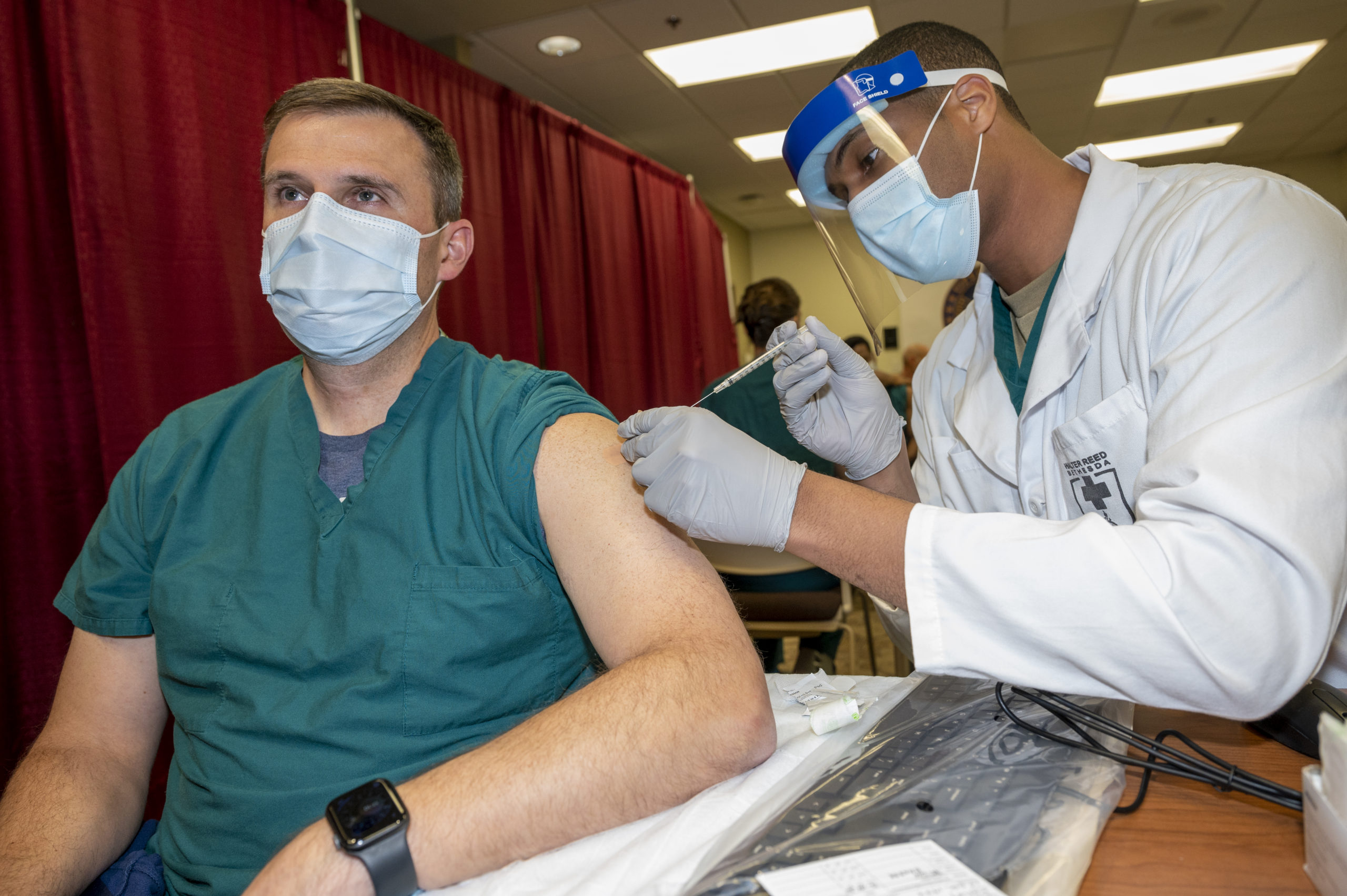
Army Col. Sean Dooley, a doctor at Walter Reed National Military Medical Center, receives a COVID-19 vaccination, Walter Reed National Military Medical Center, Bethesda, Md., Dec. 14, 2020. (DoD photo by Lisa Ferdinando) For many people around the world, this has been an exceptionally frightening year. From the first indications of a new virus emerging in China, to the slow trickle of reports as it arrived in countries around the world, and finally the lockdowns, sicknesses, and deaths that became daily news as the COVID-19 pandemic raged around the globe. Many of us have lost ones we loved, our jobs, or our sanity as the days go by and our lives continue to be disrupted by this new virus.
As the end of the year approached, two vaccines appeared that promised to help end the suffering and finally get this disease under control. But to many, this seemed like it had to be rushed. Adding to that uncertainty, the average person doesn’t have the education to understand what is in these vaccines that they were suddenly being asked to trust. Conspiracy theories abounded and distrust swelled, threatening to upend the vaccination program.
Both vaccines have been proven safe and highly effective in large trials, and have already been given to tens of millions of people! Even so, as a healthcare provider, I know the importance of what is referred to as “informed consent.” It means that it is your responsibility to educate your patient to a level where their agreeing to a treatment is based on generally knowing what is being done to them, including the risks they face by allowing that treatment to go forward. I believe that the ingredients within the two emergency approved vaccines should be readily available, and there should be a basic explanation of what those ingredients are.
The Coronavirus (SARS-CoV-2) that causes COVID-19 has been scary enough; the ingredients within the vaccines don’t have to be as well. What follows is a very simplified breakdown of the ingredients within the first two vaccines to receive Emergency Use Authorization (EUA) from the FDA: the Pfizer-BioNTech vaccine and the Moderna vaccine:
Simple ingredient list of both vaccines:
- mRNA – The active ingredient
- Lipids, a different word for fats
- Salts
- Sugar

Messenger RNA (mRNA) is a single-stranded RNA molecule that is complementary to one of the DNA strands of a gene. The mRNA is an RNA version of the gene that leaves the cell nucleus and moves to the cytoplasm where proteins are made. During protein synthesis, an organelle called a ribosome moves along the mRNA, reads its base sequence, and uses the genetic code to translate each three-base triplet, or codon, into its corresponding amino acid.
https://www.genome.gov/Further Breakdown
- Messenger-RNA
The messenger ribo-nucleic acid (mRNA) is the true active ingredient of the vaccine. Our body makes, uses, and then breaks down natural mRNA constantly in order to function. Think of it as a copied set of instructions that takes information from our DNA and brings it to the parts of our body where we make stuff (amino acids and eventually proteins) necessary for our survival.
In the vaccine, scientists made a synthetic copy of these instructions that allow our body to temporarily produce a single part of the virus known as the spike protein, which is harmless on its own. Our bodies then develop an immunity against the coronavirus by identifying and building defenses against the virus from this single part. We then break down this synthetic message and stop producing the spike protein, but our defense against the disease remains.
To better understand it, think of it like this: when we get the vaccine, we are giving our bodies a fax which allows us to print a mugshot of the virus, which then allows our immune system to know the enemy we are up against in precise detail.
- Lipids (Fats)
These are just pieces of fat that allow our cells to absorb the messenger-RNA so that they can start making the spike proteins for our body to develop immunity. Using the analogy from the previous item in our list, you can think of these fat particles as the fax number that allows the vaccine to send the mugshot to your fax machine.
- Salts
These salts allow the vaccine to have the same level of acidity as our bodies, which keeps it from causing harm inside of us when it is injected. The reason why things like battery acid or bleach will harm us is because it doesn’t match our bodies acidity levels, which is why you should never inject either of them!
- Sucrose (Sugar)
This is just like the plain old sugar we know and love, except it isn’t put in the vaccine to make it taste sweet. The vaccine has sugar in it to keep all the ingredients from clumping together when it is frozen.
Full Ingredient Lists
**While these may seem to contain names that you don’t understand and that might frighten you, those are all just the scientific names for the fats and salts in the vaccines! For example, Dihydrogen Monoxide sounds very scary, until you realize it’s just the chemical name for water**
- Pfizer-BioNTech: mRNA, lipids ((4-hydroxybutyl)azanediyl)bis(hexane-6,1-diyl)bis(2-hexyldecanoate), 2 [(polyethylene glycol)-2000]-N,N-ditetradecylacetamide, 1,2-Distearoyl-sn-glycero-3- phosphocholine, and cholesterol), potassium chloride, monobasic potassium phosphate, sodium chloride, dibasic sodium phosphate dihydrate, and sucrose.
- Moderna: mRNA, lipids (SM-102, polyethylene glycol [PEG] 2000 dimyristoyl glyceral [DMG], cholesterol and 1,2-distearoyl-sn-glycero-3-phosphocholine [DSPC]), tromethamine, tromethamine hydrochloride, acetic acid, sodium acetate, and sucrose.

Army Spc. Angel Laureano holds a vial of the COVID-19 vaccine, Walter Reed National Military Medical Center, Bethesda, Md., Dec. 14, 2020. (DoD photo by Lisa Ferdinando) For more information, check out these links!
https://www.fda.gov/media/144638/download
https://www.pfizer.com/news/hot-topics/the_facts_about_pfizer_and_biontech_s_covid_19_vaccine
https://www.modernatx.com/covid19vaccine-eua/providers/about-vaccine
basic covid ingredients, carona virus, caronavirus, china covid, covid 19, covid ingredients, covid vaccine, covid vaccine conspiracy, covid vaccines, EUA, moderna vaccine, mrna, mrna vaccine, pfizer vaccine, salts vaccine, sars-2, simple covid ingredients, sugar vaccine, vaccine danger, vaccine proven safe, vaccine safety -
Dyson Spheres and the New Age of Energy
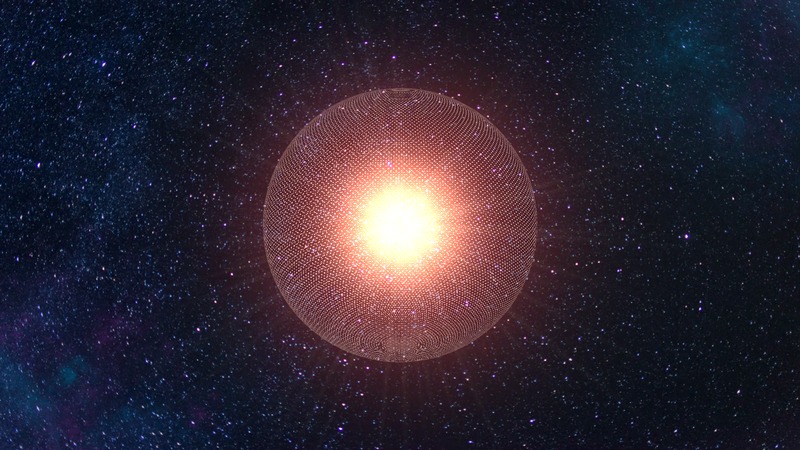
https://commons.wikimedia.org/wiki/File:Dyson_Swarm_realistic_representation.png In one week everybody’s life will change. It is the year 3031, and I am the one to finish building the Dyson sphere. I had to finish the algorithm to finally bring the Dyson sphere online. It was unbelievable how Kanye West, our world president, was able to make every government agree to make a Dyson sphere. We had to get everybody’s help to have the materials, money, scientists and sacrifices to build the Dyson sphere. Social media is booming in excitement and anticipation for this event. Global warming is getting out of hand so we know we have to do something about it. In the meantime, Russia, China and the United Countries have come up with the idea to explore other planets. With the energy we acquire from the Dyson sphere, this will be no problem. Also, we will have the energy from the Dyson sphere to develop technology to stop climate change. All the hard work that the world did to make a Dyson sphere will only be complete if I solve the calculation to finally bring it online. Why, do you ask? Well, my name is Cloud Strife, and my mind is capable of processing complex calculations all at once, just like my brothers and sisters, all named Cloud Strife as well. Millions of scientists and professors are trying to help me, but none of them are capable of this level of mathematics. But something incredible has happened: I have found another Dyson sphere using my buster telescope. The bad thing is that there are some sort of beings out there that might be smarter than us. However, at least I found the proper algorithm for the construction of our Dyson sphere using their Dyson sphere. I have the answer now, and in six days, the launch will be all over the news and will be streaming on the Banana Bpad. I can already hear them counting down, preparing to power on the Dyson sphere around our sun, propelling humanity far into the future. I can already hear it, 3…2…1…
What Do You Need to Make a Dyson Sphere?
This topic has been discussed at great length by the well known Youtube channel, Kurzgesagt, in a video entitled, “How to Build a Dyson Sphere.” In the video, the author mentions the importance of the design. The Dyson sphere should probably not be a solid shell because a large rigid body like that would be vulnerable to shattering on impact. What would be better is a Dyson swarm which has orbiting panels that collect the sun’s energy for use by all the world’s people. This Dyson swarm would be better at avoiding the impacts of space debris. If each satellite is a square kilometer it would take about thirty quadrillion of them to surround the sun. Even if we do build them, we would need one hundred quintillion tons of material. Then we would need the parts to put that material together around the sun. We also need a permanent infrastructure set up in space to start building. On top of that, to get the energy for the Dyson sphere, we need to go to a planet closer to the sun so we could easily harness and transport the energy. A good option would be mercury. The permanent infrastructure would need four major pieces of technology: solar collectors, miners, refiners and launch equipment. Finally, would need to get the energy from Mercury to the solar panels on the Dyson sphere. Another option is to use the entire planet of Jupiter as a hollow shell after breaking up the gas giant. While this process might sound extreme, it is possible, and is estimated to take about 800 years to create a Dyson swarm this way, according to Freeman Dyson, the creator of the idea. Dyson states that,
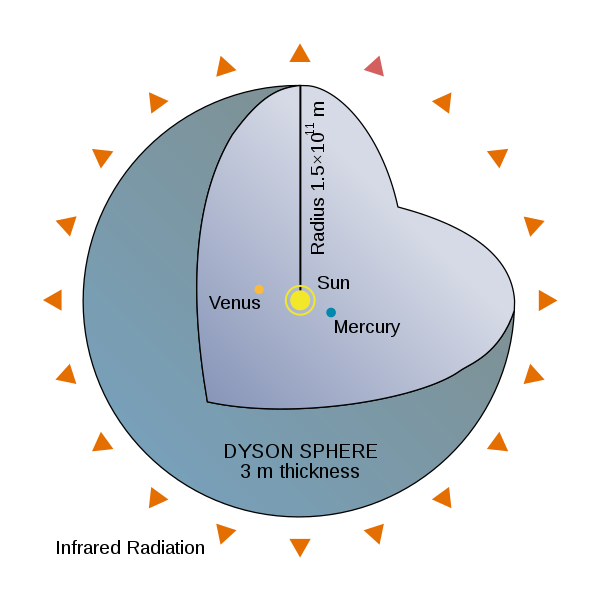
To trap the energy, earthlings could knock apart the planet Jupiter and rearrange it as a hollow ball about 10 feet thick with a diameter twice the size of earth’s orbit. This would take all the energy given off by the sun in 800 years. Such a sphere would be “comfortably habitable.
How will we handle the transition of a Dyson sphere when the sun enters a new state? Well, when the sun dies it would turn into a white dwarf. According to physicists Ibrahim Semiz and Salim O˘gur at Bo˘gazi¸ci University in Istanbul, Turkey, you can build a Dyson sphere around the white dwarf without even needing the use of artificial gravity technology. But, even though we can build a Dyson sphere around a white dwarf, we won’t get as much energy. We know this because the sun will lose half its mass when it becomes a white dwarf, meaning less energy.
Do We Currently Have the Technology to Make a Dyson Sphere and if We Did, How Long Would it Take?
 No, the amount of energy and materials we need is way too much for us at the current moment. Even with the technology, there is no estimated time because the growth of our energy and technology in the future is hard to tell. Giving a proper estimate of when we will be able to make a Dyson sphere is nearly impossible. In fact, we don’t even know that future civilizations will even want to make a Dyson sphere; or maybe they will even come up with something better. Also, if we do ever wish to get together enough energy and materials, we would need to collaborate on a global scale, requiring governments to work together. A lot of governments will probably not like the idea of joining together. Another point is that it will be hard to convince the world to build a Dyson sphere at such a high cost of materials and energy since failure would result in a complete loss with no real ability to mitigate the losses.
 How Much Energy Would a Dyson Sphere Produce?
By using a Dyson sphere, we would have access to a colossal 400 septillion watts of solar energy. That’s a trillion times more power than what the entire Earth produces today. With this amount of power we could do incredible things, like deconstructing planets by removing parts of the planet to find more energy. We could also power super computers, allowing us to boost our interstellar exploration and space travel. We would also most likely be able to make stellar engines. A stellar engine is a way to move our solar system. We might even be able to travel at light speed because of how much energy we get from the Dyson sphere. This will help us with space travel and space expansion. Another thing we can expand is virtual reality by making it feel more real, meaning you can experience full immersion in virtual reality and meet people or have adventures. So, now we know that you can make many significant things and change the world from the energy you get from the Dyson sphere.
What Are the Disadvantages of Making a Dyson Sphere?
One disadvantage would probably be asteroids. When you are building the Dyson sphere, one of the satellites might get damaged by an asteroid, which could jeopardize the whole Dyson sphere. This also relates to the problem that you have to waste a lot of energy to make a Dyson sphere and if it fails then it might create problems on Earth due to a shortage of energy. Another disadvantage might be the fact that if you’re blocking the sun or absorbing its energy, it might make the climate colder. Furthermore, the Dyson sphere might absorb too much energy and the whole thing could fail. The last disadvantage would be that humanity would have to come together to decide what to do with all the energy. So, just deciding what to do with the energy could start wars that could kill millions of people. So, now we know that building a Dyson sphere can be beneficial but it can be disastrous too for humanity.
Wonder about your world…

Take the plunge down the rabbit hole of insanity and wonder in this fast-paced, nonstop psychological thriller that will leave you questioning the very nature of reality and beyond. Part thriller, part romance, part existential horror, A Dream of Waking Life delves into lucid dreaming, psychedelics, existential ontology, video games, the nature of love, the nature of reality, and more.

Mendel’s Ladder delivers an adrenaline-fueled journey set on a dystopian future Earth, brimming with high-stakes action, adventure, and mystery. This epic series opener plunges readers into a world filled with diverse cultures, heart-pounding battles, and characters who will captivate your heart and imagination.

“E.S. Fein is raising the bar for quality as it’s a very well-written and thought-provoking book…There are points and themes in the story that could be discussed for eons as people will have their own idea on where it leads. It’s a book I would highly recommend.” – Andy Whitaker, SFCrowsnest
 Wondergressive

