Are you awake? Is your reality real? Are you sure?
Take the plunge down the rabbit hole of insanity and wonder in this fast-paced, nonstop psychological thriller that will leave you questioning the very nature of reality and beyond. Part thriller, part romance, part existential horror, A Dream of Waking Life delves into lucid dreaming, psychedelics, existential ontology, video games, the nature of love, the nature of reality, and more.
Outlast. Outgrow. Outlive. In the ashes of Earth, evolution is the ultimate weapon.
Mendel’s Ladder delivers an adrenaline-fueled journey set on a dystopian future Earth, brimming with high-stakes action, adventure, and mystery. This epic series opener plunges readers into a world filled with diverse cultures, heart-pounding battles, and characters who will captivate your heart and imagination.
Embark on a cosmic mystery spanning all of spacetime and beyond to discover the very nature of reality’s multilayered foundations.
“E.S. Fein is raising the bar for quality as it’s a very well-written and thought-provoking book…There are points and themes in the story that could be discussed for eons as people will have their own idea on where it leads. It’s a book I would highly recommend.” – Andy Whitaker, SFCrowsnest
Dearest Wonderguest, I have spent a great deal of time researching spirituality. Much of that research has fallen into the category of "eastern philosophy." Originally zen studies were most interesting. From the aged riddles of the Book of Equanimity, I learned how confusing subjective reality can be. I, having been lucky enough to live in the same town as Louis Steinberg, began to practice yoga -- 0f course this was only after the urging two of my very dear friends and what they have come to call the "JR Delay." This path of study has opened my mind to new experiences and helped me better communicate with the people around me. Recently I discovered that I was surrounded by people who practiced the martial arts. Ninjas, everywhere. This perhaps peaked my interest in learning self defense. Having been the victim of random attacks and the not so innocent victim of less-than-rouge fists, I decided that this might be beneficial. This research of self defense seems to clash with the harmonious nature of yogic practice. Well at least, I thought so until I stumbled onto the center portion of my Venn diagram. The point in which spirituality and yogic practice are mashed so closely together that its cosmic equivalence might be considered a black hole. The incredible Shaolin Monks....
The Shaolin Monastery…
was founded in 464 AD (for a proper date on the Chinese calendar here’s the format…uh… figure it out?) and is largely regarded as the most famous Mahayana Buddhist Temple. According to legend, Bodhidharma himself paid a visit to the temple. In doing so, the Dharma ranger brought his brand of wall-gazing Buddhism to the Monks at Shaolin.
Now this is where the story leans more towards legend: Apparently before leaving the temple, Bodhidharma left behind the book Yijin Jing (Muscle/Tendon Change Classic) which was written in ancient Indian. The Monks used these techniques with extreme rigor and in doing so achieved the skill and fame which they enjoy today.
The Monastery is home to many monks. Some are preforming monks and others are monks immersed in the study of Zen. Regardless of their position at the temple they all practice what is commonly called Shaolin Kung Fu. Intense is the best way to describe Shaolin Kung Fu training(this is definitely not the best way). Through a series of harsh and controlled activities, the Shaolin Monks practice to make their bodies extremely tough. For fun, scroll through the video below to any point and see how intense this training is!
Shaolin monks are often revered for abilities such as uprooting trees, one finger push-ups, and being on the blunt end of a whole heck of a lot of pain. This list of exercises is enough to spark any imagination. It may seem a list of ridiculous feats near impossible to accomplish but consider for a moment if being a Shaolin Warrior was your day job. Instead of collating documents, you would be challenged to balance on a spear day in and day out. It’d be extremely different. To say the least, extreme!
For most people in the world, dabbing on a spot of perfume or cologne in the mornings is a part their morning routine. Many of us have heard that maxim made famous by style icon Coco Chanel: “A woman should wear perfume wherever she wants to be kissed.”
Romanticism aside, the general consensus on this has been that perfume should be worn on the pulse points in order to lengthen the life of the perfume. However, Elizabeth Barrial, a perfumer at Black Phoenix Alchemy Lab in North Hollywood, California says:
The body heat generated by pulse points helps intensify fragrance, and can often diffuse, magnify and amplify a scent, but it won’t affect the longevity. Perfumes will generally be stronger on someone with oily skin and good circulation whose body runs a little hotter.”
Hair is great at retaining scents (both good and bad). Dr. Michael Roizen answers a question on the smell of smoke lingering in hair over at sharecare.com:
…your hair acts like a paper towel—it’s absorbent. And hair also often has a mild electric charge, particularly in very low humidity, and this can attract charged pollutant particles. So in a nutshell, your hair takes the stink from the air, and brings it home with you.
If you opt to go the hair route, make sure you only do this with clean hair, as About.com’s Catherine Helbig warns that “natural oils (and any lingering hair products) will affect the odor.”
Also, not all scents work for everyone. TLC Style’s Alia Hoyt advises to
carefully test each scent before making a public debut. Many physical factors, like body chemistry and skin type, can alter the impression of any fragrance, rapidly changing a soft, sweet scent into a sour or overpowering one.
And for those of you out there who like to spray scent onto your wrists and rub them together—don’t. From eHow Style:
Do not rub perfume into skin. Doing so will break down some of the molecular composition (or “bruise”) the perfume.
On a similar note, some perfumes can stain clothing, it is recommended that you apply fragrances before dressing.
Passing gas is the ultimate human pastime, ubiquitous throughout culture, race, and religion. In fact, every species in the animal kingdom passes gas in some way, whether it is a booming fart or just noiseless, general seepage throughout the day. Did you know that some animals even use their flatulence to communicate?
Like most things that are taboo to talk about, there is no real rationality behind the hushed whispers of something so incredibly natural. However, I recognize that it would be strange to walk up to your neighbor and say, “Hey Ted, how often do you fart, and how bad does it smell?” So why not talk to Wondergressive instead?
What is Gas?
Gas is an interesting cocktail of different substances which burst out of your mouth or anus in varying mixtures depending on the food you eat.
Gas is primarily composed of carbon dioxide, oxygen, nitrogen, hydrogen, and sometimes methane. Flatus, gas passed through the anus, may also contain small amounts of gasses that contain sulfur. Flatus that contains more sulfur gasses has more odor.
There is only one time in your life when you are not filled with gas or passing gas, and that’s before you take your first breath. After that, well, welcome to the toot club; the only way out is death.
Breaking down of food in the large intestine by bacteria
Swallowing air
Eating or drinking too fast
Smoking
Chewing gum
Sucking on hard candy
Drinking carbonated or “fizzy” drinks
Wearing loose-fitting dentures
Some of the gas created in the stomach comes out as burps. Whatever remains gets passed right along down the digestion train.
The stomach and small intestine do not fully digest some carbohydrates—sugars, starches, and fiber found in many foods. This undigested food passes through the small intestine to the large intestine. Once there, undigested carbohydrates are broken down by bacteria in the large intestine, which release hydrogen and carbon dioxide in the process. Other types of bacteria in the large intestine take in hydrogen gas and create methane gas or hydrogen sulfide, the most common sulfur gas in flatus.
The body does its best to break down all the diverse junk you cram inside of it. Gas is just its way of saying thanks.
Different Foods Cause Different Farts
The formation of gas is almost entirely dependent on diet.
Vegetables such as broccoli, cauliflower, cabbage, brussels sprouts, onions, mushrooms, artichokes, and asparagus
Fruits such as pears, apples, and peaches
Whole grains such as whole wheat and bran
Sodas; fruit drinks, especially apple juice and pear juice; and other drinks that contain high-fructose corn syrup, a sweetener made from corn
Milk and milk products such as cheese, ice cream, and yogurt
Packaged foods—such as bread, cereal, and salad dressing—that contain small amounts of lactose, a sugar found in milk and foods made with milk
Sugar-free candies and gums that contain sugar alcohols such as sorbitol, mannitol, and xylitol
As a general rule of thumb, remember this: Most foods that contain carbohydrates cause gas. In contrast, fats and proteins cause little gas.
Okay, I’ll Alter My Diet, but I Still Don’t Want to Fart in Public. Is it Safe to Hold it in?
Contrary to popular belief, holding gas in the body actually isn’t biologically dangerous. It’s not going to blow out your small intestine and leave you leaking methane like a popped cow. But, there is a serious drawback to holding it in; it is incredibly painful and debilitating. As I’m sure you’ve experienced, holding in gas leads to bloating, stomach cramps, and even devastatingly serious pain, especially during those times when you’re sitting in a job interview after downing 2 or 3 triple layer cheese tacos and end up holding in an anal megaton explosion to avoid smelling like a herd of grazing horses.
If you are overly sensitive about your butt musk, your best bet is to pass gas in strategic places. Dr. Oz suggests:
You shouldn’t bother [holding it in], let it come out when it’s supposed to come out. Be smart about it. Do it in a place that’s airy enough that you’re not going to hurt your family and friends.
There’s nothing wrong with a nice strong fog horn resounding from between your cheeks, but in some instances, like a wedding or funeral, you might want to excuse yourself and blow your gassy payload outside so that it gets carried downwind.
As one of the single best pieces of information, Dr. Oz states that holding gas in for a prolonged period of time won’t make it smell worse. Smell is completely dependent on what you eat, not how long you let a fart fester.
Natural Ways To Reduce Gas
For those of you still not convinced that holding in gas simply isn’t worth all the abdominal pain and worry over being judged, here are some natural ways you can reduce your gaseous gifts to the world.
Try to limit air swallowing. The prevention of air swallowing is important in limiting repetitive belching. A time-honored remedy for repeated burping is to grip a pencil between the teeth. It is impossible to suck air into the esophagus with the teeth parted this way.
Eat slowly and don’t talk while eating. Chew your food thoroughly, instead of gulping it down.
Avoid using a straw or drinking out of a narrow-mouthed bottle. It promotes air swallowing.
Avoid carbonated beverages like soft drinks and beer. Carbonated beverages are an obvious source of swallowed gas as gusty belching is a familiar background sound in a barroom.
Avoid chewing gum, or sucking on candy.
Have loose dentures refitted. They trap air bubbles and saliva, causing you to swallow more frequently.
Treat postnasal drip.
Avoid smoking or chewing tobacco.
Some people have a nervous habit of swallowing air. Use relaxation techniques, such as deep breathing or yoga, to reduce stress.
Increase your physical activity. Any aerobic activity like running or even walking will speed up digestion and help eliminate gas, but might make things unpleasant for those bringing up the rear. If abdominal distension is a problem, try sit-ups to firm up the abdominal muscles. Walking after eating moves the air bubble to the upper stomach where it can be easily belched.
Reduce your lactose load. Lactose is found in dairy products such a milk, skim milk, and cottage cheese. Aged cheeses, such as Swiss or cheddar, have little lactose. Yogurt is usually well tolerated by lactose- intolerant people. If milk bothers you, try Lactaid or DairyEase.
Avoid sorbitol and fructose. Sodas and hard candies which contain sorbitol and fructose sugars cause extra gas and should be avoided.
Go slow on high fiber. Fiber is healthy but it will increase your gas, especially if you increase the amount too quickly.
Presoak dried beans and discard the water. This helps remove the gas-causing starches. You might also try a few drops of Beano before meals. This harmless natural enzyme can help reduce gas formation. It can be purchased without a prescription at your pharmacy.
Natural Ways To Remove Gas
You know now how to reduce it, but how do you get rid of it? The best way to remove excess from the body is by doing a few easy yoga poses. Not only will yoga remove excess gas from your body so that you will be ready for an embarrassment-free night on the boardwalk, it will also aid in digestion, flexibility, and overall well being.
All of these poses are for beginners and place minimal strain on the body. The focus of these exercises is to remove gas, not add stress. Make sure to use a comfortable yoga mat or sturdy, yet soft surface, and to also slowly breathe in and out while doing the poses. This will also help rid the body of unwanted gas.
The most important thing to remember is that it’s okay to enjoy every aspect of life, especially the most natural parts that are shared all across humanity. Never be afraid to laugh at yourself, especially your gas.
Some 60 light years away lies Planet HD 189733b, second of its kind as it resembles our humble home, Earth. This planet, let’s call it Blue (due to its blue hue which is probably the only thing resembling Earth) is actually a very interesting planet, as it frequently has rain, like Earth, but not really like earth at all since the rain is curiously made of glass and not water.
This exotic blue planet, full of various gases that make it up, has 4,500 mph winds which possibly cause glass to rain sideways. The blue hue of the planet is the most interesting part, due to water and oceans reflecting light, hinting at habitability and the possibility of life. However, with the extreme weather patterns and the intense heat of the planet (2,000°F to be exact), the planet is not likely housing anything but gases and well, glass. Lots and lots of rainy glass. Who knows though, maybe Chuck Norris lives there.
Another new development in our galaxy is that of the birth of a Supersun. It will contain 500 times more mass than our Sun and it will glow an eerie blue due to its surface temperature of over 50,000°F, which is 5 times hotter than our Sun, thus the nickname Supersun.
Though still under construction, as gases and mass are condensed and compressed under the cold star’s gravity, it will eventually build itself into a heaping Titan of a star, one that Titans of old would be proud of. The coolest part about all this is that scientists are able to view the creation of this Supersun second by second as it piles together, until it combusts and becomes the star it was meant to be! Superman would most likely pass out from all the power that this Supersun would supply him with; maybe it would make for a better movie than the newest Superman rendition.
These finds represent very interesting developments in our galaxy, and with ever expanding space, we may find that we are in fact not alone. In case you were curious, here is a little something on our boy ‘Blue,’ Planet HD 189733b:
Acoustic waves have allowed for many more objects and liquids to be levitated in mid-air than ever before. Such feats are usually performed with magnets, but the objects floating on the magnets needed to have magnetic properties. ETH, a group of researchers in Zurich, successfully levitated a toothpick in mid-air and controlled its movements using acoustic waves. With the same technique they also merged droplets of liquid.
The postdoctoral researcher involved in this study at the Swiss Federal Institute of Technology is Daniele Foresti. Foresti made it possible for any object, regardless of its properties, (except maybe weight which is still at the experimental stage) to levitate in mid-air through the use of acoustic waves. This allows for the study of some chemical reactions involving processes that would otherwise be compromised with the contact of a surface.
Levitation via acoustic waves allows for a vast number of objects and liquids to be experimented on. The current methods we have that allow objects to reach a levitated state are magnetic levitation, electrical fields, and suspension in liquids with the help of buoyancy. The problem with magnets is the difficulty of controlling the movement of liquids. The liquids are required to have some sort of magnetic properties. Floating liquids in another liquid requires the use of immiscible liquids (not forming a homogeneous mixture when added together) such as oil and water. Acoustic waves take care of these limitations. The only limitation is the maximum diameter of the object being levitated. It has to correspond with half the acoustic wavelength being used. Levitation is achieved when all of the acting forces (gravity and acoustic waves) reach equilibrium. The force of the acoustic waves counteracts the force of gravity, which allows this state to occur.
Making Coffee on Acoustic Waves
The scientific term used to describe this phenomenon is the acoustic radiation pressure effect. This is not a new discovery, rather an alteration to a previous one that goes back to the findings of Rayleigh. However, unlike in previous studies, we can now control movement with acoustic waves. This was done by putting together multiple modules that create the acoustic waves and by switching them on to vary their wave action. This varying process is how liquid is able to move from one module to the next. Foresti used this method to merge a water droplet and a bit of instant coffee together to form coffee!
The Friends of the Indian movement was fueled by rhetoric, religion, and “sympathetic” rich people- the three R’s of relations between the United States and Native American Indians in the latter part of the 1800s. Under the guise of sympathy, the friends of the Indian fought hard for the cultural assimilation and subsequent Americanization of the native peoples. Their logic was simple and absolute: assimilate the Indians or they will be destroyed by The United States of America. With the lens of hindsight, it can be seen that the two concepts are rather identical.
In The Beginning Was War
The battles between the United States of America and the tribes of the native peoples came to a head towards the latter part of the 1800s. Tensions were high as the United States fought through its civil war. Even though a major part of the battles were fought between the North and the South, events such as the Dakota uprising escalated tensions and strained relations between the U.S. and the Natives.
In 1862 the Dakota Indians, in an act of frustration and self-preservation, attacked a small community of white settlers. In response to the 500 American settler deaths, President Lincoln ordered the death penalty on some 300 Dakota. This order resulted in the largest mass execution in U.S. history. 38 Dakota warriors were sent to the gallows on December 26, 1862.
This was not the only transgression between the United States and the multitude of tribes west of the proclamation line. The Snake Wars lasted from 1864-1868. These wars are often caricatured in the old Western movies. The Snake Indians inhabited the Snake River along the Oregon trails. This term was a blanket term used by wagon-trailers as they made their way west. It became a derogatory term to describe the Oregon Trail raiders. From the white settler’s prospective, these Indians were violent and unreasonable. From the Natives’ perspective, the white settler’s just couldn’t take a hint. Eventually volunteer armies pacified the Snake Indians. This made trade and travel glorious for everybody. Everybody, that is, except for the Native Americans.
There were multiple times the U.S. attempted to make amends with the Native American peoples but time and time again the federal government partook in what ignorant children call “Indian giving”—I call them ignorant because up until now, I believed the term to be representative of the Indian culture (being ignorant myself). Perhaps the term should be rebranded to “giving to the Indians,” with the new definition being: ”To make temporary agreements, under the guise of permanence, until the actual value of said agreement is allocated.’ After this assessment of resources is sufficient to withdraw past agreements, use force to change the terms of said agreements.”
To return from digression, this new definition of Indian Giving is directly represented in case of The Treaty of Fort Laramie in 1868. This treaty assigned the Black Hills and a large part of what is now the northern mid-west region of the United States to the Lakota people forever. The land was theirs and could never be taken back by the U.S. government. The United States honored this claim until the discovery of gold by private prospectors. In 1877 the Black Hills were seized by the reaching arms of the United States and incorporated into the ever expanding concept of Manifest Destiny. Recently, in the 1980’s, the Lakota people defeated the U.S. government and were granted a cash settlement for the land and interest acquired since 1877. The Lakota people refused, expecting their land, not a mere paper “equivalent.”
Since its inception, the United States had been at war with, well, everybody. If it wasn’t the Indians, it was the Spanish, or the French, or the British, or any other people who laid claim to what is now the continental United States. War is extremely tiring for the people who have to fight it. In the late 1860s and 1870s the U.S. government placed a great deal of emphasis on reversing that idea.
Grant: Indian Friend and Foe
President Grant’s famous slogan “Let Us Have Peace” gave hope for more subtle relations with the Native Americans—this is decidedly less memorable than his other, more aimed, slogan of 1968 “Vote As You Shoot,” which couldn’t have been all that thought out. The latter slogan, though primarily applied to the healing union of North and South, can be viewed as his policy on Indian Affairs.
Grant was a veteran of battles both with and against the Native Americans. He was a man of honor–despite his various presidential scandals– and pride. He respected the Native Americans on paper and went to great lengths to aid in their participation with the civilized United States.
Grant felt for the Indians and helped in several ways. He appointed Ely Parker, a Seneca Indian, to be Commissioner of Indian Affairs. Parker was the first Native American to act as commissioner. Parker and the president worked, with success, to decrease the number of battles with Indians. He sifted through bureaucratic nonsense in order to dissolve the mistreatment of Indians. In doing so, he faced a question that a lot of “civilized” Natives would also encounter:
Whether it has been well that I have sought civilization with its bothersome concomitants and whether it would not be better even now to return to the darkness and most sacred wilds (if any such can be found) of our country and there to vegetate and expire silently, happily, and forgotten as do the birds of the air and the beasts of the field? The thought is a happy one, but perhaps impracticable.
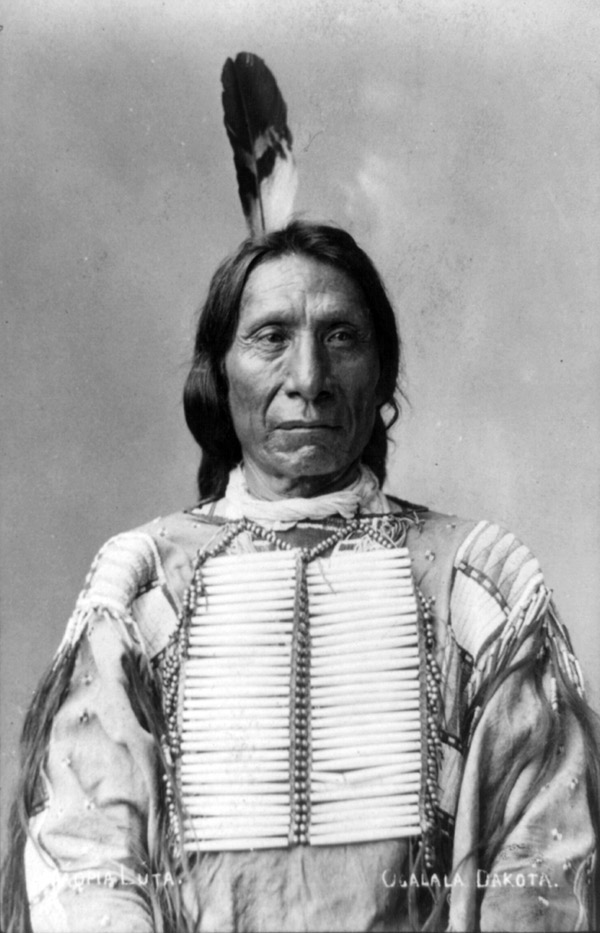
Aside from Grant’s Native American nomination, he also made a point to actively meet with tribal leaders at the White House. Leaders such as the famous Red Cloud called upon the president to work towards peace. As bloody territory battles and enraged meetings with Native figureheads risked becoming mundane in their frequency, it became clear that a new course of action was necessary.
Full Scale Assimilation Begins
The Indian Appropriations act of 1871 put an end to the separation between the United States and the Indians. This act removed the individual sovereignty of native tribes, which effectively made all of the Indians wards of the U.S. Government. The act specifically did not allow (Edited on July 17th) treaties to be made with any individual Indian nation. Initially the act was crafted in an effort to protect those sovereignties from white settlers who were invading past reservation treaties.
In reality this act lay—or perhaps reinforced—the foundation for the assimilation and civilization of the Native peoples. By dealing with all of the Native tribes as a whole, the U.S. removed the individual identities of each nation. They turned thousands of cultures into just one single Indian problem.
Where there’s a problem, there are people to reform it and shape the predicament into something that creates a lot less guilt. The friends of the Indian movement (the friends) believed strongly that they could help alleviate the ”Indian Problem” by putting in place a system so as to help the Indians from facing their ultimate demise. Their solution: Assimilation.
Composed of various rich white folk such as elected government officials, “reformance artists,” and concerned philanthropists, the Friends met yearly to solve the Indian problem. The group used careful rhetoric, lack of critical thinking skills, and political power to devise a threefold plan.
First, the Indians must be taught to live in a civilized manner. The friends called for Native Americans to learn trade skills and step away from their traditional hunter/gatherer lifestyle. Secondly, the children of the Native Americans were to be educated into proper American lifestyle. The emphasis here was to root out the cultural bad habits— the ones which would not be profitable. Thirdly and most importantly, the U.S. government was to enact an allotment policy to aide in further assimilating the Indians.
Carlisle Industrial Indian School was perhaps the most infamous of the boarding schools for Native American children. It was perhaps best known for its use of before-and-after photographs which displayed the cultural transformation that took place within the Native American Youth. Richard Henry Pratt, founder of Carlisle Industrial, said to
Transfer the savage-born infant to the surroundings of civilization and he will grow to possess a civilized language and habit
The use of planned rhetoric by the Friends of the Indian was profound. On one hand, they openly use terms such as “assimilation” without any fear of disrespecting cultural traditions while simultaneously referring to these people as savages devoid of culture and proper tradition- If only they knew of the great civilizations, such as Cahokia, that existed before the creation of the United stated. Perhaps then they might have appreciated and even learned from these so called “savages”.
Welcome to the Reservation
The Dawes Act of 1887 was a further example of the United States “giving to Indians.” The act called for the redistribution of Reservation lands. The individual tribal members and families were given a portion of the total Reservation lands and any excess was held in a trust for 25 years. After this time period the Reservation’s Tribe could sell the land. This was done in hopes that the land would be sold to white settlers so as to further encourage assimilation.
The curiousness of the Friends of the Indian really knows no bounds. One example of these misguided do-gooders is that of Alice Fletcher or, as referred to by the Nimíipuu (Nez Perce), The Measuring Woman. Alice was fascinated by the American Indians. She worked in museums, worked directly with several tribes, and continuously acted as an ambassador between the federal and tribal governments. She cared for the American Indians. But despite this, even her best-intentioned fulfillment of duty would be highly destructive to the tribes that she worked with.
Consider the case of the Nimíipuu (Nez Perce). After the horrible chase and subsequent surrender by the famous Chief Hin-mah-too-yah-lat-kekt (Chief Joseph), the Nimíipuu people signed treaties with the U.S. government in order to reserve a bit of land for themselves. After the Dawes Act was passed, the measuring woman soon came. Sent on a special task by the U.S. Government, Alice Fletcher was on the scene. She came with the specific purpose of allotting the lands of the Nimíipuu.
In doing this, Alice showed incredible conviction to her beliefs. She, like the rest of the Friends of the Indian Reformers, believed strongly that they were saving the Native population from the grinding wheels of American Society. They believed that the best way to save them was to transform them into something new. What they did not understand was that no matter how hard they tried, they wouldn’t be able to change thousands of years of rich history and culture without severely damaging the intelligence, dignity, and beauty of an entire people.
The idea of an “Indian problem” was itself a problem. Just as the term Indian giving has been reassigned from its proper meaning “giving to the Indians,” the Indian problem really is a problem created by the white majority; “The White Imperialist”—strange how the term has not seen its rounds.
The more I’ve visited and revisited the United States “handling” of the Native Americans the more I believe that the whole situation was completely out of line. In fact, it has been literally out of line on several occasions: Crossing the proclamation lines, branding the numerous tribes as one group of Indians Native American, and making promises, trusts, only to break them when the right amount of raw material rears its golden head.
For those who will say “but what about the blood shed by the Indians,” I would like to remind them of the fact that this was their home. We came in without knocking or taking off our shoes and remodeled their entire existence, not to mention systematically eradicating many of the natives in existence at the time! The only “right” that we had to do such a thing lies in our professional use of refined military equipment.
Perhaps a better solution to the “Indian Problem” can be to investigate with open minds how best to cultivate a better understanding. This is the solution for many of the world’s problems. Though it is a simple policy, when you take a deep breath and learn about the ways of others, it will always amount to a better understanding and perhaps even less bloodshed.
To close I would like to say that any movement in which “friendship” is a tool used to manipulate the minds of others is not, and will never be, true friendship.
Critics are quick to point out the consistently noted dangers of cannabis ingestion. These are the same arguments that have been used for decades. They remain aggressively debated without compromise, despite decades of rational evidence suggesting falsity and fallacy. The seemingly valid concerns regarding cannabis use that top the critics’ list are: the gateway drug theory, short-term memory loss, psychosis, decreased intelligence, harm from cannabis smoke, depression, an elevated heart rate, and worries over driving while high. Let’s allow science and logic to save the day, shall we?
Gateway Drug
Many critics of cannabis use claim that cannabis is a gateway to harder and more persistent drug use. They are implying that if a person uses cannabis, recreationally or medically, they are more likely to use dangerous drugs like cocaine (again, ironically listed as a schedule 2 drug) or heroin. Although multiple studies have found that cannabis users are more likely than non-users to engage in the use of more ‘hardcore’ substances (meaning higher addiction potential and/or more biologically detrimental), there are endless holes in this argument.
Much of their [US drug-policy leaders] rhetoric about marijuana being a ‘gateway drug’ is simply wrong. After decades of looking, scientists still have no evidence that marijuana causes people to use harder drugs. If there is any true ‘gateway drug,’ it’s tobacco.
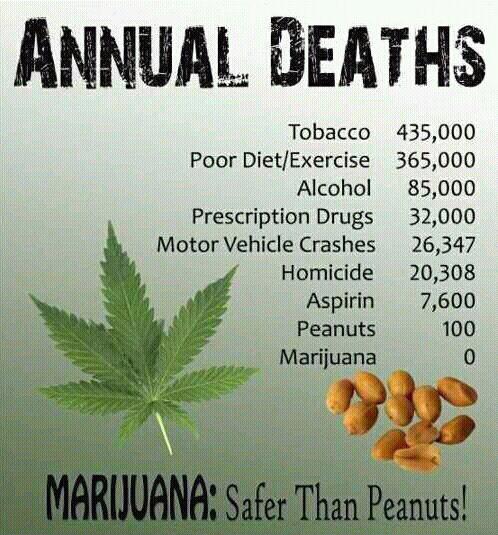
Alcohol and tobacco are more accessible and far more likely to be used by teens, consequently making those substances more likely to lead to further drug use. As stated by Elders, they are the true gateway drugs. In one of the most highly credible and sourced assessments on the science of drug use, the Institute of Medicine stated that:
In fact, most drug users do not begin their drug use with marijuana–they begin with alcohol and nicotine, usually when they are too young to do so legally…
There is no evidence that marijuana serves as a stepping stone on the basis of its particular physiological effect.
Starting to see the trend here? Alcohol and tobacco are far more dangerous and addictive than cannabis. If the gateway drug theory did have any legitimacy, it would have to be applied to alcohol and nicotine, two completely legal substances, before it could be attributed to any other substance.
The best analogy I’ve ever encountered for the ridiculousness of the gateway drug theory comes from Lynn Zimmer, PhD, Professor Emeritus at Queens College at the City University of New York:
In the end, the gateway theory is not a theory at all. It is a description of the typical sequence in which multiple-drug users initiate the use of high-prevalence and low-prevalence drugs.
A similar statistical relationship exists between other kinds of common and uncommon related activities. For example, most people who ride a motorcycle (a fairly rare activity) have ridden a bicycle (a fairly common activity). Indeed, the prevalence of motorcycle riding among people who have never ridden a bicycle is probably extremely low. However, bicycle riding does not cause motorcycle riding, and increases in the former will not lead automatically to increases in the latter.
Nor will increases in marijuana use lead automatically to increases in the use of cocaine or heroin.
If we overly criminalize behaviors like marijuana use among teens, this could interfere with opportunities for education and employment later on, which, in turn, could be creating more drug use.
The gateway drug theory is weak and unfounded. It is in fact not a credible theory at all. It has no place in the realm of science.
Decreased Intelligence
It is a propaganda technique that we have been hearing for nearly the entire 20th century and it continues into the 21st century; cannabis makes you stupid, a loser, a burnout.
While there is clear evidence that cannabis, like other substances, alters perception and brain function, there is no evidence that cannabis alters brain function in a purely negative way. Additionally, there is absolutely zero evidence that the biological effects of cannabis are permanent. On the contrary, science tells us that all of the consistently noted negative biological aspects of cannabis are entirely temporary.
According to Igor Grant, MD, Executive Vice Chairman at the University of California, San Diego Department of Psychiatry:
Smoking marijuana will certainly affect perception, but it does not cause permanent brain damage. ‘The findings were kind of a surprise. One might have expected to see more impairment of higher mental function. Other illegal drugs, or even alcohol, can cause brain damage…
If we barely find this tiny effect in long-term heavy users of cannabis, then we are unlikely to see deleterious side effects in indivduals who receive cannabis for a short time in a medical setting…
If it turned out that new studies find that cannabis is helpful in treating some medical conditions, this enables us to see a marginal level of safety.
Government experts now admit that pot doesn’t kill brain cells.
This myth came from a handful of animal experiments in which structural changes (not actual cell death, as is often alleged) were observed in brain cells of animals exposed to high doses of pot. Many critics still cite the notorious monkey studies of Dr. Robert G. Heath, which purported to find brain damage in three monkeys that had been heavily dosed with cannabis. This work was never replicated and has since been discredited by a pair of better controlled, much larger monkey studies, one by Dr. William Slikker of the National Center for Toxicological Research [William Slikker et al., ‘Chronic Marijuana Smoke Exposure in the Rhesus Monkey,’ Fundamental and Applied Toxicology 17: 321-32 (1991)] and the other by Charles Rebert and Gordon Pryor of SRI International [Charles Rebert & Gordon Pryor – ‘Chronic Inhalation of Marijuana Smoke and Brain Electrophysiology of Rhesus Monkeys,’International Journal of Psychophysiology V 14, p.144, 1993].
Neither found any evidence of physical alteration in the brains of monkeys exposed to daily doses of pot for up to a year.
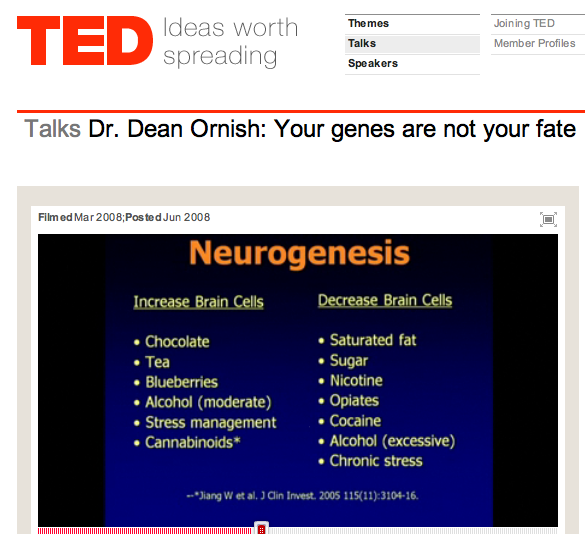
The surprising truth is that cannabis actually promotes the creation of new neurons in hippocampal regions of the brain, the part of the brain most responsible for memory. Xia Zhang, an expert at the Neuropsychiatry Research Unit, Department of Psychiatry, at the University of Saskatchewan in Canada along with other medical researchers, points out that cannabis is the only illicit drug ever found to promote the creation of brain cells:
We show that 1 month after chronic HU210 [high-potency cannabinoid] treatment, rats display increased newborn neurons [brain cell growth] in the hippocampal dentate gyrus [a portion of the brain] and significantly reduced measures of anxiety- and depression-like behavior.Thus, cannabinoids appear to be the only illicit drug whose capacity to produce increased hippocampal newborn neurons is positively correlated with its anxiolytic- [anxiety reducing] and antidepressant-like effects.
College students who smoke cannabis demonstrate comparable or even higher grades than their cannabis abstinent classmates, and are more likely to pursue a graduate degree.
The short answer is yes, cannabis alters your mind and body, like any other substance in the world, but it does not make you stupid (certainly you’re not going to claim any of these highly successful cannabis-users are stupid), and all of the physiological and psychological effects are temporary.
Critics of cannabis use argue that memory loss, especially short-term memory loss, occurs more prominently in cannabis smokers. They also claim that it is a permanent effect. All of these claims are either exaggerated or wrong. We’ve already discussed how all the effects of cannabis ingestion are completely temporary; the same applies to memory.
To begin, it is true that cannabis has a noticeable effect on short-term memory as well as working memory, while the user is under the influence. Cannabis affects working memory through the mechanisms stated above, by encouraging neurogensis, or the creation of neurons, in the hippocampus region of the brain. Although this has a positive effect on memory overall, it disrupts short-term memory while the user is ‘high’ by creating ‘noise’ in the hippocampus. These effects are detectable at least 7 days after heavy cannabis use,
but appear reversible and related to recent cannabis exposure rather than irreversible and related to cumulative lifetime use.
Furthermore, after extensively studying cannabis use, lead researcher and Harvard professor Harrison Pope came to the conclusion that:
From neuropsychological tests chronic cannabis users showed difficulties, with verbal memory in particular, for ‘at least a week or two’ after they stopped smoking.Within 28 days, memory problems vanished and the subjects ‘were no longer distinguishable from the comparison group.’
These tests affirm that the physio/psychological effects of cannabis are temporary and reversible.
As for the seriousness of the temporary effects on short-term memory, studies have found that the effect is negligible. Researchers from the University of California, San Diego School of Medicine headed by Dr. Igor Grant analyzed data from 15 previously published controlled studies involving 704 long-term cannabis users and 484 nonusers and found that:
long-term cannabis use [is] only marginally harmful on the memory and learning. Other functions such as reaction time, attention, language, reasoning ability, perceptual and motor skills [are] unaffected. The observed effects on memory and learning, [show] long-term cannabis use [causes] ‘selective memory defects’, but that the impact [is] ‘of a very small magnitude.’
In fact, rather than having deleterious effects on memory, Ohio State University scientists have shown that
Research supports this claim as past studies have revealed that cannabinoid receptors stimulated by cannabinoids in cannabis act as an anti-inflammatory agent and serve to improve memory in old rats.
Surprisingly, recent research into the activity of the hippocampus suggests that the key to a good memory is forgetting. Think of the brain as a computer with enormous hard drive space. Despite this incredible amount of storage, it is still finite. The more memories our brains create, the harder it is for our working memory to properly remember and recall. In this way, forgetting a few things actually isn’t a bad thing. It is in fact highly beneficial overall.
Another important point is that different cannabinoids found in cannabis affect memory centers in the brain in remarkably different ways. Through further legalization, scientists will have the freedom to perform more extensive research, while growers will have the opportunity to create strains of cannabis that have an even more minimal effect on the memory centers of the brain.
These studies reveal that in the short run, short-term and working memory are disrupted by the ingestion of cannabis by creating new neurons in the memory centers of the brain. These additional neurons disrupt working memory by acting as additional ‘noise’ to the active, recalling mind. These short-term memory lapses are completely temporary though, and in the long run the brain is actually left with additional neurons and a more expansive memory center. To use the analogy of a computer again, think of heavy-cannabis ingestion as a temporary lapse in primary memory functionality for the sake of upgrading the storage capabilities of secondary memory.
Elevated Heart Rate
It is true that many cannabis users describe symptoms of panic and consequently an elevated heart rate, especially during their first time trying cannabis. What still remains debated is whether cannabis itself biologically causes heart rate to increase.
The most well known study done on the correlation between cannabis and heart rate, and subsequently the only truly credible and widely used study, is one performed by a man named Dr. Murray A. Mittleman. Mittleman’s study focused on:
information on cannabis use from 3,882 middle-aged and elderly patients who had suffered heart attacks. A total of 124 patients were identified as current users, including 37 who reported smoking the drug up to 24 hours before their attack, and nine who had used it within an hour of experiencing symptoms.
Mittleman’s conclusion was that the first hour after taking cannabis heart attack risk is 4.8 times higher than during periods of non-use. In the second hour, the risk drops to 1.7 times higher. According to Mittleman this was the first study to document that smoking cannabis could trigger a heart attack, but that the trigger mechanism remained unknown. So what’s the issue with this constantly cited study?
Besides the fact that any type of smoke entering the lungs produces the same effect (it is not necessary and not medicinally optimal to smoke cannabis, a subject that is covered later in this report), Dr. Lester Grinspoon, who is one of the world’s foremost cannabis researchers as well as Associate Professor Emeritus of Psychiatry at Harvard Medical School and a former senior psychiatrist at the Massachusetts Mental Health Center in Boston for 40 years, explains why this study should be dismissed. Dr. Grinspoon tells an interviewer, in response to Mittleman’s study:
..let me say that since 1967 there have been numerous reports and studies, each of which the American media has blown out of all proportion, stating one or another supposed ill effect of marijuana use. I can list them, if you’d like. ‘Increase in the size of the ventricles, decrease in testosterone, destruction of chromosomes.’ All were front-page stories, none of them have ever been replicated. In other words, they didn’t pan out scientifically. Of course, the studies that contradicted them ended up on page 31 or thereabouts, if they got mentioned at all… I would point out that out of 3,882 patients, we’re talking about 9 who used marijuana within an hour of the onset of a heart attack. That’s around 0.2%. By sheer mathematics, given that people sleep eight hours per day or so, we can deduce that 6.7% of those patients emptied their bowels within an hour of onset. It’s incredible to me that the numbers here could be said to constitute a significant risk factor.
So, as is typical of the main stream media, a report was utterly sensationalized and relatively negligible data was heralded as proven truth. Dr. Grinspoon elaborates on the shortcomings of the study by reminding the interviewer that:
[Mittleman] put that increase [in heart rate] at 40 beats per minute. In truth, that number is closer to 20 beats per minute, which is probably consistent with running up the stairs in one’s house...I blame the media far more than I do Dr. Middleman. I read his abstract, and in its conclusion he cautioned against making too much of the data…in 1997, Kaiser Permanente did a large-scale study which included more than 65,000 admitted marijuana users, and they could not demonstrate any impact of marijuana use on mortality. If marijuana use really was a significant risk factor for heart attack, it is hard to believe that it didn’t turn up there. Again, I’m not saying that there is absolutely no risk demonstrated here. But given the history of the research since 1967, I’d be surprised if these findings don’t go down the same chute as all of the other front-page scare stories.
It’s really not that hard to believe. We have seen the same baseless scare tactics take place 20 years ago, 40 years ago, 60 years ago, 100 years, and more!
With regards to actual significant scientific data, cannabis has in fact been shown (as stated in the ‘Cannabis Cures Everything’ section of this report) to treat and protect the heart, as well as help prevent heart disease through the interaction with the endocannabinoid system of the heart and surrounding regions of the body. It is consequently a likely tool for fighting and preventing obesity (along with hemp seeds). The science is still emerging, but what little research exists strongly suggests that cannabis will serve an extremely positive role in keeping the heart healthy in the future.
The single study that is consistently used to argue that cannabis poses a danger to cardiovascular health is far from significant and only became prominent through sensationalized media. Repeat studies suggest the cannabinoids found in cannabis play a pivotal role in cardiovascular health and the prevention of heart disease.
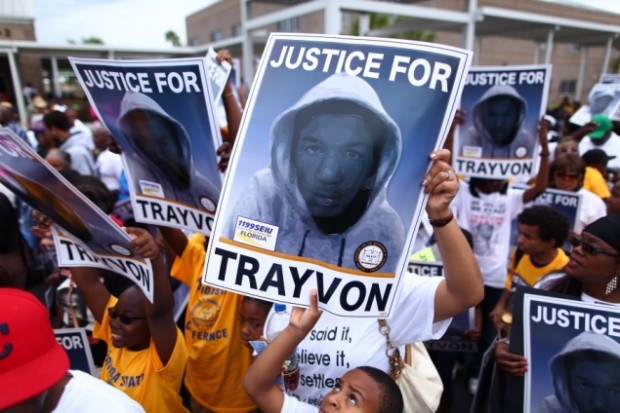
There is a new reason to be appalled by the sensationalized George Zimmerman trial, as the jury is scheduled to begin deliberations today. Judicial Watch has just recently obtained damning documents showing that the Department of Justice (DOJ) actively aided and organized protests against Zimmerman. The documents detail the actions of the Community Relations Service (CRS), a small outfit within the DOJ.
March 25 – 27, 2012, CRS spent $674.14 upon being “deployed to Sanford, FL, to work marches, demonstrations, and rallies related to the shooting and death of an African-American teen by a neighborhood watch captain.”
March 25 – 28, 2012, CRS spent $1,142.84 “in Sanford, FL to work marches, demonstrations, and rallies related to the shooting and death of an African-American teen by a neighborhood watch captain.
March 30 – April 1, 2012, CRS spent $892.55 in Sanford, FL “to provide support for protest deployment in Florida.”
March 30 – April 1, 2012, CRS spent an additional $751.60 in Sanford, FL “to provide technical assistance to the City of Sanford, event organizers, and law enforcement agencies for the march and rally on March 31.”
April 3 – 12, 2012, CRS spent $1,307.40 in Sanford, FL “to provide technical assistance, conciliation, and onsite mediation during demonstrations planned in Sanford.”
April 11 – 12, 2012, CRS spent $552.35 in Sanford, FL “to provide technical assistance for the preparation of possible marches and rallies related to the fatal shooting of a 17 year old African American male.”
The federal government is now in the business of swaying public opinion in criminal trials against defendants they want to smear. This should be a chilling reminder that the ever-increasing authority of the federal government knows no bounds, and that Washington’s lust for power will continue to ooze into anything and everything in order to further consolidate its dominion.
Although the amount of money is relatively small, these reports document an orchestrated effort by the CRS to organize protests and give assistance to anti-Zimmerman groups. Perhaps most ominously, this campaign to influence and aid these groups began just five days after the DOJ and the FBI decided to open further investigations into the events of February 26th.
So to recap: The DOJ actively abetted anti-Zimmerman groups in order to tarnish Zimmerman’s reputation, while at the same time leading a supposedly unbiased investigation into the Martin shooting. The DOJ is supposed to be a disinterested and even-handed arbiter of disputes. These flagrantly political actions further mar Attorney General Eric Holder and the Obama administration as a whole, although with the recent and alarming revelations about the NSA’s extensive surveillance programs, frankly, it’s shocking that there’s any integrity left to mar.
The media has created a narrative concerning the shooting, a wholly racial fabrication starring an idealized 17-year-old black boy and the racist “white-hispanic” who gunned him down. The Obama administration shamelessly–and nonsensically—assisted in this endeavor.
MSNBC tried and convicted Zimmerman, executed him by firing squad, then propped the body up at the defense table so it could do it all over again. Host Lawrence O’Donnell said Zimmerman shot “a black teenager to death for having done absolutely nothing,” and opined that “I believe what we have here is evidence of a police cover-up.” At a rally, another of the network’s personalities, the Rev. Al Sharpton, compared the injustice done to Martin to the Crucifixion of Jesus Christ — and that may have been one of his cooler-headed moments.
How many of these rallies were spontaneous movements and how many were mobilized or even created by the DOJ or Obama?
Justice, in the sense of a deliberate, lawful judgment consistent with the facts, was never the driving passion of the Zimmerman-haters. They wanted a racial morality play. If Trayvon Martin had been shot by another black person, no one would have cared. Al Sharpton wouldn’t have made him a cause. Lawrence O’Donnell wouldn’t have batted an eyelash. No one outside his immediate family and friends would have ever known his name.
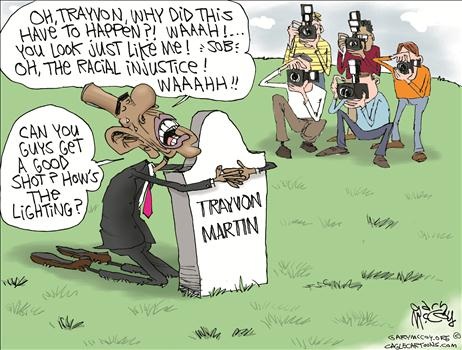
Trayvon Martin’s shooting was an ideologically useful tragedy, and so the vultures did their worst.
Now that these documents illuminate the DOJ’s role in helping to frame the narrative, we can include Obama as one of the vultures circling their carrion, intervening in order to score cheap political points. Although it’s been a consistent lie, Obama always said that he was going to have the most transparent administration in history. Now, for a brief glimmer–and in a way he wholly unintended–it looks like he finally backed up his promise, revealing just how unscrupulous he can be.
According to Scientific American, a woman, after giving birth, retains some of her child’s cells in her brain. Did you ever wonder why your mom knows exactly what you’re thinking or what you are about to do? Well this is not the answer to that question, she just knows. This has to do with your DNA and what it can do for your mother. More specifically, these left over cells can both help and harm the mother through lung, liver, kidney, heart, and skin defects. This process is known as microchimerism, where cells that are left over are adapted naturally by the mother and used for different reasons. Scientists are still unsure whether or not these cells are actively being used or if they are participating in harming or helping the mother.
Why is this relevant? Let us imagine they are indeed harming the mother after birth, in fact that they are affecting her lifestyle and worsening her response to disease. Maybe the cells are increasing the mother’s risk for cancer, or maybe they are simply causing a slower response time to what would be an easily curable sickness. In this case it is extremely important to help find a way to get rid of the cells after a female gives birth, rather than waiting on a side effect to develop. Side effect, only of course, if it in fact deals with harming the mother.
On the flip side, lets say its not a side effect but a blessing; some research suggests that the mother benefits from having cells left over after birth. They can even help with autoimmune disorder and rheumatoid arthritis. There is some research being done that suggests it may be similar to stem cells in that they help with regenerative properties. In fact, these stem cells may even help with the creation of new eggs for future births.
The biggest thing to gather from all of this is that it isn’t just males that are thought to imprint themselves on women’s brains because of their rowdy and reckless behaviors. Now all of you girls are also held accountable for actively being on your mother’s mind. Literally.
A new study on climate change and evolution shows that climate change is happening so fast that many vertebrate species can’t evolve fast enough to keep up with the pace. They would have to evolve ten thousand times faster than they currently are to keep up with the climate change that is expected for the next hundred years.
The study compared the past rates of adaptation to the modern rates of climate change. Scientists analyzed 540 vertebrate species and the speed of their adaptation to climate change in the past. This included amphibians, reptiles, birds, and mammals. The study concluded that land based vertebrates do not evolve anywhere near fast enough to adapt to the new trends of climate change, resulting in possible extinction if they are not able to migrate, acclimate, and eventually evolve. Each species has their own comfort zone when speaking about temperature, climate and environment, which is why you won’t see penguins in the Amazon or monkeys in Antarctica.
According to Wiens, who conducted the research along with another postgraduate research assistant at Yale University, findings show that on average, species evolve and adapt to climate changes at a rate of about 1 degree Celsius per million years. However, if the International Panel of Climate Change is correct and we should expect a rise of 4 degrees in the next hundred years, a vast number of species won’t be able to evolve quickly enough.
This little guy’s species can’t evolve fast enough to stick around. http://cdn.ph.upi.com/
These conclusions came from studying evolutionary family trees of vertebrates that show how species relate to each other through DNA. The data gathered from the trees was then compared with the data on the climatic niche of each species. This allowed the scientists to evaluate at what pace the species changed in their given climatic niche. Most sister species evolved to live in habitats whose temperature difference was just 1-2 degrees Celsius over the course of one to a few million years.
Overall, most of the vertebrate groups contain some species that will be potentially endangered. It does’t have to be all that bad though. Species can acclimate but not truly evolve, or they could migrate to their preferred climate. Unfortunately, for some species this is not an option as they move very slowly or are required to go through habitats that are heavily influenced by humans.
It should be noted that most extinction cases are not a direct effect of the physiological burden of climate change, rather the changes in interaction with other species, as well as their food availability. For example, if an area experiences serious droughts and plants cannot grow causing low food availability for those animals, it would ultimately result in their migration or demise.
Although all life can evolve to meet the demands of a new environment, a necessary ingredient to evolution is time, something the world does not have.





























 Wondergressive

