-
Paul Ryan: “School? Get a job! In fact get three!”


According to Paul Ryan, the until now unheard of fifth horseman of the apocalypse (riding a red, white and blue horse representing poverty), students should stop asking for rational and affordable tuition costs and instead work extra jobs. Three jobs to be exact.
According to Ryan the Pell Grants which provide millions of low and middle class students up to $5,500 toward tuition per year is no longer sustainable. What Ryan believes is sustainable though is billions in tax breaks for big oil companies, billions of tax breaks for income on investment dividends, tax breaks on corporate jets, as well as tax breaks for heirs of million dollar estates.
As Gerald Ford said, “a government big enough to give you everything you want is a government big enough to take from you everything you have.”
-
Natural, Living Pesticides
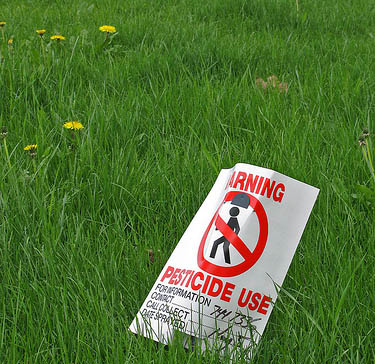
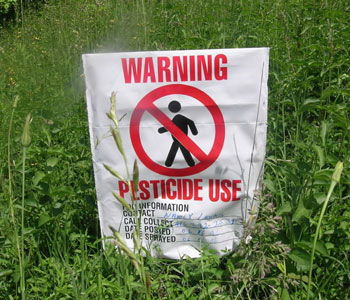
This TED talk, by Shimom Steinberg, documents the benefits and ease of using insects to combat pests safely, naturally, and economically.
-
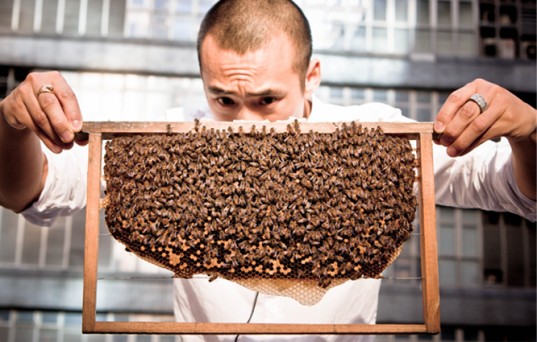
Healthy Honey Bees
-
Make a Permaculture Connection
permacultureprinciples.com What is Permaculture?
Permaculture was invented in Tasmania Australia by Bill Mollison, David Holmgren and their associates in the 1970’s. It was a revolutionary approach to age old problems with farming and gardening. Through a series of publications they began to spread their ideas and it has continued ever since with growing international communities and passionate people expanding and improving methods everyday. Wikipedia tells us that,
Permaculture is a branch of ecological design, ecological engineering, and environmental design which develops sustainablearchitecture and self-maintained horticultural systems modeled from natural ecosystems.
Geoff Lawton, a permaculture consultant, takes it a step further in his TEDx video and explains why it is such an important practice.
How can I get involved?
There are many great websites that connect worldwide communities interested in sustainable agriculture, permaculture, organic lifestyles, clean energy methods and more.
Permies is a forum with invaluable information abound! It’s called Permies, because that’s what these wonderful people are called!
Permaculture Global is another website that helps connect people all over the world through projects and classes.
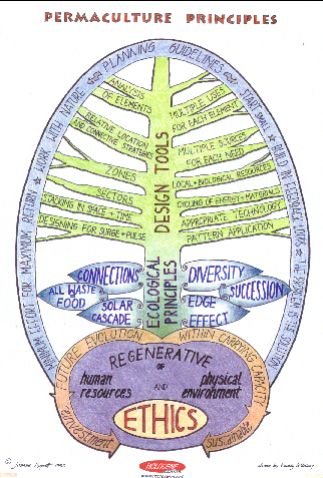
If you’re interested more in organic farming make sure to check this site on WWOOFing. The WWOOFing organization allows people to travel and learn this valuable information on a low budget. If you just want to stay at home and learn a little more the Permaculture Activists site is quite useful. Of course you could always take a vacation to California where they’re working a lot harder at it than the rest of the states. (There is also a really great detailed version with explanations of the above chart)
In addition to looking at websites and joining forums there are also classes and schools you can go to in order to receive permaculture certifications or general foundation knowledge. Here’s a link to courses in the American Midwest.
The Chart
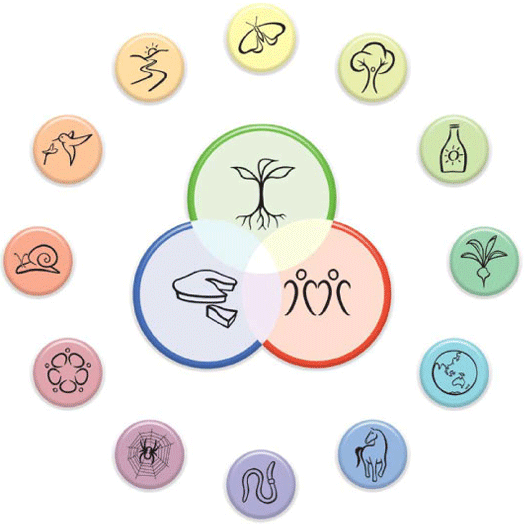
In the chart above the three main circles stand for earth care, people care and fair share.
The 12 smaller circles represent the following ideas.
1. Observe & interact
2. Catch & store energy
3. Obtain a yield
4. Apply self-regulation & accept feedback
5. Use & value renewable resources & services
6. Produce no waste
7. Design from patterns to details
8. Integrate rather segregate
9. Use small & slow solutions
10. Use & value diversity
11. Use edges & value the marginal
12. Creatively use & respond to change
So check out the site, become a permie and as Gandhi said:
“Be the change you want to see in the world.”
Sources:
-
Permaculture Connection
This site connects people interested in sustainable farming, permaculture, organic lifestyles, clean energy methods and more from all around the globe. It is a forum with invaluable information abound!
There’s a name for these wonderful people by the way; Permies.
Check out the site, become a permie and as Gandhi said:
“Be the change you want to see in the world.”
-
Eat Your Yard: Grow an Edible Landscape at Home
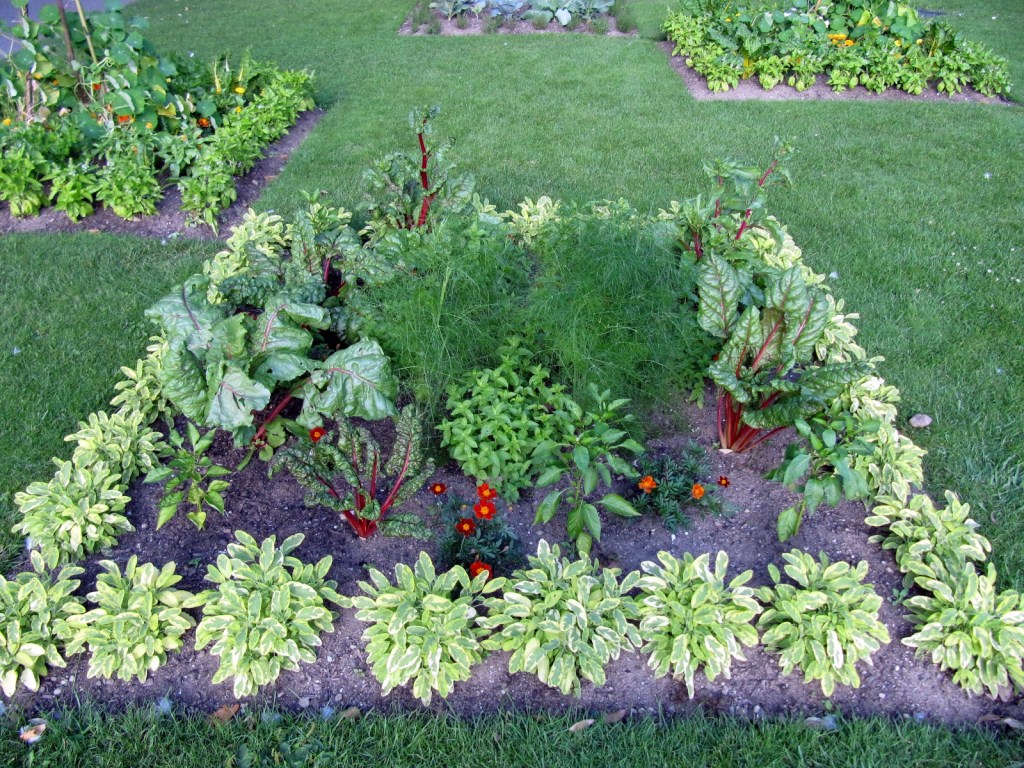

Edible landscapes heidiinthegarden.blogspot.com This TED talk describes how local communities and the world at large can begin to use land to create edible landscapes instead of lawns. Pam Warhurst explains how she and a small group of garden revolutionaries began planting edible landscapes consisting of edible herbs, fruits and vegetables around their village in England without permission. The result? Countless miles of previously unused land has been converted into healthy chow.
Pam is urging the world to stop growing ‘pretty’ flowers simply for their aesthetic value and start growing edible plants in their place. Oh, those vines wrapped around city hall’s bicycle rack? Strawberries. Help yourself.
The idea of growing edible landscapes has also spread to homeowners around the world who are choosing to transform their front and back yards into gardens in place of traditional shrub-style landscaping. Ros Creasy has actually been creating edible landscapes for three decades! Everyday Joes and Janes are beginning to adopt more sustainable lifestyles through utilizing edible landscapes. Not only does the practice save you a nice chunk of cash, it is also way to make the food you eat healthier. It makes the environment happy as well by decreasing the amount of space required for commercial agriculture.
A particularly fruitful type of edible landscape is the food forest. The food forest has an almost legendary status among gardening and edible landscape enthusiasts due to the fact that it grows 9 different layers of edible crop on the same piece of ground. That’s not even the best part. A food forest is self contained, meaning you work very little to maintain it and there is no waste created by the forest since everything from the forest is recycled back into the soil. A food forest is literally the garden of Eden at your tongue’s command.
Whether through personal or communal gardening, keeping edible landscapes is an easily approachable and sustainable lifestyle choice. Anyone can do it. As Pam Warhurst said,
if you eat food, you’re in!
Come on fellow food lovers, you have nothing to lose, and hordes of delicious fruits and veggies to gain!
A highly suggested documentary if you’re interested in learning more about edible landscape history and different current techniques is the “Permaculture Trio” documentary, available in full on Youtube.
Your body, your community, your planet, and the future will thank you for growing food, not lawns.
Sources to get you started:
Youtube: A visit with Ros Creasy
Rosalind Creasy‘s website
-
Edible Landscapes
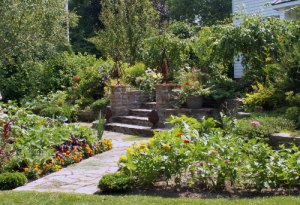
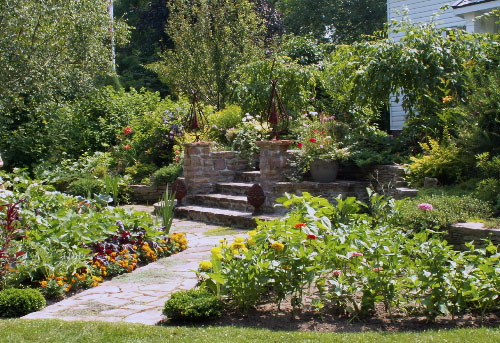
This garden, consists entirely of healthy, edible plants! This TED talk describes how local communities and the world at large can begin to use its land more effectively. Pam Warhurst explains how she and a small group of garden revolutionaries began planting edible herbs, fruits and vegetables around their village in England without permission. The result? Countless miles of previously unused land has been converted into healthy chow. Pam is urging the world to stop growing ‘pretty’ flowers simply for their aesthetic value and start growing edible plants in their place. Oh, those vines wrapped around city hall’s bicycle rack? Strawberries. Help yourself.
The idea of edible landscaping has also spread to homeowners around the world who are choosing to transform their front and back yards into gardens in place of traditional shrub-style landscaping. Ros Creasy has actually been practicing edible landscaping for three decades! Everyday Joes and Janes are beginning to adopt more sustainable lifestyles through edible landscaping. Not only does the practice save you a nice chunk of cash, it is also a healthier alternative to the food you eat. It makes the environment happy as well by decreasing the amount of space required for commercial agriculture.
Whether through personal or communal gardening, keeping edible landscapes is an easily approachable and sustainable lifestyle. Anyone can do it. As Pam Warhurst said, “if you eat food, you’re in!”
Your body, your community, your planet, and the future will thank you!
Wonder about your world…

Take the plunge down the rabbit hole of insanity and wonder in this fast-paced, nonstop psychological thriller that will leave you questioning the very nature of reality and beyond. Part thriller, part romance, part existential horror, A Dream of Waking Life delves into lucid dreaming, psychedelics, existential ontology, video games, the nature of love, the nature of reality, and more.

Mendel’s Ladder delivers an adrenaline-fueled journey set on a dystopian future Earth, brimming with high-stakes action, adventure, and mystery. This epic series opener plunges readers into a world filled with diverse cultures, heart-pounding battles, and characters who will captivate your heart and imagination.

“E.S. Fein is raising the bar for quality as it’s a very well-written and thought-provoking book…There are points and themes in the story that could be discussed for eons as people will have their own idea on where it leads. It’s a book I would highly recommend.” – Andy Whitaker, SFCrowsnest


 Wondergressive