-
NOT Another 9-11 Article (rolls eyes*)


http://3.bp.blogspot.com/-TUvbzXE_ju4/Tmwu1oROgtI/AAAAAAABx_Q/P0T3C0aA1IA/s1600/9-11.jpg You know him. Maybe you are him. The casual acquaintance, not quite friend, he saunters forward, dilated pupils scanning over each of his shoulders, iPad casually out and ready, a knowing smile forming a crest of righteously pompous paranoia across his stubbled jaw, beads of youthfully enthusiastic perspiration clinging to his hipster handlebar mustache, and, beaming with false solidarity, he presses play:
Half-way through the clip, he starts digging through his leather “Tool” wallet and pulls out five pre-creased bills to further baffle you with (below).

http://fc01.deviantart.net/fs45/i/2009/074/7/b/Twin_Towers_on_Money_by_haloflooder.png Ok, great, I’ve seen this stuff before. So was 9-11 an inside job? Maybe just allowed to happen for private agendas? It’s old played-out news, and, most likely, your mind was made up long ago. The more important question no one seems to be asking is, “why should we give a shit?”
Woah woah woah!! You can’t mean that?
I do. Absolutely. And if I do my job here, hopefully you’ll be shrugging with indifference as well by the end of this article, and the world can be a happier place with just a few more rainbows and baby unicorn farts. Come follow me on this fanciful rollercoaster ride, enjoy all the benefits of “disregarding bad news.”
Where we stand
Today, 36% of Americans either are certain or pretty sure that 9-11 was an inside job. So, this is not some fringe group of loonies, but a rather hefty chunk of “we the people,” not to mention the masses on the fence open-minded to the idea. The countless YouTube links circulating Facebook are everywhere so the question has been posed to just about everyone by now. If we can all unite for a moment and assume the very worst, “9-11 was our government killing its own people,” that’s exactly why we need to knock this right the hell off. Terrorism is bad, but thinking about terrorism is far worse…
Check it out
We’ve seen the documentaries, and the documentaries refuting the documentaries, and even the refutations of the refutations blah blah blah.
There is a natural rhythm to peering down the rabbit hole. First is the rush of finding something sensational; it triggers this carnal craving to be “in the know”. Then, once the initial high of learning something edgy wears off, the specific details slowly fade away from our memories and we’re left with only a few linchpin ideas. These are the singular points that, at least to us, are utterly irrefutable. The linchpin is a beautiful mental process that allows us to unburden and feel righteous in our opinion, free wonder about other things.
On the official story believer’s side of the case is the old, “how could that many people possibly keep something this big a secret?” Then, to the conspiracy theorists, all they need are 2 words, “building 7,” and the argument is over. In either case, it’s like an atheist preaching to a born-again; it always ends in a, “well I just have faith,” and a perforated stress-ulcer coupled with bloody stool.
I mean something far greater than apathy when I say this: once you quit giving a shit, it’ll all be roses. I promise.
The motives

http://t.qkme.me/35hgha.jpg Whoever the group responsible, there is a wide array of believed motives. Conspirators say Iraq war, oil, create enemy, repeal rights, globalization, fear agenda. Meanwhile, official storyers say… umm… “They hate freedom” or something, U.S.’s Saudi Arabia presence, sanctions on Iraq. Whoever the culprits, whatever the aim, each of these explanations shares a common bond; they all hide under the same umbrella: “propaganda.” There is some message that attack was designed to send. There was a message, and that is part of why we need to stop caring…
See, the mind of the conspiracy theorist is an interesting place. They tend to be the more curious amongst us, believing themselves more open to the truth than others. Whether their world view is ever validated or not, there have always been a segment of the people who don’t buy the “official line.” Be it JFK, the moon landing, Lincoln, freemason founding fathers, or “God” is a mistranslation for “Aliens,” alternative explanations of history abound.
What that means is, if a small powerful group of the world’s elite was responsible for 9-11, they knew full-well that some would shout “bullshit.” It’s a matter of human nature. So don’t you think, just maybe, if they knew how you’d react, that might have been part of the plan?…

http://i17.photobucket.com/albums/b91/Aaron244/i_4230_keanu-reeves-conspiracy-meme-017.jpg I hope you can bear with me here. Remember, we’re still assuming the “truthers” are right.
Since the 60’s, the idea of “the man” has been all but ubiquitous, but in the last decade especially, an overwhelming shift in perspective has occurred to where it’s now just assumed common knowledge that “your government is out to get you,” like some unspoken rule. FEMA camps, chemtrails, illuminati symbols, clips of cops beating rioters all flood through our bandwidth. Ideas that would have gotten one ostracized a decade ago are now commonplace. politicians are corrupt, the news is filled with lies, food is poison and breathing causes cancer, so cynicism seems to be justified, but let me ask you this: How bad was 9-11 really?
Even the “they” out to get you isn’t out to get you.
3000 people died that day. That’s terrible, but not really (how dare you?). Nearly 3000 people have died since you started reading this article.
But those weren’t Americans so it’s not as important? Or, those were largely natural causes (circle of life)?
The callous truth is, in spite of all the hype, the numbers are a speck of rubble amidst the heap of steel and concrete that is human mortality. Being blown up by a terrorist is terrifying (hence the name), but not only are you more likely to die slipping in the shower than you are to die in a terrorist attack, you are 4,167 times more likely (where’s the war on hygiene?).
From this angle, the attack itself was not a big deal. I’m sorry to all the victims and their families, but for God’s sake, I’m just as sorry to the 3000 people who are killed each year by hippos. Perhaps this is too large of heartless a leap to take, but our own cops do more damage than that.
It’s no longer just a game!!!

http://www.cowart.info/blog/wp-content/uploads/2012/09/Hungry-Hippos.jpg “Mission accomplished”
Here’s what I’m suggesting: the result has been accomplished. Even If our own government were the orchestrators of 9-11 (again, maybe so, maybe not), it absolutely doesn’t matter.
The numbers are so small they are inconsequential. If the government attacks its own people, you should worry about it if you also expect to be struck by lightning while holding a winning lottery ticket; it could happen, but it won’t.
The dwindling baby-boomers who still trust FOX-news may fear terrorist, but the internet doesn’t. The internet, though, is afraid. We are afraid of something far worse…
If these elusive shadow men really run the show, the larger game was not anything tangible, but the propaganda campaign that followed, where we now collectively fear our government. That was the aim. The result has been this massive uneasiness on the collective mind of the people that the one’s they were supposed to rely on were out to get them, and that is far scarier.
Pissed off guys in caves with access to box cutters is not a threat to a heavily armed nation. But a group who controls the riot police, watches all the satellites, monitors your browsing history, and owns the judicial system is trying to kill you… that’s scary.
Guess what, my friends; they aren’t. 3000 people. Whoever it was killed just enough to make it seem plausible that they are killing us. They aren’t. They just aren’t. Do serial killers exist? Of course. Will you be skinned and made into a lampshade at some point this week? Absolutely not!!!
Now I can already hear the backlash. “He must be working for the man. They got to Qwizx, too.” Or, “What about the FEMA camps, flying drones, and U.S. citizens put on no-fly lists or labeled terrorists without trial?”
Yep. Those are things alright. So what? The only thing that’s changed is now we know about it. Far worse things have happened and will continue to, because that is part of the human condition. Say thank you to the internet for being a check on the villains of the world’s nefarious bullshit. You are just as safe you were before you did a Google search for codex alimentarius, but now you are aware.
Wherever you stand, if we could go ahead and give every last benefit of the doubt, and assume the most extreme explanation is the right one: some race of hyper-intelligent aliens is controlling humanity through the media and orchestrated 9-11 as a false flag operation to scare the population into an Orwellian state so they can harvest our soul energy to create a negative-polarity Hell universe (heavy heavy stuff)… still… they killed only 3000.
They want you scared; there’s nothing to be scared of. When you “expose the truth” you’re really the one spreading the fear. The very powers you’re trying to expose, you are doing their job for them.
We have the power to make this world a better place, and it only takes one simple step: Just shut the hell up already, and play some ultimate Frisbee. Things are good.

https://i.chzbgr.com/maxW500/6326262272/h5ABB99DA/ Sources:
Managing Bad News in Social Media: A Case Study on Domino’s Pizza Crisis
Why the 9/11 Conspiracy Theories Won’t Go Away
9/11 Loose Change (Full Length)
Debunking 9/11 Conspiracy Theorists
9/11 Truthers: Meet the Scholars for 9/11 Truth
9/11 Free for All– Debunking Popular Mechanics
How Convenient! The Epistemic Rationale of Self-Validating Belief Systems
Why the Human Brain is Designed to Distrust
John Kerry: Building 7 was Deliberately Demolished
Taliban Says 9/11 Attacks Were Excuse for ‘Illegal’ War
On Anniversary, Iran’s Ahmadinejad says U.S. Planned 9/11 Attacks
What’s the Takeaway from September 11th?
Globalization, Terrorism, and Democracy: 9/11 and its Aftermath
President Bush Addresses the Nation
Motives for the September 11 Attacks
Understanding the Iraq Sanctions
Why People Believe in Conspiracies
10 Best JFK Assassination Conspiracies
Lincoln Assassination Theories: A Simple Conspiracy or a Grand Conspiracy?
FEMA Camps and the Threat of Martial Law Didn’t Start with Obama
The Illuminati: Symbols, Signs, Meanings, & History Revealed
Savage Beating of Protestors by Greek Riot Police
Scientists Calculate Odd Ways to Die
10 Incredibly Bizarre Death Statistics
You’re Eight Times More Likely to be Killed by a Police Officer Than a Terrorist
Gun Ownership Statistics and Demographics
The Five Most Terrifying Civilizations in the History of the World
Aliens Blamed for September 11 by Conspiracy Fans
How the Illuminati Exert Control Through the Media
History of American False Flag Operations
Unholy Experiment: Alien Greys and Soul Harvesting
9-11, 9/11, alex jones, America, apathy, aware, brain, building 7, change, chomsky, conspiracy, cops, crazy, david icke, death, Facebook, fremason, government, gun, guns, hate, hippo, illuminati, inside, inside job, intelligence, iraq, job, kill, mind, oil, police, politics, popular mechanics, qwizx, qwizx is awesome, refutation, religion, science, september, shut up, social media, society, terror, terrorism, think, tool, war, YouTube -
Evolutionary Tooth Decay
Dentists have been around for thousands of years, presumably one of the oldest professions. They are also the most questioned and the most avoided by people because of their grueling and painful procedures. Well not really anymore; one quick tingly shot and you feel virtually nothing during a root canal or a filling of a tooth. However, if we floss daily and brush twice a day then we can avoid dentists altogether, or so I have been informed. There is also the saying that goes: an apple a day keeps the dentist away, supposedly by the exercise it causes for the jaw during the chewing motion and for the natural sugar substitute over candy. But could the crunchy apples also be better for your teeth than the mushy apples? Could it be that our comfort foods such as mashed potatoes and gravy drowned meatloaf (mmmm… meatloaf) are the cause of our teeth slowly decaying over time?
According to a new study, our light and mushy food may be causing a higher wear and tear on our teeth than our prehistoric counterparts’ diets! The study finds that through testing different artificially created teeth, food that is crunchier, like nuts, grains, and seeds, actually causes less stress on our molars, causing a lighter load on the teeth than softer foods. Does this have anything to do with our ancestors and how their diets were composed of raw foods and crunchy nuts?
The morphology of the crown might have been selected to maintain chewing efficiency throughout the life of the individual as the tooth wear increases
If our teeth evolved to complement harder foods, then by using them less on harder food and more on softer mushy food (yes the mushy-ness is beginning to gross me out too) have we perhaps doomed ourselves to an evolutionary decay in our teeth?
Ironically, it seems the lack of physiological wear may in fact lead to pathological conditions
Oh well, at least I can still eat my spinach salads with nuts to offset the, yes here it is again, mushy-ness of the spinach with a nice added salty CRUNCH!
Research:
Evolutionary Paradox of Tooth Wear
-
Obese? Got a Fatty Liver? No Problem. Spinach & Nuts Have You Covered
Besides the obvious reasons for eating spinach and nuts, like losing weight and eating real food, they can also aid in fighting fatty liver disease. For the first time, a correlation between vitamin E and symptoms of fatty liver disease caused by obesity has been uncovered. Fatty liver disease occurs when 5-10% of the weight of your liver comes from fat. It can be caused by alcoholic and non-alcoholic means.
The collaborators, from Case Western Reserve University, the Cleveland Clinic Foundation and Cornell University, discovered that the essential nutrient vitamin E can alleviate symptoms of liver disease brought on by obesity.
The implications of our findings could have a direct impact on the lives of the approximately 63 million Americans who are at potential risk for developing obesity-related liver disease in their lifetimes,
says Danny Manor, an associate professor at the Case Western Reserve University School of Medicine.
Eating leafy greens such as spinach, as well as nuts and sunflower oils, could help battle the symptoms of fatty liver disease since they contain high amounts of vitamin E. Vitamin E has many beneficial health altering properties such as protection against toxins like air pollution, premenstrual syndrome, eye disorders such as cataracts, neurological diseases such as Alzheimer’s disease, and diabetes.
The Fatty Liver Test
Dr Manor tested this hypothesis on a group of mice that were in the advanced stage of non-alcoholic steatohepatitis (NASH). It’s a common symptom of obesity by fat accumulation and inflammation in the fatty liver. The team deprived the group of mice of vitamin E and recorded an increase of fat deposition and other liver problems in the mice. Once vitamin E supplements were given to the mice, these symptoms ceased to exist.
Lessons Learned
- The vast majority of adults do not consume enough vitamin E. This is most likely due to the increased consumption of processed foods which are not rich in Vitamin E for the most part.
- We need to consume more vegetables, nuts and seeds, or a supplement, in order to get our daily vitamin E intake as well as to lose weight and avoid fatty liver symptoms.
Sources:
http://www.webmd.com/hepatitis/fatty-liver-disease
http://ods.od.nih.gov/factsheets/VitaminE-HealthProfessional/
air pollution, alzheimer’s, Case Western Reserve, cataracts, Cleveland Clinic, Cornell University, diet, disease, fatty liver, greenleaf, health, leafy greens, liver, nash, neurological, nutrient, nuts, obese, obesity, oils, research, science, spinach, sunflower, symptoms, toxins, university, vegetables, vitamin E - The vast majority of adults do not consume enough vitamin E. This is most likely due to the increased consumption of processed foods which are not rich in Vitamin E for the most part.
-
From Multi to Mono: The Greatness of Monotasking
For many years now, as technology has advanced, our habits as a society have shifted to accommodate multi-tasking—and this is something that is expected now. We might chuckle when older folks talk about our being plugged in all the time or how fast everything keeps being upgraded but for the most part, we shake our heads and think that they just haven’t gotten with the program yet. It seems like the natural thing to do, you have a tiny computer in your pocket and you’re wasting valuable time at a red light: why wouldn’t you check your texts? Heck, flagging isn’t just for books anymore!
We can call, cook, tweet and watch a slideshow of all the pictures we’ve ever taken all at the same time. We must be pretty close to figuring out how to be superpeople, right? Right? …Guys?
Turns out, science is shutting this party down. Productivity expert Julie Morgenstern (no, really, she’s written
fivesix books) says in an interview by Forbes:It has been scientifically demonstrated that the brain cannot effectively or efficiently switch between tasks, so you lose time. It takes four times longer to recognize new things so you’re not saving time; multitasking actually costs time. You also lose time because you often make mistakes. In addition, studies have shown that we have a much lower retention rate of what we learn when multitasking, which means you could have to redo the work or you may not do the next task well because you forgot the information you learned. Everyone’s complaining of memory issues these days—they’re symptoms of this multitasking epidemic.
That’s pretty condemning. There’s also the much-grieved etiquette argument. Incredibly enough, it’s slowly begun to be acceptable to dismiss the company of those around you in favor of others. I have had people answer calls while out at lunch with me, and, on occasion, I’ve done the same. Apologies are all good and well, but can these things really not wait at all? Paolo Cardini gives a brief TED talk on the subject of monotasking (his accent is rather heavy, it might take a few seconds to get used to, but it’s an endearing clip). He gives a personal example of how his judgment/concentration lapsed while grilling due to trying to do too much at once.
I’ll leave you with this final thought, which comes from Dr. Adam Gazzaley, who is the Director of the Neuroscience Imaging Center at the University of California, San Francisco. He’s also an associate professor of neurology, physiology and psychiatry at said institution. (This bit is from an NPR talk titled, Does Multitasking Lead to a More Productive Brain?:
Well, we’re learning a lot more. I think the advance of brain imaging and what we call functional brain imaging, seeing what your brain is doing while we challenge it, has really clarified a lot of what’s happening.
A lot of this has been suspect for a long time, but we’re learning a lot more of the details, and it certainly seems that our brains are not – you know, it’s becoming increasingly viewed that our brains are not highly adapted for multiple streams of information at the same time but rather focusing at a particular direction.
And we see that usually what happens when you demand great degrees of quality or of care […] what happens as opposed to actually doing two things at the same time, it seems that you switch between these things. And with each switch, there’s a cost, a cost in performance that occurs.
I’m going to go ahead and believe the man that requires two sentences of SCIENCE to describe what he does in any given day.
References
Do you take your cell phone in the bathroom? 75% of Americans admit to calling, texting on the toilet
Seinfeld: George’s Toilet Book
Julie Morgenstern Amazon.com Author Page
How Multitasking Hurts Your Brain (and Your Effectiveness at Work)
Paolo Cardini (TED Talk): Forget Multitasking, Try Monotasking
Does Multitasking Lead to a More Productive Brain? -
Re-animated Kidneys, 3-D Printing and (Icky?) Organ Markets

http://www.nature.com/news/lab-grown-kidneys-transplanted-into-rats-1.12791 As horrific as the recent events in Boston were, it’s easy to get lost in the tar pits of negativity and despair over the state of modern society. However, such despondence ignores the reality that people around the world are now less likely to die a violent death than at literally any other time in the history of mankind. The United States is currently enjoying a decades-long plunge in violent crime rates. The general public’s obsession with gruesome anomalies like the Sandy Hook massacre and Boston bombing is blessedly based on media saturation rather than an abundance of such atrocious acts.
Contrary to what dominates the news cycle, the modern world is brimming with inspiring stories that better reflect the exaltation of our species. The bravery of everyday Bostonians running towards the blasts to aid the wounded is one such example.
Others are innovations that will dramatically transform the future of medicine and hopefully save millions of lives one day. There are currently 118,026 Americans on an organ donor waiting list, with 81% requiring a kidney. In 2011 over 6,500 people died awaiting their transplant. Scientists may be on the verge of ending the wait list altogether.
In a recent report in Nature Medicine, researchers at the Massachusetts General Hospital have successfully transplanted bio-engineered kidneys into rats. The team, led by Harald C. Ott of the Center for Regenerative Medicine, also hopes to use the technology to create new hearts, lungs and livers for patients experiencing organ failure.
http://www.youtube.com/watch?feature=player_embedded&v=5wfdhB_VyJw
From the video:
Using donor organs that are not normally suitable for transplantation, Ott’s team re-animates them by first washing away native cells with a soapy solution. What’s left behind is a natural scaffold of structural proteins that can be repopulated with stem cells taken from a patient.
After stripping away the living cells, the researchers infused the kidneys with stem cells from newborn rats. Using a vacuum, they literally sucked the stem cells to where they were needed in the organs. The kidneys were then placed in chambers that mimicked a living body where they could grow for a few days. Soon enough, they began to function and were able to successfully filter waste products and produce urine.
To fully test the process, the kidneys were then transplanted into a living rat to see the results. Incredibly, the bio-engineered creations functioned and performed nearly as well as the rats’ original kidneys.
Ott says that this process is unique because it lets doctors use only the “blueprint” of donor organs and allows them to individualize the transplant and effectively eliminate the possibility of the patient’s immune system rejecting it. It also allows surgeons to use less-than-perfect organs, which will help increase the supply for people in need.
One benefit of Ott’s research is that organs don’t have to be grown, although that doesn’t seem to be a problem for organizations like Organovo, who are trailblazing the 3-D bio-printing of living tissue. I have written about my love of 3-D printing before, and the ultimate goal of Organovo’s research is utterly revolutionary: The ability to print nearly any organ, customized to the patient, on demand.
http://www.youtube.com/watch?feature=player_embedded&v=-A-uH15bQZw#t=236s
Organovo plans to start by printing relatively simple tissues like heart muscles, blood vessels and nerve grafts that can be transplanted into patients. Once the technology further advances, they wish to expand into more complicated organs and structures. The capability to replicate and replace failing hearts, livers and lungs by a simple Ctrl-P command would be an astonishing advance for medicine, perhaps beyond any other since the acceptance of the germ theory of disease.
While these nascent technologies are developing, there is a simple way to help patients who need replacement organs, particularly kidneys, today. There needs to be a regulated market for organs. Currently it is illegal in almost every country to buy or sell a kidney. This is a perverse and unfair system in which everyone benefits from the organ transplant except for the donor. The patient gets a new kidney, the surgeons and nurses get paid, but it is illegal for the donor to be compensated for the trouble of undergoing drastic surgery, sacrificing a major organ, and saving a life. I’m sure most donors feel emotionally satisfied by their decision to go under the knife, but in order to save more lives there should be a financial incentive to donate to a complete stranger.
This idea strikes many as being gruesome, a surefire path for the poor to simply sell themselves to the highest bidder. As a believer in self-ownership, however, I see no moral problem with the impoverished being compensated for providing a literally life-saving asset. Iran is the presently the only country in the world where the organ trade is legal and regulated. As a result, they do not have a waiting list for patients who require kidney transplants. The US needs to decide what’s more important, saving the lives of thousands of patients every year by paying donors, or sacrificing those lives by maintaining that the organ trade is icky.
The research by the Massachusetts General Hospital is simply enthralling, as is the technological advances of Organovo and bio-printing. Whether people re-animate, grow, or even trade them, the most important thing is to make sure the individual patients who need new organs receive them so they can lead healthy and fulfilling lives.
For all the carnage at the Boston Marathon and the general inundation of violence that we are subjected to every day, it’s important to step back and always look on the bright side of life.
https://www.youtube.com/watch?v=jHPOzQzk9Qo
Sources:
http://www.rightoncrime.com/category/priority-issues/victims/
http://optn.transplant.hrsa.gov/data/
http://www.donatelifeny.org/about-donation/data/#Data US1
http://www.nature.com/nm/journal/vaop/ncurrent/full/nm.3154.html
http://www.youtube.com/watch?feature=player_embedded&v=5wfdhB_VyJw
http://www.youtube.com/watch?feature=player_embedded&v=-A-uH15bQZw#t=236s
http://www.csmonitor.com/2004/0609/p12s02-wogi.html
http://www.economist.com/node/8173039?story_id=8173039
-
Science Says “Smart People Are Idiots”
Right off the bat, congratulations on being in the top eighty percentile. We can read, and that puts us well ahead of the seven hundred million adults that can’t (I know the pictures are pretty, but focus. Focus!). Let’s bump us up a few more pegs for knowing what a percentile is as well. You’re smart; you know it; and I’m so so sorry… turns out this is bad news. Smart people are idiots.
Don’t panic!!! You’re obviously one of the exceptions. For God’s sake, quit panicking. Quick mental test:
In a lake, there is a patch of lily pads. Every day, the patch doubles in size. If it takes 48 days for the patch to cover the entire lake, how long would it take for the patch to cover half of the lake?
You said 24, right? Good, that means you’re smart. Unfortunately, the right answer was 47. I’m afraid you may be suffering from a condition called smart-idiot-itis, an affliction on the rise amongst intellectuals. See, because you’re smart, your brain immediately heard “half” and “48” and karate-chopped out a quick 24. Oops, this mental shortcut is called dysrationalia. Dysrationalia afflicts 100% of people who, when asked the question “how much dirt is in a hole 6 ft. by 3 ft. by 9 ft?” answer anything but zero, zero dirt (There’s no dirt in a hole, silly). Dysrationalia is the leading cause of smart-idiot-itis.
Don’t take my word for it. According to a long string of individuals with PhD’s, MBA’s, and various other impressive acronyms, “smart people are stupid.” The idea they present about our educational system can be summed up nicely in this quote by one of the said intellectuals (Michael Sherman):
Smart people believe weird things because they are skilled at defending beliefs they arrived at for non-smart reasons.
Essentially, smart people are used to being smart people, so they assume they’re right, because usually they are, even when they aren’t, right that is. Wow, that’d make more sense if I was one of those smart people, but if I were, it’d be wrong apparently. Thank you, brain.
It seems to boil down to something called the bias blind spot. Everyone is biased, and everyone who is biased believes they are not. This is why it’s so obvious when someone else is doing something stupid, but our own dumb actions confound us. Since we’re stuck in our own heads, when we put our briefcase in the dishwasher last week, or tied our shoes and completely forgot we’re not wearing pants yet, we don’t see ourselves as the bumbling morons we all are from time to time. It’s because of the cloud of justifications and excuses always swirling around our heads.
Sorry to say it, but being aware of this makes no difference, apparently. Currently, medical science has no cure for smart-idiot-itis, short of a lobotomy. As research into this horrible affliction progresses, should a cure be found, how could we ever trust these brainy buffoons anyway?
http://assets.diylol.com/hfs/0d6/397/e40/resized/calvin-candie-meme-generator-stop-hammer-time-378f49.jpg?1335487056.jpg For more information on this disease, see Daniel Kahneman’s “Thinking, Fast and Slow.” If you think you may have smart-idiot-itis, seek medical attention immediately, and cross fingers that your doctor didn’t nail his hand to his refrigerator for no apparent reason.
Sources:
Why Smart People are Stupid (The New Yorker)
Rational and Irrational Thoughts (Scientific American)
Dysrationalia: Defects in Real-World Intelligence (Talent Develop Resources)
Why People Believe Weird Things (Michael Shermer)
We Struggle With Objectivity: The Bias Blind Spot (Psychology Today)
Cognitive Sophistication Does Not Attenuate the Bias Blind Spot (ncbi.nlm.nih.gov)
-
Let’s Capture US an Asteroid!
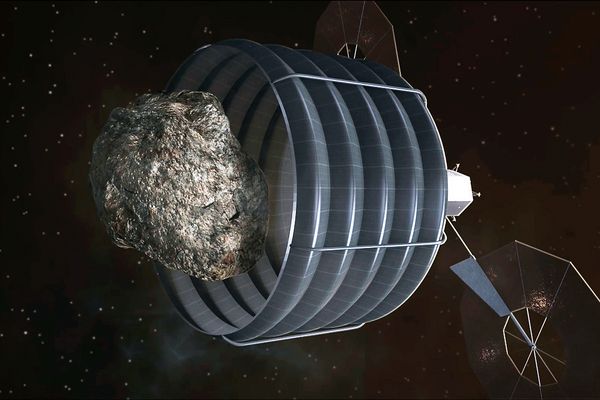
http://news.nationalgeographic.com/news/2013/04/130410-asteroid-recovery-nasa-space-budget-science/
What would interstellar warfare be without the original ideas that brought us there? Like, for instance, humans developing new space technologies and exploring space in the first place. Lucky for us, we have a great amount of our budget invested in NASA, a hefty proposed 17.7 billion dollars to be exact, which, surprisingly, is still 50 million less than in 2012. Looks like NASA’s planned mission to an asteroid was not just a pipe dream!
The most interesting part of the budget would be the proposed spending associated with NASA and asteroids. The description in the budget for NASA states that:
The Budget includes $78 million for NASA to develop needed technologies and study alternative approaches for a robotic mission to rendezvous with a small asteroid—one that would be harmless to Earth—and move it to a stable location outside the Moon’s orbit.
http://savetheasteroids.spreadshirt.com/ That is to say we will send men to space to commandeer an asteroid and bring it home! As if the asteroid had any say in the matter anyway, I foresee a cult uprising like no other before! That is all chump change compared to what NASA is really planning to do with this excavating of asteroids. Sometime in 2014, there is a planned launch of Orion, which will bring us one step closer to herding asteroids and ultimately reaching Mars in 2030!
Dan Dumbacher, deputy associate administrator for NASA’s Exploration Systems Development Division (what a title!) says:
It’s a key element of our overall plan to get humans beyond Earth’s orbit as quickly as we can
With that test flight accomplished, the scientists and engineers can analyze Orion’s design and maneuverability, capability of Orion housing humans, and heat shields designed for Orion’s reentry, all of which will hopefully bring us all closer to sun bathing on our red brother’s atmosphere. That, or using it as a space station for our intergalactic space battles!
For a full low down on the President’s Budget for Fiscal Year 2014, visit that link and check out whether or not you agree with the budget and the changes it will bring. One definite that it prescribes is an eventual decline in our debt, but at what cost?
Further Reading:
Wondergressive – NASA’s Planned Mission to Asteroid
President’s Budget for fiscal year 2014
Wondergressive – Interstellar Warfare
-
Starcraft as a Model for Future Interstellar Warfare
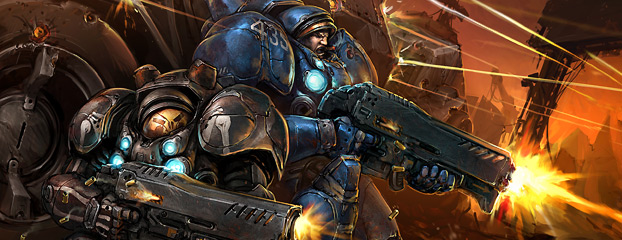
http://bnetcmseu-a.akamaihd.net Starcraft and its sequel Starcraft 2 are wildly popular real time strategy computer games made by Blizzard Entertainment. They are played by people from all over the world. In fact, Starcraft 2 was the top selling computer game of 2010 and continues to be played by millions of gamers, even being featured in highly publicized worldwide tournaments. It has recently come under the microscope of legitimate science as researchers tout it for the incredible expertise required to become a master of the game. While chess was historically used as a major measure for cognitive speed and power, Starcraft is now used as the true measure for cognitive fortitude due to its added complexity, fast pace, and rapidly changing infinitude of variables. There is even research being performed by the SFU Cognitive Science Lab on the extreme mental capacity required to compete with the Starcraft elite. The set of abilities is called Skillcraft. The chess masters of yesterday are like bumbling children compared to the Starcraft masters of today.
Drs. Thomas Targett and Duncan Forgan, both of the Institute for Astronomy at the University of Edinburgh, wanted to know how humans would fare in a cosmic battle between other space-faring alien races. War and destruction are after all what humans do best. The problem is that the only space-faring species we’ve ever seen is, well, us, and we’ve just barely left our own rock. What would an alien race look like? What would their capabilities entail? What motives would they have? Are they as insanely militaristic and imperialistic as us? Are they so technologically advanced that they can remain invisible and spatially aloof to the point that they could be standing over your shoulder reading this without you even realizing it?!
None of these questions can be answered with certainty, but they can certainly be modeled. Theorizing and modeling are the foundation of all sciences. The theory is that one day there will be a war of the worlds, so how do we properly model this war? By using Starcraft, of course.
Starcraft has players choose one of three races of alien beings: the hive minded Zerg, the technologically advanced and telepathic Protoss, or Terrans, which are humans with technology based on our own present day capabilities. The pair of doctors set out to learn what they could from the endless stream of results from battles waged in Starcraft day after day. They stated that:
In a classic example of citizen science, we found that the general public had generated a vast dataset of (admittedly fictional) alien behaviour, which we could use to drive our simulations. So, we created a population of stars similar to the local Solar neighbourhood, and seeded it with six different races, each representing one of the three [Starcraft] civilizations.
Each of the six races in the simulation carried out one of two primary strategies, a macro or micro strategy. The macro strategy is one where a species builds up a vast number of resources before engaging in battle, while the micro strategy involves rapid movement of smaller military forces used to quickly eliminate developing opponents.
This gives 30 possible combinations of combatants. As we had access to user data showing the outcome of each combination rehearsed many times in StarCraft 2 games played online, we could soon develop a probability that Race 1 defeats Race 2, and so on and so forth. This allowed us to do two things: i) we could see if there was a preferred strategy for StarCraft 2 users to adopt, and ii) How does the balance of power change when these alien races are placed in a Galactic context?
The results were intriguing. If humans were to go to war with a hiveminded alien race, or an ancient telepathic alien race, we would be pulverized if we took the macro economic approach. However, the micro strategy grants us a great amount of advantages. While the model revealed that a micro strategy is favorable across the board for all races, a human type alien race has the upper hand when it comes to smaller, fast paced battles and guerrilla tactics. According to the Starcraft model, as long as we stick to the micro strategy, our only concern should be how to spend our time on the beaches of all our new colonized worlds.
The researchers point out that
we don’t intend to claim the Zerg and Protoss are real! We were interested in seeing how the video games industry can help scientists understand difficult topics like life in the Galaxy, where actual data is so thin on the ground.
Starcraft players of the world, you may be Earth’s only hope for successful interstellar dominion!
While it’s true that we still haven’t found life outside of our tiny stellar neighborhood, remember, life is all over the place; it’s only a matter of time!
Sources:
Scientific American: Starcraft the New Chess
Wondergressive: Every Nuclear Explosion Around the World
Wondergressive: Clouds of Western Intervention Loom Over Syria
best pc game, best rts, blizzard, blizzard entertainment, brain, chess master, cognition, combatant, duncan forgan, economy, hive mind, imperialistic, institute for astronomy at the university of edinburgh, interstellar dominion, invisible conspiracy theory, life, macro economic, micro economic, militaristic, model, nash, protoss, protoss strategy, real time strategy, RTS, SFU, skillcraft, starcraft, starcraft 2, starcraft master, starcraft model, starcraft tournament, telepathic, terran, terran strategy, theory, thomas targett, top selling video game, United States, war, warfare, zerg, zerg strategy -
Tattoo Quest (Part 2): The Spread of Tattoos
This is a continuation of a three part series of articles on the art of tattoo. I’ve chosen this as a topic in order to help decide whether or not I will get a tattoo myself. Click to read Part 1 and Part 3.
Tattoos have been around for a long long time. The earliest known case of inktitude was found in 1992 on the mummified and extremely frozen corpse of Otzi the Iceman. The Iceman’s tattoos are strangely in line with common acupuncture nodes and are likely to be more than decorative.
While most tattoos are ornamental in nature, the tattoos found on Otzi’s body were in the form of simple stripes or crosses. They were also found in places that would normally be covered by hair or clothing. Since such non-ornamental tattoos had previously been found in similar locations on mummies in Siberia and South America, some researchers speculated that the lines on Otzi’s body were of therapeutic importance.
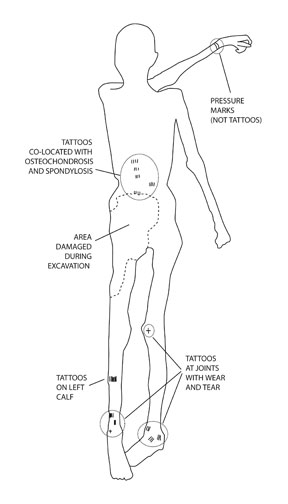
http://rosecityacupuncture.com/blog/wp-content/uploads/2012/09/03-otzi.jpg The arts of tattoo and acupuncture often intersect and have aided each other in spreading to a global audience. Other mummies with these holistically rad skin decals have been found through the world.
Trade routes spread ideas as well as goods. Routes such as the silk road were vitally important in sharing skin tapestries.
During the expansion of the roman empire tattoos went from being an acceptable art form worn by soldiers to an anti christian sentiment and therefore banned.
Among the Greek and Romans, tattoos were used to mark someone as belonging to a certain religious sect, or as the owner of slaves. Tattoos were even used as a form of punishment to mark criminals. When a dynasty of Macedonian Greek monarchs riles Egypt, the pharaoh Ptolemy IV (221-205 B.C.) evidently had been tattooed with ivy leaves to symbolize his devotion to Dionysus, the Greek god of wine. The tattoo fashion was then taken up by Roman soldiers and utilized across the Roman Empire until the spread of Christianity, when tattoos were banned by the Emperor Constantine (A.D. 306-373).
Both of these empires had a heck of a lot of pull on the world around them. When trade routes shifted from land to sea, tattoos became a symbol of the traveler and of nobility.
Tattoos became popular in Britain after Captain James Cook made his trip to Tahiti, which is about 1,500 miles from Samoa. Broken shells were the tattoo needles of choice in Tahiti. Cook made the practice popular amont sailors before British elites started wearing them. King George V sported a dragon tattoo, and King Edward VII was decorated with a Christian cross. From this point onward, the tattoo became a sign of nobility in Britain.
The bridge from antiquity to modern tattooing really happened in 1891 when Samual O’Reilly patented the electric tattooing machine. Since then, the art of tattooing has spread like dermal wildfire. As I’m not really sure what dermal wildfire is, I’ll leave that to your imagination.
Stay tuned for the part three of my cultural examination of tattoos. I’ll be investigating the long-term psychological effects of having a tattoo!
Sources and Additional Information:
Other Wondergressive Links:
Tattoo Quest (Part 1): Tattoos of Southeast AsiaTattoo Quest (Part 3): Significance of Tattoos in the 20th and 21st Century
AI Proscribes Better Treatment than Doctors -
The 5 R’s Followup 1: Refuse
Several weeks ago I did an article that touched on living a zero-waste lifestyle. A comment asking for more details and perhaps some pointers made me want to do a followup article for each of the five points, the first one being “refuse.” I know to some, this might seem a bit silly and something to easily skip over onto the real “meat” of the message. To be honest, I’d started this article intending to combine the first and second points (refuse and reduce), but the more I thought about it, the more I understood that this step in the process is just as important as the others. Bear with me.
In her article in Sunset magazine, Béa Johnson (of ZeroWasteHome.com) says:
In a recession, people are inclined to keep things, but I feel the opposite. The less I have, the richer I feel. Stuff weighs you down. Photos are a good way to keep the memory of something without keeping it because of emotional attachment or the guilt of letting it go.
This idea might take some getting used to. As a society, we’re very much attached to things—especially if we claim sentimental value exists, but if we’re not actively using that item (old music box, heirloom stemware, etc) then it is not only not-benefiting us, but it’s also not benefiting someone out there who might actually use it. It’s basically a lose-lose situation.
Arguably, this first step is the hardest. I’m currently in the middle of a move which is forcing me to take stock of what I truly need and what I’m simply hanging on to. Old essays dating back to middle school (yes, I’m that girl); sketches I’ve done over the years which I have no intention to digitize any time soon; old, broken electronics I haven’t sold for parts in years, the list really can’t end. It’s hard to look at something and admit that it was either: a) a bad idea in the first place or b) no longer a good idea now.
The first of the five R’s goes beyond just this personal purging of stuff, though. It extends particularly into our lives as consumers. We must learn to refuse what we do not need. Let us collect moments, not things. Of course, this is easier said than done, but it can be done. It requires us being brutally honest with ourselves, and that’s not something we’re always prepared to do. Let’s not order random shit online that surprises us when it finally arrives because we’d already forgotten about it (possibly NSFW).
In the above article, the Johnsons use laundry mesh bags to buy their produce in (which is kind of a stroke of brilliance, in my opinion) which cuts down on those clear plastic baggies that seem to have no other purpose than that short trip between the store and your house. They also take glass jars (more on the awesomeness of glass in the next followup) to their grocery store for meats, cheeses and other deli items. This only works, however, if the scales at the deli have a tare function to deduct the weight of the jar. They have the food added to the jars upon cutting so there’s no excess wax paper waste, either.
Béa’s example is extreme, no doubt. There’s no getting around clamshell packaging for some things. Heck, even if you run out of paper clips or staples, you’re going to acquire more packaging in replenishing your supply. The Johnsons probably use a more eco-friendly alternative but for many of us, this isn’t really a viable option yet. I guess what I’m saying is, think three or four times before buying the glittery pink staples when you already have a drawer full of the regular ones—is it truly that important to match your Brony comforter?
References
https://wondergressive.com/2013/02/24/refuse-reduce-reuse-recycle-rot/ (Part 1 of this post)
Sunset magazine
ZeroWasteHome.com
South Park Studios – Insecurity (possibly NSFW)
Wonder about your world…

Take the plunge down the rabbit hole of insanity and wonder in this fast-paced, nonstop psychological thriller that will leave you questioning the very nature of reality and beyond. Part thriller, part romance, part existential horror, A Dream of Waking Life delves into lucid dreaming, psychedelics, existential ontology, video games, the nature of love, the nature of reality, and more.

Mendel’s Ladder delivers an adrenaline-fueled journey set on a dystopian future Earth, brimming with high-stakes action, adventure, and mystery. This epic series opener plunges readers into a world filled with diverse cultures, heart-pounding battles, and characters who will captivate your heart and imagination.

“E.S. Fein is raising the bar for quality as it’s a very well-written and thought-provoking book…There are points and themes in the story that could be discussed for eons as people will have their own idea on where it leads. It’s a book I would highly recommend.” – Andy Whitaker, SFCrowsnest
 Wondergressive