
-
Red Wine Vinegar Aids Weight Loss and Fights Diabetes
Red Wine Vinegar goes well with salads and is a staple of the Mediterranean cuisine. But did you know that it can also help you lose weight and curb your appetite? It even allows you to eat the high-carb foods that usually give you a feeling of regret after the last bite.
When red wine is fermented for a long period, it transforms into red wine vinegar. Besides containing the same antioxidant called resveratrol, the main component of red wine vinegar, and the one that gives it the sour taste, is acetic acid.
Acetic acid is also a main component of other vinegars like white vinegar and apple cider vinegar. Acetic acid helps to slow down the digestion of foods that you eat. This action helps to regulate blood sugar and prevent spikes. Blood sugar spikes are what make your pancreas secrete insulin, which tells your body to start to store fat.
According to Doctor Oz, two tablespoons of red wine vinegar will give you optimal results if you want to maintain steady blood glucose and insulin levels. The main reason why it does so is because it prevents some of the carbohydrates that you consume from passing through the blood stream. Carbohydrates are what raise your blood sugar level, insulin level, and ultimately bring your body to store more fat. It is the carbohydrates, not the fat that you eat, that is making you fat.
Here is an excerpt from a research article summary on WebMD concerning mice and red wine vinegar:
Researchers found that the mice developed a lot less body fat (up to 10% less) than mice who didn’t receive the vinegar compound. The amount of food eaten by the mice was not affected.
It’s believed that acetic acid turns on genes that produce proteins that help the body break down fats. Such an action helps prevent fat buildup in body, and thwarts weight gain.
Diabetes is a condition in which the body cannot regulate blood sugar (blood glucose) properly. Those diagnosed with diabetes, are often told by doctors to stay away from sugary foods. This includes grains, especially bread. Carbohydrates are complex sugars, that can be broken down into simple sugars and processed by the body. As mentioned above, carbohydrates make your blood sugar and insulin sky rocket. Consuming a tablespoon or two of red wine vinegar could help some individuals with diabetes have a sugary meal without having their blood sugar levels spike abnormally. Of course, if you are diabetic, make sure you talk to your doctor before you make bagels your new food staple.
If you like your bread, pasta, bagels, and cereals, then incorporating red wine vinegar into your diet could aid in the slowing of digestion and subsequent weight loss. As a spritzer or as a salad dressing, red wine vinegar can be quite delicious.
Get your own bottle of our favorite red wine vinegar over at Amazon.
Sources:
Crush Your Cravings With 5 Appetite-Suppressing Foods
NewsMedical.net- What is Resveratrol
http://www.ncbi.nlm.nih.gov/pubmed/23265476
WebMD- Causes of Type 2 Diabetes
WebMD- Vinegar May Aid in Fat Loss
Mayo Clinic- Definition of Diabetes
Extra Reading:
-
Feet First! Take Better Care of Your Feet
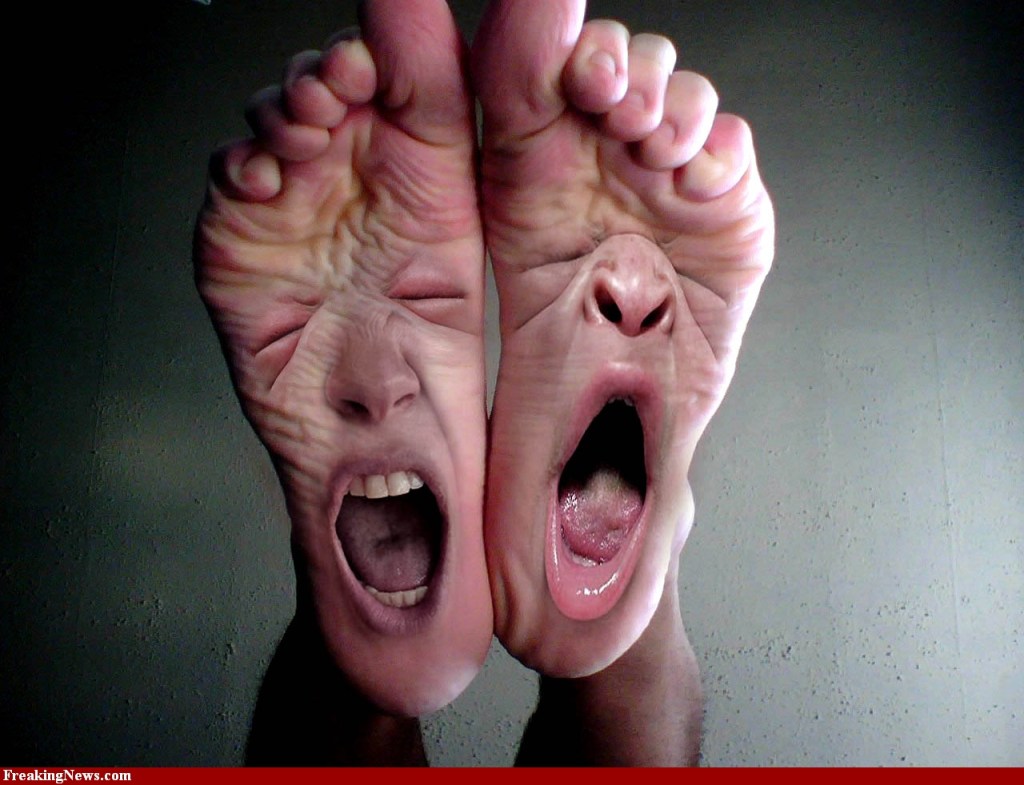

Help your feet feel better
(nelsonjane.blogspot.com)Put your best foot forward. We at Wondergressive enjoy taking good care of our feet. To do so you must be actively thinking about what is best for them. Everyday, people cram their feet into shoes that don’t fit. Flashy styles and inexpensive shoes are often right for the eye or the pocket book but they take a toll on the toes, arches, and foot overall.
Our entire bodily alignment is based on the foundation of our feet. Yet, as Pam Werner, from sun and moon yoga studio puts it…
..Our feet are often neglected and abused by wearing uncomfortable or improperly fitted shoes and rarely walking barefoot. Walking barefoot utilizes the foot muscles, which strengthens them as well as helps recreate and maintain healthy arches. It also allows the feet to be free, spread, and get fresh air.
That’s right, walking barefoot helps your feet and body alignment immensely. Think that walking is a bit too slow? Consider trying barefoot running. A study at Harvard examined the amount of force placed on the foot. This study was conducted by Daniel E. Lieberman and others to show the differences between force applied while barefoot…
and with shoes on.
As you can see the force applied while wearing shoes dips slightly while weight is transferred between the heel and the forefoot. This blip of applied energy is believed to encourage injury in the long run.
Related Article: The Wonderful, Healthier, Life Changing, and Life Lengthening World of Fasting
Aside from actually using them, there are several things that you can do to take better care of your feet. The first, of course, is to develop a healthy yoga practice. You will not regret it, unless you have a history for regretting doing things that make you feel awesome and comfortable inside your own skin. In every yoga pose (asana) each foot acts as a point of reference. That goes without saying as the entire body should act as a reference point. The second thing that you can do is quite easy: Keep hydrated. Your feet sweat a lot. From Yoga Pam (see above):
There are 250,000 sweat glands in each pair of feet that release nearly a cup of moisture every day. There are more sweat glands per inch of our feet than anywhere else in the body, and their function is to keep the skin moist and supple.
That’s reason alone to get those basement digits some fresh air. They deserve it, you know, after they’ve lugged you around for an entire lifetime. To help with other foot problems check out foot.com for a comprehensive resource on all things foot health related.
Related Article: The Almighty Escapism: Creating Distraction
Get your own yoga starter kit and BPA free water bottle!
Sources:
Yoga for the Foot -
Coconut Oil: Fat or Not?
Coconut oil has recently achieved a kind of celebrity status in some cirlces (Pinterest. I’m talking about Pinterest). To hear some folks talk, there’s no reason to have all these newfangled pharmacies or “doctors” because coconut oil does it all. On the other hand, most of the people we trust with our health information have been telling us to avoid this ambrosia unless we’re looking to get a quadruple bypass soon.
So what are the facts? I’ll break it down into categories and just present the information, but I’d encourage everyone to do their own digging on the matter. This hasn’t been heavily researched yet, so there’s been nothing conclusive.
What Is Coconut Oil About?
In a nutshell, it is an oil that is “high in a saturated fat called medium chain triglycerides. (WebMD)”
What the Scientific Community Is Saying
For years, health professionals have been giving coconut oil a bad name, but that may be changing. However, they’re not singing a different tune just yet. In fact, most medical professionals seem to echo Len Piche’s sentiment in the Huffington Post. Piche is a nutritional scientist, registered dietitian and professor in the Foods and Nutrition program at Brescia University College at Western University in London:
I don’t think any health professional, including myself, is going to tell you to increase the level of saturated fat in your diet […but] I’m not so sure that the nutrient profile of saturated fat in coconut oil is all that bad necessarily because some of them are shorter-chain fatty acids and aren’t implicated in some of the chronic diseases
Thomas Brenna, a professor of nutritional sciences at Cornell University sheds some light on why coconut oil was the devil incarnate some years ago in a New York Times article:
Most of the studies involving coconut oil were done with partially hydrogenated coconut oil, which researchers used because they needed to raise the cholesterol levels of their rabbits in order to collect certain data. Virgin coconut oil, which has not been chemically treated, is a different thing in terms of a health risk perspective. And maybe it isn’t so bad for you after all.
Please note that in terms of coconut oil, “virgin” does not mean initial press but rather, undoctored, unbleached and unprocessed. In short, we’re NOT talking about the LouAna stuff you buy at Walmart. (I believe Walmart does have a more natural offering, perhaps through the Spectrum company, but it will likely depend on your area.)
What People Are Saying
Most notably, coconut oil is being purported as a cure for Alzheimer’s disease as well as Parkinson’s (among many, many others). The above two have been touted so much so that most people are asking their doctors about it—this has naturally lead to the medical community taking note. If you have some time, you should really check out the linked article. It goes into some details about the woman who treated her husband’s Alzheimer’s with coconut oil and kept detailed records of it, as well as the controlled experiments the medical community intends to undertake.
At this time, since there hasn’t been any documented, controlled and scientific experiments and/or research done, most medical professionals don’t feel comfortable recommending coconut oil to their patients. The experiments mentioned in the previous link might change that.References
Wondergressive: Coconut Oil Reverses the Effects of Alzheimer’s Among Many Other Benefits
WebMD
Huffington Post
Alzheimer’s Doctors Taking Note of Coconut Oil
Once a Villain, Coconut Oil Charms the Health Food World -
Hurricane on Saturn’s North Pole

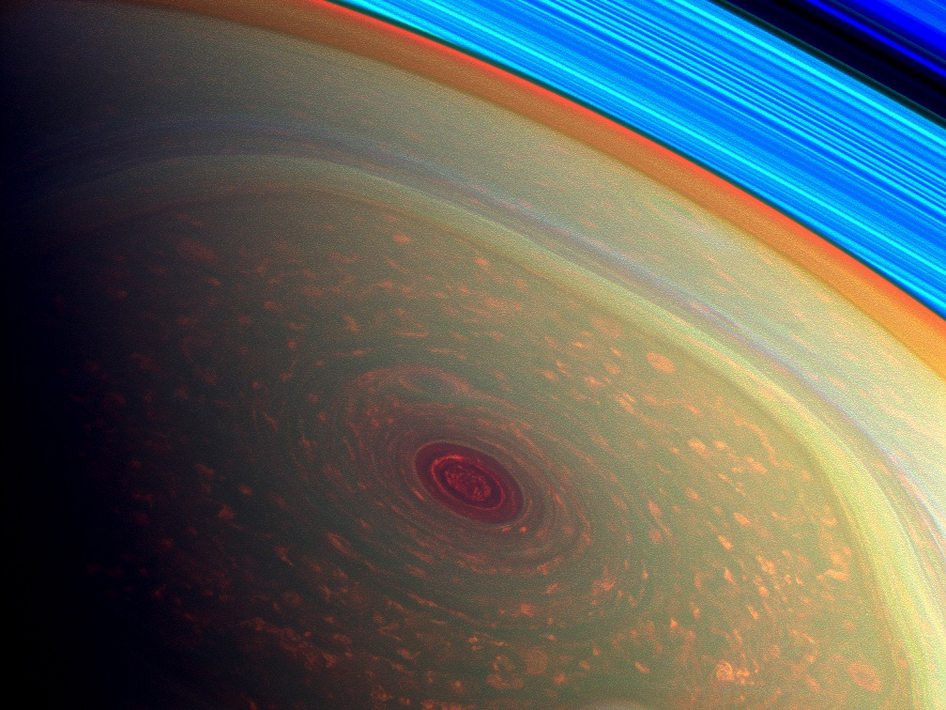
http://science.nasa.gov/science-news/science-at-nasa/2013/29apr_saturnhurricane/ After orbiting Saturn for nine years, the Cassini space probe has made another incredible discovery about the ringed giant. NASA has recently released the above photo of an enormous hurricane centered on the planet’s north pole. The images are astoundingly beautiful and will hopefully help shed light on the composition and structure of Saturn and the other gaseous planets.
Here’s how NASA explains it:
https://www.youtube.com/watch?v=qHx3AQAn0T0
To be fair, the actual images are not this glamorous. They were taken in red and infrared wavelengths and the color that you see here was added to increase detail and contrast, but they are nonetheless spectacular to behold. To help you understand the color scheme, NASA explains:
The images were taken with Cassini’s wide-angle camera using a combination of spectral filters sensitive to wavelengths of near-infrared light…At Saturn, this scheme means colors correlate to different altitudes in the planet’s polar atmosphere: red indicates deep, while green shows clouds that are higher in altitude. High clouds are typically associated with locations of intense upwelling in a storm. These images help scientists learn the distribution and frequencies of such storms. The rings are bright blue in this color scheme because there is no methane gas between the ring particles and the camera.
Red indicates depth, and I love how a close-up on the eye of the storm makes Sauron’s look withered and impotent. The top of Saturn looks like lava swirling down a reinforced drain into hell.
http://www.bbc.co.uk/news/science-environment-22351048 The diameter of the storm on Saturn is estimated to be about 1,250 miles, twenty times bigger than the average terrestrial hurricane. The edges of the cyclone are spinning at 330 miles per hour. In comparison, the Hurricane Katrina was about 400 miles wide with sustained wind speeds of about 125 miles per hour.
The images also expose a rather odd quirk in Saturn’s atmosphere that scientists first discovered from images taken by the Voyager spacecraft about 25 years ago: There is an unusual jet stream that surrounds the north pole in the shape of a hexagon. This jet stream is incredibly large, about the width of two Earths side-by-side. Scientists previously had not been able to discover what was in the center because it had been winter on Saturn and the planet was tipped away from the sun. Without sunlight is was impossible to see the planet’s north pole.
However, with the long winter over (a year on Saturn is about 30 Earth years) the sun has finally risen over the pole. This allowed scientists to take these incredible images and document the giant hurricane that is centered and locked within the hexagonal jet stream.
Weirdly enough, there is also a tremendous hurricane on the other side of the planet as well that was discovered in 2006. Just like its brother in the north, it is fixed in position directly over the its pole. Larger than its northern counterpoint, the southern hurricane is a whopping 5,000 miles across, although it doesn’t enjoy its own polygonal ring surrounding it.
I’ve written about the Voyager spacecraft and my love of stellar exploration before. When Galileo viewed Saturn through his telescope in 1610 he became the first person to see its rings. However, because of the limitations of his lens he thought they were two moons encircling the gaseous planet. It’d be fun to play the time travel game and show him what we now know today, if the logistics involved wouldn’t kill him out of shock. (They most assuredly would.)
Science is such illuminating fun and the pace of discovery has quickened along with the means of acquiring knowledge. I follow a maxim that states that it’s always better to know than to not know, and tomorrow we’ll know just a little bit more.
Sources:
http://science.nasa.gov/science-news/science-at-nasa/2013/29apr_saturnhurricane/
http://www.scientificamerican.com/article.cfm?id=sandy-vs-katrina-and-irene
http://adsabs.harvard.edu/abs/1988Icar…76..335G
http://www.bbc.co.uk/news/science-environment-22351048
http://news.bbc.co.uk/1/hi/sci/tech/6135450.stm
Recommended Books About Saturn
-
Robotic Sense and Feel

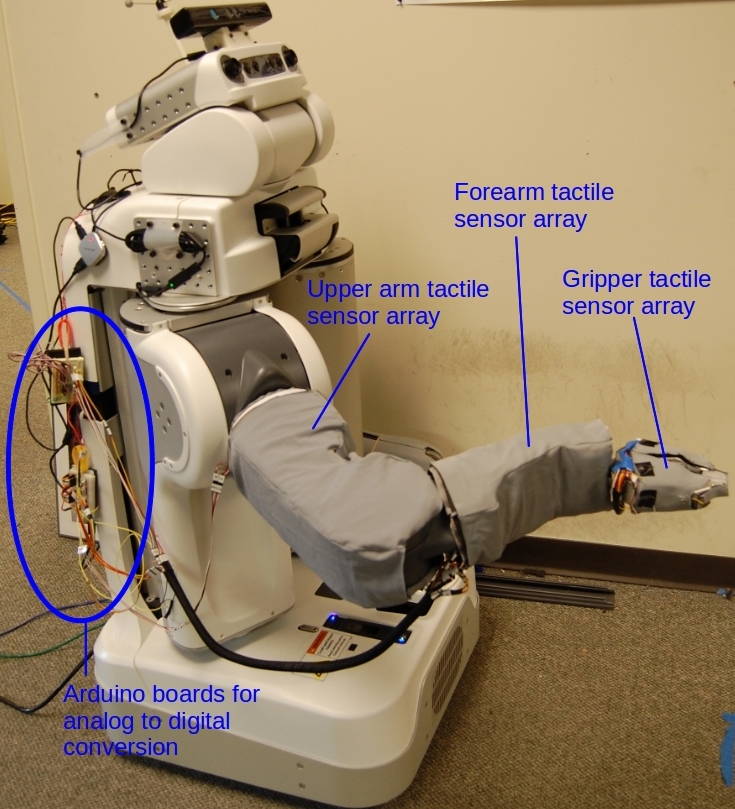
http://www.hsi.gatech.edu/hrl/project_open_source_whole_arm_tactile_sensing.shtml As you may have already noticed, us writers of Wondergressive are obsessed with robots, and when new news of robotic improvements surface, you better believe that we are reading about those new developments with both vigor and ecstasy. Most of the time.
Anyway, there was early talk of a bionic hand that can feel and transmit the sense of touch to the user. It is being developed later this year so it seems the technology is finally surfacing! Amazingly, the bionic hand is getting an additional upgrade: it will soon be able to dig in your pocket (get your mind out of the gutter) to find the right amount of change needed for the toll booth you are sitting at. Soon, very soon.
Researchers of the Healthcare Robotics Lab at Georgia Institute of Technology have created and successfully used a robotic arm which identifies items based on how each object feels. This new robot can maneuver around an area to reach a certain goal; even when lightly coming in contact with structures or objects the robot simply redirects its movement to get to the goal. The idea is to allow the robot to move without too much force when coming in contact with humans at a workplace, or when searching for an item that is out of the robot’s viewpoint. In this way, the robot does not have to be completely careful and can still gently come in contact with objects. Without damaging anything, it can then continue its work by redirecting its movements.
With this new robotic arm, robots could potentially be used to assist the elderly and handicapped in daily routines. Or what about those dangerous and sensitive rescue missions that need delicate care and specific precautions? Robots everywhere!
The best part? The researchers have made the robot’s “feel” skin as well as the robot’s software open source and readily available for all others working on and interested in robotics.
So why not move forward with this technology to better our lives? Why not find ways to better our AI counterparts? Why not become cyborgs that don’t feel emotion, are as strong as Metallo with evil intent, and (matrix spoiler) enslave our fellow human breatherin after a grueling war of humans and AI where the sun is blotted out in order to stop the machines from getting energy from the sun but it backfires and we humans lose the war only to become the machines’ new source of energy? Okay maybe not any of that cyborg spiel but instead the creation of a real bicentennial man.
As before and always thereafter, the singularity is nigh upon us!
Research:
Reaching in clutter with whole arm tactile sensing
Healthcare Robotics Lab at Georgia Tech
Wondergressive: Bionic Hand That Can Feel
Wondergressive: The Singularity is Nigh Upon Us
Wondergressive: Kid Allergic to Everything Attends School
AI, android, arm, artificial intelligence, avoid, bicentennial man, bionic, cyborg, daily, droid, elderly, feel, georgia tech, handicapped, healthcare robotics lab, maneuver, matrix, metallo, movement, reaching, rescue, robot, robotic, robotic arm, robots with feelings, sense, Singularity, tactile sensing, touch, university of georgia, worker -
Japanese Diet Secret: Black Soybean Tea (Kuromame Tea)
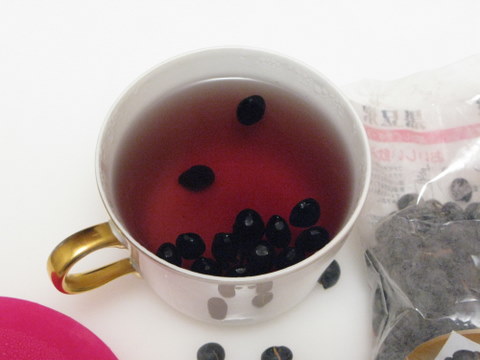

Kuromame Black Soybean Tea http://www.hirokoskitchen.com Black soybean tea, otherwise known as kuromame tea, is another wonderful secret of how the Japanese maintain their weight and health. Obesity is arguably the worst health risk threatening the developed world, especially in the West. According to the Centers for Disease Control and Prevention, more than one third, or 35.7%, of American adults, are obese. More than two-thirds of adults are considered overweight.
Kuromame tea is here to help you, if not save you. Kuromame, or black soybeans, a rare legumes native to China, and have long been used in Chinese medicine to clear toxins from the body and promote urination. Kuromame has also been linked to effective weight loss along with promoting a healthy diet. There are a few major components to black soybean kuromame tea that give it its remarkable fat shedding ability.
Related Article: Japanese Diet Secret: Kurozu (Black Vinegar)
Polyphenols in Black Soybean Kuromame Tea
Polyphenols are compounds known for their anti-aging properties. They are found in foods such as black rice, pears, and potatoes. Black soybeans contain a specific polyphenol called anthocyanin which is known to fight numerous human diseases. Anthocyanin has shown positive results in cancer prevention, anti-aging, reducing the risk of arteriosclerosis, lowering cholesterol, and promotion of lipid metabolism.
A study done by the Journal of Medicinal Food found that anthocyanin inhibited fat absorption in a group of mice that included a higher amount of fat in their diet compared to the control group. The mice did not gain any additional weight.
Isoflavones and Weight Loss
Isoflavones are themselves a type of anti-oxidant and help prevent certain types of cancer such as breast cancer. They also improves lipid metabolism. Lipid metabolism powers your weight loss, or more specifically fat loss. Kuromame tea can help you with this because black soybeans are filled with isoflavones. Lipid metabolism is the process of your body fat being mobilized to be used as energy. They also help to control circulatory blood fats.
There are two more very important components to black soybeans that make kuromame tea the choice for a healthier diet and effective weight loss. One is fiber. Black soybeans are a high carbohydrate legume. However, a large portion of those carbohydrates come from fiber. Fiber helps to lower cholesterol and helps prevent a steep rise in blood sugar levels. The other important and not commonly known compound found in kuromame skin is saponin. Saponin is a chemical compound that also inhibits the absorption of fat.
Make Your Own Black Soybean Kuromame Tea
I have been making my own kuromame tea from the black soybeans I buy in the Asian markets near my house (which you can also buy on Amazon). There is really not much to it:
You grab a handful of black soybeans and put them in a pan over high heat. Let them roast for a few minutes. Nothing extra has to be added. Boil some water for later use. The black soybeans will be ready once you hear the skin crack and the color of the beans turns brown. Take the beans and put them in a french press or other utensil you normally use to prepare tea. Pour in the boiling water and let it sit for a few minutes, or let it sit until you are done drinking.
The reason I do not put down specific measurements is because you can adjust the amount of water to your own liking. Some people like kuromame tea with a smokier taste and some like it more diluted.
After drinking, you can eat the black soybeans themselves since they will be nice and soft. This way you can take in all of the healthy carbs and fiber available to you. It is also worth mentioning that black soybeans are low on the glycemic index, so they make a perfect snack for diabetics!
Sources:
Wondergressive: The Obese Shall Inherit the Earth
http://www.livestrong.com/article/305656-calories-in-black-soybeans/
http://slism.com/diet/black-bean-diet.html
http://online.liebertpub.com/doi/abs/10.1089/jmf.2006.147
http://www.cdc.gov/obesity/data/adult.html
http://win.niddk.nih.gov/statistics/
http://www.ncbi.nlm.nih.gov/pmc/articles/PMC1082894/
http://ir.library.oregonstate.edu/xmlui/handle/1957/33070
http://www.health.harvard.edu/newsweek/Glycemic_index_and_glycemic_load_for_100_foods.htm
Recommended Reading for those Interested in More Japanese Secrets
anthocyanin, anti aging, anti oxidant, arteriosclerosis, black rice, black soybeans, blood sugar, breast cancer, carbohydrates, carbs, chinese medicine, Cholesterol, diet, 黒豆, fat absorption, fat loss, fiber, health, human diseases, isoflavone, kuromame, kuromame tea, legume, lipid metabolism, obesity, overweight, pears, polyphenols, potatoes, saponin, weight loss -
Tattoo Quest (Part 3): Significance of Tattoos in the 20th and 21st Century

http://www.valley-clothing.com/wp-content/uploads/2011/09/Evolution.jpg This is Part three of my seemingly never ending investigation of whether or not I should get a tattoo. Click for Part 1 and Part 2.
The emphasis of this article is going to be in examining the cultural significance of tattoos in the 20th and 21st century.
Well to start, holy wow. The holiest of wows. A lot of time has passed between the year nineteen double aught and now. In 1891 the first electric tattoo machine ushered in the modern era of rad tats and it’s effects are still with us today.
Unfortunately the tattoo machine opened the doors for capitalistic-how you say- compromising of an art form considered sacred, ceremonial and often used in rites of passage. Specifically I’m talking about flash sheets.

Initially, flash sheets were bought by tattoo parlors to give customers an idea for tattoos. One person would create the designs, ship them to shops all over the world and suddenly everybody had the mandarin symbol for peace permanently placed just above their right ankle.
Now to be fair, most studios these days use flash sheets as an inspirational guide for customers who want a tattoo but aren’t really sure what to get.
Flash sheets have also adapted to the times. Now, instead of seeing tired old sheets of peace signs and the like, an aspiring young tattooee is likely to see flash images of tattoos that other people have had custom made. So essentially the flash sheets have evolved. They now show the shop artist’s style and really give a feel for what the customer is getting themselves into.
But, being the purist that I am, there is something to be said about actually working with an artist to get exactly the right tattoo. Design is all of the fun.
Enough blarble jarble. It’s time for some facts. 32% of people with a tattoo say that they have become addicted to the ink. Perhaps it’s time to investigate tattoo addictions. In the United States alone, 1.65 billion dollars is spent on tattoos. You could purchase Youtube for that amount of money. 14% of all Americans harbor tattoos of their own. That’s approximately 43,622,868.38 people! And out of those roughly 44 million people, 17% of them have some regret afterwords.
So there are odds and they seem to be stacked in somebody’s favor, at least. The most important thing to do, when getting a tattoo, is to properly investigate and question the artist. You are going to be getting a permanent work of art placed on your skin by somebody who uses a needle to do so. Also, it is possible to get tattoos removed. Unfortunately, the removal process tends to be just as, if not more, painful as the initial tattooing.
So how has this all effected us? Well I’m glad I asked! Tattoos allow us another medium to display our feelings and explore human creativity. Skin art gives us a chance to express ourselves and visually influence the way that people think about each other. Over the years the world has become a bit smaller and globalization has spread goods and ideas. Tattoos have come in with the tide.
Sources and additional reading:
Tattoo Quest Part 1: Tattoos of Southeast Asia
-
Smelling Calmness: Aromatherapy and Essential Oils
These days, the nose is getting a lot of attention. Well, more than noses have typically gotten in the past. Nasal irrigation is a thing, for example.
The more we study the nose and our olfactory senses, the more we find that links them to memories. There are several theories floating around the science community about why smells elicit such strong emotional responses. Jonah Lehrer of ScienceBlogs postulates in his article, “Smell and Memory”:
One possibility, which is supported by this recent experiment, is that the olfactory cortex has a direct neural link to the hippocampus. In contrast, all of our other senses (sight, touch and hearing) are first processed somewhere else – they go to the thalamus – and only then make their way to our memory center.
Aromatherapy is an alternative medicine that has been gaining popularity in the margins. Bear in mind that just because it’s categorized under something labeled “medicine” doesn’t mean it’s going to cure something. In fact, aromatherapy is most used to aid relaxation and center the mind and body, usually through essential oils.
Essential oils are “A natural oil typically obtained by distillation and having the characteristic fragrance of the plant or other source from which it is extracted” (Google Dictionary).
Lavendar is probably the best-known essential oil. It tops Self.com’s list of 6 Essential Oils and What They Do Pro Tip, ladies: according to Dr. Alan Hirsch, founder and neurological director of the Smell & Taste Treatment and Research Foundation in Chicago:
Studies reveal that the number one odor that enhances male sexual arousal is a combination of lavender and … pumpkin pie!
Different essential oils have different properties. Here’s a list of many along with their properites.
A few important things to remember when experimenting with essential oils is that they are NOT to be used straight. They should be diluted with a carrier oil (olive, coconut and jojoba oils are a few examples) or diffused in a diffuser. Cinnamon oil would burn if it made direct contact with skin because it is one of those that is very potent.
Also, fragrance oils and essential oils are NOT the same thing. Fragrance oils have a larger range of scents because they are synthetically produced. These do not have the healing/centering/aromatherapeutic properties that true, 100% pure essential oils do. When purchasing oils for therapeutic and medicinal reasons make sure they are 100% pure. Amazon is a good place to test the waters with a sampler kit.
References
SinuCleanse Demonstration on OprahGoogle Dictionary: essential oils
-
Power Posing Can Change Your World


High power pose
Photo Credit: simplysmittenevents.blogspot.comPower posing is a form of body language. With just two minutes in a confident, powerful stance one can change his or her attitude and the way he or she interacts with the world around them. In this TED talk Amy Cuddy discusses a research report from Psychological Science about power posing. In the study some subjects assumed a power pose for 2 minutes while others assumed passive or neutral poses. The subjects then went through a rigorous interview process to test their interactions. The research’s findings reports:
Humans and other animals express power through open, expansive postures, and they express powerlessness through closed, contractive postures.
These power relations are complimentary, with people naturally adjusting themselves during interactions so that one person assumes a more powerful role while the other person takes on a submissive role. The research shows that the subjects who assumed high-power stances acted more confident and relaxed during their stressful interview. The report states that:
High power pose
Photo Credit: http://www.thofoods.comHigh-power posers experienced elevations in testosterone, decreases in cortisol, and increased feelings of power and tolerance for risk; low-power posers exhibited the opposite pattern. In short, posing in displays of power caused advantaged and adaptive psychological, physiological, and behavioral changes, and these findings suggest that.
Cuddy gives an intriguing talk about the science behind it and her personal story of pretending to belong until she realized one day she finally did. She says of the study:
Our nonverbals govern how we think and feel about ourselves. Our bodies change our minds.
This research could have amazing implications for people who lack the confidence to confront people and/or have discussions. Just two minutes of high-power posing is all that’s required to gain the confidence needed to approach a scary boss, a bossy mom, or that obstinate roommate. Be timid no more! Go forth and achieve your dreams; awaken the power that is already within you!
Sources:
TED Talk- Amy Cuddy: Your Body Language Shapes Who You Are
Working Knowledge- Power Posing: Fake It Until You Make It
Harvard Business Review- Just Because I’m Nice, Don’t Assume I’m Dumb
amy cuddy, attitude, body language, confidence, confident, control hungry, feel, feel powerless, Harvard Business Review, high power, how to, how to get, intimidating, job interview, low-power, no power, obstinate, power hungry, power pose, power stance, powerless, psychological science, risk tolerance, scary, stances, standing, stubborn, talk to mom, talk to roommate, TED, TED talk -
Japanese Diet Secret: Kurozu (Black Vinegar)
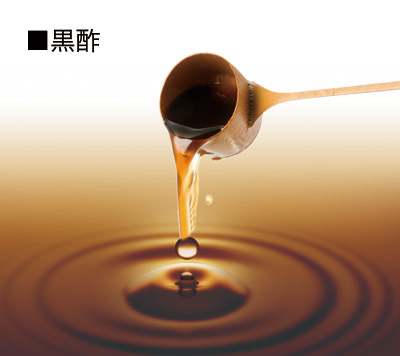
Japanese Black Vinegar – Kurozu http://www.wakasanohimitsu.jp/site/files/00116/s_kurozu_04.jpg Black vinegar, also known as kurozu (黒酢) is a very popular weight loss product among the Japanese. Men and women alike are awed by the health benefits, especially the ones concerning their diet.
Black vinegar is believed to have originated in China and spread out to the rest of East Asia.. Kurozu is a light but traditional black vinegar produced from unpolished rice and has been widely used in Japan as a seasoning and as a health supplement. Currently in the states, a one liter bottle of this could cost you up to $35 dollars!
Kurozu Benefits
- Lowers high blood pressure
- Provides energy through its rich concentration of citric acid.
- Promotes saliva secretion which aids in digestion.
- Aids in disorders such as hyperlipidemia, hypertension, and cancer.
Kurozu and Weight Loss
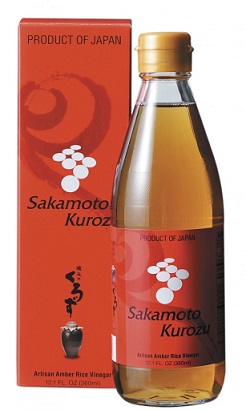
http://www.365cooking.com Now the real interesting part about kurozu is that it can help people shed fat without any drastic changes to their diet (not that adding kurozu to a salad as opposed to ranch dressing would hurt though). According to a study performed by a Kyushu professor, kurozu reduced the size of fat cells, called adipocytes, in mice. The study used kurozu liquid concentrate (KLC). The findings were as such:
In the KCL group, the average adipocyte size in subcutaneous and perirenal adipose tissues was significantly reduced. The KCL-administered rats displayed greater numbers of small adipocytes in the subcutaneous, perirenal and mesenteric adipose tissues than did rats from the other groups. In the KCL group, the DNA content in subcutaneous adipose tissue was significantly increased. The rate of fatty acid excretion was significantly increased in the KCL group.
In plain English, fat cells shrunk in the presence of the constituents that make up kurozu. Fat cells are made up of fatty acids that, when secreted by fat cells, get used up as a form of energy, leaving you with smaller fat cells, less fat tissue, and a leaner look. The great part about kurozu is that it is rich in amino acids, which are the building blocks of protein. Ingesting enough amino acids also promotes the growth of lean tissue such as muscle, since muscle needs protein.
Another way to increase the rate of fatty acid excretion is through fasting for short periods of time, such as 16-36 hour periods.
Get your own bottle of Black Vinegar over at Amazon!
Sources:
http://en.wikipedia.org/wiki/Black_vinegar
http://en.wikipedia.org/wiki/Citric_acid_cycle
http://www.livestrong.com/article/269937-natural-health-benefits-of-black-vinegar/
http://www.lipidworld.com/content/9/1/134
Wondergressive: The Health Benefits of Fasting
http://www.ncbi.nlm.nih.gov/pmc/articles/PMC3128363/
http://www.ncbi.nlm.nih.gov/pubmed/15149153
http://www.britannica.com/EBchecked/topic/1081754/human-digestive-system/45315/Salivary-glands
Wonder about your world…

Take the plunge down the rabbit hole of insanity and wonder in this fast-paced, nonstop psychological thriller that will leave you questioning the very nature of reality and beyond. Part thriller, part romance, part existential horror, A Dream of Waking Life delves into lucid dreaming, psychedelics, existential ontology, video games, the nature of love, the nature of reality, and more.

Mendel’s Ladder delivers an adrenaline-fueled journey set on a dystopian future Earth, brimming with high-stakes action, adventure, and mystery. This epic series opener plunges readers into a world filled with diverse cultures, heart-pounding battles, and characters who will captivate your heart and imagination.

“E.S. Fein is raising the bar for quality as it’s a very well-written and thought-provoking book…There are points and themes in the story that could be discussed for eons as people will have their own idea on where it leads. It’s a book I would highly recommend.” – Andy Whitaker, SFCrowsnest
 Wondergressive

