
-
Morals or More Rails To Guide Us: Science Vs. Religion

http://www.theofantastique.com/ The virtues of right and wrong have been around since the first creature felt what would be later called pain and responded to it. When something hurts, you try not to do it again. It is a relatively simple concept that has evolved unobstructed for one life time (one life time being from the start of all life, until now). There are many different sources of morality. Each of these sources share one major thing in common: They all believe that they are the most right. I’m not here to call your god a shape-shifting molester of women (unless you pray to Zues) or tell you how to live your life but rather, I would like to examine a few schools of moral thought. I’ll leave the conclusion making to you, our Wondergressive readers.
Science
Before I begin I would like to address a euphemism. You see, There are No Morals in Science but what science lacks in morals, it makes up in “ethical concerns” which if you ask me, is a science’d up way of saying that even scientists have morals.
Science believes, whole-mindedly, that the answers to everything are measurable. Using analysis, a scientist decodes the world. There is nothing that cannot be measured. The things that are not yet measured are only not yet measured because we haven’t found a way to measure them yet. Science will find a way to answer every question through precision measurements. From What is Science:
Science is continually refining and expanding our knowledge of the universe, and as it does, it leads to new questions for future investigation. Science will never be “finished.”
Logic is the pride of science. Every decision must be logical. Since I’m in the habit of asking google what things are, I decided to ask “What is Logic?”
Briefly speaking, we might define logic as the study of the principles of correct reasoning. This is a rough definition, because how logic should be properly defined is actually quite a controversial matter.
Basically logic is the refinement of thinking in order to achieve perfectly scientific results.
Fables, Fiction, and Fantasy:
Guided by both the imagination and the wisdom of everyday life, invented stories are another means of instilling morality. This time, when I searched the rules of fiction, there is nothing concrete. There are limitless ways of expressing good/evil dichotomies when you use your imagination. There are a few guiding points in writing a good piece of fiction. Each work must have elements of plot, setting, character, conflict, symbol, point of view, and some sort of a theme to tie it all together.
That is just from the standpoint of the author. The great thing about these three ‘F’s is that the infinite imagination of the reader is coupled with the infinite imagination of the author to create unparalleled sharing of ideas. Reading fiction challenges the morals, or-if you prefer-ethical concerns, through vivid imagery. A good author is capable of projecting feelings through the work that has been created in order to engage the reader in a decision making process. Did things turn out the right way? But what happens when you pair both science and these three ‘F’s?
Religion
Unlike any of the aforementioned morality boosters, religion deals primarily with what happens after you die. Some philosophies approach the matter more scientifically and some choose to use time-tested stories in order to explain the whatnots and whyfors of morality. Religion asks its followers to fully believe that there is no other way than the path that they are on. Relying on a sense of community to herd the masses into doing what is right, religion gives security to the faithful.
Secular ethics and the World Around You
Speaking as somebody who has a terrible time deciding what class to choose in RPGs (I often choose the druid or shape shifting class), I think that we all have a responsibility to find our own moral code. Religion, Science, and Fables/Fiction/Fantasy all give us ways to learn something new, or really.. really old. It is up to us to decide to be kind and charitable to each other whether or not we share the same values. At the core, we all want to be happy and that is all that matters.
In closing, as Kurt Vonnegut puts it best:God damn it, you’ve got to be kind.
Source List:
What is Science?
What is Logic?
There are No Morals in Science
There are a few guiding points in writing a good piece of fiction
This is a great part of Monty Python’s Life of Brian -
Unsweet Dreams: Nightmares and Health

http://www.colourbox.com/preview/2164693-637463-nightmare-forest.jpg You’re naked. In front of people you know and respect (and all your archenemies). Everyone is pointing and laughing in that over-the-top, full-body way that you imagine laugh track audiences do. You are humiliated beyond belief and take a step back, wishing the ground would swallow you whole. Oh, and there was a surprise staircase behind you which you didn’t know about earlier. Off you go, tumbling into the vast, unending abyss—WHAM! You’re awake.
How’s your pulse—probably speedwalking, right? A little out of breath? Unnerved? Slightly sweaty? Maybe you gotta pee. You should probably take care of that, first.
According to the Mayo Clinic,
Nightmares are common. They may begin in childhood and tend to decrease after about age 10. However, some people have them as teens or adults, or throughout their lives.
Until age 13, boys and girls have nightmares in equal numbers. At age 13, nightmares become more prevalent in girls than boys.
At 24, I can safely say I look to be one of those people who will have nightmares throughout my life. It’s okay to be jealous. WebMD lists several reasons why adults might experience this free horror show, and some of the reasons might be surprising.
Post-traumatic stress disorder (PTSD) also commonly causes people to experience chronic, recurrent nightmares.
Other causes include stress, anxiety, depression, fevered illness, withdrawal from drugs and medication (whether prescription or recreational) and sleep deprivation. Surprisingly enough, late-night snacking also made the list! According to the Mayo Clinic:
For some, eating right before bed—and the resulting boost in metabolism and brain activity—leads to nightmares.
Although for the most part, having nightmares appears to be one of those relatively harmless quirks of living, chronic nightmares can be problematic for your health. Particularly for those who already suffer from some level of anxiety or depression, nightmares can cause them further distress and psychological ill effects. Also, though there hasn’t been enough research done, nor is the relationship fully understood, there is some correlation between nightmares and suicide. When nightmares lead to sleep deprivation, you’re looking at a host of other issues including heart disease and obesity.
Though it might seem new-age and trendy, deep breathing exercises before bed have been proven to help. This is not to say they eliminate nightmares, but if you’re someone who suffers from the after hours acid trip often, try it and see if it lessens the frequency. If you’re having the same recurring nightmare every time, rehearsing a better ending before bed can actually lead to a different ending in your sleep. Again, I know this can sound kooky, but when you go to sleep and repeatedly see your loved ones slaughtered, suddenly, a few minutes of coaching your mind to understand that “it turns out, we were just playing zombies!” seems totally worth it. Harvard psychologist Deirdre Barrett first described this “image rehearsal” technique in her 1996 book Trauma and Dreams. Research has concluded that this technique is effective in reducing the occurrence of nightmares.
So the next time you find your mental faculties trapped in an abandoned carnival late at night and that giant clown with razor teeth and harpy claws riding a unicycle of death while wielding a bloodied machete advances upon you, just think about a positive outcome instead.
Sources:Mayo Clinic: http://www.mayoclinic.com/health/nightmares/DS01010
WebMD: http://www.webmd.com/sleep-disorders/guide/nightmares-in-adults
Trauma and Dreams: http://www.amazon.com/Trauma-Dreams-Deirdre-Barrett/dp/0674006909
Case series utilizing exposure, relaxation, and rescripting therapy: impact on nightmares, sleep quality, and psychological distress: http://www.ncbi.nlm.nih.gov/pubmed/15984916 -
A How To: Behavior Changes and Breaking Habits

wf360.typepad.com Stanford University and their Persuasive Tech Lab have released a list of the top 10 mistakes in changing behavior. Great, now I know what I’m doing wrong. What I want to know next is more about what I can do instead of continuing to make the same mistakes.
So let’s take a look at the mistakes and some alternative solutions.
Mistakes in Behavior Change
1. Relying on willpower for long-term change (Imagine willpower doesn’t exist. That’s step 1 to a better future.)
2. Attempting big leaps instead of baby steps (Seek tiny success– one after another.)
3. Ignoring how environment shapes behaviors (Change your context & you change your life.)
4. Trying to stop old behaviors instead of creating new ones (Focus on action, not avoidance.)
5. Blaming failures on lack of motivation (Solution: Make the behavior easier to do.)
6. Underestimating the power of triggers (No behavior happens without a trigger. )
7. Believing that information leads to action (We humans aren’t so rational.)
8. Focusing on abstract goals more than concrete behaviors (Abstract: Get in shape. Concrete: Walk 15 min. today)
9. Seeking to change a behavior forever, not for a short time. (A fixed period works better than “forever”)
10. Assuming that behavior change is difficult. (Behavior change is not so hard when you have the right process.)In my research for this I found some really interesting behavioral theories and behavior research. So, here’s the list of what I have found most effective and links to original sources so you can continue the investigation and find what works best for you.
Ways to Change Your Behavior
Take Baby Steps
Stanford University’s BJ Fogg works on behavior theory and founded the Persuasive Technology Lab to help him further his research into technology that can change behaviors for the better. Fogg has a program that he personally directs to help change behaviors. It’s free, and he runs a session every week. If you’re interested in joining a session head over to tiny habits. Fogg’s model for behavior change has three factors that affect behavior: motivation, ability, and triggers. The idea of the theory is basically to make target behaviors with high motivation easier to do. Set triggers to encourage positive behaviors and start with small habits.
You can train people, giving them more skills, more ability to do the target behavior. That’s the hard path. Don’t take this route unless you really must. Training people is hard work, and most people resist learning new things. That’s just how we are as humans: lazy.The better path is to make the target behavior easier to do.
So why are tiny habits and baby steps important? Big change is difficult, but small change is doable. Incremental changes have a history of working for groups like Alcoholics Anonymous and addiction recovery programs. Stanford’s Mobile Health recognizes that big changes often fail and organized an event in 2012 entirely dedicated to the idea of baby steps. Remember, if you want to change a habit, any change in that direction is better than no change at all. If you want to be a runner, no matter how slow you are when you start, you’re still running laps around the person on the couch. So start small, and as you continue, change will become easier and you can add to your goals. Self-regulation is a limited resource. If you regulate too much you quickly run out of endurance and become passive.
Don’t Multi-task
Research from the University of Utah proves that most of us are not very good at multi-tasking. We try so hard, but it doesn’t ever seem to work out in our favor. In the Harvard Business Review’s article Multitasking’s Real Victim, they note:
For the modern professional, multitasking is an immutable part of daily life. Yet 97% of us are hopeless at it.”
The article focuses on how the real victim of multitasking isn’t the individual doing it, but the others around them who suffer from that individual’s lack of productivity. They detail a list of activities that others can do to help multitasking obsessed individuals with their bad habit. Since multitasking isn’t effective, the most logical thing to do is focus your tasking on one activity. In The Magic of Doing One Thing at a Time, Tony Schwartz states that focusing on one activity at a time and then taking a real break increases productivity. That is backed up by the compilation of research linked from another article in the New York Times. Do one thing at a time. It will increase your efficiency and make change easier to achieve.
Replace Bad Habits with Good Habits
thewaybyelle.tumblr.com Change the situation so that positive decisions are easier to make, or better yet, your only choice. If you’re removing certain foods from your diet, remove them from the house. Set yourself up for success. Fill your fridge with healthy foods you enjoy eating. If you’re quitting smoking, take up a new hobby during the times when you would have taken a smoke break; drink a cup of tea or challenge yourself with a crossword. Remember that making the new behavior as easy as possible is important to your success. Goals that are difficult to reach often fail.
Make a Plan
So now we know what types of goals can help us change our behaviors, but we need to make a realistic plan to get us to the finish line. Taking into account what we’ve learned so far: our plan should be focused; it should replace old behaviors with new positive behaviors; and it should be composed of small changes. Now at least we know what the plan should look like; it needs to go from the abstract to the concrete.
Your goals should be realistically achievable and manageable. They should include specific times and specific activities. If you want to quit a bad habit like biting your nails, replace it with a good habit. Your goal can look something like this: when I get the urge to bite my nails I will chew gum as a replacement activity. When I catch myself biting my nails I will do five push-ups. Making definitive goals allows you to see your progress take shape.
Activate Social Networks
Let others around you know what your new habits are so they can help remind and encourage you when you forget or when you feel the motivation is not strong enough. Having people to watch you and hold you accountable for the new behaviors is an important benefit of having a social network that you can take advantage of. Ten Ways to Get People to Change points out that:
Peers can set expectations, shame us or provide role models.
We can use our peers to help us achieve our goals. Let others around you know what your goals are and they will be inspired to see you succeed. They can help create a supportive environment to ensure that your desired habits flourish.
So basically what I’m saying is:
Decide what you want to change, and make a small, realistic, focused plan to get there. Replace your bad habits with good habits. Tell your friends and family about your plan and enlist their help. Most importantly, don’t give up.
Remember, the key is to start small.
A journey of a thousand miles begins with a single step. ~Lao-tzu
Sources and Resources for Further Reading:
Stanford University: Top 10 Mistakes of Behavior Change
Stanford University’s Persuasive Tech Lab
A Behavior Model for Persuasive Design
Mobile Health’s Baby Steps for Big Results
Senior News 50 and Better: Baby Steps to Lasting Change
Harvard Business Review: Multitasking’s Real Victims
Harvard Business Review: Ten Ways to Get People to Change
New York Times: Only a Few Can Multi-task
University of Utah: Supertaskers: Profiles in Extraordinary Multitasking Ability
Pub Med: Ego Depletion: Is the Active Self a Limited Resource?
Psych Central How To Change Your Drinking: A Harm Reduction Guide To Alcohol
Pinnacle Counseling: Addiction Recovery: Baby Steps
Harvard Business Review: The Magic of Doing One Thing at a Time
New York Times: Slow Down, Brave Multitasker, and Don’t Read This in Traffic
-
The Amazing Bacon, Beer and Edible Underwear Diet


obviouswinner.com America, home to hordes of insecure anorexic teens, overly-secure fatties, and wide enough for a plethora of crazy fad-diet trends to render a “Madea Goes Jihad” premier speechless. So anyone not yet convinced they’re fat either hasn’t encountered a magazine, TV, billboard, pop-up ad, mirror or unfiltered reaction from a child in a super-long while, or the rock of self-deception they live under could give Devil’s Tower pause (no offense DT). So when I shell out this ludicrous claim of a bacon beer and edible underwear diet, I totally understand anyone who rolled their eyes and skipped to the next StumbleUpon link, but seeing as you’re eyes are still scrolling, giving me the benefit of the doubt, let’s make it worth your while…
How would you feel about eating honey-glazed 6 lb bricks of gorgonzola cheese stuffed with chocolate mousse while, in the same swallow, dropping weight quicker than your budget’ll permit you to replace your wardrobe? Throw on an extra slab of butter and settle in for a healthier, happier, fitter you…
In 2003-4, when cutting carbs was all the rage with the trendy fitness seekers, Dr. Robert Atkins was something of a messiah, and for good reason. The Atkins diet had, for those with the tenacity to adhere to its stringent formula, boasted nearly a 100% success rate.

blog.timesunion.com Unfortunately, effective as it may have been, the Atkins Diet fell out of vogue shortly after its rise to fame due in large part to expense (Atkins eating cost 80% over an average American diet), and, more so, the bleak future his disciples realizes when it struck them: THEY CAN NEVER HAVE A DOUGHNUT AGAIN!!! Before fading into obscurity, however, he gave us the foundation for what will soon be the cornerstone to changing our lives for the greater.
Now if you’ve ever tried a fad diet and failed, that’s totally fine, though it is demoralizing. 95% of the newly-health-inclined turn back to a steady intake of chicken-fried McDoubles and butter-slathered Doritos within a week. No need to beat yourself up (but don’t be too proud either). While this subject of fat loss is a massive one (yes, it was intended), minus a small few of us with genetic disorders, the failure of our collective willpower, fortunately, can boil down to three simple fixes:
1. Self-control is overrated.
Let’s pull up our sweatpants for a moment, wipe the crumbs from our chinny-chins, and gorge a big guilt-free meal (to the point of bursting). We’re going shopping the smart way, stuffed, thus with utterly no desire to consume a morsel. This way, all the gimmicky flashing lights of the supermarket, the ones strategically positioned for herding cattle as efficiently as possible, will pose far less a threat to our will-power. Haven’t you found it far easier to give a friendly “no thanks” wave to the lady passing out free pizza samples when you have a nauseated gut?
Next, as we’re human, we naturally want to do what requires the least effort, so let’s use that to our advantage; work smarter not harder. To subvert temptation rid yourself of temptations. When carrots and hummus are the sole items in the fridge, despite the supermarket being just next door, guess what we’ll eat?
Finally, and I’m not promoting apathy here, but two consecutive hours of running, while certainly an impressive feat to spam to Twitter, burns a mere 1000 calories (equivalent of a single White Castle chocolate shake). Running is fantastic, but sadly not the super-slimming-strategy it’s generally considered to be. So how are skinny people even a thing if the numbers are so outrageous? …Hold your horses.
2. Metabolisms plateau and rebound even with the most restrained of us.
60% of the success at beginning diets, even among the most persevering maniacs, is water weight. The human body is an absolute marvel of nature, capable of maintaining itself with minimal fluctuation. That means as one adjusts one’s habits, the body kicks whatever mechanism it has to into gear to maintain the status quo. This is why diet/exercise tends to hit a peak. Millions of generations of experience have trained the human body to maintain itself, and if we attempt to alter that balance, either the brain will jump in and override our will with a barrage of chemicals that cripple us with waffle-cravings, or the metabolism will slug-down to compensate for the new regimen; either way, assuring the same level of jiggle is maintained. To win this battle, we’re gonna have to fight dirty and hit ’em with an unexpected blow…
3. Solution: bacon, beer, edible underwear and whatever the hell else we want; as much as we can shove down our face-holes without ripping at the spare-tire.
Never is a terrifying word. I want my candy. I want my soda, my Redbull, beer-battered cod, deep-dish-pizza and the occasional pumpkin-pie binge, so of course the idea of NEVER having these things just for an extra couple years of life is crazy (those years are at the END, anyway). So if that bastard body of mine wants to undermine all my hard effort, let’s hit him where it hurts, right in the calories.
You see, a major reason diets are unsuccessful is not for lack of effort. Many of our hefty friends can see the coronary around the corner and fight the good fight only to drop a single pound after 15 hours on the bike. Instead, because the body is so good at what it does, our efforts to skinny-down are taken as an attack (Brain says, “Oh, shit, I guess we’re starving now”), so the metabolism compensates to keep us where we were, creating a green-eating, marathon-running, still-fat guy. Often the whole process is so discouraging that the dieter will relapse into even less healthy of a lifestyle.
That’s why we fight back, courageously, with the mighty cannon-fodder of junk food. See, strategically consuming garbage kicks the metabolism in the ass enough to throw it off kilter, never quite settling into a steady normalcy. Crazy as it sounds, binging on fatty foods, in the right circumstances, leads to weight loss.
http://low-carb-news.blogspot.com Get the heck out of here!!!
We need to cheat… but cheat strategically.
What started as a blog post in 2007, “How to Lose 20 lbs. of Fat in 30 Days… Without Doing Any Exercise”, evolved into a how-to on 100 lbs of fat loss and now has become something of legend, with mythical cult status. Ultimate lifestyle engineer Tim Ferris created something that shatters the paradigm of health science, and his legacy will forever be carved into the annals of the obese because his method, simply, is easy and it works.
Tell me!! Tell me!! Quick, I’m getting hungry.
The slow-carb diet (as he calls it) has only 4 simple tenets, no calorie counting or complicated matrices to learn:
1. No white carbs
2. No drinking calories
3. Repeat the same few meals
4. Cheat
We receive no royalties from Tim for promoting his book, so how about a quick sample diet (alter to your desires):
Sunday – Friday:
- Breakfast: scrambled eggs with sautéed spinach, chic-peas and chunky salsa.
- Lunch: protein smoothie (raw kale greens, peanut-butter, almond milk, protein powder).
- Dinner: ground chuck with mixed vegetables and lentils.
- Before bed: 2 glasses of red wine (optional).
Saturday:
- 3 pints of Ben & Jerry’s, Brick of mozzarella, dozen Kristy Crèmes, an Ultimate Pizza Sandwich, 6 triple quarter-pounders w/ cheese dipped in unprocessed lard, 12 stack of crème cheese-stuffed French toast, 2 babies and a diet coke.
Don’t believe me? Frankly I barely do either, and I’ve lost 40 lbs and counting with this lunacy. So all y’all skeptics check out the following links or just take my word for it and spend your valuable time doing more important things, like liking Wondergressive on Facebook.
Sources:
- Wondergressive: Obese Shall Inherit the Earth
- dailystrength.org
- forbes.com
- mann.bol.ucla.edu
- cdc.gov
- businessinsider.com
- nutristrategy.com
- calorielab.com
- ncbi.nlm.nih.gov
- books.google
- dietandfitnessresources.co.uk
- fourhourworkweek.com (twice)
*Note: I’m neither a doctor, nor do I play one on TV, so don’t be stupid; do your due-diligence. For being awesome enough to read to the bottom, here’s a song about a guy who worships doughnuts…
-
The Folly of High Speed Rail in America


http://www.businessinsider.com/map-of-american-high-speed-rail-network-2013-2
Would you take a high speed rail line?This transit layout, put together by California Rail Map and Alfred Twu, envisions a future America thoroughly connected via high speed rail. After repeatedly popping up on my Facebook feed like a freakish case of shingles, I decided that I couldn’t allow this quixotic dream and the fevered intentions behind it go unchallenged. The love affair for high speed rail in the US is nothing more than noxious propaganda, seeping fumes that mute rationality in favor of misplaced adoration for antiquated, 19th century technology.
Don’t get me wrong: I love trains. I’ve been living in South Korea for over three years and am fully enamored with its spectacular rail service. I also lived in Germany and was equally impressed with the efficiency of their inter-city mass transit system. The problem with Alfred Twu’s map is simple and profound: America was not designed to be like Europe or Korea. What works for them simply cannot function Stateside, no matter how much people wish it would.
There is one area in America where high speed rail makes sense: The megalopolis between Boston and Washington D.C., a relatively small stretch of land that supports almost one-sixth of the US population. With the possible exception of a route between San Diego and San Francisco, that is the only place where extensive passenger lines are sensible. It is a hyper population-dense region with a string of cities that enjoy adequate access to public transportation. Every other route on Twu’s map is expensive folly. I should actually say more expensive folly, because in 2011 Amtrak somehow managed to lose about $1.2 billion, despite having better than expected ridership.
The rail system in Korea works so well because of its unique geography and population density. South Korea is home to about 50 million people, all living in an area roughly the size of a mountainous Indiana. Because of its condensed urban nature and high public demand, every city has an orderly and efficient public transit system. This makes it possible to travel to every city, and also within every city without the need for a car. Another simplifying factor is that a trip between Korea’s two largest cities, Seoul and Busan, which are on totally opposite sides of the country, can be made in about two and a half hours.

http://bruteforcecollaborative.files.wordpress.com/2010/02/freiburg_vag.jpg Most cities in Germany and other European countries are also similarly compressed and friendly to high speed rail. Their narrow, bicycle-spoked street layouts are based on their medieval roots, when expanding city streets were cobbled together for immediate convenience and with an understanding that space was at a premium. This makes the modern cities more conducive to light rail systems than the spacious grids of most American cities. This in turn helps ensure that once a tourist or visitor arrives to a city by train, they can fairly easily travel to wherever they want to go by public transport.
Other than the notable exceptions I mentioned earlier, America simply doesn’t have the population density required to sustain high speed rail. One of the glaringly obvious and defining characteristics of the US is its size, and this geographical reality has helped to fundamentally shape American culture and the design of our cities. Once Americans migrated west of the Appalachian Mountains, they built cities that reflected the new-found abundance of land. They eschewed the congested, radial street plans of Boston and Washington DC in favor of the sprawling grids of cities like St. Louis, Phoenix and Los Angeles. The farther west people traveled and as railroad and eventually automobile technology advanced, this effect was magnified. For a simplistic example, the Greater Los Angeles Area covers just under 34,000 square miles, compared to just 5,617 sq miles for the Paris aire urbaine.
One area of the country that could theoretically support high speed rail is—at second glance—utterly incapable of doing so: The Midwest triangle between Chicago, St. Louis and Indianapolis. Chicago is a large metropolis with a good transit system, and the cities are all economically and culturally intertwined, with a high volume of traffic between the three. However, St. Louis and Indy are decidedly built around the automobile. St. Louis does have two light rail lines, but they largely overlap and aren’t very popular. From personal experience, Indianapolis might as well not have any public transport. It has no light rail and its bus system is notoriously byzantine and tortuously slow. It would be virtually impossible for a businessman to pop into these cities by train and promptly get to where he needed to go. It simply isn’t feasible without a car. And these are major cities; can you imagine how these problems will compound in small towns like Quincy, IL (pop. 40,633) or Cheyenne, WY (pop. 59,466), which are also covered in Twu’s fantasy map?

https://www.firstchampionshiphousing.com/portals/0/Metrolink%20Map.jpg With the size of the US, any proposed high speed rail lines are going to be prohibitively expensive, especially considering that the country is $16 trillion in the hole. The California High Speed Rail project from San Diego to Sacramento was approved by voters in 2008 and financing for the first leg was signed by Gov. Jerry Brown in July, 2012. The project has already become a massive boondoggle, with the expected cost having greatly expanded from an estimated $45 billion to between $68 and $98 billion. The completion date has also been delayed 13 years to 2033. Incredibly, this is in a region that—on paper—looks like a perfect place to implement high speed rail. How farcically will the process further degrade on a proposed route between Tulsa, OK and Corpus Christi, TX?
Without a car, there is simply no reasonable way to navigate the vast majority of American cities. The infrastructure to travel on mass transit simply isn’t there. And in most respects it shouldn’t be: There just isn’t a big enough demand to justify it. The US system depends on cars and airplanes. The routes can be largely customized by the user and they provide a level of freedom wanting from high speed rail that is expected by the American traveler. They are also cheaper and more efficient in our country of suburbs and interstate travel.

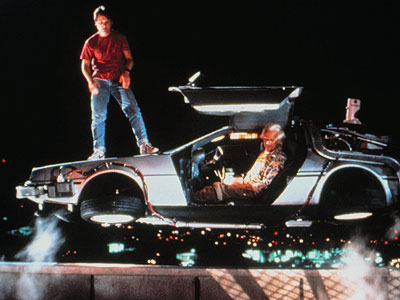
http://mlikoje.borec.cz/obrazky/!GT-500_f3q.jpg There is no rational reason to support a mass increase in high speed rail projects in the US. America is not structured like South Korea or European countries that make rail a viable and dependable mode of transportation for the majority of inhabitants. They have a system that works, and so do we. We don’t need to abandon organically-driven functionality in a vain and expensive effort to be “more European.” Cars, from the ’67 Ford Mustang to Marty McFly’s DeLorean, are a part of America’s DNA; they symbolize and help grant the liberty that the nation was founded on. It would be a shame to throw that all away on a futile wish that “If we build it, they will ride.”
http://mlikoje.borec.cz/obrazky/!GT-500_f3q.jpg Sources:
Business Insider: Here’s What an American High Speed Rail Network Could Look Like
Princeton.edu- Greate Los Angeles Area
California High Speed Rail Authority
LA Times: Bullet Train’s $98-billion Cost Could Be Its Biggest Obstacle
Huffington Post: California High Speed Rail Still Faces a Lot of Obstacles
-
3D? Lets go One More! 4D!


http://www.sjet.us/SJET-MIT.html 3D printing has of late become the hottest discussed news. With this new age printing method we can create guns, replicate handy tools, and even create stem cells to print organs. With 3D printing becoming more accessible and developed further, we of course now have to turn to the world of 4D, a world where things make themselves, without outside intervention!
The world of 4D printing is a world that is yet to be fully realized though research into it has already begun. Exciting new developments in this field will lead to more efficient explorations of the next frontier! Hints of a better lifestyle also come promised as more is learned about this new self assembly system. This passive self assembly system could be the next step to developing AI and creating a new, always adapting system of thought.
Skylar Tibbits, from MIT’s Self-Assembly Lab says:
Imagine robotics-like behavior without the reliance on complex electro-mechanical devices!
Although it is still being developed, even in early stages, the potential for 4D “printing” is outstanding and very real. Shake a passive cube system and you get a desired structure! As Skylar mentions in the Ted talk:
Bridges, buildings, and structures can self assemble through previously programmed data.
A machine that creates itself based on data could be advantageous in war-like scenarios where a bridge for transports is needed. Set a self assembling robot to work if a base camp needs to be set up quickly while manpower is used more efficiently on scouting and gathering intelligence. It could even lead to the development of this guy…

http://www.sodahead.com He could be a bad-ass soldier and all, but why is this important to you and I? With all this advancement hopefully we will get to the point where our conveniences become that much greater with the use of these 4D inventions, that is, as long as our reliance on robotics doesn’t also increase exponentially in the process. As convenient as our lives can become through technology, I remain a firm believer and enthusiast of personal connections and interactions! Less is sometimes more… but until then…
The Singularity is Nigh Upon Us.
Sources for research:
Wondergressive: The Singularity is Nigh Upon Us
3D, 3D printing, 4d, 4d printing, assembly, better than 3d, bridges, buildings, future, MIT, new, new age, new science, new technology, next generation, Printing, replicating, scenario, science, self assembly, self replicating, shake, skylar, Skylar Tibbits, structures, technology, TED, terminator, terminator 2, tibbits, war -
Green Tea Power: Surprising Health Benefits

http://www.wisegeek.com [no_toc]
Green tea, along with all other types of tea, is one of the most consumed beverages in the world along with water and coffee, and reaps many health benefits! Green tea contains powerful antioxidants called catechins (especially EGCG). They attach to free radicals and remove them from our body. Free radicals are particles that damage our DNA and can accelerate aging of the cells and the body.
Green tea is one type of tea that comes from the camellia sinensis plant, which is what all tea is made from. Alongside of green tea you also have white tea, oolong tea, black tea, and puerh tea. They undergo different fermentation processes, and hence change their color, flavor, and contents accordingly. Green tea is the least fermented so it retains most of the green color.
Dietary Health Benefits
-
High concentration of antioxidants
-
Helps to fight cancer and heart disease
-
Lowers cholesterol
-
Helps with weight loss and encourages the body to burn fat
-
Increases metabolic rate with caffeine
-
Makes you feel more full and eat less
-
Helps prevent diabetes and stroke
-
Staves off dimentia
Common Types of Japanese Green Tea

Matcha Tea
Photo Credit:www.greenteajapan.comSome people might find this tea to be less palatable due to the grassy taste, but do not worry. There are many varieties of green tea and I am certain that you can find one that will suit your tastes.
Gyokuro – These are the highest quality. They have a very smooth taste and light fragrance. They are moved to the shade before harvesting.
Sencha – This is the most common form of green tea. When you buy a TAZO green tea bags, this is what it contains.
Fukamushi Sencha – Literaly deep steamed green tea; it undergoes a longer steaming process and has a much greener body.
Matcha – This is the powdered form of the tea and is used in Japanese tea ceremonies. It also contains the highest amounts of beneficial compounds because you are digesting the whole leaf that has been crushed down. (Requires some extra utensils)
Houjicha – Houjicha is roasted green tea and hence, has a brown color. It has a nutty flavor and lower caffeine levels for those who get too jittery.
Genmaicha – This is by far my favorite. This tea is also made from sencha that is pan fried. It is then mixed with toasted rice which gives it a very nice roast aroma.
Cancer Prevention
According to WebMD and recent health research done by the American Cancer Society, lab results show that green tea’s EGCG regulates cancer growth and kills cells that display abnormal growth. Though human studies have not yet proven this, hope remains.
A study in Japan involving roughly 500 Japanese females with breast cancer found lower cancer recurrence associated with green tea consumption before and after surgery.
Some studies in China also showed that there is less risk of developing stomach, prostate, pancreatic, and colorectal cancer.
Another way that it helps to prevent growth of cancer is by starving the cells. It is one of the consumables that inhibits blood vessel growth to cancer cells which prevents them from attaining nutrients.
Sources and Resources for further Learning:
Antioxidants and Free Radicals
Wondergressive- All Tea Comes from the Same Plant
-
-
Open Access Journals Suddenly Open to the Public


http://www.evolllution.com/wp-content/uploads/2012/08/open-doors.jpg Last week, my personal frustration with finding sources lead to an anger-filled article on open access journals and the apparent lack of them. The President, who most likely reads every article on Wondergressive, has been forced to tell somebody else to act. In response to a whitehouse.gov petition regarding increasing public access to research, the director of the Office of Science and Technology Policy (OSTP), John P. Holdren, has issued a memorandum to any federal agency making more than $100 million dollars.
The logic behind enhanced public access is plain. We know that scientific research supported by the Federal Government spurs scientific breakthroughs and economic advances when research results are made available to innovators. Policies that mobilize these intellectual assets for re-use through broader access can accelerate scientific breakthroughs, increase innovation, and promote economic growth. That’s why the Obama Administration is committed to ensuring that the results of federally-funded scientific research are made available to and useful for the public, industry, and the scientific community.
Federal agencies have been given one year to organize all of their data and provide an easy way for public researchers to access. From the memo:
To the extent feasible and consistent with law; agency mission; resource constraints; U.S.
national, homeland, and economic security; and the objectives listed below, the results of
unclassified research that are published in peer-reviewed publications directly arising from
Federal funding should be stored for long-term preservation and publicly accessible to search,
retrieve, and analyze in ways that maximize the impact and accountability of the Federal
research investment.So providing that Homeland Security or the Department of Defense does not stamp “Plebeians Should Not Read” in dark red and all of the information is in scientific journal format, we should expect to see a lot more results from our dear Aunt Samantha. The memo requires agencies to make archives readily available as well. Supposing that our government steers clear of the 1984’s Department of Truth, this new policy might actually be a good thing.
But wait, $100 million dollars is a heck of a lot of money? What about the agencies that don’t meet this mark? This Federal R&D Budget Request outlines how much money is allocated to different agencies. The chart, picture below, tells us plainly that almost all of the federal funding goes to agencies receiving more than the Doctor Evil-inspired mark. You’ll probably also notice that the DoD research request accounts for just under half of the total budget with a whopping $71 Billion.

https://www.fas.org/sgp/crs/misc/R42410.pdf Besides not being able to properly understand the vast amount of money, It’s hard to understand why we spend so much of it on defense. I mean, why are we being so defensive? We don’t need to yell. It doesn’t take somebody who sees octarine to realize that there might be a problem with that. As this article is about Open Access Journals, I will stay this point until a later date.
It should come as no surprise then that the Department of Health and Human Services has been actively sharing their findings for a couple of years now. They are so healthy and fresh over there and all they want to do is take care of us. Well good for them. Even bureaucrats can have a heart, or at least know where to find one in a pinch.
Sources:
www.whitehouse.gov: Increasing Public Awareness
Memorandum to Departments and Agencies
$100 Million, Barack Obama, Bearable Beachwear, Department of Defense, Department of Truth, Government Agencies, Health and Human Services, Homeland Security, John P. Holdren, Office of Science and Technology Policy, Open Access Journals, OSTP, Research and Development Budget, The White House, Whitehouse.gov Petition -
The 5 R’s: Refuse, Reduce, Reuse, Recycle, Rot

http://www.diynetwork.com Here’s something none of you probably figured out by now: I’m kind of a hippie (cue SarcMark). Not in the no-showers and Woodstock kind of way, more like the go-green, hate-chemicals and make-things-from-scratch way. I love recycling. I’m a huge believer. At my previous workplace, shocked that there were no recycling bins in an environment that used so much paper, I promptly implemented a couple. Can we pat me on the back for that one? Let’s pat me on the back.
Recently an associate whose intelligence I hold in high esteem told me he didn’t believe in recycling. “What?!” I demanded, aghast. In this day and age, who doesn’t believe in the practice? Did he want us all to drown in our own litter? Did he never see that episode of The Magic School Bus?! He explained that he’d done some research into the matter some time ago and discovered that all the trash is sifted through anyways, since there’s money to be made in the things we carelessly toss out. Somewhat mollified, I shrugged it off and determined to do some research myself.
My own findings lead me in a slightly different direction.
Modern day recycling is an ideology that was really pushed in the 80’s, with the voyage of the Mobro 4000, a garbage barge that sailed from New York to Belize with narry an empty landfill in sight to dump its load onto along the way:
Wandering all the way from New York to North Carolina, Alabama, Louisiana, Texas, Mexico, and Belize, no community wanted to let it unload.
This sparked the outcry for recycling and the fear that the earth couldn’t sustain all of our trash. As noble as the intention may have been, the numbers seem to tell a different story. In his methodical article, “Recycling and How It Scams American,” Darin Tripoli states:
Our biggest mistake is thinking that recycling saves energy. In actuality it increase energy use in transporting, sorting and cleaning. You cannot recycle without the latter mentioned uses of energy. It is a fact that it cost more to recycle a plastic water bottle than to produce a new one. So why do we recycle if it is at the cost our economy? Is feeling good enough of a reason to recycle? Being misinformed is one thing but I know that we do not justify doing heroin because it makes one feel good.
[…]
It cost our municipal system an average of fifty to sixty dollars a ton to pick up unsorted garbage and dump it in a landfill. It cost about one hundred twenty to one hundred eighty dollars a ton to pick up recycled garbage.
What bothered me more than the inflated costs with limited to no return on investment was thinking about how easily corporations ditched their responsibilities to the environment and foisted them onto consumers instead. Too often, we think of recycling as the greenest way to live and forget that before that should come reducing our mindless consumption and reusing what is already available. The romantic in me loves glass bottles and the practical side of me doesn’t fully understand why we stopped using them.
Heather Rogers’ excellent article in Trash (the book) titled, “Message in a Bottle” tells of how, in the 70s, corporations and bottlers convinced Americans that the onus was on us to Keep America Beautiful (KAB), rather than on them for implementing sustainable practices. The KAB campaign
downplayed industry’s role in despoiling the earth […and] was a pioneer in sowing confusion about the environmental impact of mass production and consumption.
Fun Fact: did you know the KAB campaign was
founded by the American Can Company, Owens-Illinois Glass, who invented the disposable bottle, along with more than 20 other companies who benefit from disposables? That the entire campaign was paid for by corporations shifting the responsibility for littering from the manufacturers who should be taking returns, to the public? (Lloyd Alter)
That rubs me the wrong way. I’d have no problem buying my liquids in reusable bottles and returning them when they’re empty. It’s a great practice that is not only sustainable, economical and expends less energy than the current methods, but it’s also great for building communities and instilling friendlier camaraderie among neighbors. I’d like a return to companies that understand where they fit into the circle of producer responsibility, where they can go back to creating packaging designed to be taken back (Recycling is Bullshit; Make Nov. 15 Zero Waste Day, not America Recycles Day).
Again, I’m not against the idea of recycling—in fact, I’m having a hard time raging against the dying of this light, but I believe in the words of Maya Angelou:
Do the best you can until you know better. Then, when you know better, do better.
Although it seems daunting at first, I think the Johnson family’s model is a great one to aspire to. I first saw this video about two years ago, and it has stuck with me ever since. It bears watching. I know, I know. The knee-jerk reaction to an embedded video is usually:

…but I would highly encourage it. I’d never lie to you, readers. You trust me, right?
Sources:
The Magic School Bus (Recycling Episode)
Federal Reserve Bank of Boston: What a Waste
coke, compost, corporations, Federal reserve, federal reserve bank of boston, Federal Reserve System, garbage, glass, magic school bus, magic school bus holiday special, magic school bus recycle, pepsi, recycle, recycling bad, recycling is bullshit, recycling scam, recycling scandal, reduce, reuse, trash, trash the book, waste -
Write a Prisoner

http://www.writeaprisoner.com Prison: Punishment or Reform?
The main reason for most prisons is supposedly to remove potential threats to the safety of society. This is what I was told growing up at least. However, I don’t think we’ve properly thought through what happens to the people when they are exiled from society. The New Yorker poses a good question to ponder:
How is it that our civilization, which rejects hanging and flogging and disembowelling, came to believe that caging vast numbers of people for decades is an acceptably humane sanction?
Where the people go and what they do when they’re removed from society are incredibly important things to consider. Of course there are things that can be done in society to prevent people from becoming criminals, but once it gets past that point, should prison be punishment or reform?
The scale and the brutality of our prisons are the moral scandal of American life. Every day, at least fifty thousand men—a full house at Yankee Stadium—wake in solitary confinement, often in “supermax” prisons or prison wings, in which men are locked in small cells, where they see no one, cannot freely read and write, and are allowed out just once a day for an hour’s solo “exercise.” (Lock yourself in your bathroom and then imagine you have to stay there for the next ten years, and you will have some sense of the experience.) Prison rape is so endemic—more than seventy thousand prisoners are raped each year—that it is routinely held out as a threat, part of the punishment to be expected.
It’s evident that prison is often seen as punishment for those who have “wronged” society, but should prison be only a place where people are punished?
Prisons today operate less in the rehabilitative mode of the Northern reformers “than in a retributive mode that has long been practiced and promoted in the South,”
Are all people just one mistake away from being forever forsaken? Or should prison be a place where the misguided can grow into better people?
Prisoner Recidivism and How to Help Change It: Write a Prisoner
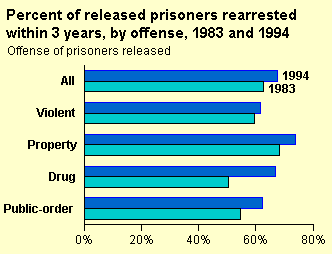
http://bjs.ojp.usdoj.gov In a study following two thirds of total released prisoners in the US,
67.5% of prisoners released in 1994 were rearrested within 3 years, an increase over the 62.5% found for those released in 1983
Research has shown that education and training can help stop the cycle of incarceration that has become so normal in America. There are many programs in prisons all over the world designed to help prisoners. Either by encouraging prisoners to read or promoting positive behaviors.
One such program trying to add a splash of reform to this dreary situation is Write a Prisoner. The group focuses on connecting inmates with positive influences on the outside world to help foster responsibility, good habits, and a positive attitude about life. It is meant to combat depression and create a connection to society to avoid feelings of isolation.
With millions of inmates in America’s penal system, it is important to keep in mind that nearly all of them will at some point be released. “
In the Write a Prisoner‘s list of Top Ten Ways to Reduce Recidivism it talks about the different ways people on the outside can help change the lives of inmates for the better. You can write a letter and change an inmate’s life
By encouraging a positive attitude, an attitude of realistic hopefulness, and the knowledge that someone on the outside cares. Believe it or not, your few words of sincere encouragement make a tremendous impact on an inmate
The website has inmate profiles to help you connect with an inmate and get started changing someone’s life. Here are a few testimonials from former inmates who were part of the Write a Prisoner program:
One cannot fully understand the therapeutic effects one receives from correspondence with his or her peers on the outside.” (M.J., Hagerstown, MD)
Despair, disappointment, anger, frustration, hopelessness and heartache wake us up in the morning and put us to sleep at night. We have become the forgotten, the faceless, the overlooked, the unwanted, and the unloved.” (H.S., White Deer, PA)
My friends and family outside of prison have all disappeared. Everyday is a struggle to retain an ounce of dignity. I don’t seek pity. I ask you to remember that prison is a very lonely place. Having someone willing to listen, confide in and be an outside source of strength will help to make prison life bearable.” (T.C., Shakopee, MN)
The worst solitude is to be destitute of a sincere friendship!” (R.L., Raiford, FL)
So if you want to get involved remember that helping others is good for your health!
Sources and Resources:
The New Yorker: Caging of America
Video Innovative Program Aims to Break Cradle-to-Prison Cycle
Wonder about your world…

Take the plunge down the rabbit hole of insanity and wonder in this fast-paced, nonstop psychological thriller that will leave you questioning the very nature of reality and beyond. Part thriller, part romance, part existential horror, A Dream of Waking Life delves into lucid dreaming, psychedelics, existential ontology, video games, the nature of love, the nature of reality, and more.

Mendel’s Ladder delivers an adrenaline-fueled journey set on a dystopian future Earth, brimming with high-stakes action, adventure, and mystery. This epic series opener plunges readers into a world filled with diverse cultures, heart-pounding battles, and characters who will captivate your heart and imagination.

“E.S. Fein is raising the bar for quality as it’s a very well-written and thought-provoking book…There are points and themes in the story that could be discussed for eons as people will have their own idea on where it leads. It’s a book I would highly recommend.” – Andy Whitaker, SFCrowsnest


 Wondergressive


