-
Quit Cumming, Save MANkind: The Detrimental Effects of Porn


Watching porn only takes up like half of your day, it can’t be that bad! cracked.com Though we’re a news site, I strive not to post on the bummers unless there are solutions to couple with ’em, especially when it comes to porn. The mainstream fear mongers feed enough of that drivel to the hungry baby boomer crowd, and here, we want your life to be better, at least in some way. So when I lay this terrible news on you, don’t freak out; there is an easy fix…
Get ready for…
Raw unbridled power. Soon you’ll have unparalleled focus, strength, and animal-magnetism enveloping your being like some all-mighty aura of tenacious suavity. Awesomeness. But first…
Before we take a stab at why you don’t have these things, women, this article isn’t meant for you. Glean some nifty tricks if you can, but the research happens to all be aimed at the fellas. And be forewarned, the Pandora’s Box of the male psyche really is disturbingly straight forward, so endeavor further at your own peril.

There are activities besides porn where my thumbs can come in handy? http://blogannath.blogspot.com Gentlemen, I have some mixed news for you regarding porn. We’ve been shooting ourselves in the groin for countless generations, completely oblivious. As it turns out, when our monkey forefathers sprouted opposable thumbs nearly 70 million years ago, they launched our chimp brothers into a vortex of technological advancement, but unfortunately, in this same step, doomed our fraternal lineage to a fate of epidemic depression, anxiety, inferiority-complexes and erectile-dysfunction. No need to take bolt cutters to that wonderful fifth digit, there is an easier fix.
What’s wrong with my thumbs? And what does it have to do with porn?
Aside from allowing us, collectively, to construct tools, carry said tools, flush toilets and headshot noobs, our thumbs have been responsible for basically all of civilization as we know it, separating us through dexterity from the rest of the animal kingdom. Similarly magnanimous, from the pyramids of Giza to sliced bread, every great human advancement those little babies have rendered us capable of has stemmed from a single, all-encompassing species-driving motive: we wanted to impress women. Literally, all facets of culture and society can be broken into that basest motivation: mating. So when our primate cousins found their fingers all those generations ago, suddenly the rules of the game changed, because our every hardwired purpose for living could now be overridden in one effortless squirt. I’m talking about masturbation.
Don’t get all preachy on me now!
Relax. This isn’t some moralistic pseudo-religious naysaying on the evils of your naughty bits. The palm hair is safe.
The capacity to watch porn and masturbate has put us in a dilemma. We have a choice as men: we can study hard, trouncing all competitors, create an empire, amass a fortune, and (possibly) win the affections of some elusive supermodel goddess. Or, for the price of a bottle of Lubriderm and a stolen Wi-Fi connection, we can download ultra-high resolution close-ups of lady-bits and let our imaginations skip all that effort.
Low hanging fruit tastes better, we like to pretend.
I happen to enjoy my porn, thank you! Why is that a problem?
It isn’t, necessarily. But there are definite drawbacks. Each ejaculation takes a toll on the philanderer’s wellbeing in several potent ways.
First, with each climax, a man losses a whole slew of essential vitamins and nutrients because semen is designed to give as much of a fighting chance to the new embryo as possible. In fact, each time we cum, we lose the protein equivalent of a large egg. That’s why we just want to nap afterward or find the whole thing gross; literally, our entire physiology is designed to propel us into this point of mutual orgasm, storing massive energy reserves to be spent at copulation, not to be squandered into a crusty sock.
Worse still, ejaculation expels testosterone reserves. Every fap session makes you less of a man in a very real sense, depleting you of your very chemical maleness (This does not apply to actual sex, however, which we’ll look at shortly. High-five!). Lastly, and we’ve covered this deeper in previous articles, masturbation effects dopamine levels on a similar scale to heroin, leading to obsessive-compulsiveness, thought-disorders, social anxiety and depression. Be honest, at some level, does that seem familiar?
You said there was good news?
Indeed, I did. Friends, if you masturbate because porn is easy and getting laid eludes you, we have some great news. Masturbating is why you’re not getting laid. You see, each time you lose that testosterone, first your body produces less pheromones, your natural arousal cologne, and the renewed secretion of pheromones creates this cloud of alpha-male essence around you, effortlessly attracting women and impressing your dominance upon fellow men.
Better still, with this unsquandered natural energy and social prowess, comfort and confidence in your own skin skyrockets, and your body instinctually makes you want to set aside the MMORPG’s and interact with other humans. You’re a natural at talking to girls, just not so much after the instant gratification of manual stimulation. Face to face socializing is what you were designed for.
Too good to be true? There are thousands of first-hand accounts of 180 degree life changes from simply giving your little buddy a rest, and closing out of the porn site. There are also massive support communities to help the transition into the new Casanova lifestyle. We all love our porn fellas, and the idea of losing our parents to cholera is probably more soothing than withdrawal from the sweet, sweet glories of a photoshopped Kate Upton…

Damn, she looks good. But guess what? So do real girls. Porn is a poor substitute. So how bout a quick self-check:
- Do you exercise, dress classy, and/or groom your billy-goat beard from time to time, but still feel invisible to women?
- Have you read any how-to’s by Neal Strauss?
- Did you linger at that last photo (we all did)?
- Does there seem like a collective decision by all woman-kind to blue-ball you?
- Do you suspect you give the vibe of a man passing out candy from his windowless van?
- Is your go-to stress relief the instant-gratification of internet porn?
Back to the science: Something About Mary had it backwards. Just go a few days without relief and a switch flips. Suddenly, you’re the center of everyone’s attention. Oh, thank God (teeth were gritted down to nubs of insecurity).
Can we talk about Porn?
I thought you’d never ask. Porn, fantastic as it may be, acts directly on the addiction centers of the brain. Our caveman minds are, frankly, not equipped for handling the endless feast of flesh at our fingertips thanks to the internet, because, physiologically, sex is geared to be the highest possible reward meant only for the healthiest most contributing-to-the-tribe males. This instant access is a major cause of the growing trend in apathy in the developed world. With the dopamine high of life’s ultimate purpose so reticently available, there is a dwindling (possibly non-human) percentage driven to true accomplishments.
Come on. It’s natural to like to look at women.
Totally. That’s not the point. No one’s judging. No one want’s to be told one of their favorite pastimes is a drain on them, or worse, that it’s an addiction. That’s between you and your penis to decide. By no means are we suggesting you become celibate (though many of the great minds in history went that route), or that you focus your chi to transmute your sex energy, but if your gut instinct was defensiveness, maybe try the no porn challenge for kicks.
As with all addictions, porn needs escalation to get the same thrill. So soft-core turns to hardcore turns to fetishes to taboos and tentacle-rape to friction scars and cut out front-pockets for easy access, until you’re crying over a bottle of merlot fantasizing about accidental eye-contact with the hostess at Applebee’s. (That’s universal, right?)
To getting a life. Cheers.
Sources:
5 Reasons Women are as Shallow as Men
7 Craziest Things Ever Done to Get Laid
Journal of Psychology: Sexual Exhaustion in Male Rats
Wondergressive: Sex is Just a Lack of Disgust
PubMed.gov: Ejaculation and Testosterone
Wondergressive: You and Your Internet on Porn
American Journal of Psychology: Subjective Experiences of Dopamine Depletion
PubMed.gov: Pheromonal Influences on Sociosexual Behavior in Men
Subject Experiences of Positive Porn Abstinence
IMDB: There’s Something About Mary
Philip Zimbardo: Your Brain on Porn
Wondergressive: A Note on the Top 1%
The Mystery of Sex Transmutation
addiction, anxiety, balls, biology, brain, depression, Dick, DNA, drug, fap, girls, health, intelligence, internet, jizz, Johns Hopkins School of Medicine, joke, kate upton, life, lifestyle, masturbate, masturbation, mate, mating, medicine, Mental Health, monkey, news, orgasm, Porn, porno, pornography, research, science, semen, sex, society, species, spew, spunk, squirt, strength, TED, upton, woman, women -
ObamaCare and the 49-Employee Company

Whether you love it, hate it, think it goes too far or not far enough, the gears of ObamaCare are grinding along, theoretically to be fully implemented January 1, 2014.
The politics of The Patient Protection and Affordable Care Act notwithstanding, the law illustrates quite clearly the difficulty—and indeed the folly—of massive, top-down re-organizational efforts governments around the world like to employ. Human beings are dynamic creatures that respond to stimuli in order to maximize their own benefits. However carefully politicians craft the language of their regulations, people find remarkably easy ways to sidestep such obstacles, often to the detriment of the economy and the grand schemes of politicians.
ObamaCare induces businesses into providing health care for its employees by issuing a fine on those that don’t. This penalty does not, however, apply to businesses that have fewer than 50 employees. Recognizing a loophole when they see one, many business owners will likely take the easy way out and simply refuse to expand their company past the dreaded 50-employee barrier.
This phenomenon has already been seen in France, where once a company has 50 or more employees the business is obligated at great cost “to establish a committee on health, safety and working conditions and train its members.” This obligation is so expensive to business owners that many choose to deliberately limit themselves to only 49 employees, only crossing the threshold when it’s clear that having x more employees outweighs the deleterious effects of further regulation.
The National Bureau of Economic Research recently performed a study analyzing the effects of such regulatory burdens on French companies. France imposes stringent regulations on companies once they have more than 9 employees; more severe restrictions kick in once businesses have more than 49 employees and again at the 100 mark.
Here’s a graph showing the frequency of French companies by the number of their employees:
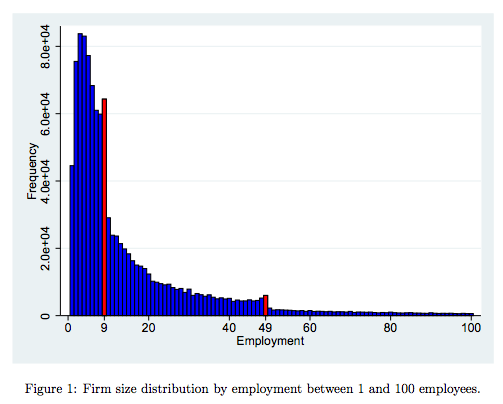
The difference between 9-employee and 10-employee companies is dramatic. The drop-off between 49 and 50-employee companies is also plainly evident. This graph zooms in on the data, further illustrating the stark and unnatural reality that there are almost 3 times as many companies with 49 employees than with 50:
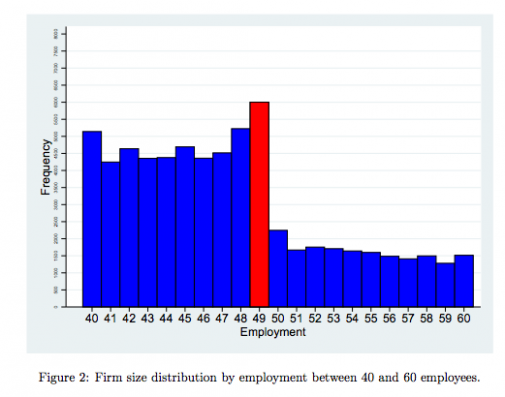
Business owners in France routinely discuss their “companies” rather than their singular “company.” As it turns out, it is common practice to maintain several businesses under the 49-employee threshold rather than aggregate them into a single entity. Perversely, the paperwork and bureaucratic red tape involved in starting and maintaining multiple businesses is seen as a better alternative to biting the bullet and hiring that unlucky 50th employee.
The French economy has numerous problems—recently their union work ethic was lambasted by US CEO Maurice Taylor, who accused the French laborers of only working three hours a day-– and their unemployment rate is shockingly high. Struggling to respond to a jobless rate north of 10%, President Francois Hollande has promised to make the economy a priority during his term. It is clear that onerous and arbitrary economic regulations actually damage the economic climate, slowing or even preventing recovery. Lessening or striking them from the books would help revive the economy by simplifying the cost and the process of doing business.
ObamaCare will likely have the same effects on US businesses as France’s strict legislation has had on theirs. Seeking to avoid regulatory oversight, and seeing a perfect opportunity to do so, many businesses will simply refuse to hire that 50th employee and escape from detrimental and unnecessary burdens. Companies have been well aware of the future effects of healthcare legislation since its signing. That likely already accounts for some of their reticence in hiring new workers and why the US unemployment rate stubbornly hovers around 8%.
I am not here to pass judgement on ObamaCare itself or the intentions that lead to its enactment. The point is that regulatory burdens do indeed affect how businesses operate. Companies respond to incentives the same way that individuals do. By drafting these types of regulations, politicians inadvertently (?) help ensure that more people will be left without health insurance because employers are skirting such obligations by refusing to hire new talent. These laws create perverse incentives that make businesses less likely to hire new employees, keeping unemployment up and the economy down.
People are not a monolithic entity and they do not often respond to legislation the way that Washington predicts. As has been proven continuously throughout history—and just as often ignored– the best way to encourage business is to stay out of the way and make it easy to do business.
Laws and policies like ObamaCare and Too Big To Fail muddle the economic waters and contribute to the slow and painful US recovery that the nation now endures. Ending them would be a powerful message that would help unshackle business owners from the capricious laws of Washington and spur the economy on to a real and sustained recovery.
Sources:
-
The Art of Cyber Warfare: United States vs. China
Cyber warfare may be how all battles of the future are fought. http://www.occupycorporatism.com/ Cyber warfare is becoming about as common as an oil lobbyist’s smug grin, and in cyber warfare, hacking is the weapon of choice. Hacking has become the norm as our world continues to move forward technologically. Now, in 2013, we are already seeing big names like Apple, Facebook, and Sony admitting to being hacked. A recent survey conducted in 2011 on the security of companies shed lights on some shocking truths:
Ninety percent of organizations in our study have had at least one breach. When asked to consider cash outlays, internal labor, overhead, revenue losses and other expenses related to the security breach, 41 percent of respondents report that it was 500,000 or more.
If security breaches due to hacking is happening regularly to companies, what happens if the attacks are on a larger scale? We turn now to nations hacking other nations, and the waging of cyber warfare between super powers.
USA’s Bald Eagle and the Chinese Red Dragon find themselves pitted against each other. The brawl is not physical but rather fought along the porn riddled strands of the world wide web. China is and has been a superpower not only in sheer population numbers but also in political power, technological advancements, business ventures, and military standing. Billions of dollars could have potentially been stolen through this exchange of superpowers waging cyber warfare on each other.
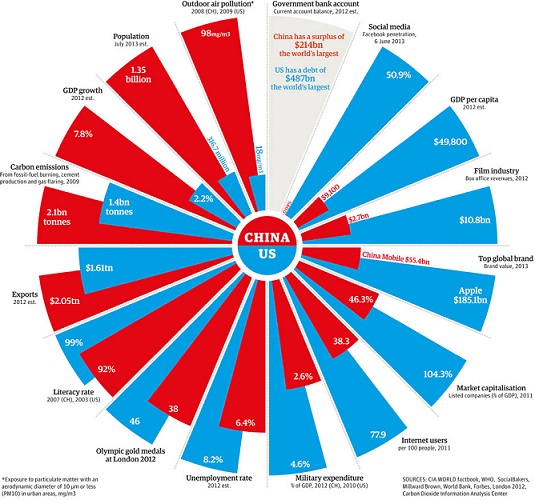
When it comes to cyber warfare only one things matters: which hacker has the highest GWAM?http://www.theguardian.com/ Apart from billions of dollars being at stake, different depictions in various texts about China’s influence paired with our growing debt to China all point toward a potential future where most of the world is speaking Mandarin Chinese. Maybe being under Chinese rule wouldn’t be such a bad thing. Or maybe this public knowledge of our nations engaged in cyber warfare will strengthen ties between the Bald Eagle and the Dragon and they will give birth to the first super powered scaly griffon. Maybe it is a good thing that the hacking is occurring. It may be helping to improve security and prepare for even more dangerous hack attempts. Unfortunately, all this talk of potential crippling cyber warfare is only maybes in the end.
On a brighter note we are moving closer to a cyber infused world where technology and nature are becoming entwined. Even with all these hack attempts the internet isn’t all that bad! It is almost an all-in-one source of the totality of human knowledge. It aids in the creation of useful and beneficial things for people. And soon, hopefully, it’ll be free for all! Until then, lets hope that this disturbing news of cyber warfare will evnetually lead to a world of free information rather than a nuclear outbreak!
Sources:
https://wondergressive.com/category/technology/
http://www.juniper.net/us/en/local/pdf/additional-resources/ponemon-perceptions-network-security.pdf
http://edition.cnn.com/2013/02/19/tech/web/apple-hacked/index.html
http://www.cbsnews.com/8301-205_162-57569713/facebook-says-it-was-hacked-last-month/
http://news.cnet.com/8301-17938_105-57539756-1/sonys-playstation-3-experiences-its-biggest-hack-yet/
http://world.time.com/2013/02/19/china-calls-u-s-hacking-allegations-groundless/
http://nation.time.com/2013/02/19/u-s-ready-to-strike-back-against-china-cyberattacks/
http://www.time.com/time/magazine/article/0,9171,1576831-9,00.html
http://www.zdnet.com/china-hits-back-at-hacking-claims-us-is-our-top-cyber-attacker-7000011543/
http://www.amazon.com/exec/obidos/ASIN/1893554082/qid=970215310/sr=2-1/104-0533761-1644734
http://usgovinfo.about.com/od/moneymatters/ss/How-Much-US-Debt-Does-China-Own.htm
http://www.time.com/time/magazine/article/0,9171,1978756,00.html
http://en.wikipedia.org/wiki/Griffin
http://motherboard.vice.com/blog/reassessing-the-hack
https://wondergressive.com/2013/02/11/the-singularity-is-nigh-upon-us-2/
https://wondergressive.com/2013/02/18/open-access-journals/
https://wondergressive.com/2012/09/01/15-year-old-invents-a-3-cent-cancer-test-using-google/
https://wondergressive.com/2013/02/04/free-internet-help-yourself/
http://world.time.com/2013/02/12/north-korea-confirms-successful-nuclear-test/
-
Court Battle Begins Between David and Goliath, Bowman and Monsanto


http://www.laapush.org On Tuesday the court case Bowman vs. Monsanto got underway in the Supreme court. Vernon H. Bowman, a 75-year-old farmer in Indiana has been sued for infringing on a patent that Monsanto holds on genetically modified soy beans.
Monsanto produces genetically modified seeds which are Roundup Ready and can withstand herbicides as well as weed killers. This makes for an increased volume of successfully grown corn, soy beans, etc., but it also leads to another problem, and that is farmers indiscriminately spraying herbicides and pesticides knowing that the GMO crops won’t fail to reach harvest. This has made Monsanto’s seeds very successful in the farming community.
According to Monsanto, the farmers sign an agreement in which they agree to use the seeds for a year, and have to buy new seeds for the following growing season. Mr. Bowman however circumvented this patent system for over 8 years by purchasing soybeans from a nearby grain elevator, and using them for his harvests. You can read more about this Supreme Court challenge by Bowman.
Here are some of the main questions that are being asked in regards to this case:
Does Monsanto hold rights to the DNA of a seed that is an offspring of an originally purchased seed?
This question intrigues just about everybody from Monsanto to the music industry, movie industry, and anywhere else where copyrights are a concern. First of all, what needs to be cleared up is whether Monsanto holds patent rights to the physical seed itself, or just the DNA molecules. If it holds patent rights to the DNA molecule chains, then it should allow the farmers to reuse the new seeds at a discounted rate. It was, after all, the farmer’s fertile soil that did the work to produce the seeds, relieving Monsanto of some overhead. On the other hand, if Monsanto holds the rights to the complete seed itself, then that raises the next question:
Does the lifetime of the contract when purchasing seeds extend beyond the original seeds and into the newly harvested seeds?
According to Justice Stephen Breyer, patent law holds that it is illegal to plant them:
What it prohibits here is making a copy of the patented invention and that is what he did.
Now I’m not a farmer nor an expert in agriculture, but I am familiar with the issue of pirating CDs, DVDs, copying music, software and so on. The aforementioned copying examples are completely controllable. You can quite simply just say to yourself, copying is illegal and I should not participate in such acts.
But in the case of Bowman vs. Monsanto, how can it be considered illegal to copy a seed (the patented invention) when seed reproduction is an inevitable process of harvesting? Not forgetting to mention that a seed itself is a form of a living organism, does Monsanto have the right to newly reproduced life? Can newly formed life be potentially patented? This is a topic all by itself.
I do not believe that Monsanto could hold rights to the new seeds, as they are not the ones who physically produced them. Therefore the lifetime of the contract should not be able to go past the originally bought seeds. It’s just like burning a music CD. The album producer does not hold rights to the physical CD itself, rather to the make up, the songs. Therefore I do not think that Bowman breached any contracts.
So in the end, what Monsanto can hold rights to are the intellectual property, which is the DNA within the newly reproduced seeds.
It’s cheaper to buy a music album on iTunes than the physical album in a store. It’s cheaper to download a movie legally (in most cases) than to purchase a physical disc at a store. It’s also cheaper to download an eBook than to buy the physical book itself from a book store. The big difference in the digital purchases is the overhead cost relief that producers get by licencing just the intellectual property, and therefore being able to sell the “intellectual property” at a lower price.
Why can’t Monsanto do something similar?
Sources:
-
Open Access Journals

http://www.quoteso.me Greetings Wonderguests!
I’ve spent a lot of time digging through the depths of second hand knowledge in an attempt to get to the bottom of things. Whenever I write one of these articles, I find that I run into the same problem over and over and over again. My facts are based on secondary sources. Why? Well as it turns out most primary source scientific information comes in the form of the scientific journal. If a knowledge seeker wants to read some journals of scientific merit they almost always have to shell out a heck of a lot of money to do so. Conversely, any writer who has access to a scientific journal can basically write whatever they want about said journal knowing that everybody will be looking to them for the “Facts.” Well, frankly, I have had enough.
And fortunately so has the internet. I introduce to you this list of Open Access Journals. Open Access Journals are exactly that. The majority of them are entirely free to read, review and sometimes even allow for permission-free mass production.
This website, Wondergressive, writes with passion in an effort to share knowledge in as unbiased a way as possible. Relying on websites that actively filter popular news effectively disallows us from doing so. While Open Access Journals have a lot of good, free, and earnest information to offer, “Closed Access Journals” publish a ridiculous amount of costly information with nothing in mind but the cash flow. The collective stream of intelligence is but a trivial side effect.
Many of you may remember having a session or two with your schools library research team as they excitedly tell you all the ways that you can seek information. I know I have. I didn’t understand why they were so excited until I came to the understanding that librarians have access to an intense amount of information. Catalogs upon catalogs of indexed information. Open Access Journals give us the chance to understand on our own terms.
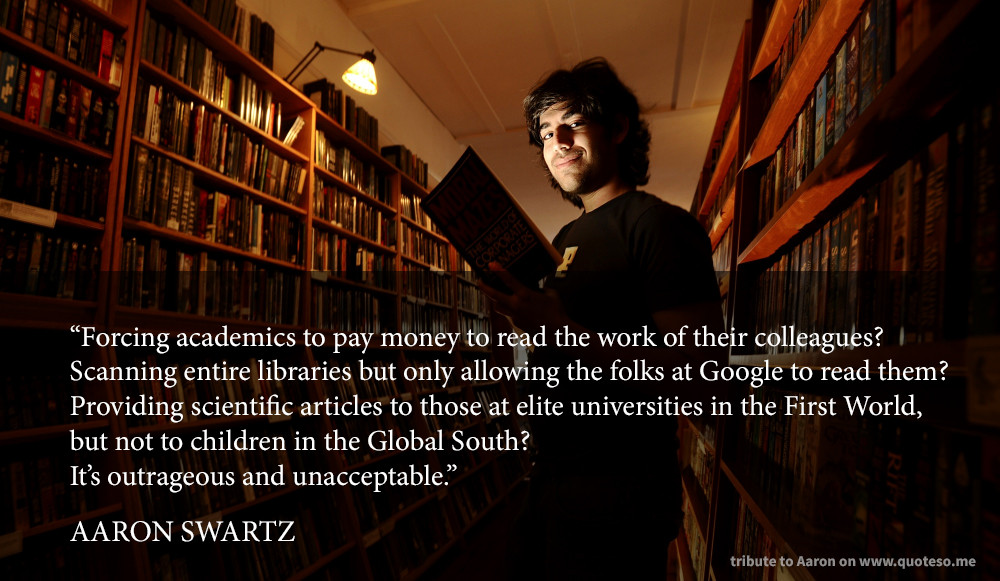
Recently Aaron Swartz passed away. Aaron Swartz, co founder of Reddit and all around brilliant individual, fought a long and hard battle against online censorship. After years of legal battles relating to downloading a digital ton of academic journals, Aaron committed suicide. Before his death he fought hard for free and open information with the belief that knowledge should be for everybody.
So next time that you’re deeply involved in a research project, remember that you can get your information first hand from before it is filtered, misquoted, and watered down by the rest of the internet. Free information is a necessary tool in our quest to Be Always Growing.
Sources:
-
Put That Music You Hate On Repeat
I’d bet money on the fact that a good portion of you reading this article right now have, at some point or other, hated a song you heard. A few minutes, days or even years later, however, that hate changed to tolerance changed to acceptance changed to annoying your friends and family with it until they hate your stupid face. But how can that be? You are a connoisseur of great music and you know what you like and what you don’t like. It’s not as though you underwent major life changes and the piece you once despised became the soundtrack to your rebirth from the ashes. As usual, science is here to explain the wizardry.
It turns out that music, like racism, is learned. Researchers at the University of Melbourne found that just the ability to identify tones and harmonies was positively correlated with musical training. The less trained we are to hear certain sounds, pitches, tones or cadences, the more likely we are to associate it as dissonance (grating, unpleasant noise) and in some cases, straight up not hear it at all. (Magic!)
As Lindsay Abrams of The Atlantic puts it:
From a practical standpoint, [this] seem to suggest that we can train ourselves to better appreciate music.
The researches did another experiment involving 19 participants with little to no prior musical training and gave them just under a dozen music theory lessons. The result? NPR’s Anastasia Tsioulcas summarizes:
…those participants were not just better at pitch identification but also found those chords to be less dissonant, even when they were technically “dissonant” according to traditional music theory. That is: The more you hear, the more you’ll love.
Bitter because you never got to take music lessons as a kid and are thus doomed to spend the rest of your days living in musical ethnocentricity? Cheer up, we have the internet now. A wealth of free music theory lectures are available online. Worst case scenario, you can expose yourself to untold amounts of new, international music on YouTube. Just don’t fall into the comments section, nothing good ever came of that.
Sources:
http://psycnet.apa.org/index.cfm?fa=buy.optionToBuy&uid=2013-00031-001
http://www.npr.org/blogs/deceptivecadence/2013/02/15/172120886/can-you-learn-to-like-music-you-hate
https://www.udemy.com/learn-free-music-theory/
http://www.youtube.com/watch?v=dybCDE2QR-0
https://www.youtube.com/watch?v=m3ZyU98N3Fk
https://www.youtube.com/watch?v=AByQdgmTVyU
http://www.youtube.com/watch?v=Dlr90NLDp-0
-
Lumpy Tablets are the New Rage


http://www.damngeeky.com Tablet computers are incredible pieces of technology, but what is the next innovation to make our lives that much easier and more exciting? How about a keyboard that can appear whenever you need it, then disappear when you are finished? Done; welcome to the world of 21st century technology.
A California based company called Tactus has developed a new technology for tablets that allows the touchscreen to create a keyboard out of thin air, or more specifically, out of microfluidics. When you need a keyboard to make typing easier, a single tap in the right area of the tablet will cause a section of the touchscreen to form into bumpy buttons, creating a tactile keyboard on command. When you are done typing, another well placed tap makes the buttons vanish back into the screen without a trace.
This innovation can be applied to any type of touchscreen technology to create a morphing, tactile interface. No more stabbing at the screen with your sausage fingers. The singularity is near, and it is making it oh so much easier to just accept being fat and let our technology take care of the rest.
Sources:
http://www.tactustechnology.com/company.html
http://www.bbc.co.uk/news/technology-20970928
http://en.wikipedia.org/wiki/Microfluidics
https://wondergressive.com/2013/01/04/the-obese-shall-inherit-the-earth/
https://wondergressive.com/2013/02/11/the-singularity-is-nigh-upon-us-2/
21st century technology, BBC, best tablet, best tablet PC, broken touch screen, disappearing keyboard, fix screen clean screen, freaky, ipad, IT, microfluidic, microfluidic keyboard, tablet computer, tablet tactile keyboard, tactile interface, tactus, tactus keyboard, tactus technology, tech, touch screen -
A Note on the Top 1%: Psychopaths or Superhumans?


http://masksofsanity.blogspot.com/ A few days ago, we looked into the coming rise of a new species being developed by the technocrats; it’s nigh. Spectacular as this notion is, as it turns out, the next stage in human development has already arrived, interlaced inconspicuously amongst us, as though “They Live” were a documentary.

Doesn’t anyone have a goddamn stick of gum?!
http://www.releasedonkey.comYou see, everyone loves a good ethnic slur, but under our thin veil of cultural, linguistic, economic, and pigment differences, it’s understood that we’re all one collective unity of mankind. Hi, brothers and sisters. So with the utmost love and respect for all y’all round the globe (minus Canada, America’s ceaseless punchline), we can all join hands in an orgy of discrimination against the one group that’s not like the others. Proudly, I’ll stand on my soapbox of an anonymous keyboard and proclaim something we’ve all long suspected, but never voiced: “yuppies aren’t human.”
…Literally… Let me explain
If there’s one thing I’d gleaned from my last stint in the psych-ward (like you didn’t suspect), it’s how, like an uncured slab of beef, the lines between mental illnesses, unfortunately, are neither cut nor dry (consider the utter failure of the DSM). A great deal of consensus, however, stands in the psychologist community to where these muddied lines can be drawn, and the word “psychopath” is not a term bandied lightly, folks. A psychopath, apparently, is not always the image immediately drawn to mind of some knife wielding pariah, glazed in dried mustard and animal-semen (gross), prowling the subway adorned only in a single strategically-placed pool-floatie, who passes the day lobbing “Jesus saves” paper-airplane pamphlets at jaded urbanites. Nah, he’s probably wearing a silk tie, Gucci perhaps.
Psychopaths, in fact, while occasionally criminal masterminds, are masterful social chameleons, often indistinguishable from the crowd. Preconceived notions blown. A new theoretical analysis suggests that psychopathy is not merely a mental disorder, though, but rather the psychopath is a separate new sub-species of human altogether, a new animal. No joke. Sure, Patrick Bateman may lob revving chainsaws upon fleeing call-girls, but he wasn’t human, so it’s copacetic. Evolution, it seems, just won’t take a day off. Psychopathy is categorized with traits of:
- glib and superficial charm
- grandiose (exaggeratedly high) estimation of self
- need for stimulation
- pathological lying
- cunning and manipulativeness
- lack of remorse or guilt
- shallow affect (superficial emotional responsiveness)
- callousness and lack of empathy
- parasitic lifestyle
- poor behavioral controls
- sexual promiscuity
- early behavior problems
- lack of realistic long-term goals
- impulsivity
- irresponsibility
- failure to accept responsibility for own actions
- many short-term marital relationships
- juvenile delinquency
- revocation of conditional release
- criminal versatility
To sum all that up, psychopaths (henceforth redubbed Homo PsychopathiusTM) are highly-intelligent, calculating, manipulative machines of self-interested ambition, lacking the capacity for conscience due to the inability to feel emotion. They are a manifestation of the cliché wolf in sheep’s clothing as a predator in white-collar work clothes, and these things aren’t human.
With an untappable spigot of raw uninhibited self-interest at its disposal, Homo Psychopathius often rises to the top of whatever organization/ field it sets its aim at. They are natural visionaries, innovators, and leaders of men, so it just makes sense that, statistically, the career with the highest propensity for psychopathy is nothing less than the CEO.
Over the last few decades, as you’ve undoubtedly noticed, the global power regime has shifted reigns from the uber-nation to the empire-corporation being the vaster colossus of influence. Our ruling class, then, are the highly-competent next stage in evolution, being more adapted for the major-leagues without the nuisance of those silly outdated oddities called feelings. Further still, note this list of the top ten careers Homo Psychopathius are found in, not forgetting the psychopath, more often than not, is at the forefront head of his field:
1. CEO
2. Lawyer
3. Media (Television/Radio)
4. Salesperson
5. Surgeon
6. Journalist
7. Police officer
8. Clergy person
9. Chef
10. Civil servantWait! Wait! Wait! Holy shit! What are you saying?
This thing is smarter than you, vastly more driven to power. It controls the companies you work for; it represents your legal system, decides what news you hear, tells you what to consume (down to a science), holds your life in its hands, arrests your deviants, propagates your religions, and it dominates your politics… oh yeah, and cooks your food (never trust a guy with a set of personally engraved knives, I guess).
We’re not alarmist here. Rather, I propose a happy compromise over this news: as successful as these things have proven themselves to be, rising to the apex of society, I offer that we humans dutifully permit this new animal to take the reins (cause it already has) as the new dominant species of the planet. You win, psychopaths. Game over. Anyway, our outdated human machine doesn’t mind serving as the structural base for your mighty overlord will. We’re more suited for playing Minecraft, masturbating, and following your orders. It’s kinda what we’re good at. If it’s not overly presumptuous of me to assume the diplomat between our 2 great peoples, let me be the first of my kind to say, “I vow my allegiance. All hail the morlocks! (I’m on board, guys. Eat someone else’s kids.)”
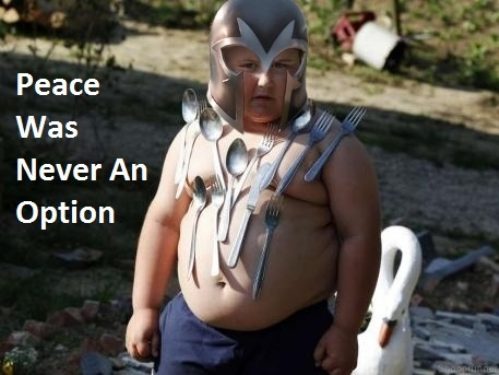
Fellow sapians, kinda brings the whole “Occupy Wall Street” thing into a new light, huh? Looks like the X-Men comics had it right all along: the 1% with all the powers really were the next stage of human evolution.
Take it; leave it; use it as an excuse to embrace your inner asshole.
Either way, let the hate mail commence.
http://lunsfuhd.tumblr.com Sources:
Wondergressive: The Singularity is Nigh Upon Us
Ari Shaffir: The Amazing Racist
Wondergressive: Impossible to Distinguish Sane from Insane
Wondergressive: You Might be a Psychopath
PubMed.gov: Genetic Risk for Psychopathy in 7 Year Olds
PubMed.gov: Corporate Psychopathy
Corporate Psychopaths and Global Financial Crisis
Corporate Psychopaths: Bullying and Unfair Supervision
MSN: 10 Sneaky Care Dealer Tricks
1%, alarm, America, asshole, biology, blood, brain, canada, ceo, chameleon, change, clergy, corporation, criminal, crowd, disorder, DNA, documentary, empathy, environment, ethnic slur, evolution, government, gucci, gum, hate, health, holy shit, human, illness, intelligence, jesus, journalist, law, lawyer, life, lifestyle, mastermind, media, mental, Mental Health, morlock, nature, new, next stage, nigh, note, orgy, police, power, psychology, psychopath, racism, racist, religion, research, sales, science, sex, society, species, study, sub-species, technocrats, they live, United States, unity, wallstreet, work, x-men, yuppies -
Why Don’t We Eat Insects?
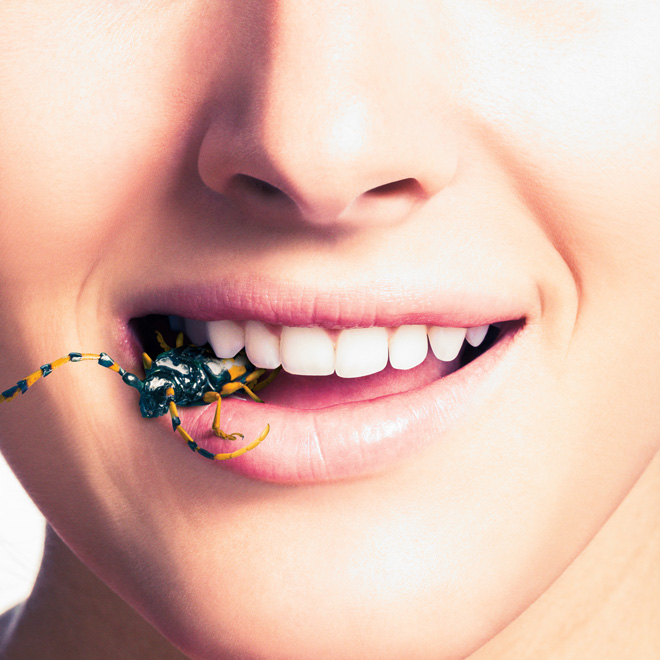
http://www.wired.com The world population is huge! Not as big as it could be as I’ve recently been told… but it’s still pretty big. How are we feeding all these people? Well, we have the usual assortments of unhealthy meat, nutritious plants and other foods, but what about things like noisy grasshoppers? The effects of agriculture on our planet are immense and largely overlooked. Insects could be a viable answer.
Here’s a great TED talk with Marcel Dicke talking about eating insects.
And why not? Scientific American has the low down on entomophagist David Gracer who says that
…a bowl of grasshoppers has more vitamins than beef and is lower in fat.
He also goes on to say that
Our disgust for insects is just cultural… Afterall we eat lobsters, which are arthropods, as are insects.
So now that I’ve tempted you, I’m sure you’re ready to try pick up some sour cream and onion flavored crickets from your local ethnic food store. Or maybe you’re ready to try some recipes. I’ve taken the liberty to find a few good recipes for you.
Here’s a site for all things bug recipe related based in Florida, USA.
And here’s a site dedicated to all insect recipes all the time… There is also a huge list of other places to find insect recipes at the bottom of this site’s page.
So dig in! and try to enjoy!
Sources:
David Gracer via Scientific America
Georgia College’s Insect Recipes
https://wondergressive.com/2013/02/13/the-ugly-face-of-overpopulation/
https://wondergressive.com/2012/09/26/them-cows-is-sweet/
https://wondergressive.com/2012/08/15/edible-landscapes/
https://wondergressive.com/2013/01/11/a-new-tune-for-grasshoppers/
https://wondergressive.com/2012/08/17/the-effect-of-agriculture-on-the-planet/
http://www.flapest.com/recipes.aspx
agriculture, bug recipe, crickets, David Gracer, diet, disgusting insect, don’t eat meat, eat, eat bugs, eat insects, effects of agriculture, entomophagist, Florida Pest Control, food, grasshoppers, high vitamin, insect disgust, insect recipe, insects, low fat, Marcel Dicke, nutritious food, plants, scientific american, sour cream and onion, TED, TED talk, unhealthy meat, world population -
What Does Light Look Like?

nikiinwonderland.blogspot.com Throughout history humans have tried to understand how the world around us works. It’s what humans are good at. We really only have two semi-unique attributes that have helped make us as successful as we are: a brain to examine the world and opposable thumbs to manipulate it to our advantage.
We study phenomena closely, and devise better ways of observing them, so we can recognize patterns and use new information to our advantage. The simplest and perhaps most profound example of this in human history is the development and advancement of agriculture. Starting from literally nothing, as agriculture is a decidedly foreign concept to mammals, over many generations and thousands of years, humans pieced together the information necessary to create an abundance of food, capable of sustaining billions of people. What environment do certain crops grow best in, how to till the land, when to plant, when to harvest, how to store and cure. As soon as these questions had adequate answers we thrived as a species, spreading out from our native Africa to literally ever corner of the globe.
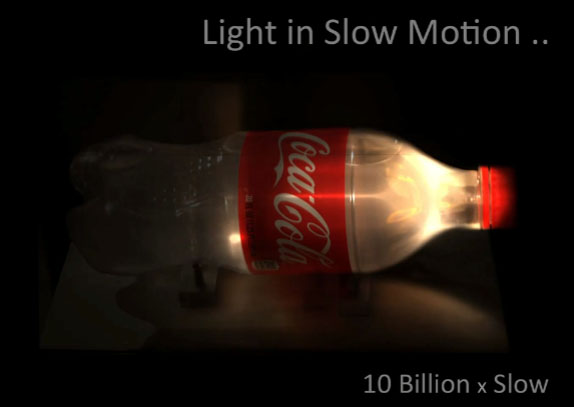
An amazing new tool has been discovered to help further our knowledge of the world: Femto-photography. It’s an imaging system that takes a trillion frames per second. Because of it, we can now visually observe light. Ramesh Raskar, an associate professor at MIT, demonstrates the remarkable abilities of this new technology in this Ted Talk.
Femto-photography. It’s an imaging system that takes a trillion frames per second. Because of it, we can now visually observe light. In Raskar’s demonstration, he discusses ways of utilizing this new observational tool. On the more mundane side, femto-photography can be used to determine the ripeness of fruit based on the way light scatters through it. He also mentions a more practical (and military grant enticing) use: the ability to see around corners. But to me, the raw discovery is what fascinates me, rather than the current or future ways to productively utilize such technology.
Humans began to understand the world in concentric circles. First we understood our immediate environment. Then we spread our knowledge to the unseen. The Greek mathematician Eratosthenes is said to have determined the circumference of the Earth with remarkable accuracy in the 3rd century BCE. Galileo and Copernicus helped us understand the Solar System. Einstein created the Theory of Relativity and described space-time. Innumerate others helped explain sub-atomic particles and quantum physics.
Now we have a way of looking at light itself.
I am thrilled for the future applications of this knowledge. I really am. But for right now, I think it’s important to simply sit back in our arm-chairs, let out a contented sigh, and take comfort in the ingenuity of humans. It’s inspiring and assuring to realize that the species can indeed, given time, accomplish anything if it puts its mind to it (to paraphrase Doc Brown).
Sources:
http://en.wikipedia.org/wiki/Femto-photography
http://www.ted.com/talks/ramesh_raskar_a_camera_that_takes_one_trillion_frames_per_second.html
http://edition.cnn.com/2012/08/19/opinion/raskar-camera-corners
http://en.wikipedia.org/wiki/Eratosthenes
Wonder about your world…

Take the plunge down the rabbit hole of insanity and wonder in this fast-paced, nonstop psychological thriller that will leave you questioning the very nature of reality and beyond. Part thriller, part romance, part existential horror, A Dream of Waking Life delves into lucid dreaming, psychedelics, existential ontology, video games, the nature of love, the nature of reality, and more.

Mendel’s Ladder delivers an adrenaline-fueled journey set on a dystopian future Earth, brimming with high-stakes action, adventure, and mystery. This epic series opener plunges readers into a world filled with diverse cultures, heart-pounding battles, and characters who will captivate your heart and imagination.

“E.S. Fein is raising the bar for quality as it’s a very well-written and thought-provoking book…There are points and themes in the story that could be discussed for eons as people will have their own idea on where it leads. It’s a book I would highly recommend.” – Andy Whitaker, SFCrowsnest
 Wondergressive