
-
Mind Over Body: Can Meditation Help Cure Cancer?

http://www.breakthenorms.com/ Cancer is no stranger to the list of common health concerns present in today’s society. With 1 in 3 people in the UK alone developing some form of cancer during their lifetime, it has become a challenge that most of us may have to face. However, how we choose to treat this disease is changing for many around the globe, as the rise in alternative therapies shed new hope for a natural approach to curing the dreaded C.
There are more than 200 types of cancer in the world and many different treatments for each. The most common medical therapies are Chemotherapy, Radiation Therapy and Targeted Therapies. Although conventional methods have proved to be relatively successful, they do come at a price. Symptoms such as fatigue, hair loss and breathlessness are just some of the unpleasant manifestations that follow after treatment.
In recent years, alternative therapies such as yoga and meditation have taken off. As more positive research unfolds, so does ones openness to embrace another way of healing the body: through the mind itself.
From Where Does Meditation Derive and How Can its Benefits Help Us Today?

favimages.com This ancient practice was first formed thousands of years ago in the Far East. There is recorded evidence to suggest that meditation dates back as far as 500 B.C, where Indian artifacts known as “Tantras” speak of such meditative practices. It is speculated by researchers that the first discovery of an “altered state of conciseness” was made by primitive hunter-gathers whilst staring into the flames of their fires.
Across the Asian continent Gautama the monk, as the Buddha, made his mark as the meditative icon we still see today. His teachings spread through the East. As neighboring countries caught wind of the spiritual practice, they adopted their own forms of mediation by practicing it in different ways.
Thousands of years passed until meditation finally made headway into Western society around the 20th century. In the 1960’s and 1970’s researchers began to look into the various effects of the practice. It quickly became apparent that there was far more to gain from meditation than just a sense of spirituality. Studies show that the physical and mental effects of mediation can be extremely beneficial.
A five year study conducted by Harvard scientists revealed that meditation affects DNA and brain activity. According to John Denninger, a psychiatrist at Harvard Medical School who was leading the study,
There is a true biological effect. The kinds of things that happen when you meditate do have effects throughout the body, not just in the brain.
His research concluded that these mind and body techniques could have such power to switch on and off genes linked to stress and immune function.
But What is the Link to Cancer?
Some believe that one’s mental process or state of mind could be a contributing factor or even the cause of the disease itself. By applying alternative practices such as meditation, in theory, the mind could be cured along with the cancer.

http://reallifeglobal.com/ Stories are popping up all over the web of real life testimonials from individuals claiming they cured their cancer through meditative practices. There are websites dedicated to such theories with an abundance of articles discussing the subject. One reader of the website AnmolMehta.com wrote in with her story, saying:
I reduced my stress level by at least 80% naturally. I listened and stopped talking – becoming aware of surroundings. I knew that my organs had a voice, and I was to listen. I started to go to my room to meditate every day, and recharging my body.
Websites such as Cancerreaserch.org are jumping on the bandwagon and embracing alternative therapies too. Their website has a whole section dedicated to the subject including research conducted in many different countries on meditative benefits. Most of the recent research has been based around mindfulness mediation that can help reduce anxiety, tiredness, stress, chronic pain and sleep problems as well as lower blood pressure.
A controlled study published in 2000 looked at 90 cancer patients who did mindfulness based stress reduction (MBSR) meditation for 7 weeks. They found that people who meditated had 31% lower stress symptoms and 67% less mood disturbance than people who did not meditate.
The Results
Alternative therapies have been proven over thousands of years to reduce anxiety and stress by calming the body, and helping the individual to feel more relaxed. As of yet there is no scientific research to prove that meditation alone cures cancer but there is no doubt that the practise can significantly improve one’s sense of well being during such a traumatic time.
Although the practice derives from a religious background, you do not need to be religious to learn meditation. Whether you are seeking spirituality, clarity, or simply relaxation, with a little practice, anyone can learn and benefit from it.
There is no denying that cancer sufferers through the world are feeling the incredible benefits that the practise has to offer. If at the very least it can help patients feel more positive and optimistic, than that in itself is something to be celebrated.
References:
http://www.breakthenorms.com/blog/the-power-of-meditation-how-it-cured-my-fathers-cancer/
http://www.cancerresearchuk.org/cancer-info/cancerstats/keyfacts/Allcancerscombined/
http://www.cancerresearchuk.org/cancer-info/cancerstats/world/incidence
http://www.macmillan.org.uk/Cancerinformation/Aboutcancer/AboutcancerHome.aspx
http://en.wikipedia.org/wiki/Meditation
http://www.project-meditation.org/wim/history_of_meditation.html
http://meditation-research.org.uk/
http://www.calmclinic.com/anxiety/causes/cancer-patients
http://projectreporter.nih.gov/project_info_details.cfm?aid=8541701&icde=18114901
http://projectreporter.nih.gov/project_info_description.cfm?aid=8541701&icde=18114901
http://www.cancer.gov/cancertopics/factsheet/Risk/stress
http://www.zendoctor.com/Home/frameindex.html
http://www.cancer.gov/cancertopics/treatment/types-of-treatment
http://anmolmehta.com/blog/2011/03/10/meditation-natural-treatment-for-cancer/
-
My Beautiful Western Face: The Rise in De-racialisation Surgery


http://www.stuff.co.nz The pressure to look beautiful has become increasingly present in today’s society. With TV shows, movies and magazines flaunting some of the best looking people in the world, it’s no wonder most of us feel like we don’t hit the mark.
The longing to appear more attractive has always existed for men and women alike, but the very definition of what is attractive and what is beautiful has changed drastically over the years. The Victorians depicted the epitome of beauty in their paintings as curvaceous, busty women, whilst long ago the Japanese celebrated the elegance and perfection of the Geisha. However, an increasing number of the population are feeling the burden of a new, modern-day beauty ideal: having a Western look. In a desperate attempt to fit into this image, some are choosing to go under the knife to achieve this new ‘look’.

http://www.flickr.com This growing trend is already the norm in places like Seoul, South Korea, where one in five women have had some type of surgery to help them look more Western. In fact, there are now a multitude of procedures one can undergo with the aim to “westernise” non-Caucasian features. It has become so popular that these procedures now have a name: de-racialisation surgery.
Plastic surgery is sweeping across Asian countries in particular. With over 4,000 clinics across the country, South Korea takes the prize for plastic surgery capital of the world. Here the most popular cosmetic surgery is double eyelid surgery; making the eyes appear bigger and rounder. In close second is refining the nose using rhinoplasty to make the tip of the nose more prominent. Following that, jaw bone surgery to make the jaw appear softer.
An Australian SBS Documentary called ‘Change My Race’ highlighted some of these extreme procedures such as facial contouring, skin whitening, calf reduction and double eyelid surgery. In the documentary, Chinese-Australian presenter Anna Choy explores the hidden truth behind our obsession with looking Western and reveals her own inner battles with accepting her Chinese origins.
But why are so many young women in particular ashamed of their inherited ethnic features? Is it really worth erasing your identity to fit into a predominantly white society?
The Power of White
As much as we all think this is a new phenomenon, the truth is that this racial divide has been around for hundreds of years, and still some reminiscence remains. We may have moved on from slave labour and the Nazi revolution, but in turn we have moved into a new era filled with incredible technology and far reaching media influence. There is power in the colour white, and with power comes beauty and respect.
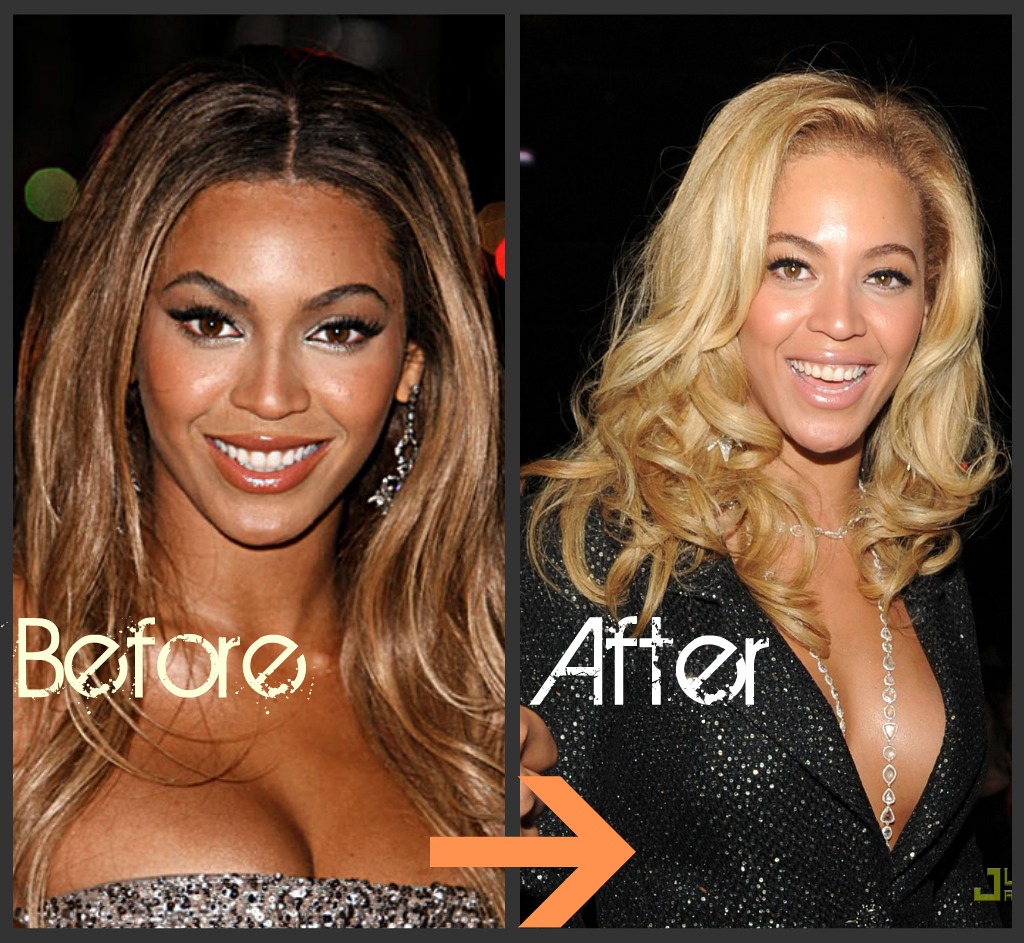
http://www.lipstickalley.com Magazines are becoming culprits in ‘lightening’ their models and even adverts are being slated for not casting a variety of races other than Caucasian. Even such music legends as Beyonce and Michael Jackson have been accused of “Westernising” themselves. Adorned with a blonde wig and using clever studio lighting, in a recent picture to promote her new album Beyonce looked much lighter than her natural skin tone.
Let’s not forget Michael Jackson’s radical transformation over the years. Could his rise to stardom have affected the way he viewed himself? His bodily changes were shrouded in secrecy and the reasons as to how and why his skin turned white became a controversial subject for years.
These celebrities may have outraged many by “betraying” their Ethnic heritage, but sadly, for a rising number of young people, this depiction of a “white, western global beauty ideal” has been accepted as a valid reason to go under the knife.
Outnumbered and Out-casted
Australia is an ever-growing multicultural society and houses a large number of citizens of many ethnic origins. According to Arthur Kemp in The Immigration Invasion,
In mid-2006 there were 4,956,863 residents who were born outside Australia, representing 24% of the total population. The Australian-resident population consists of people who were born in these countries:
China (Excluding Hong Kong, Taiwan and Macau), 279,447; Vietnam, 180,352; India, 153,579; Philippines, 135,619; Malaysia, 103,947; Lebanon, 86,599; Sri Lanka, 70,908; Indonesia, 67,952; Fiji, 58,815; Pakistan, 19,768; and Bangladesh, 13,751.
Although these people make up a good quarter of the population they remain a minority for now. Discrimination against colour and race is still very much prominent in Western society. Children go to school with their Australian peers and are teased for looking different, despite being born and raised there.
But it’s not just their peers who make them feel like they do not fit in. In the SBS documentary they follow a 16 year old girl called Kathy. Kathy was born and raised in Australia by her Vietnamese parents. She is a sweet girl who seems carefree and content with the way she looks. However her parents feel adamant that if she were to look more Western she would have better success in her life and future career.
Her parents felt so strongly that they pressured Kathy into having cosmetic surgery to change her face. To please her parents she had fillers injected in her nose, eyelid surgery and a chin reduction procedure. Whilst her parents gushed over her new look, Kathy seemed emotionless.
At the young age of 16, having just undergone drastic surgery that could change her life forever, her only apparent feeling seemed that of relief. Maybe she hoped that the surgery would make her parents happy and get them off her back as any teenager would feel. But, is such an extreme measure worth it? I can only wonder how this girl might feel in 20 years time.
The Asian Culture
In Korean culture women are judged more on their looks than any other women in the world. As stated on seoultouchup.com,
Generally in Asia, good looks and having a good face are like stepping stones- for they do open up doors to many of life’s advantages.
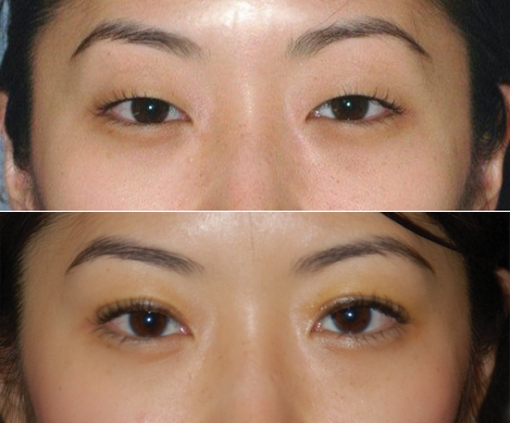
http://www.hyphenmagazine.com/ Clearly this is the foundation for the reason that has lead to a high rate of cosmetic surgery in Asia. Its rise in popularity has made plastic surgery all the more affordable and accessible for the average person, and with the opportunity there to become more beautiful and successful, more and more young people are choosing the ‘easy’ path of surgery.
What was once seen as an extreme step in a bid for perfection is now seen as an everyday normality in countries like Korea. You could almost go as far as to say it is expected of women in such a society. If they do not conform to this ideal, they may be out-casted from what was once a network of friends. Non-conformity could even bring shame to their family.
The question still remains: what is perfection and beauty in their eyes? Are they just aspiring to a model of beauty that is completely unrealistic?
There’s Still Hope for the Future
We can only hope that in the coming years the world will open up and accept all races for what they are. After all, diversity is real beauty. I believe that having heritage is part of one’s identity. Your birth origin and ethnic background is an important part of who you are. All cultures should be celebrated and each of us should be proud of what is in our blood, not reject or suppress it.
If the victims of de-racialisation surgery keep growing we are at risk of losing not only our personal identities, but the world’s. The decisions, views, values and choices that we make today will shape the future of our offspring. Let’s strive to make the right ones.

http://jeesusjalutasallveelaeval.blogspot.com/2014/04/understanding-cultural-traditions.html Sources:
http://www.sbs.com.au/news/article/2013/12/03/cosmetic-surgery-change-race-rise
http://www.seoultouchup.com/plastic-surgery-in-korea/
-
Testosterone Therapy: Is It Worth The Risk?
Erectile dysfunction? Maybe it was the whiskey…
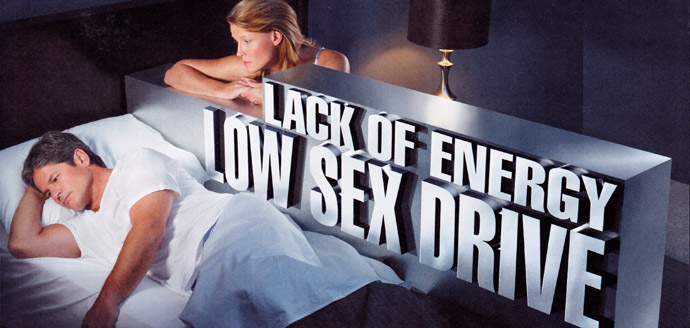
http://experthealthdoc.com/2014/02/17/heart-attacks-cancer-and-law-suits-why-men-are-the-new-drug-targets-for-low-t/We have all seen the ads. The commercials that come on in between your favorite Breaking Bad episodes, your adrenaline rushing and bravado showing. How about during your online browsing sessions, where your side banners tell you that you are not man enough but there is hope through testosterone treatments. I know for certain that when you step foot into your gym at least a couple of TVs are advertising “low testosterone” remedies. It has even been advertised as a catalyst for treating erectile dysfunction. With all this hype, you better believe that the number of testosterone treatments and participants have been increasing over the years.
Related Article: Quit Cumming, Save Mankind
But why do men experience a loss of testosterone? Why does a man seek therapy to boost testosterone? According to WebMD:
As a man ages, the amount of testosterone in his body gradually declines. This natural decline starts after age 30 and continues throughout life
Of course it makes sense then that a man aged 40 and up would look for a means of staying young by increasing testosterone, even if it may be detrimental to his health in other ways. A study on testosterone therapy focusing precisely on those health risks has been creating quite the buzz in the news recently. The study found that with testosterone treatments you are also increasing your risk of a heart attack. With that in mind, different testosterone treatments have been getting backlash from both media and activists alike, as it has been disputed whether the risks outweigh the supposed benefits of the treatments.
Androgel is one such product currently dealing with lawsuits from 4 plaintiffs who claim their cardiovascular injuries came from the use of the gel product. The product was originally approved by the FDA to be used by those experiencing hypogonadism, where the patient’s body doesn’t produce enough testosterone to continue masculine functions such as muscle growth or sperm production. Now, however, Androgel is more commercially advertised as a means to boosting performance and testosterone levels in middle aged (40+) and older men (65+). It does have its benefits, but unfortunately Androgel does not yet acknowledge the risk of cardiovascular health, nor does it label it in its safety information.
Due to the curiosity and miracles that testosterone therapies are proclaiming, groups like the Endocrine Society are rallying their cry to label testosterone therapies and treatments with proper warnings. The Endocrine Society is also calling for a larger scale study in order to properly examine how risky testosterone therapies can be. Even the FDA is currently investigating the link between increased heart risk and testosterone therapy. Like other miracle drug claims, one would do well to practice caution and research before using anything that claims to improve your health in any way.
Related Article: Power Posing Can Change Your World

I can’t even achieve THIS at the age of 26! Makes me sad…
http://laweekly.blogs.com/.a/6a00d83451afa369e20134877262f7970c-popupWhat can a man do then? Is there no solution? Of course the obvious answer is to consult your doctor, because although some testosterone therapies are posing a threat to one’s health, others may be causing more promise than problems. Either that, or force yourself to go to the gym, not to necessarily get your testosterone back, but rather your confidence and energy! Or disregard everything and jump on the Cenegenics train and look like Dr. Life (on the right) in your 70s… Cheers to immortality!
Research:
WebMD: Testosterone Replacement Therapy
Endocrine Society Statement on Testosterone
Endocrine Society Calls for Large Scale Studies to Evaluate Testosterone Therapy Risks
Mayo Clinic – Male Hypogonadism
FDA evaluating risks associated with FDA-approved testosterone products
Wondergressive: Quit Cumming, Save Mankind: The Detrimental Effects of Porn
androgel, arousal, boost performance, cardiovascular health, cenegenics, confidence, Dr. Life, Endocrine Society, energy, erectile dysfunction, FDA, health, heart attack, hypogonadism, low testosterone, muscle, muscle growth, sex, sex drive, strength, testosterone, testosterone supplements, testosterone therapy, testosterone treatment -
Your First Real Heartbreak, Can it be Fatal?

Heartbreak: my ache-y, brake-y, heart…
mobavatar.comHeartbreak, happens, all the time. We have all been there before. We have all bled our hearts out, hurt until we couldn’t bear it anymore, and cried ourselves to sleep over lost love. Some of us even restort to alcohal, using it to battle against the emotional surge that accompanies heartbreak. As we binge we try to forget that person that hurt us…
“No matter how bad your heart is broken, the world doesn’t stop for your grief” – Faraaz Kazi.
What about the heartbreak we experience after the loss of a loved one? Is it possible to get so stressed and emotionally disheveled that our lives are at risk?
New research has surfaced showing that the grief of losing a loved one doubles heart attack risks within 30 days of the loved one’s passing. Contrary to popular belief, our physical health is in fact at risk right after heartbreak or loss.
Dr. Sunil Shah, co-author of study, says
We think it is important that doctors, friends and family are aware of this increase risk of heart attacks and strokes so they can ensure care and support is as good as possible at a time of increased vulnerability before and after loss of a loved one.
The study concerns mostly individuals aged 60 to 89, but what if there is some underlying increase in health problems after each heartbreak starting from a young age? What if those three long term relationships that ended in heartbreak will lead to a string of health problems in the future? More importantly, what about everyone else going through relationship problems and experiencing anxiety over a heartbreak?
“Ever has it been that love knows not its own depth until the hour of separation” – Kahlil Gibran.
Of course, there is a way to help your situation even before heartbreak occurs.
Related Article: No Heart? No Pulse? No Problem!
Researchers at the University of Rochester found that having a romantic movie date night could be more helpful then attending couples therapy! Are you dating someone who is not emotionally open to you? Watch the funny comedy Date Night, have some laughs, and talk about the movie afterwords. Or watch something more serious like Gone With The Wind, where one of you is bound to cry and pour out all of your emotions. This could potentially be the key to avoiding future heartbreak.
The idea is that the time spent together and the discussions that ensue after watching a movie about a relationship will likely lead to healing and mending in your own relationship. If not, hopefully it leads to some romantic time together. (Giggity)
A movie is a nonthreatening way to get the conversation started,
says Ronald D. Rogge, associate professor of psychology at the University of Rochester.
It’s really exciting because it makes it so much easier to reach out to couples and help them strengthen their relationships on a wide scale.
The University of Rochester website provides interactive tools for couples as well as surveys and studies to participate in to help with their heartbreak woes!
If all else fails maybe it is time to move on….
“Never allow someone to be your priority while allowing yourself to be their option” – Mark Twain.
Cheers to heartbreak!
Research:
JAMA Network: Increased Risk of Acute Cardiovascular Events After Partner Bereavement
University of Rochester: Divorce Rate Cut in Half for Couples Who Discussed Relationship Movies
University of Rochester: Couples Research
IMDB: Gone with the Wind (1939)
University of Rochester Faculty: Ronald D. Rogge
University of London: Dr. Sunil Shah
Youtube: Giggity Giggity, Giggity Goo
bereavement, break heart, can heartbreak lead to death?, couples, date night, dating, death, fiance, health problems, heart, heart break, heartbreak, heartbreak body, heartbreak health, heartbreak help, heartbreak mind, is heartbreak fatal?, love, married, movie date night, Movies, relationships, stroke, University of Rochester -
Lucid Dreaming: A Step by Step Guide to Dream Control

A lucid dream is a dream where you know you’re dreaming and have full control over the dream. Lucid dreaming is a natural phenomenon, a science, and an art. As a natural phenomenon lucid dreaming has surely existed as long as dreams have. As an art it has been practiced for thousands of years, and across many cultures. Lucid dreaming was first described as a practice in the Upanishads, various Yoga Sutras, and in many Tibetan Buddhist texts.
As a scientific practice lucid dreaming has existed since 1898, when Frederik van Eeden first coined the term “lucid dreaming” in his report, The Study of Dreams. Nowadays, due in large part to scientists such as Stephen LaBerge, lucid dreaming institutes are hard at work providing the study of lucid dreaming with unprecedented discoveries and evidence.
Lucid dreaming has been verified as a state of consciousness with “definable and measurable differences” from waking life and REM sleep. It has been physiologically verified as a legitimate occurrence using EEG scans, polygraphs, the intentional use of planned signals while a person is lucid dreaming, and more.

In a 2008 report, scientists from universities in Japan and Germany analyzed five different studies from five different countries focusing on the prevalence of lucid dreaming. They found that the prevalence between countries varied greatly. 47% of the Japanese participants reported having had at least one lucid dream in their lifetime. About 70-80% of US, German, and Dutch citizens reported at least one. And a whopping 92% of Chinese people reported at least one lucid dream.
According to the above statistics, it’s entirely possible that you’ve experienced an unintentional lucid dream before. Lucid dreams involve varying degrees of vividness, control, and awareness, so likely your unintentional lucid dream was fuzzy, and lasted only moments. Regardless, the experience itself was surely unmistakable.
Or maybe you’ve never had a lucid dream, but still smile at the idea of becoming fully aware in your own dreamscape. There are proven effective methods for becoming lucid and gaining control over your dreams.
Lucid dreaming takes a bit of practice, but once you get the hang of it, you’ll be flying through your favorite cities, using super powers, drinking light, and creating planets like a pro. Or, you can use lucid dreaming to benefit your waking life by practicing public speaking, learning languages, or delving deeper into your subconscious mind by having philosophical conversations with different aspects of yourself.
In a lucid dream, whatever you imagine comes true. You are the god of your own universe. Stick to the guide below, and you’ll be a master oneironaut (dream traveler) in no time.
A Step by Step Guide to Lucid Dreaming
Step 1: Don’t Get Discouraged
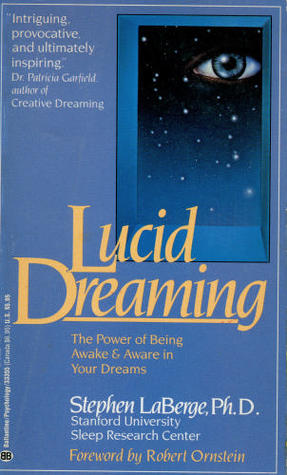
Stephen LaBerge heralded a quantum leap in lucid dreaming research. http://www.goodreads.com According to Stephen LaBerge, founder of the Lucidity Institute, as well as the man credited with being the “Father of Lucid Dreaming,”
Although we are not usually explicitly aware of the fact that we are dreaming while we are dreaming, at times a remarkable exception occurs, and we become conscious enough to realize that we are dreaming. “Lucid” dreamers (the term derives from van Eeden, 1913) report being able to freely remember the circumstances of waking life, to think clearly, and to act deliberately upon reflection, all while experiencing a dream world that seems vividly real (Green, 1968; LaBerge, 1985; Gackenbach & LaBerge, 1988). This is all in contrast to the usual past characterization of dreams as typically lacking any reflective awareness or true volition (Rechtschaffen, 1978).
That all sounds fantastic, but here’s the truth: Unless you are a natural (you wouldn’t be reading this guide if you were), lucid dreaming will take a great deal of time and effort.
There is no participation trophy. The vividness and control you have in a dream is entirely dependent on how often you practice and follow this guide. It will take time to have a lucid dream, sometimes more time than you’d like, so for that reason step 1 is NEVER GET DISCOURAGED. The more impatient and discouraged you get, the harder lucid dreaming becomes. Stay relaxed, and you WILL be lucid dreaming in no time.
Some people I have spoken to claim that it only takes them a few days to become lucid for the first time. It personally took me four months to have my first lucid dream, and another month to teach myself to use basic super powers like flying and telekinesis.
Everyone has their own pace. Be patient, and stay diligent.
Step 2: Research Lucid Dreaming
As a 20 year veteran lucid dreamer I assure you that this guide is good. Stick to it and you’ll be lucid dreaming within weeks. However, the key to becoming truly great at something is to never stop learning.
Scroll down to the bottom of this article and read through some of the studies and articles I used as sources. Better yet, speak to some lucid dreamers directly at LD4All.com. LD4All is one of the most wonderful communities I have ever had the opportunity to be a part of. I and other lucid dreamers like me want to help you start lucid dreaming, so you may as well take advantage of us.
Step 3: Keep a Dream Journal
Keep a journal or a tape recorder by your bed. Every time you wake up, whether it be to use the bathroom, drink some water, or begin the day, just stop. Don’t move. The moment you move the dream will become harder and harder to remember.
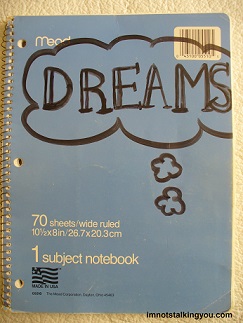
A dream journal is the cornerstone of any lucid dreamer’s journey. https://imnotstalkingyou.com/tag/ann-faraday/ Begin recalling your dreams. Focus on details, colors, emotions, words, locations, people; anything!
Once the dream is rolling around your mind like a pop radio song, write it down (or record your voice). Write anything and everything. If you can only remember a faint memory of the color blue, write that down. No detail is unimportant. The more serious you take your dream journal, the more likely you are to become a lucid dreamer.
If you can’t keep yourself awake long enough to write in a dream journal, sit up on one elbow to make yourself slightly uncomfortable. Also, make sure to keep your dream journal separate from other journals you may have.
A dream journal is the cornerstone of successful lucid dreaming. Keeping a dream journal will increase dream recall, as well as the vividness and detail of your dreams. Most importantly, a dream journal is the single most important factor in increasing your chances of having a lucid dream. Whatever you do, don’t slack on step 3.
It is common to witness a profound improvement in dream recall along with dream vividness after the very first entry in your dream journal. If it has been over a week and you still can’t remember any dreams at all, scroll down to the “Lucid Dreaming Troubleshoot” section of this guide.
Step 4: Wake Back to Bed Method (WBTB)
This is usually taught later on, but it is so effective that I want you to know about it immediately. WBTB is the secret weapon lucid dreamers use to make lucid dreaming significantly and consistently easier. It has the added bonus of improving the likelihood that you will remember your dreams. If you are having trouble having any dreams at all, then this method is your best friend.
1. Set your alarm to wake you up 5 hours after you fall asleep. (I know you can’t get it to be exact, just do your best). The reason the alarm needs to be set 5 hours ahead is due to our natural sleep cycle. On average, after 5 hours of sleep, a person is at the very tail end of REM sleep, and easily woken. This is also the very end of a dream, and just before the beginning of another descent into deep sleep. In truth, everyone’s sleep cycle is slightly different. In step 8 you will master your REM cycle. For now, just stick to around 5 hours.
2. Wake up, then go back to sleep. It’s as simple as that. While WBTB works even if you only stay awake for a few seconds, for maximum effect, stay up for 10 minutes to 1 hour.
3. During the time you are awake, focus only on lucid dreaming-related material. Read your dream journal, tell yourself you will have a lucid dream, read about lucid dreaming online. It’s up to you. The more you focus, the more likely you will be lucid dreaming when you lay back down.
4. WBTB can be used in conjunction with all other lucid dreaming techniques.
Step 5: Do Reality Checks
At this point you’re confident, well researched, and have been sticking to your journal at least semi-regularly. Welcome to step 4. If you have ever seen the movie Inception you are familiar with the totems that each character uses to know if he or she awake or dreaming. The same applies to lucid dreaming in real life. Every lucid dreamer does reality checks throughout the day, but it has less to do with staying sane, and more to do with creating patterns in your subconscious mind.

Look at your hands. Are you dreaming? http://lucidrealitycheck.com/ Let’s say your reality check is looking at your hands. In a dream, your hands rarely if ever look normal. They usually have more or less fingers, or look alien and bizarre. Upon seeing a strange hand in a normal dream you wouldn’t even give it a second thought.
“Tentacle fingers? Makes sense.”
But in the mind of a person who has been constantly doing reality checks, those tentacle fingers are the answer to the question, “Am I dreaming?” Lucid dreaming time!
Simply put; the more often you do a reality check, the more likely it is that you will do the same reality check in any given dream. The key to reality checks is to do them mindfully and frequently. Ask yourself, “Am I dreaming? Am I awake?” Or some other variation of the same question.
If you are not asking yourself the question in waking life, then you won’t ask yourself the question in the dream. It is the question, not the action itself, that will make lucid dreaming successful.
There are an infinite number of reality checks to choose from or create. Some of the most well known and effective reality checks include:
*Note: Always remember to ask yourself if you are awake or dreaming whenever you do a reality check.
Hands: As mentioned above, glance at your hands. In waking life they look like your normal hands. But inn a dream, hands are as variable as thought itself.
Light-switch: Flip a light-switch and see what happens. In a dream a light-switch rarely has anything to do with light. It might transport you to a new location, bark at you, or spray the room with confetti. Flip and find out.
Breath: Pinch your nose and try to breathe through it. In a dream you can breathe through your forehead or your hip bone. It makes no difference.
Text: Just about the only font used in the lucid dreaming world is a strange mix between hieroglyphics and wingdings font. It just doesn’t make sense. Sure, there will be a few letters that look familiar to you, but the odds of seeing more than a few written words in a dream that make any sense are slim to none. I have created text in dreams, but never have I stumbled upon a piece of text that makes much sense.
Clock: Check the time. Both digital and mechanical watches look strange in a dream. Watching the hour hand move backward and the minute hand move forward is always a fun time.
Mirror: Look in a mirror. In a dream your reflection could be anything from blurry, to horrifying, or even non-existent. If it turns out you’re dreaming, take a leap of faith and walk through the mirror. You never know where you might end up.
Jump: Simply jump. In a dream you will often move in slow motion, float above the ground, or even start flying. Some of the greatest dreams of my life have been just flying through different lands, on different planets, through fictional universes, and through various mediums. It is very liberating.
Poke: Poke yourself. In a dream your silky smooth skin might feel like any number of different textures. Mossy arms and prickly legs aren’t impossible in a dream world.
*Note: Always use at least two reality checks. Once in a while you will glance at your hand in a dream and it will look completely normal. That’s where the second reality check comes into play. I have never personally heard of two reality checks failing.
As you continue to do reality checks the question of whether or not you are dreaming will become a habit of thought, especially in your dreamworld. You’ll be holding a boa constrictor, falling through the sky completely naked, and suddenly ask yourself, “wait, am I dreaming?” Of course you are. You hate it when snakes interrupt your nude skydiving sessions. Boom! Now you’re lucid, and you will record your lucid dream in your dream journal when you wake up. Right? (Stop slacking on Step 3! :D)
The other benefit of doing frequent reality checks throughout the day is that it ensures that you are constantly thinking about lucid dreaming. The more you focus on something, the more likely it is to occur, especially in the case of lucid dreaming.
With practice your dreams will become extremely vivid and detailed, so much so that they will seem as real as waking life. Luckily reality checks always turn out the same in waking life, but rarely the same in dreams.
Step 6. Mnemonic Induced Lucid Dreaming (MILD)
There are a ton of techniques for becoming lucid, but I suggest you start with MILD. This technique was personally created by Stephen LaBerge and is ideal for beginners. This lucid dreaming technique can be split into five general parts. They are:
- Dream Recall
- Reality Checks
- Relaxation
- Affirmation
- Visualization
Lucky for you, you’ve already been working on parts 1 and 2. Let’s start with part 3, relaxation.
3. Relaxation
Any relaxation technique will suffice, but there are some tried and true methods that lucid dreamers, including myself, have found work best. Start by finding a comfortable position in bed. This is ideally a position you won’t move from.

Always make sure to take some deep breaths and relax before attempting to lucid dream. http://www.examiner.com/ Next, take 5-10 deep breaths, keeping in mind that you are preparing for a night of lucid dreaming. Remember that truly effective deep-breathing involves movement of the belly, chest, and shoulders.
Inhale using your diaphragm so that your belly pushes outward. When your belly is out, continue inhaling so that the chest expands. Don’t stop there! Continue inhaling so that your shoulders and collar bone rises. Hold this breath for 2-5 seconds, and release.
Your release should move opposite to your inhale, and be just as controlled. Begin with the lowering of your shoulders, the sinking of your chest, and finally the deflation of your belly. This entire sequence is called a yogic breath, and is a very powerful relaxation tool.
After you finish with your deep breathing, you are ready to begin muscle clenching. Start from the bottom up, clenching your toes, followed by your feet, legs, and so on. By the time you reach your forehead your entire body should be clenched tight. Release, and you will feel a powerful calm wash over you. Repeat muscle clenching at least two more times, or until you are in a completely relaxed state.
4. Affirmation
In this part of MILD you affirm to yourself that you will in fact have a lucid dream. Part 4 creates a solidified intention. It is like a manual override of the brain.
As you lay in bed fully relaxed, begin repeating in your head over and over again:
“I will become lucid,” “I will have a lucid dream,” or “I am dreaming, this is a dream, I am lucid dreaming…”
The words don’t matter as much as the intention. You WILL become lucid. Convincing yourself of that is the whole point of part 4.
If it’s been three weeks and you still haven’t had a lucid dream, it will be extremely hard to totally convince yourself that the next night will be different. Remember step 1: don’t get discouraged.
As your mind begins to wander, (it inevitably will), just gently bring it back to focus on the task at hand. “I will become lucid tonight.” Remember, just like with the reality checks, the words and movements don’t matter as much as your feelings and intentions. Believe yourself when you say that you will be come lucid, no matter how long it’s been.
5. Visualization

Visualize yourself flying, and you will fly. http://www.enlightenedwithoutguru.com/ Lucid dreaming is easiest when you have a clearly defined goal. What do you want to do in your first lucid dream? If you just stand around, amazed that you are actually awake inside your own dream, you will lose lucidity, guaranteed. Part 5 gives you a better chance at becoming lucid, and remaining lucid.
While you are affirming to yourself that you will have a lucid dream, visualize in your mind what you will do in your dream. If you want to fly, visualize yourself flying in your preferred location. It also helps to visualize yourself writing in your dream journal about the lucid dream due to the mental associations you’ve made regarding the dream journal.
MILD Quick Overview:
- Stick to the dream journal.
- Keep doing reality checks throughout the day.
- Find a comfortable position to fall asleep in, and begin relaxing yourself using deep breathing and full- body muscle clenching.
- Use positive affirmation to tell yourself that you will become lucid. Know it to be true.
- Visualize yourself in the lucid dream. Have a clearly defined goal, and focus on that goal during your visualizations, and in your dream.
*Note: Remember that WBTB can be used in conjunction with MILD to maximize your chances of lucidity.
Step 7. Wake Induced Lucid Dreaming (WILD)
After you have mastered MILD you are ready to move on to the Holy Grail of lucid dreaming techniques, WILD. There is nothing wild or crazy about WILD. It is an extremely straightforward technique. Reading it over, it might even sound easier than MILD. In truth though, WILD is an advanced lucid dreaming technique which transports your waking state awareness directly from waking life into your dream state. Stay with me here, because this is not science fiction. WILD is a tried and true method for lucid dreaming.
*Note: Use WBTB in conjunction with WILD. For experienced lucid dreamers, this is generally the quickest, most effective, and most relied upon method of lucid dreaming.
1. Relax
Yup, same as MILD. This technique works best when you are in a totally relaxed state. Set aside some time for stretching, deep breathing, and/or muscle clenching.
2. Observe the Hypnagogia
The hypnagogic state occurs at the onset of sleep, well before you being lucid dreaming. It consists of a seemingly random roller coaster ride of visions, sounds, and sensations. You may hear a phone ringing, followed by your name shouted by thirty different voice, followed by a leaf gliding acorss your skin, all while technicolor fractal geometries dance across your inner eye lids. The hypnagogic state can be fun, disorienting, or downright terrifying. Just remember that it’s all in your head, and go along for the ride. The hypnagogic state is actually the doorway to lucidity.

This is a great representation of what the beginning of the hypnagogic state looks like. Morphing dots, geometries, colors and sounds. You must stay perfectly still during the hypnagogic state, or else you will wake up and have to start all over again. With practice you will be able to ignore itches, and reflexes, like the need to swallow. It is also a good idea to experiment with different sleeping positions to find what is not only most comfortable for your mind, but your body as well.
In most cases, a person will experience a dominant type of hypnagogia. Visual and auditory hypnagogia are the most common, but it’s also possible to experience movement on or near your body in the hypnagogic state. Whatever you experience most, focus on it. Do not let your attention sway. If it does (it will) keep reminding yourself that you are dreaming. It is helpful to count, “1 I’m dreaming…2 I’m dreaming…3 I’m dreaming…”
As you stay aware during the hypnagogic state the hypnagogia will begin taking on distinct patterns and form. Begin to project your own visualizations onto the hypnagogia. Imagine the scene you want to begin your dream in. Imagine the hypnagogic imagery forming into your desired dream scene and it will do exactly that.
It is like focusing on something under a microscope. At first everything is blurry with many sounds and images all mixed together. But as you focus, or visualize a scene, the image becomes crystal clear. Layer upon layer, your dream scene is created.
Visualize yourself entering the dream scene you have created from a first person perspective. As long as you keep reminding yourself that you are dreaming, you will pop out of your sleeping body and into your new dream body.
3. Enter the Dream and Stabilize
Success! You’re lucid dreaming (do a reality check). Now that you’re in the dream the first thing you’ll want to do is stabilize. Imagine a pilot suddenly entering an area with a wildly different air temperature. Things are shaky. In your case, it’s your awareness that’s shaky. If you’re not careful, you’re going to lose lucidity and fall back asleep. This can be incredibly frustrating, but it happens to the best of us.
The first thing you should do is shout “Increase lucidity!”, “I am dreaming!”, or “I will stay aware!” Something to that effect. This will immediately increase the dream’s vividness as well as your awareness. You can also try spinning on your axis, or asking a dream character for help in staying lucid. Some dream characters respond like robots, while others are so complex and real that it fills you with awe.
At this point you are ready to start experimenting with what works best for you. Make sure to try out different ideas while you are dreaming and see what works best for you. Congratulations, you’re a lucid dreamer.
Step 8: Master your Sleep Cycle
This is not a necessary step, but mastering your sleep cycle will greatly increase the vividness and rate of lucid dreams you have.
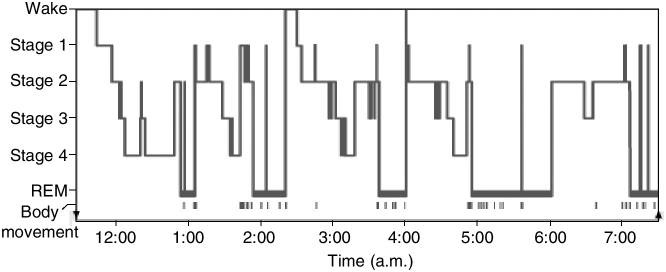
Who knew scientists could graph sleep with such beauty. http://www.ncbi.nlm.nih.gov/books/NBK19956/ As stated above, when doing WBTB, the reason you set your alarm clock to wake you up 5 hours after going to sleep has to do with the average person’s sleep cycle. If you understand the basics of the sleep cycle and then master your own, I assure you, you will become a master lucid dreamer. So, here’s sleep in a nutshell:
Sleep architecture refers to the basic structural organization of normal sleep. There are two types of sleep, non-rapid eye-movement (NREM) sleep and rapid eye-movement (REM) sleep. NREM sleep is divided into stages 1, 2, 3, and 4, representing a continuum of relative depth. Each has unique characteristics including variations in brain wave patterns, eye movements, and muscle tone. Sleep cycles and stages were uncovered with the use of electroencephalographic (EEG) recordings that trace the electrical patterns of brain activity.
The sleep cycle itself could be its own article, so let’s stick to what you need to know.
*Note: Sleep patterns change with age and gender.
- Dreams take place almost entirely during REM sleep.
- 80% of all dream recall is associated with waking up during REM sleep. That’s why WBTB is timed at 5 hours.
- Each sleep cycle lasts about 90 – 110 minutes. If you sleep for 8 hours, you are sleeping through about 5 cycles of sleep.
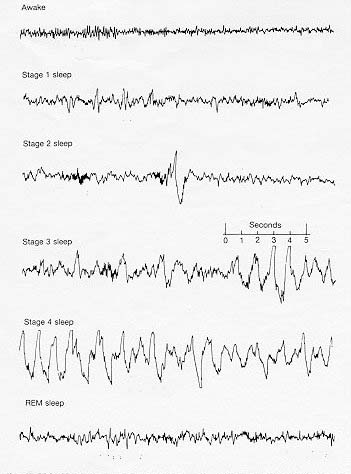
Your brainwaves wile you sleep. http://www.sleepdex.org/ - It is your goal to figure out how long your personal sleep cycle is by the best approach that exists: trial and error. Set your alarm to wake you up after 4.5, 6, 7.5, or 9 hours. Don’t wake yourself up during the first cycle as it lasts for a slightly shorter amount of time and will throw off your findings.
- Since each sleep cycle you go through in a single night is different, pick one of the above times and stick to it.
- Each night, set your alarm to wake you up a few minutes earlier or later than the time you chose. Write down how you feel when you wake up. Are you groggy? You probably woke up during deep sleep. Did you wake up feeling refreshed? Than you probably woke up during REM sleep or Stage 1 sleep.
- Do the math and figure out when your REM cycle takes place on average. That is your golden time to set your alarm for WBTB. You will experience significantly better dream recall, as well as greater vividness when you go back to sleep.
*Note: You can also use the knowledge of your sleep cycle to ensure that you don’t wake up feeling dazed and confused every morning. Sleep only in intervals that match when you will wake up feeling refreshed. Don’t forget to engineer the perfect morning while you’re at it.
Step 9. Alternative Techniques
Try out the copious amount of other techniques that lucid dreamers and non-lucid dreamers alike have come up with. There is certainly no shortage.
You can even look into using some lucid dreaming technology such as the NovaDreamer.
If you are a true experimenter you can give Calea Zacatechichi a try. Known as Calea Z for short, consuming this plant doesn’t have any noticeable effects while you are awake. Once you go to sleep though, it’s a whole different story. Your dreams become more vivid, more convincing, and in some cases, wilder. I have personally tried Calea Z on multiple occasions, and it is in my opinion like using a psychedelic in the dream world. This is definitely for the experienced lucid dreamer.
Another tried and true alternative that you can mix with any other technique is the use of binaural beats. A binaural beat is a pair of two very similar but slightly different frequencies played in each ear. The brain integrates each frequency, and by doing so creates the sensation of a third frequency called the binaural beat. If a frequency of 100 hertz is played in the right ear, and another frequency of 94 hertz is played in the left ear, the frequency of the binaural beat will be 6 hertz. That is equivalent to theta brain waves (4-7 hertz), as well as REM sleep. In this way, you can guide your brain into REM sleep just by listening to specific sounds as you fall asleep.
Binaural beats are most effective when using headphones, and can be used at any time to induce a wide range of states of consciousnesses.
Turn your speakers way up:
Lucid Dreaming Troubleshoot:
–No Dream Recall
You’ve had a notebook sitting by your head for 3 weeks and you still can’t recall a single dream.
Just as writers experience writer’s block, lucid dreamers experience dry spells. Sometimes you just can’t remember anything. Are you stressed? Do a quick scan of your body. Does any part of your body feel overly stressed? Stress is the ultimate lucid dream killer.

All of these foods have the potential to enhance your dreams. Take your pick. http://www.world-of-lucid-dreaming.com/ Another thing to consider is your diet. Alcohol has been known to decrease dream recall, as well as cannabis. There are many foods you can eat to help with dream recall though.
You can also check out Calea Z if you’re feeling adventurous, or just do some good old exercise.
Most importantly, take advantage of the WBTB method.
— Infrequent Lucid Dreams
You become lucid, but only rarely. How can you increase the frequency of lucid dreaming?
First of all, being a lucid dreamer does not mean you will be transforming into Godzilla and saving the cosmos from interstellar doom every single night. When you are first getting started 1-2 lucid dreams per month is normal. After a year or more of practice 10-20 days each month is very common. I don’t have any clear evidence of this claim. I base it on the claims made over years of being active in various lucid dreaming forums.
The best advice is to stick to one technique and master it. Become the Mr. Miyagi of WILD, or the Yoda of DILD. As long as you focus on a single vehicle for lucid dreaming, frequency is sure to come.
Other than that, just stick to the guide and ensure that you master each step along the way. Be patient, and stay focused.
— Blurry Dreams and Difficulty Staying Lucid
Your lucid dreams are blurry and it’s hard to stay lucid. You usually just fall back to sleep.
This is an extremely common problem, especially when you’re first starting out. Check out the section entitled “Stabilization” in Step 7 (WILD) of the lucid dreaming guide.
Some quick tips are to spin on your axis, scream “increase lucidity,” visualize a new dream-scene, or ask a dream character for help.
— Sleep Paralysis
Sometimes you wake up and your whole body is paralyzed. What should you do?
This is called sleep paralysis, and it can be a frightening experience. For those of you that have never experienced sleep paralysis, it feels like your whole body is chained down and that there is a heavy weight on your chest. Sometimes a menacing presence is felt in the room as well.
he menacing presence is likely just a result of hypnagogia (more on that in the next section). As for sleep paralysis, it’s totally natural. It is not clear why it occurs, but it is thought to be directly associated with REM atonia. REM atonia is when the body shuts off production of motor neurons during REM sleep. This is likely a way for the body to protect itself. Were it not for sleep paralysis everyone would be acting out their dreams. Sleep walking would be the norm.
This best thing to do if you are experiencing sleep paralysis is to stay calm, and use it as a chance to become lucid. If you fight the paralysis you will only make things worse. Instead, begin the WILD technique from the state of sleep paralysis. You’re already a step closer to lucid dreaming that way.
— The Old Hag
This scary old lady appeared last night, sat on your chest, and stared into your eyes with a look of death. W-T-F!
Just about every lucid dreamer will meet the Old Hag at one time or another. The truth is, there is no legitimate explanation for why thousands of lucid dreamers over the last 2000 years have been describing variations of the same terrifying old woman appearing in their dreams an sitting on top of them.

The notorious Old Hag. http://www.paranormalportals.com/ It is known as Old Hag Syndrome, and it is arguably the single most terrifying experience that can take place during your lucid dreaming adventures.
The running theory is that the Old Hag is a combination of sleep paralysis, emotional instability/stress, and hallucinations/hypnagogia. Just remember, it’s all in your head. The old hag and the rest of the nightmares you will face cannot hurt you. You are choosing to be afraid. Recognize that it is not real, and just let go. The harder you struggle, the worse it gets.
Just let go, and remember that you are the one and only master of your dreams.
–Other Issues.
If you have any other problems or issues not mentioned here I would be happy to answer them to the best of my ability as a lucid dreamer with 10 years of experience. Send an email to officialesfein@gmail.com with any questions or concerns.
Lucid Dreaming Ideas and Inspiration
Are you tired of just flying around, exploring worlds, and talking to dream characters? Do you need some creative inspiration? Are you looking to push your imagination to the limit? Either head over to LD4all for more tips, tricks, ideas, and inspiration, or try out my own suggestions below.
- Walk through a mirror.
- Experience synysthesia, a mixing of senses. For example, try tasting light, listening to smells, etc.
- Transform into an animal of your choosing.
- Transform into an alien creature.
- Explore the human body as a cell.
- Engage in a Pokemon battle.
- Create your own world, solar system, or even galaxy.
- Have a party where you invite different aspects of yourself. Invite your artistic side, your murderous side, and your silly side, and watch them all interact.
- Shout out that you would like to meet your spirit guide and see what happens.
- Request something creative from your dream, like a poem, song, or picture.
- Conquer an old nightmare you had as a child, or one you are currently having.
- Practice a sport in your dream and you may very well see positive results in your waking life.
- Try talking to a dead person from history, or a dead relative.
- Experiment with time dilation. Try making a 10 minute dream feel like 10 hours.
- Ask your dream characters highly existential questions such as “Are you in my dream, or am I in yours?”
- Play with gravity and other laws of physics.
- Travel through time and meet yourself in 30 years.
- Become the founding mother/father of a dream nation.
- Recreate the universe of your favorite book.
- Experience life as the opposite gender.
- Let go of your control over the dream while remaining lucid. Be a quiet observer of the changes inside and out.
If you must sleep through a third of your life, why should you sleep through your dreams, too? –Stephen LaBerge
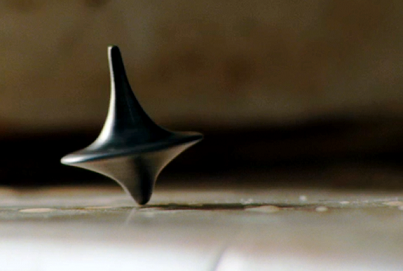
Quick! Do a reality check. Are you dreaming? Sources:
http://www.lucidity.com/SleepAndCognition.html
http://www.ncbi.nlm.nih.gov/pubmed/19750924
http://archiv.ub.uni-heidelberg.de/ojs/index.php/IJoDR/article/viewFile/79/96
http://archiv.ub.uni-heidelberg.de/ojs/index.php/IJoDR/article/viewFile/79/96
http://www.lucidity.com/LucidDreamingFAQ2.html
http://en.wikipedia.org/wiki/Oneironautics
http://en.wikipedia.org/wiki/Stephen_LaBerge
http://library.macewan.ca/lucidity/lucid%20let%205.2/LL5_2_Preview_L_G.htm
http://www.lucidity.com/vanEeden.html
http://www.lucidity.com/SleepAndCognition.html
http://www.world-of-lucid-dreaming.com/mnemonic-induction-of-lucid-dreams.html
http://www.world-of-lucid-dreaming.com/hypnagogic-state.html
http://www.ncbi.nlm.nih.gov/books/NBK19956/
http://www.world-of-lucid-dreaming.com/the-stages-of-sleep.html
http://www.world-of-lucid-dreaming.com/lucid-dreaming-techniques.html
http://www.amazon.com/Calea-zacatechichi-ternifolia-Dream-Capsules/dp/B00A9ZM65I
http://www.monroeinstitute.org/resources/what-are-binaural-beats
http://www.world-of-lucid-dreaming.com/15-foods-that-enhance-your-dreams.html
binaural beats, calea z, calea zacetechichi, dream journal, dream recall, dream technique, dream visualization, dreaming, hypnagogia, hypnogogic state, Inception, ld4all, lucid dream, lucid dream guide, lucid dream relax, lucid dreamer, lucid dreaming, lucid dreaming help, lucid dreaming idea, lucid dreaming tip, lucid dreaming troublshoot, mild, novadreamer, reality check, rem lucid dream, rem lucid dreaming, rem sleep cycle, sleep cycle, sleep paralysis, stephen laberge, wbtb, wild -
Internet Trolls: Why They Prosper From Your Grief

You just got trolled by Mr. Bean.
http://creatememe.chucklesnetwork.com/mr-bean/page-5/Internet trolls are a force to be reckoned with.
Have you ever played an online video game? Entered a chat room? Posted a topic? Wrote a blog? Of course you have. And maybe you have even been trolled in the process… but what is trolling and how have you been affected?
The internet troll is a unique individual, at times making quick appearances, other times invading our cyber lives in overwhelming fashion. They are best described as individuals who regularly exhibit the three characteristics of the Dark Triad:
- Narcissism – pride and egotism with a lack of empathy.
- Machiavellianism – deceiving and using others for self gain; immoral individuals.
- Psychopathy – exhibiting remorselessness and again a lack of empathy.
Related Article: A Note on the Top 1%: Psychopaths or Superhumans?
Internet trolls are not only described by those characteristics, but also proven to share a correlation with them! In a new study, titled “Trolls Just Want to Have Fun” (genius), it was found that:
trolling correlated positively with sadism, psychopathy, and Machiavellianism, using both enjoyment ratings and identity scores.

Rainbow Troll.
http://gnuenguemo.deviantart.com/art/U-MAD-210234559But why would anyone troll your blog about cute animals doing cute things? Your blog is silly and I hate you and your cute things are disgusting that’s why! Sorry about that, my inner troll popped up unexpectedly.
But seriously, they thrive off of personal work and emotion. Something you put a great deal of work and time into is the ideal target.
Even in a chat room where a serious debate has ensued, a troll will inevitably charge in to divert the focus of the debate or simply mock any and every intellectual point made. Their actions and words spark an emotional connection and provoke a passionate, heartfelt response. This is precisely the point when a troll reigns victorious.
Related Article: NOT Another 9-11 Article (rolls eyes*)
Did you just achieve a new rank in a game? Did someone follow up that achievement with a statement to anger you? You read: “Newb.” or “LOL props scrub,” and with that all your hard work and sense of achievement wanes into a form of senseless rage. But why would someone want to anger you? Why is it that someone is getting pleasure out of your misery?
The answer lies in the conclusion of the study:
[Internet] trolling appears to be an Internet manifestation of everyday sadism.
Sadists. All of them. This result bolsters the idea that a their behavior is actually representative of an even greater evil, the Dark Tetrad. This malevolent nexus of annoying includes the Dark Triad with the addition of sadism – gaining pleasure from others’ misery.
Interestingly enough, you may have trolled someone yourself, out of boredom if not for any other reason. Maybe you’ve said someone’s profile picture is ugly or created a fake story, telling others the story is the gospel truth… does “spreading gossip” ring any bells? Does that make everyone a little sadistic, narcissistic, psychopathic, and Machiavellian? Is the world just an endless stream of Rick Rolls? Are we all internet trolls at heart?
Related Article: You Might be a Psychopath; Psychological Catch 22
Being trolled? Just breathe… they want you to respond in a heated manner. Ignore the comment, delete it, or simply move on to a different topic. To reply to them is to fuel them! LOL… here’s a graph depicting the reality of the dark tetrad around the world.
Cheers!
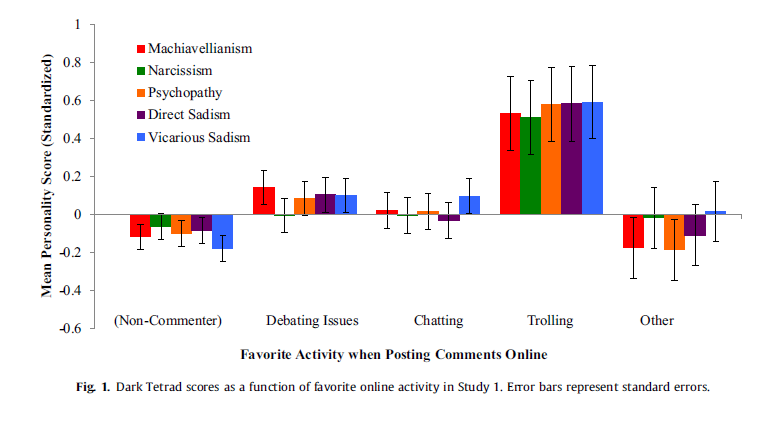
Mean Personality Score.
http://www.motherjones.comResearch:
Science Direct: They just want to have fun
Popular Science: Why We’re Shutting Off Our Comments
15 Infuriatingly Hilarious Quotes
Wondergressive: You Might be a Psychopath; Psychological Catch 22
Wondergressive: A Note on the Top 1%: Psychopaths or Superhumans?
-
State Nullification and the Tenther Movement: Fight the Fed


State nullification is the only way to tame the Leviathan! http://logisticsmonster.com/ State nullification is a term you will be hearing more and more often in the coming years. It is taking place all across the nation as states fight to take back power from the Leviathan-like federal government of the United States.
Simply put, a vast majority of Americans believe the federal government is out of control. Activities like NSA spying, the use of drones, the passing of the NDAA, illegal search and seizures, and overall flagrant disregard for the rights and will of the people have forced the hand of individuals and states. The people are taking a stand, and state nullification appears to be the key to success.
Over the years the Fed has been placing greater emphasis on its own will rather than the will of the people. The Fed has actually gone so far as to throw away the writ of habeaus corpus whenever it sees fit under the Patriot Act and NDAA. There are various solutions to the power struggle that individuals and groups have experimented with. Some people choose to protest, some revolt, while others choose to cast their vote and hope for the best. All of these methods have wildly mixed results.
State nullification, however, is an historically effective tool used by of one of the fastest growing movements in America. This movement has been wining major battles with the Fed for years, and there is no sign that state nullification will stop working as a viable solution in the near future. The movement I’m referring to is the Tenther Movement.
The Tenther Movement

Proponents of state nullification are part of the Tenther Movement. sodahead.com The Tenther Movement, also called the State Sovereignty Movement or Tenth Amendment movement, is spreading like wildfire. It is founded on a political ideology which posits that the federal government is acting unconstitutionally, and that it is the states’ obligation to stand against an unconstitutional federal government. It is a state-wide refusal of what is considered flagrant disregard for constitutional law on the part of the federal government. Most importantly, refusal is taken a step further with federal laws overturned through state nullification.
According to the supremacy clause of the Constitution no state is allowed to create a law that is in direct conflict with a federal law. Incredibly, despite the legal reality of the supremacy clause, state nullification has worked in the past, and continues to work today. The numbers are staggering, with some reports showing that 80% of states have at least one law in direct opposition to a federal law.
The Tenther movement was inaccurately named after the tenth amendment to the Constitution, which states:
The powers not delegated to the United States by the Constitution, nor prohibited by it to the States, are reserved to the States respectively, or to the people.
This is a misnomer however since the implied validity of state nullification goes beyond just the wordage of the Constitution to the very words spoken during various constitutional conventions. In fact, supporters of state nullification have attempted to shed the name “Tenther” because it was created as a pejorative by those opposing their ideals. The name, however, has stuck.
If state nullification is so popular, why have you never heard of it? Actually, you have heard of it, you probably just didn’t realize it was a collective movement. In truth, any state victory against the Fed is associated with the Tenther Movement in some way. Check out this list of instances where state nullification is either being considered, currently being passed, or has already been used to trump federal law in a wide array of states:
As you can see, there is a great deal of successful, and ongoing state nullification taking place in the United States. Taken as a single instance state nullification may not mean much. Taken collectively, however, state nullification represents a powerful, growing trend in practicing state sovereignty. Every time a state stands up to what it perceives as the Fed overstepping its boundaries all other states benefit. State victories set national precedents. Consider, it wasn’t until cannabis was recreationally legalized in Washington and Colorado that hemp became legal at the federal level for 10 different states that are ready to grow it.
How are states getting away with this, and do their actions stand a fighting chance in a court of law?
Related Article: The Drones Are Coming!
Is State Nullification Constitutional?
According to legal scholars, the Constitution, along with various court rulings, make it clear that the federal government reigns supreme. If a state’s activities or laws impede the federal government in any way, the state is legally bound to change in accordance with the federal government. The supremacy clause is clear about one thing: the game is rigged. No matter what, the Fed wins.

State nullification? According to the current Fed, keep dreaming… http://www.federalcriminallawyer.us/ Adam Winkler, a professor at the University of California at Los Angeles who specializes in constitutional law explains that,
the law is clear — the supremacy clause says specifically that the federal laws are supreme over contrary state laws, even if the state doesn’t like those laws.
As we learned above though, the world of law and the real world are very different places. Somehow, the Fed is losing. Its prohibitions and decrees are being overturned by states all across the country.
One of the most outspoken voices supporting state nullification is a man named Tom Woods. Woods is being featured in the mainstream media and invited to legal seminars across the nation. Everyone wants to know the same thing: What makes proponents of state nullification think they have a leg to stand on in a court of law?
Let’s take a look at the wording of the supremacy clause . It reads:
This Constitution, and the Laws of the United States which shall be made in Pursuance thereof; and all Treaties made, or which shall be made, under the Authority of the United States, shall be the supreme Law of the Land; and the Judges in every State shall be bound thereby, any Thing in the Constitution or Laws of any State to the Contrary notwithstanding.
According to Woods and other state nullification supporters, the key to their movement is the bolded text, “which shall be made in Pursuance thereof.” According to Brion McClanahan, Ph.D. in American History from the University of South Carolina and a faculty member at Tom Woods’ Liberty Classroom,
All laws made in pursuance of the Constitution, or those clearly enumerated in the document, were supreme, State laws notwithstanding. In other words, the federal government was supreme in all items clearly listed in the document.
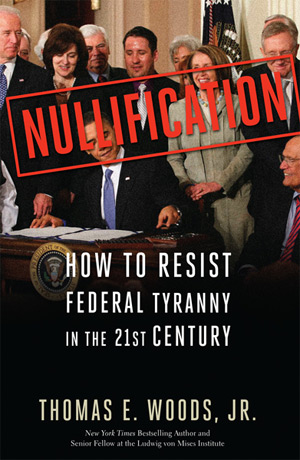
This is Tom Woods book which outlines the legality and necessity of state nullification. http://www.libertyclassroom.com Thus, anything not clearly outlined in the Constitution does not fall under the supremacy clause. There is nothing about healthcare, cannabis, or the NSA in the Constitution, thus, according to state nullification supporters, these issues fall under the tenth amendment: state enumeration.
Concerns regarding the federal power granted by the supremacy clause are nothing new. Debates over the clause date back to the Constitutional Convention held on May 31, 1787, when Edmund Randolph presented the Virginia Plan. The plan granted the federal government the power to “negative,” or shred any extant state law if it deemed a state was “incompetent.” Pierce Butler along with other representatives from South Carolina stressed that this plan was too vague and stripped the states of too much power. In the end, the idea of a federal “negative” power was voted down.
In subsequent Constitutional and ratifying conventions the supremacy clause was continuously debated. In response to attacks made on the supremacy clause, William Davie, a delegate to the Constitutional Convention from North Carolina and supporter of the Constitution explained to those against the supremacy clause that,
This Constitution, as to the powers therein granted, is constantly to be the supreme law of the land. Every power ceded by it must be executed without being counteracted by the laws or constitutions of the individual states. Gentlemen should distinguish that it is not the supreme law in the exercise of power not granted. It can be supreme only in cases consistent with the powers specially granted, and not in usurpations.
In plain English, the supremacy clause ONLY pertains to those powers clearly granted by the Constitution. Furthermore, Supreme Court justice James Iredell of North Carolina argued that the supremacy clause,
is supposed to give too much power, when, in fact, it only provides for the execution of those powers which are already given in the foregoing articles. If Congress, under pretence of executing one power, should, in fact, usurp another, they will violate the Constitution.
According to Tenthers the words of both the supremacy clause as well as those of our founding fathers make it clear that federal power is limited to those powers outlined in the Constitution only. State nullification likely wouldn’t hold up in a contemporary court of law, yet it appears to be completely in accordance with the words of the Constitution.
Related Article: ObamaCare and the 49-Employee Company
Tenther Philosophy: Argument for State Nullification
What we have here is a clash of semantics and philosophy dating back centuries. The founding fathers, as well as contemporary interpretations of the Constitution, are all locked in a Locke vs. Hobbes fight: John Locke’s idea of a fully self-governed society vs. Thomas Hobbes idea of an all-powerful leviathan government. Has the Fed turned into Hobbe’s Leviathan? According to Tenthers, absolutely.

Thomas Jefferson prescribed state nullification as the necessary cure to tyranny. http://northcarolina.tenthamendmentcenter.com/ Woods reminds us that both Thomas Jefferson and James Madison warned of an out of control central government, and prescribed state nullification as the proper weapon to fight against a leviathan government. Woods explains why we need state nullification:
As Jefferson warned, if the federal government is allowed to hold a monopoly on determining the extent of its own powers, we have no right to be surprised when it keeps discovering new ones. If the federal government has the exclusive right to judge the extent of its own powers, it will continue to grow – regardless of elections, the separation of powers, and other much-touted limits on government power. In his Report of 1800, Madison reminded Virginians and Americans at large that the judicial branch was not infallible, and that some remedy must be found for those cases in which all three branches of the federal government exceed their constitutional limits.
Woods sums up the basis of Tenther philosophy using the following three points:
1. The states preceded the union. The Declaration of Independence speaks of free and independent states. The ratification of the Constitution was accomplished not by a single national vote, but by the individual ratification of various states.
2. The American system appoints no government as sovereign. The people of each state are sovereigns, and they apportion power between themselves, their state governments, and the federal government. This apportioning is a sovereign exercise, not an impairment to sovereignty.
3. Since the people of each state are sovereign, they themselves are the proper disputants when the federal government acts unconstitutionally. The people of the state are responsible for reviewing whether their agent (the federal government) was intended to exercise such powers in question. The sovereigns must retain the power to restrain the agent they themselves created.
If the sovereign power of the people cannot be retained, a leviathan inevitably grows, resulting in the loss of civil liberties and rights. This is precisely the reason the government is allowed to continue violating the rights of the American people on a daily basis.
Related Article: A Case Against Gun Control
What if State Nullification Passes Segregation or Slave Laws?
This is the most common issue raised by scholars when discussing the validity and constitutional safety of state nullification. For obvious reasons, it is an extremely valid point.
Woods uses history as his defense. According to Woods, state nullification has never been used in support of slavery. State nullification was instead used against slavery. Wisconsin nullified the Fugitive Slave Act of 1850 and safely transported a runaway slave to Canada. While the Wisconsin nullification is true, the full breadth of Woods assertion is not.

Brown V. Board of Education shook up the nation. Those that attempted state nullification got shut down. http://www.thelostyear.com/ When Brown V. Board of Education passed in 1954, several states attempted to use state nullification to claim that the supreme court decision held no legal ground in defiance of state laws. All nine justices signed an opinion stating that the states were the ones in defiance of constitutional law.
In the 1958 case of Cooper V. Aaron, in response to Arkansas attempting to keep schools segregated using state nullification, the Supreme Court stated that the Brown V. Board of Education decision,
can neither be nullified openly and directly by state legislators or state executive or judicial officers nor nullified indirectly by them through evasive schemes for segregation whether attempted ‘ingeniously or ingenuously’.
The supreme court put a seeming halt to the state nullification debate when it stated in the case of Bush V. Orleans Parish School Board that,
The conclusion is clear that [nullification] is not a constitutional doctrine. If taken seriously, it is illegal defiance of constitutional authority. Otherwise, ‘it amounted to no more than a protest, an escape valve through which the legislators blew off steam to relieve their tensions.’ . . . However solemn or spirited, [nullification] resolutions have no legal efficacy.
In the end, this point stands as a valid argument against state nullification. History however stands to show that state nullification has only been successful in defiance of slavery, not in defense.
The Supreme Court explains clearly that state nullification is a bunch of baloney, but according to the Constitution, state nullification is perfectly valid. The Supreme Court claims that the federal government is the supreme law of the land in all matters it deems constitutional, but the Constitution limits the Feds power to only that which is outlined in the Constitution. What’s going on here?
Nobody’s Right, and Everyone’s Wrong
The Supreme Court doesn’t believe that state nullification holds any legal backing. The words of America’s founding fathers, specific words used in the supremacy clause, and the sovereignty of the individual claim otherwise. Who’s right? I don’t know that there is a clear answer.
In reality, the country looks more like this. regansravings.blogspot.com The point is that the Tenther Movement, whether good or bad, is proof that states have the power, if not the right, to self govern themselves. For whatever reason, state nullification is working, and is proving to be an effective method in creating change in the current “Leviathan” federal government.
Did all hell break loose in Colorado when cannabis was recreationally legalized? No, because everyone who is getting high now was already getting high before pot was legalized. The only visible difference this act of state nullification has made is the amount of money and business flowing into each state. Colorado and Washington hit the jackpot. Another great upside to the current state nullification craze is lower suicide rates in states that have legalized medical marijuana. If this movement is saving lives, maybe it’s worth a look?
Even though the Tenther Movement is taking place on a state level, it is people like you who ensure the snowball of change begins rolling at the local level. If the Tenther Movement has shown us anything it is that we the people are not powerless. If the federal government is out of control, it is the peoples’ duty to ensure that reasonable order is restored. Alone we can do nothing, but together, we the people have power.
Head to the Tenth Amendment Center to get up to date information about state nullification taking place in each state. The site also offers resources to help you get started on leading your own state in the process of state nullification.
“Be the change that you wish to see in the world.” – Mahatma Gandhi
Sources:
http://oregonstate.edu/instruct/phl302/texts/hobbes/leviathan-contents.html
https://www.aclu.org/blog/tag/ndaa
http://www.huffingtonpost.com/tag/illegal-search-and-seizure
http://www.globalresearch.ca/the-suspension-of-habeas-corpus-in-america/5311701
http://tenthamendmentcenter.com/?doing_wp_cron=1392051648.6796290874481201171875
http://www.law.cornell.edu/constitution/tenth_amendment
http://reason.com/blog/2009/09/21/the-tenther-smear
http://tracking.tenthamendmentcenter.com/?doing_wp_cron=1392252846.9485108852386474609375
http://online.wsj.com/article/PR-CO-20140210-906077.html
http://definitions.uslegal.com/s/supremacy-clause/
http://www.libertyclassroom.com/nullification/
http://www.ourdocuments.gov/doc.php?flash=true&doc=7
http://avalon.law.yale.edu/18th_century/debates_531.asp
http://press-pubs.uchicago.edu/founders/print_documents/a6_2s19.html
http://www.washingtonsblog.com/2013/02/constitution.html
http://www.wisconsinhistory.org/dictionary/index.asp?action=view&term_id=2485&keyword=booth
https://supreme.justia.com/cases/federal/us/358/1/case.html
http://www.leagle.com/decision/19601104188FSupp916_1899
http://ideas.repec.org/p/iza/izadps/dp6280.html
http://grassroots.tenthamendmentcenter.com/?doing_wp_cron=1392303861.0843660831451416015625
Constitution, federal government, legal hemp, leviathan government, locke vs hobbe, nsa spying, nullification, obamacare illegal, out of control government, sovereign, sovereign state, state enumeration, state government, state nullifcation, state nullification history, state sovereignty movement, state versus federal, state vs federal, supremacy clause, tenth amendment movement, tenth ammendment movement, tenther, tenther movement, thomas jefferson, tom woods, us constitution -
Electronic Cigarette Controversy: Safe to Inhale?
The electronic cigarette. A godsend for some, a tragedy for others. Most recently invented by Hon Lik in 2003, (supposedly invented first in 1963 but it was lost to the world since the idea never took flight) the electronic cigarette has risen in both popularity and use over the years as a great alternative for daily smokers.
The electronic cigarette is a battery operated product that creates a water vapor resulting from heating nicotine, bypassing the harmful smoke we get from regular cigarettes. However, what do we actually know about electronic cigarettes? Especially with all of the recent activity on banning the use of electronic cigarettes by minors, it makes one wonder: what is it about electronic cigarettes that creates such a controversy?
Related Article: Biggest Wastes of Money (Part 1): Cigarettes, Fashion, Lottery, New Cars
One side claims they are a healthy alternative to smoking and easing out of regular cigarette smoking. The other side claims that electronic cigarettes are associated with worse poisons and an impressive list of harmful chemicals. But what are the arguments and do they make sense?
The most important thing to know about the electronic cigarette is that it is not yet regulated by the FDA. It is a product that is in its trial period per-say, and not enough concrete studies have been conducted for the FDA to regulate the electronic cigarette. With this in mind, there are constant studies being conducted for and against the use of the electronic cigarette. Some with less of a bias than the others of course, but most point to clear findings supporting or bashing electronic cigarettes. Let us explore the different sides of the controversy.
The Good

For all of you that like to inhale your liquor quicker instead of enjoying it, zing!
http://www.pennlive.com/midstate/index.ssf/2014/02/electronic_cigarettes_e-cigare.htmlSupporters rejoice, for there are many, many, many different types of flavored vapors for the electronic cigarette, which is already a huge step up from the same old cigarette smoke smell. You can now inhale anything from a banana cream pie vapor to a Jack Daniels and coke vapor. What’s more, the are numerous varieties of styles and trends electronic cigarettes take on! I have seen electronic cigarettes that look like their basic predecessor, while others have very unique looks. There is even an electronic cigarette that looks identical to a USB drive. Imagine being that trend setter, having access to a whole new world of trendy e-cigs, and using a neon glowing electronic cigarette. Cool.
Related Article: Smoking: A Pre-Existing Condition Under ObamaCare
From the scientific perspective, numerous studies shed a positive light on the electronic cigarette. A study found that the amount of nicotine inhaled through a electronic cigarette is lower compared with conventional cigarette smoking. With nicotine addiction in mind, this is a breakthrough and hopefully leads to less abuse of cigarettes. On that note, a study conducted in New Zealand found that the electronic cigarette can help smokers quit regular cigarette habits while another found that secondhand exposure to the vapor from electronic cigarettes exposes people to nicotine and not any harmful tobacco specific combustion products. Another leg up on the competition, cigarettes eat your heart out.
The Bad

LET FREEDOM RING!
http://ecigarettereviewed.com/electronic-cigarettes-are-not-a-public-health-hazardWhile most studies focus on comparisons between tobacco smoke and vapor smoke, not many focus on the electronic cigarette itself. Glamour aside, you are still inhaling nicotine, you are still mimicking the habit of smoking a real cigarette, and you are still inhaling and exhaling a hot vapor which could itself be harmful. Apart from the idea that the electronic cigarette can help ease people off regular cigarettes, there are still a lot of arguments against their use.
Related Article: Cannabis Cures Cancer and More: A Thorough History and Review of the Evidence
At the University of California Riverside researchers found that cartridges leak at times exposing user to dangerously high levels of nicotine. A pre-existing nicotine addiction could thrive with such a hazard present. Another study found that there is an increase in airway resistance when using an electronic cigarette, possibly causing damage to the lungs in the future. Heart risk is also being explored as far as the nicotine levels go, with a study linking the increase in heart disease to the level of exposure to nicotine from electronic cigarettes. All of this doesn’t even take into account the long term harm caused by a hot vapor containing various metals, propylene glycol, and glycerin.
I would love to say one side is clearly in the right, but there is unfortunately still a great deal of inconclusive data with regards to electronic cigarettes and the health risks they may pose.
My Ugly

Sure is nice to smoke inside again.
http://www.nydailynews.com/life-style/health/rules-e-cigarettes-article-1.1412964There is a lot of information on the inter-web to sort through these days, mostly because of our constant yearn for knowledge, but when taking into consideration all the studies that were conducted on the electronic cigarette, it would be best to just avoid the use of electronic cigarettes all together. It is an unregulated product, and like most products that have yet to yield concrete long term side effects, it should be approached with caution. Not to mention a lot of the studies that have found results are all based on short term effects, there is yet unknown data to be observed and analysed before we can claim the electronic cigarette to be completely safe for daily use.
Related Article: Smoking Pot Without Getting High: But Why?
However, if you are intrigued but on the fence about switching over to the electronic cigarette, consider the financial aspect. If you currently smoke a pack of cigarettes each day, you could be paying roughly 600$ a year vs. the over 1000$ a year it costs for you to smoke regular cigarettes. Plus, electronic cigarettes are styling and trendy! Just look at those cool cats pictured above!
Cheers!
Research:
Mayor Bloomberg signs indoor e-cigarette ban
Top 9 ABC: Despite Opposition, House Approves E-Cigarette Ban
Wikipedia: Electronic Cigarette
ABC News: 5 Facts about E-Cigarettes
Oxford Journals: Nicotine Levels in Electronic Cigarettes
Oxford Journals: Secondhand Exposure to Vapors from Electronic Cigarettes
The Lancet: Electronic Cigarettes for Smoking Cessation: A Randomized Controlled Trial
My Freedom Smokes: MFS Custom Liquids
The different Types of E-Cigarettes
UCR Newsroom: Electronic Cigarettes are Unsafe and Pose Health Risks
Medical News Today: Electronic Cigarettes Can Harm the Lungs
NYU to e-cigarette users: Cigarettes are Healthier
News Channel 5: E-cigarettes pose serious health risks, new study links usage and heart disease
Public Health: Peering through the mist
IMDB: The Good, the Bad and the Ugly
Wondergressive: Biggest Wastes of Money (Part 1): Cigarettes, Fashion, Lottery, New Cars
Wondergressive: Cannabis Cures Cancer and More: A Thorough History and Review of the Evidence
Wondergressive: Smoking: A Pre-Existing Condition Under ObamaCare
benefits of electonic cigarettes, cigarette alternative, cigarette replacement, e cig, e cig bad, e cig good, e cigarette, e cigarette bad for you, e-cigs, electronic cigarette, electronic cigarette bad, electronic cigarette good, FDA, health, health risks of electronic cigarettes, nicotine, no smoking, second hand, second hand smoke, smoke, tobacco, vapor -
CRISPR Genetic Engineering Used to Create Custom Monkeys

Genetic engineering using CRISPRs has created these custom monkeys. http://rt.com/ The practice of genetic engineering in humans has been explored in numerous science fiction stories, such as Andrew Niccol’s Gattaca and Aldous Huxley’s Brave New World. In some stories manipulation of genes opens a door to a wild, dystopic future, such as the universe encountered in Samuel R. Delany’s Einstein Intersection. On the other hand, some speculative futures, such as Olaf Stapledon’s Last and First Men, paint a picture where genetic engineering is a bridge to disease control, self-evolution, and more.
I’m not referencing awesome science fiction novels just because I’m a huge sci-fi geek. The term “genetic engineering” happens to be rooted in science fiction. “Genetic engineering” was first coined in Jack Williamson’s science fiction book Dragon’s Island, which was published in 1952, one year before DNA’s role in hereditary was proven.
Some genetically engineered mice can act as your own personal emergency flashlight. Incredibly, it only took science two decades to perform what Williamson had only written in words. In 1973 Herbert Boyer and Stanley Cohen inserted antibiotic resistance genes into an E.coli bacterium, marking the creation of the first genetically modified organism. In 1974, scientists created the first genetically modified animal by injecting viral DNA into mice.
Related Article: It’s a Mini-Me: Mice Clones Provide Personalized Cancer Treatment
Genetic engineering has come a long way since the groovy 70’s. In 2010, scientists at the J. Craig Venter Institute created Synthia, the first synthetic life form. They accomplished this incredible feat by inserting a synthetic bacterial genome into a cell containing no DNA.
The creation of synthetic life is remarkable, but let’s get back to the natural, more complex, and messier kingdom of animals. Last week researchers from China reported the successful creation of genetically modified monkeys using a relatively new and direct method of genome editing involving the use of CRISPRs, a type of nuclease found in many bacteria. The monkeys in the experiment were originally macaques, marking the first time targeted genome editing (direct genetic engineering) has been used in primates. This could potentially pave the way for quick and easy genetic engineering in humans.
Scientists have genetically engineered monkeys in the past, but never before have they been able to directly add, remove, or alter a target gene site. A past example of genetic engineering in a primate that you may remember is when scientists injected jellyfish DNA into a rhesus monkey in 2001. The difference between 2001 and 2014 is that thirteen years ago scientists were practically shooting blind. Using different synthetic nuclease like CRISPR, scientists have unparalleled control over the genes they choose to alter, and in what ways they are able to alter them. As the Chinese researchers explain,
the application of monkeys in biomedical researches has been significantly hindered by the difficulties in producing animals genetically modified at the desired target sites. Here, we first applied the CRISPR/Cas9 system, a versatile tool for editing the genes of different organisms, to target monkey genomes.

Geneticists like this DNA wizard will one day give us the freedom of genetic engineering in humans. themindunleashed.org Three specific genes in the monkeys were modified by the researchers: one that regulates immune cell development, another that regulates metabolism, and a third that regulates sex determination as well as stem cells. Interestingly, the monkeys were altered in various ways depending on how far along the monkey embryo had developed. According to Wezhi Ji, a researcher at the Yunnan Key Laboratory of Primate Biomedical Research,
data from this species should be very useful for curing human disease and improving human health.
Human health and longevity are major focuses for genetic engineers. The discovery and use of various synthetic nuclease launched genetic engineering in humans from a dream to an exponentially growing reality.
Related Article: Immortal Animals and the Human Link
A nuclease is a naturally occurring type of genetic code found in the genome of many bacteria and archaea. Nuclease are of particular interest to scientists in the field of genetic engineering because nuclease have the unique capacity to be used as “molecular scissors.” They can literally cut DNA at target areas without harming the two newly created DNA strands in any way. They’re like a real-life cut-copy-paste tool for working with genetic code.
Genetic engineers create synthetic nuclease in the lab to aid them in genetic engineering. To date, four different synthetic nuclease have been created for use in genomic editing. These are:
- Meganucleases
- Zinc finger nucleases (ZFNs)
- Transcription activator-like effector nucleases (TALENs)
- CRISPRs
CRISPRs are what allow all the custom magic to happen. http://www.nature.com/ CRISPRs are the newest and arguably most effective synthetic nuclease used in genetic engineering today. CRISPR stands for “Clustered Regularly Interspaced Short Palindromic Repeat,” and are used by bacteria to fight off viruses by destroying targeted DNA. By harnessing the CRISPR mechanism, geneticists revolutionized the field. According to an article entitled “The CRISPR Craze“ published in August 2013 on sciencemag.org,
In January, four research teams reported harnessing the system, called CRISPR, to target the destruction of specific genes in human cells. And in the following 8 months, various groups have used it to delete, add, activate or suppress targeted genes in human cells, mice, rats, zebrafish, bacteria, fruit flies, yeast, nematodes and crops, demonstrating broad utility for the technique. With CRISPR, scientists can create mouse models of human diseases much more quickly than before, study individual genes much faster, and easily change multiple genes in cells at once to study their interactions.
Even DuPont has used CRISPRs to create improved bacterial strains for food production. CRISPRs are now used almost ubiquitously throughout laboratories that perform genetic engineering. CRISPRs provide researchers with incredible flexibility and the ability to create a genetically modified animal in a single generation. The recent custom monkey study is a boon that will inevitably launch the industry to even greater heights.
Related Article: Court Battle Begins Between David and Goliath, Bowman and Monsanto
Researchers such as Robert Desimone, director of MIT’s McGovern Brain Institute for Brain Research, have openly expressed their interest in genetically engineering their own custom monkeys. According to Desimone,
Although mice are giving us tremendous insight into basic brain biology and the biology of the disease, there’s still a big gap in between the mouse brain and the monkey brain.
Big hand, tiny feet, whatever. I just want to fly! http://www.marymeetsdolly.com/ There is yet an additional gap between a monkey brain and human brain. However, the fact that direct genome editing works to create modified monkeys suggests it might also work to create genetically modified humans. CRISPR has already been used to modify human cells grown in laboratories, but it has yet to be tested on developing or developed humans. The authors conclude their statements on genetic engineering with CRISPRs with a note of prolonged optimism, announcing that,
We believe the success of this strategy in nonhuman primates gives lots of potential for its application in humans, but we think due to the safety issue, it will take a long way for expanding this strategy to human embryos.
One day genetic engineering will revolutionize the medical industry, the fashion industry, countless more industries, and then it will one day be taken for granted. The faster we can genetic engineering technology for granted, the faster I can take having night-vision and a few extra arms for granted. Let’s do this world!
Sources:
http://jgp.rupress.org/content/36/1/39.full.pdf
http://www.pnas.org/content/70/5/1293.short
http://www.sciencemag.org/content/329/5987/52
http://www.cell.com/abstract/S0092-8674%2814%2900079-8
http://www.technologyreview.com/news/523986/monkeys-modified-with-genome-editing/
http://abcnews.go.com/US/story?id=94412
http://www.nature.com/nrg/journal/v11/n3/full/nrg2749.html
http://en.wikipedia.org/wiki/Genetic_engineering#Genome_editing
aldous huxley, Bacteria, brave new world, cas9, cripsr dna, crispr, custom monkey china, dna edit, dna engineer, dragons island, dupont, E.coli, einstein intersection, gattaca, gene crispr, genetic editing, genetic engineer, genetic engineering, genetically modified organism, geneticist, genome editing, herber boyer, jack williamson, jellyfish dna, last and first men, nuclease, nuclease crispr, olaf stapledon, rhesus monkey, samuel r. delany, science fiction, stanley cohen, synthetic life synthia, synthia -
Paradise Flying Snake and Other Surprising Flying Animals

Flying snakes are an aeronautical mystery. nationalgeographic.com When you read “flying snake,” you might think of good ol’ Quetzalcoatl, the “flying serpent” deity of ancient Mesoamerica. You can rest easy though Montezuma, this flying snake looks nothing like Cortés. There is in fact a real, living snake that has the ability to glide up to 30 meters, about a third of a football field. Somebody get a few of these snakes drafted to the Broncos. America demands more suspense in its entertainment!
Related Article: Hollywood is Pirating Hollywood
The paradise flying snake (chrysopelea paradisi), also known as the paradise tree snake, is a mildly venomous species of snake that can be found in many countries of Southeast Asia such as Singapore, Thailand, Indonesia, Malaysia, Myanmar and the Philippines. It belongs to the genus chrysopelea, a group encompassing 5 different flying snake species.
Biologists recently performed a study in which they closely observed the paradise flying snake in order to understand how such an unlikely animal can glide so well, and for so long. Co-author of the study Dr. Jake Socha from Virgina Tech explains how the snakes remain airborne for so long and with such excellent maneuverability.
The snakes flex their ribs as they launch to stretch and flatten the body to change their profile from a circle into an arched semi-circle. It looks like someone’s version of a UFO.

Did somebody say a UFO shaped like a flying snake? Oh my…
http://www.agoracosmopolitan.comLook out Indiana Jones, there are things more terrifying than snake pits: Identified Flying Snakes.
To get a better idea of the aerodynamics of the flying snake, Socha and his team created a model using a rod over water that could mimic a flying snake’s cross-sectional shape and mid-flight undulations. They found that although they could not mimic the snake with perfect precision, their model was still able to predict a great deal of the causes associated with the snake’s aerial lift. They found that the strange semi-circular geometry the flying snake morphs itself into creates a sufficient amount of lift to account for its incredible gliding abilities. Furthermore, they found that it was possible to alter direction with ease just by changing the overall angle of the model’s flight direction. Socha hypothesizes that,
Maybe the [flying snake] does hold part of its body flat at some point, using it as a mechanism for control, explaining that twisting the body while airborne could allow the snakes to fine tune the forces on their bodies for precise flight control.
As is usual, nature trumped human ingenuity in the end. Socha pointed out that he and his team were unable to attain the incredible amount of lift and drag created by the flying snake.
If you make a rough estimate of the lift to drag ratio for the real animal, it appears to do better than what we got from this study. There is something in what the [flying snake] is doing aerodynamically that is not captured by the cross-sectional shape alone.
Related Article: Robotic Legs Controlled by Your Brain
The researchers hope to continue studying the aerodynamics behind snake flight as it could lead to innovations in robotic movement and aeronautical design. If researchers get tired of studying flying snakes, there are plenty of other surprising flyers to choose from.
The following list of surprising flyers takes advantage of at least one of the following methods of flight: Free Fall (used in conjunction with other methods to catch prey) Gliding, Parachuting, Ballooning, Flapping, or Soaring. Furthermore, this list includes flyers that, while well known, are surprising due to incredible feats of flight.
- Gliding Ants
- Web Ballooning Spiders
- Jet Propelled Squid
- Flying Fish
- Flying Frogs
- Gliding Geckos
- High Velocity Birds
- Gliding Possums
- Incredible Bats
- Parachuting Cats?
- Gliding Primates?
Related Article: Fly Away Home: How Birds Evolve with Automobile Traffic
Finally, the video below is a little treat. Camera’s attached to a peregrine falcon give you an idea of what it is like to be the fastest and most maneuverable flyer on the planet.
Sources:
http://www.sci-news.com/biology/science-paradise-flying-snake-01733.html
http://jeb.biologists.org/content/217/3/382.abstract
http://reptile-database.reptarium.cz/species?genus=Chrysopelea&species=paradisi
http://en.wikipedia.org/wiki/Chrysopelea#Species
http://www.mongabay.com/external/2005/02_09-newswise.html
http://www.americanarachnology.org/JoA_free/JoA_v29_n1/arac_29_01_0114.pdf
http://news.bbc.co.uk/2/hi/science/nature/7410421.stm
http://jeb.biologists.org/content/204/16/2817.full.pdf
http://scienceblogs.com/tetrapodzoology/2010/06/07/ptychozoon-parachute-geckos/
http://www.environment.nsw.gov.au/animals/GlidingPossums.htm
http://www.sciencedaily.com/releases/2007/01/070118161402.htm
http://www.ucmp.berkeley.edu/vertebrates/flight/gliding.html
http://darrennaish.blogspot.com/2006/09/literally-flying-lemurs-and-not.html
Wonder about your world…

Take the plunge down the rabbit hole of insanity and wonder in this fast-paced, nonstop psychological thriller that will leave you questioning the very nature of reality and beyond. Part thriller, part romance, part existential horror, A Dream of Waking Life delves into lucid dreaming, psychedelics, existential ontology, video games, the nature of love, the nature of reality, and more.

Mendel’s Ladder delivers an adrenaline-fueled journey set on a dystopian future Earth, brimming with high-stakes action, adventure, and mystery. This epic series opener plunges readers into a world filled with diverse cultures, heart-pounding battles, and characters who will captivate your heart and imagination.

“E.S. Fein is raising the bar for quality as it’s a very well-written and thought-provoking book…There are points and themes in the story that could be discussed for eons as people will have their own idea on where it leads. It’s a book I would highly recommend.” – Andy Whitaker, SFCrowsnest




 Wondergressive